By Kiran Gurung · Founder, Glacier Treks & Adventure · Yuksom, West Sikkim
Published: 20 August 2026 · Last updated: 20 August 2026
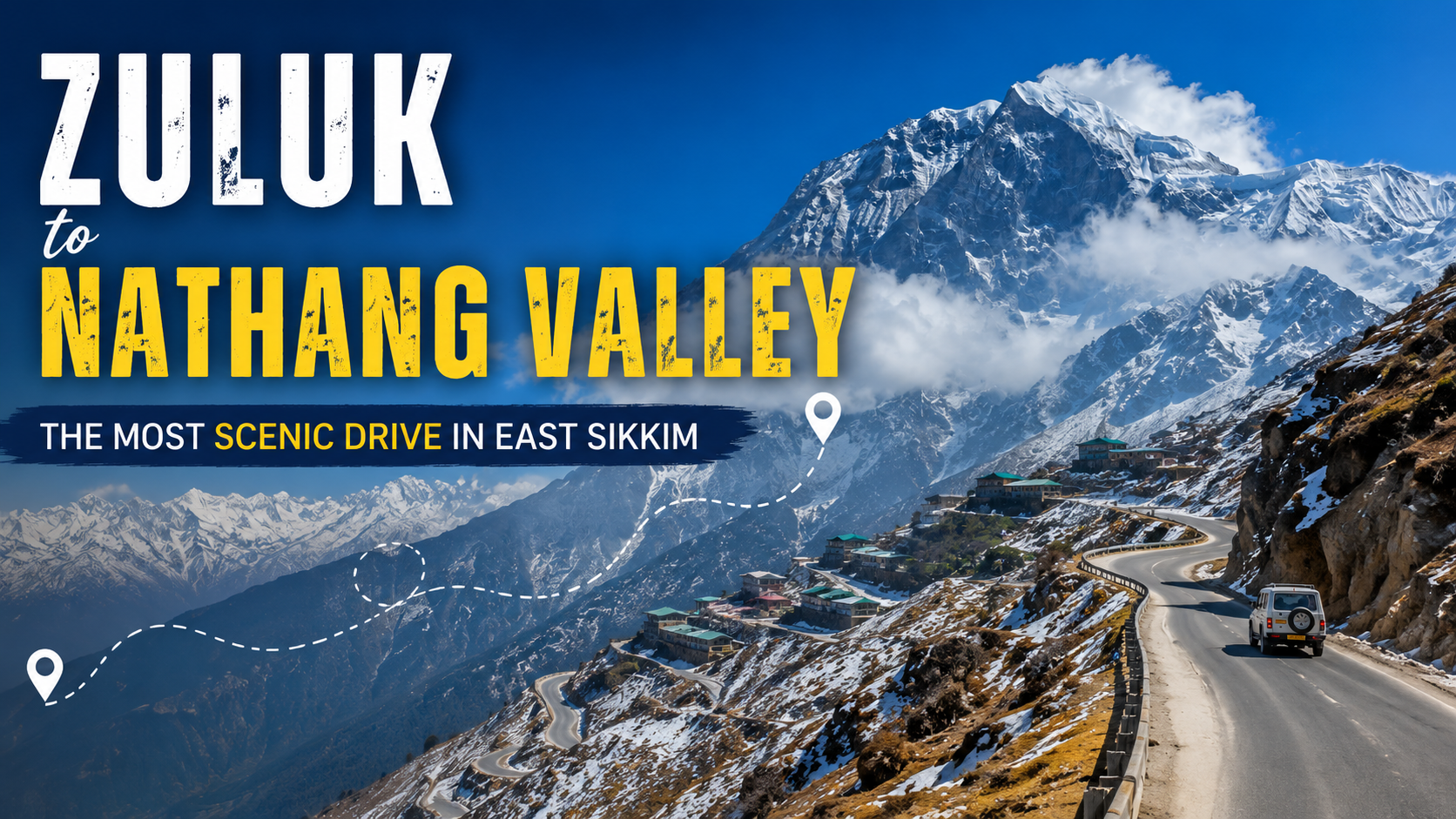
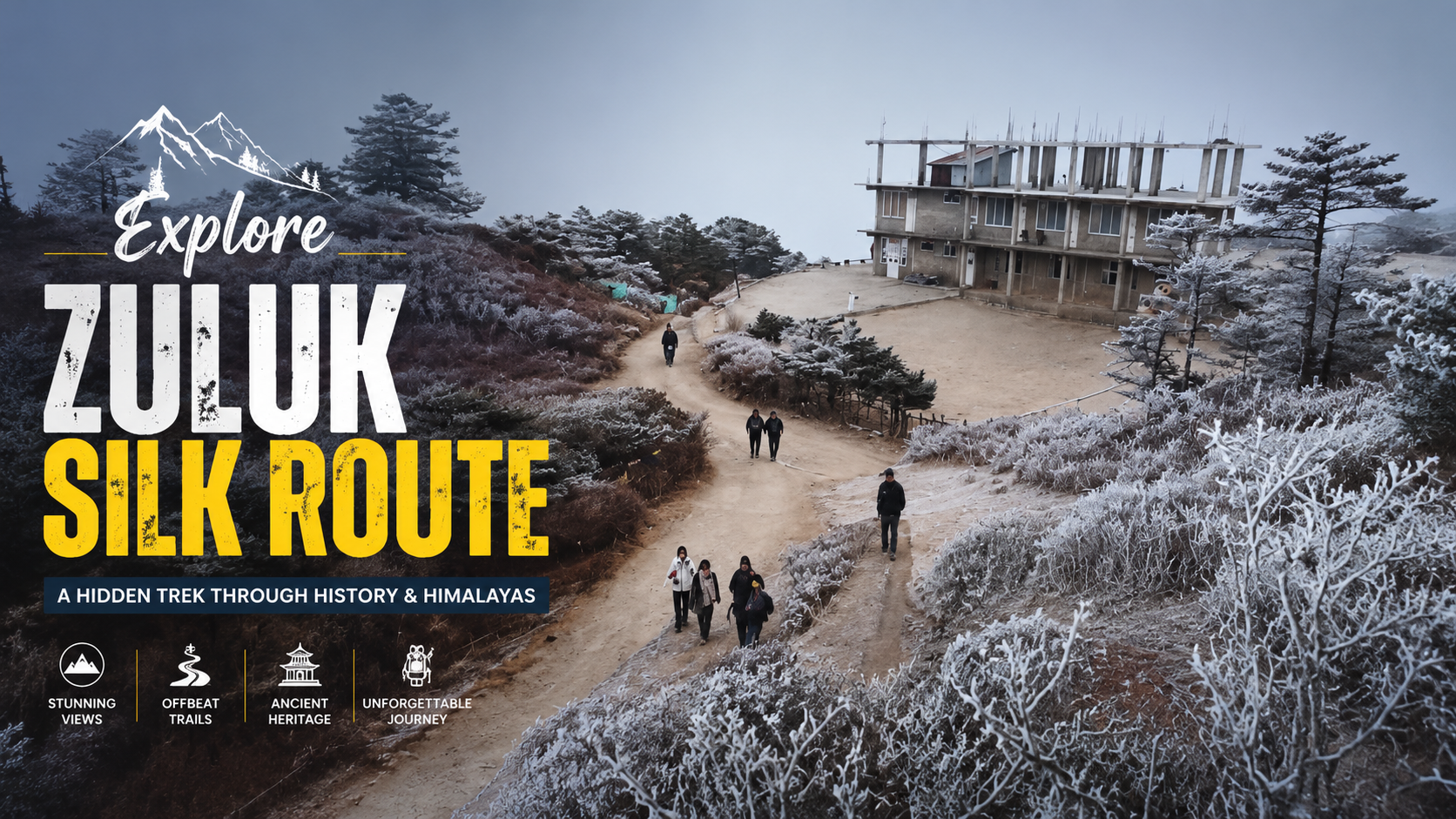
The Zuluk Silk Route is a 4-night, 5-day road circuit through East Sikkim along the old trade road that once carried wool and silk between Lhasa in Tibet and Kalimpong in India via the Jelep La pass. The route’s centrepiece is the famous 32 hairpin bends climbing above Zuluk village (approximately 3,000m / 10,000 ft), best seen from Thambi Viewpoint at sunrise. The circuit covers Nathang Valley (4,100m, the ‘Tibet of Sikkim’), Kupup Lake, Old Baba Mandir and the world’s highest golf course, with accommodation in village homestays — Zuluk has no hotels. Cost: ₹12,000 per person for Indian travellers. The route requires an East Sikkim Protected Area Permit, arranged only through registered operators, and foreign nationals are generally not permitted on this circuit. Best time: April–May and September–December, plus the December–February snow window for winter travellers.
Before 1962, if you stood on the ridge above Zuluk on a trading day, you would have watched mule caravans carrying bales of wool down from Tibet — three weeks out of Lhasa, over the Jelep La pass at 4,267 metres, headed for the markets of Kalimpong. Zuluk existed because of that traffic: it was a transit halt where muleteers rested, traded and fed their animals before the descent to the plains. When the India-China war closed the border in 1962, the trade stopped overnight, the caravans never came back, and Zuluk became what it is today — a village of about seventy families on a road that history forgot.
That is precisely why you should go. The Zuluk Silk Route is the most atmospheric road journey in Sikkim: a military road looping through cloud forest and alpine ridgeline, a viewpoint where you count thirty-two hairpin bends stacked below you like a coiled rope, a 4,100-metre valley the locals call the Tibet of Sikkim, and nights spent not in hotels — there are none — but in the homes of the families whose grandparents fed the mule caravans. I have been sending travellers on this circuit for years, and it remains the tour I recommend to anyone who tells me Gangtok and Tsomgo felt too crowded. This guide covers the full 5-day itinerary, the real history, the homestay truth, the permit rules (including the one about foreigners that most websites hide), and the honest cost.
Read more: Comparing all Sikkim tour options first? Start with the complete Sikkim Tour Packages guide
1. Zuluk Silk Route Quick Facts
| Attribute | Detail |
|---|---|
| Region | East Sikkim — the Old Silk Route corridor |
| Route | Gangtok → Zuluk → Thambi Viewpoint → Nathang Valley → Kupup → Gangtok |
| Duration | 4 nights / 5 days |
| Total road distance | Approximately 300 km |
| Zuluk altitude | Approximately 3,000m (10,000 ft) |
| Highest point | Nathang Valley / Kupup sector — approximately 4,000–4,100m |
| Cost (Indian) | ₹12,000 per person |
| Foreign travellers | Generally NOT permitted on this circuit (protected border zone) — see permits section |
| Permits | East Sikkim Protected Area Permit, operator-arranged only |
| Best time | April–May and September–December; December–February for snow |
| Accommodation | Village homestays in Zuluk (no hotels exist); hotel in Gangtok |
| Mobile network | Patchy BSNL/Jio at Zuluk; nothing reliable beyond Thambi |
| Suitable for | Photographers, history lovers, off-beat travellers, families with children 5+ |
2. The Real History — The Trade Road to Tibet
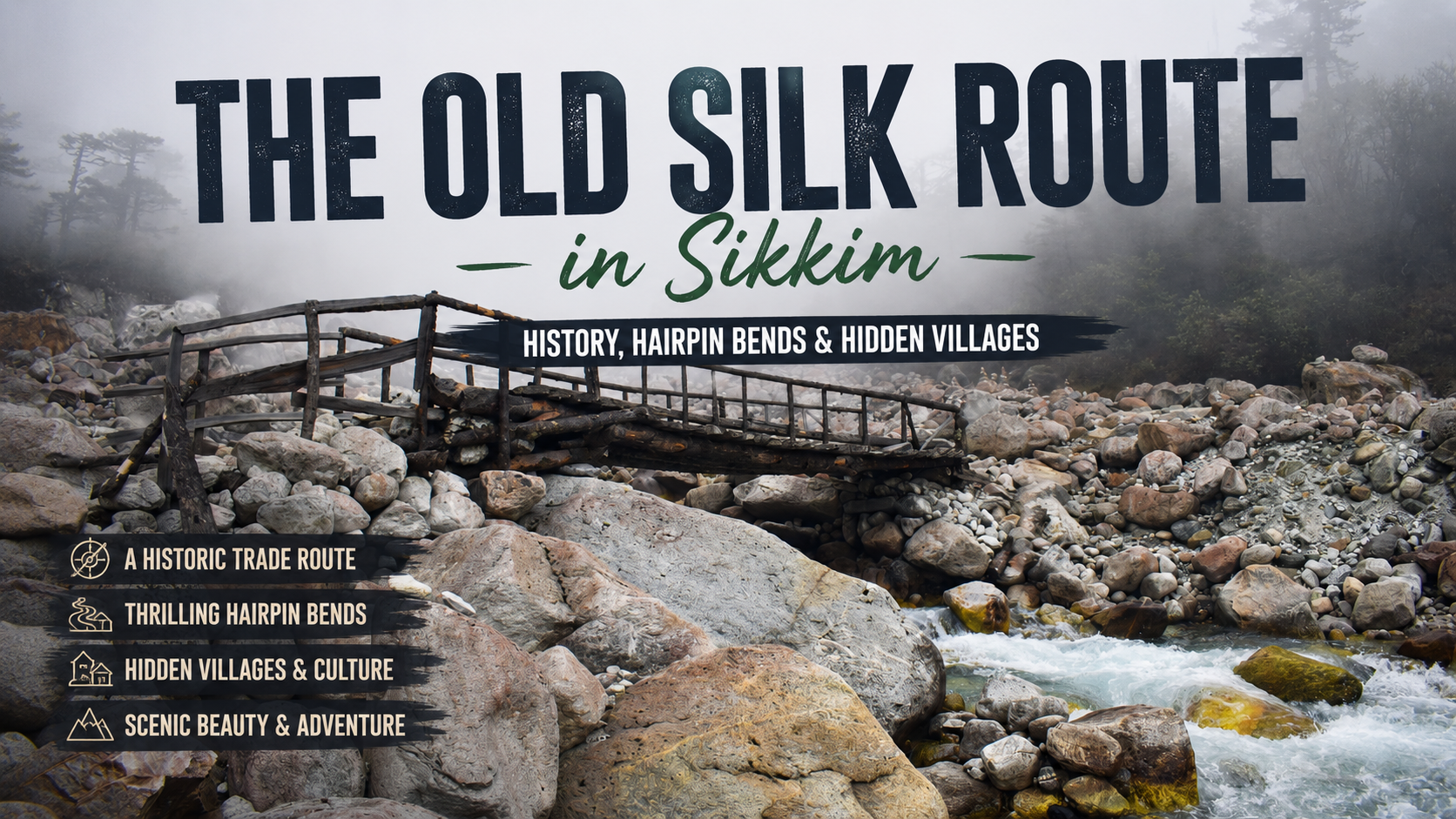
The ‘Silk Route’ name needs unpacking, because this was never the famous Central Asian Silk Road. It was a southern feeder of the same trade world: one of the main mule roads connecting Lhasa to British India. Caravans left the Tibetan plateau, crossed into Sikkim over the Jelep La pass (4,267m), descended through Kupup, Gnathang and Zuluk, and dropped to Rongli and onward to Kalimpong — which by the early twentieth century had become one of the busiest wool markets in Asia largely because of this road. Wool, borax, salt and yak tails came down; cotton, tobacco, dyes and manufactured goods went up. A round trip to Lhasa took the better part of two months.
Zuluk’s place in this system was as a transit camp — the last comfortable halt below the high ridges, where caravans rested before the climb or recovered after the descent. The village’s layout still shows it: houses strung along the road rather than gathered around fields, because the road was the livelihood. The trade ended abruptly with the 1962 India-China war, when Jelep La was sealed. The route then became what it remains today — a strategic military road maintained by the army, which is why the permits exist, why the road quality is surprisingly good, and why you will share the hairpins with the occasional convoy.
When you stand at Thambi Viewpoint watching the road coil beneath you, you are looking at a piece of infrastructure that connected two civilisations for centuries and then went silent in a single winter. Very few road trips in India carry that kind of story in the tarmac itself.
3. The 32 Hairpin Bends and Thambi Viewpoint
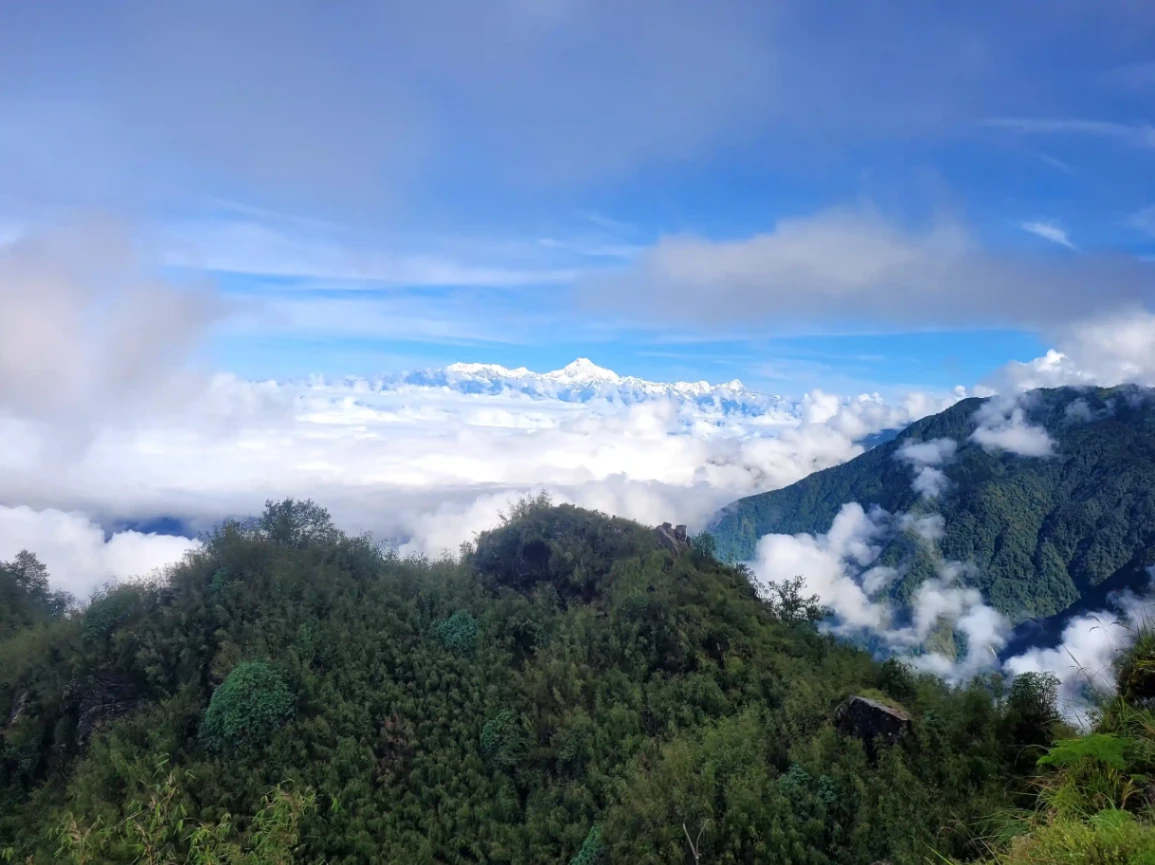
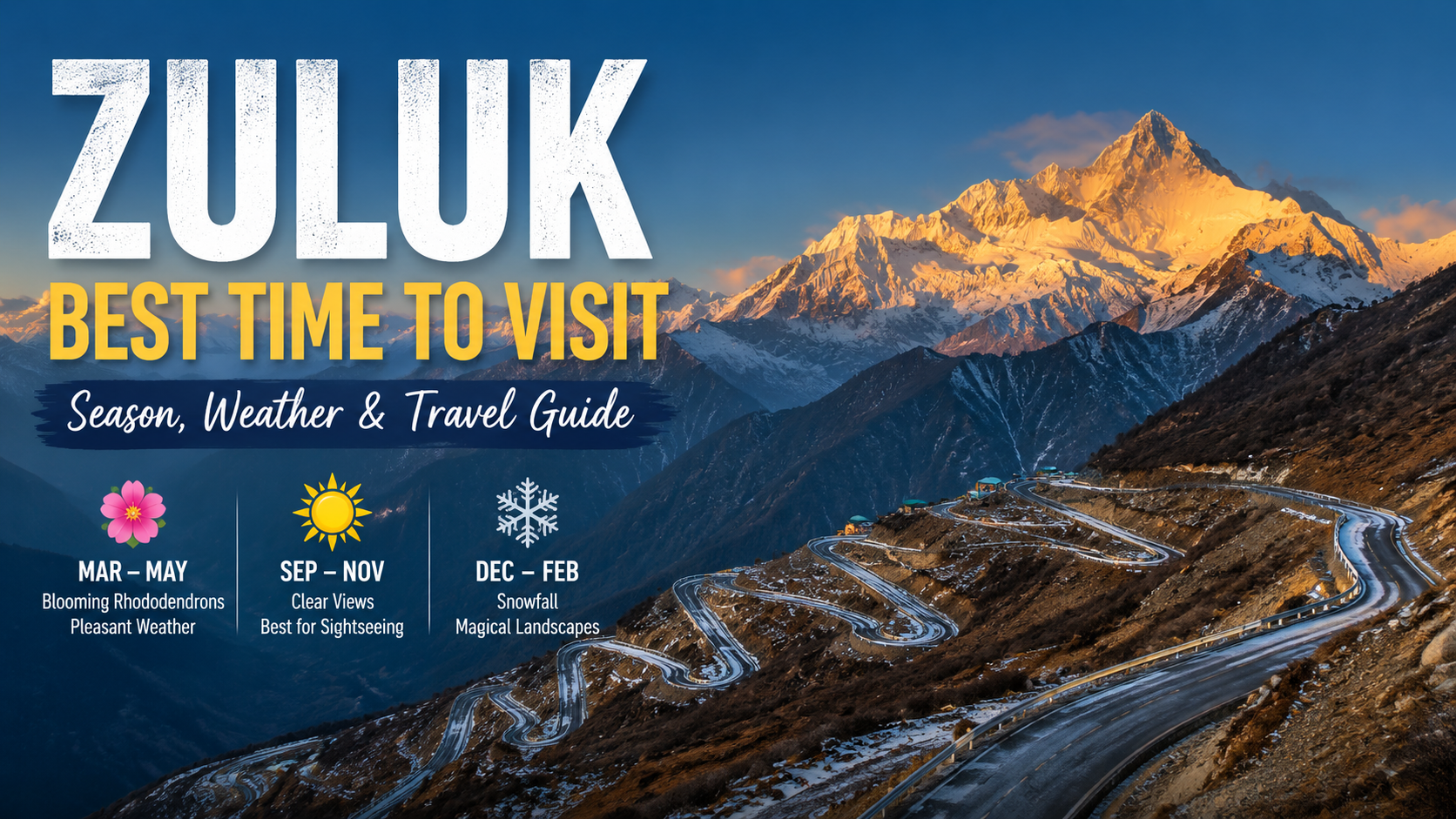
The image that sells the Silk Route — the one you have seen on every Sikkim tourism poster — is the view from Thambi Viewpoint (approximately 3,400m), about 14 kilometres above Zuluk. From here the road you just drove reveals itself as thirty-two stacked hairpin bends zigzagging up the mountainside, an engineering drawing come to life. On clear mornings, Kanchenjunga rises behind the bends, and the combination is one of the great road-trip photographs in India.
How to get the shot
- Go at sunrise. The viewpoint faces the dawn light, Kanchenjunga is clearest before 8 AM, and by mid-morning clouds typically climb out of the valleys and swallow the bends. Every Zuluk itinerary worth its price puts Thambi at first light — ours leaves the homestay around 4:30–5 AM.
- Winter gives you snow-dusted bends; spring gives you rhododendrons. Between late April and May, the slopes around the bends flower; between December and February the bends are outlined in snow. Both are spectacular — the empty green monsoon version is the one to avoid, because the road itself becomes unreliable.
- The classic frame is a wide shot from the upper viewpoint railing. A phone works; a 24mm-equivalent lens works better. If you count fewer than thirty-two bends, you are at the lower viewpoint — walk the extra five minutes up.
4. The 5-Day Zuluk Silk Route Itinerary — Day by Day
Day 1 — Arrival at Bagdogra / NJP, drive to Zuluk via Rongli (approx. 3,000m)
Distance: ~130 km · Time: 6–7 hours with the permit stop
Our vehicle meets you at Bagdogra Airport or NJP station by late morning and takes the East Sikkim road via Rangpo and Rongli — the same valley the mule caravans used. Rongli is the permit checkpoint: your East Sikkim Protected Area Permit is verified here, so keep documents in your daypack. From Rongli the road climbs steeply through cardamom forest and cloud belt to Zuluk, where you check into your homestay by late afternoon. Dinner is with the family, and it is worth sleeping early — the Thambi sunrise departure is pre-dawn.
Day 2 — Thambi Viewpoint sunrise, Zuluk village day
Distance: ~28 km round trip to Thambi · Time: sunrise excursion + relaxed day
Pre-dawn drive up the thirty-two bends to Thambi Viewpoint for sunrise over Kanchenjunga — the reason you came, delivered on the first morning so that a cloudy day leaves you a second chance later in the trip. Back in Zuluk for a late breakfast, the rest of the day is the village itself: the small wartime-era bunkers, the local school, the houses whose families have hosted travellers since the homestay system began, and the slow rhythm that survives here precisely because there are no hotels and no market street. This unhurried day at 3,000m is also quiet acclimatization work before tomorrow’s 4,100-metre valley.
Day 3 — Nathang Valley, Kupup Lake and the Old Silk Route sector (approx. 4,000–4,100m)
Distance: ~60 km round trip · Time: full day
The big day on the high route. Beyond Thambi the road crosses into open alpine country and reaches Nathang Valley (4,100m) — a wide, treeless bowl of meadow and stone that the locals call the Tibet of Sikkim, scattered with yaks and a handful of seasonal huts. Beyond Nathang lie the landmarks of the old trade road: Kupup Lake (locally Elephant Lake, for its shape), the Old Baba Mandir shrine to Baba Harbhajan Singh, and the Yak Golf Course at Kupup — recorded as the highest golf course in the world at roughly 4,000 metres. On the clearest days the road offers a distant view toward the Jelep La saddle, the pass the caravans crossed. We return to the Zuluk homestay by evening. Note the altitude logic: you sleep low (3,000m) and visit high (4,100m) — the same short-exposure principle that governs high-altitude touring everywhere in Sikkim.
Day 4 — Zuluk to Gangtok via Changey Waterfall
Distance: ~90 km · Time: 4–5 hours
A morning descent off the ridge, with a stop at Changey Waterfall on the way down — a tall, quiet fall in the forest belt that most Tsomgo-route tourists never see. We reach Gangtok by early afternoon, check into a proper hotel (your first flush toilet and long hot shower in three days — enjoy both), and the evening is yours on M.G. Marg.
Day 5 — Gangtok sightseeing, departure
Distance: 125 km to Bagdogra/NJP · Time: half-day sightseeing + 4–5 hour drive
Morning circuit of Gangtok’s essentials — Tashi Viewpoint for a final Kanchenjunga panorama, Rumtek Monastery (the largest in Sikkim), Enchey Monastery and the Namgyal Institute of Tibetology, whose collection includes artefacts from the very trade world you have just driven through. After lunch, the drive down the Teesta valley to Bagdogra or NJP for your onward journey. Book flights and trains after 5 PM.
Read more: View the Zuluk Silk Route product page with 2026 dates and booking
5. The Sights: Nathang Valley, Kupup Lake, Old Baba Mandir and the Yak Golf Course
Nathang Valley (4,100m) — the Tibet of Sikkim
Nathang (also written Gnathang) is a high-altitude bowl of meadow ringed by bare ridgelines — the closest most travellers will get to the look and feel of the Tibetan plateau without leaving India. In autumn the grass turns copper; in winter the valley holds snow for weeks and turns into Sikkim’s most photographed white landscape. A small settlement, a war memorial to the 1888 British-Tibet skirmishes, and grazing yaks are the only interruptions. Some itineraries offer a night’s stay in Nathang’s basic huts; we generally advise sleeping in Zuluk instead — 1,100 metres lower — unless you are confident of your altitude tolerance.
Kupup Lake and the Old Baba Mandir
Kupup Lake — Elephant Lake, once you see its outline from the road above — is a dark, still tarn at roughly 4,000 metres that the caravan drivers treated as a landmark: one march from the pass. Nearby stands the Old Baba Mandir, the original shrine to Baba Harbhajan Singh, the Indian Army sepoy who died near here in 1968 and whom soldiers believe still patrols the border. The ‘new’ Baba Mandir on the Tsomgo-Nathula tourist circuit gets the crowds; this original one gets the atmosphere.
The Yak Golf Course
At Kupup the army maintains the Yak Golf Course, recorded as the highest golf course in the world at about 4,000 metres. You cannot play a round as a passing tourist, but the sight of manicured greens laid out in a treeless Himalayan bowl — with yaks occasionally wandering the fairways — is one of the stranger and more memorable images of the whole circuit.
6. The Homestay Truth — Where You Actually Sleep in Zuluk
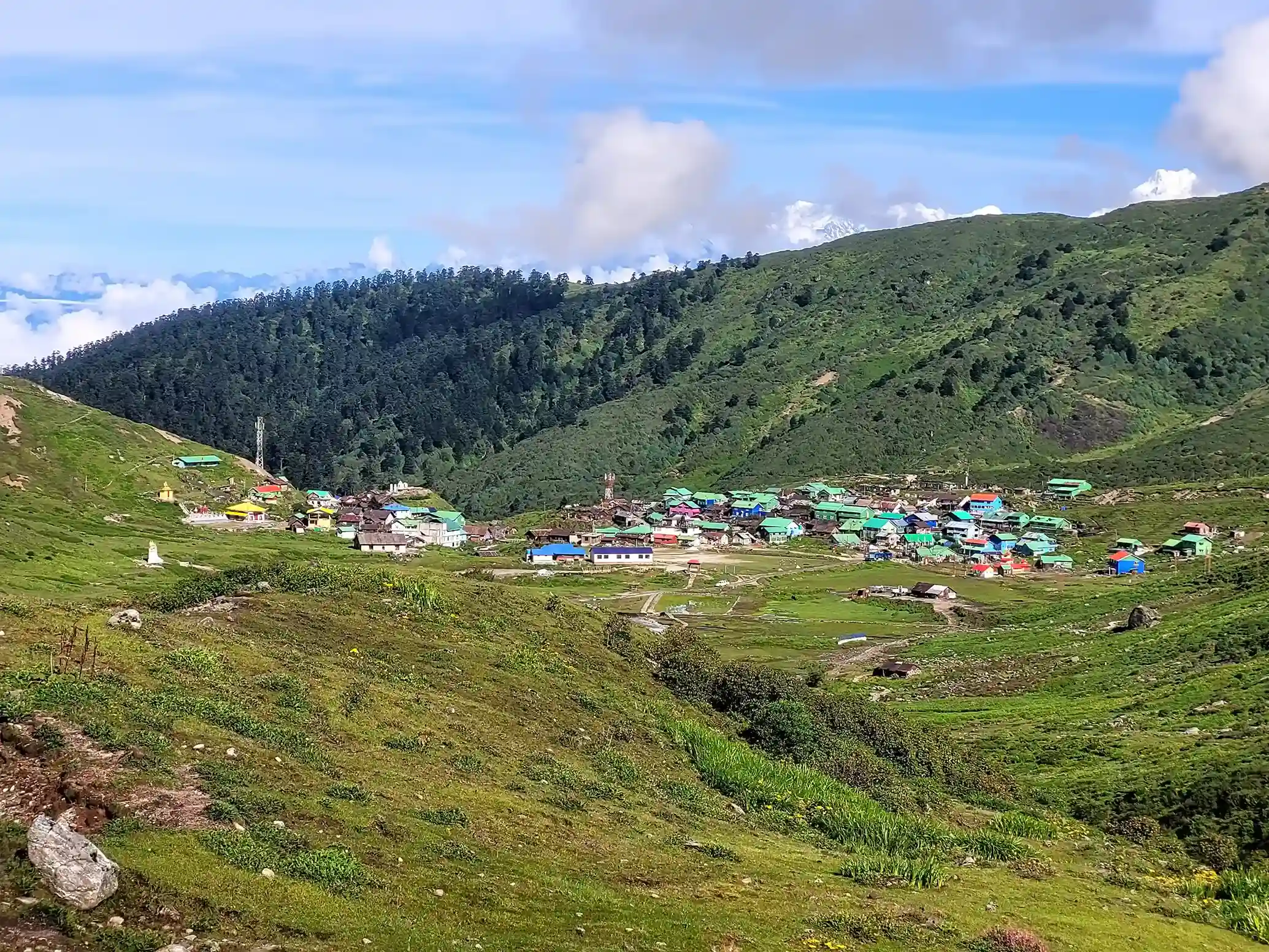
Zuluk has no hotels. None. Every bed in the village is in a family homestay, and any booking site listing a ‘hotel in Zuluk’ is selling you a homestay with a different label. I want to describe honestly what that means, because travellers who arrive expecting a hill-station hotel have a bad first evening, and travellers who arrive knowing what they booked usually call it the best part of the trip.
- The rooms: simple, clean twin or triple rooms in the family’s house, heavy blankets, sometimes a wood or gas heater on request. Walls are thin; nights are cold; the blankets win.
- The bathrooms: attached in the better homestays, shared in others; hot water comes by geyser in some houses and by bucket in the rest. Ask us at booking if an attached bathroom is a must — we assign homestays accordingly.
- The food: cooked by the family and eaten hot — rice, dal, local vegetables, eggs, often momos or thukpa on request. In a village this remote, the food is by definition home-style; it is also, night for night, better than most Gangtok restaurant meals.
- The economics: the homestay system is Zuluk’s post-trade livelihood — tourism replaced the mule caravans as the road’s income. Your stay goes directly to a named family, which is a better distribution of your money than almost any other accommodation model in Sikkim.
Electricity in Zuluk flickers and mobile signal is patchy (BSNL and Jio catch intermittent bars; other networks mostly do not). Charge devices when power is on, carry a power bank, and tell family before you leave Gangtok that you will be semi-offline for two to three days. Treat the disconnection as a feature — the village certainly does.
7. Permits for the Silk Route (and the Rule About Foreigners)
The entire Zuluk-Nathang-Kupup corridor is a protected zone along the India-China border, administered with the army’s involvement. The permit rules are absolute and checkpoint-enforced:
For Indian travellers
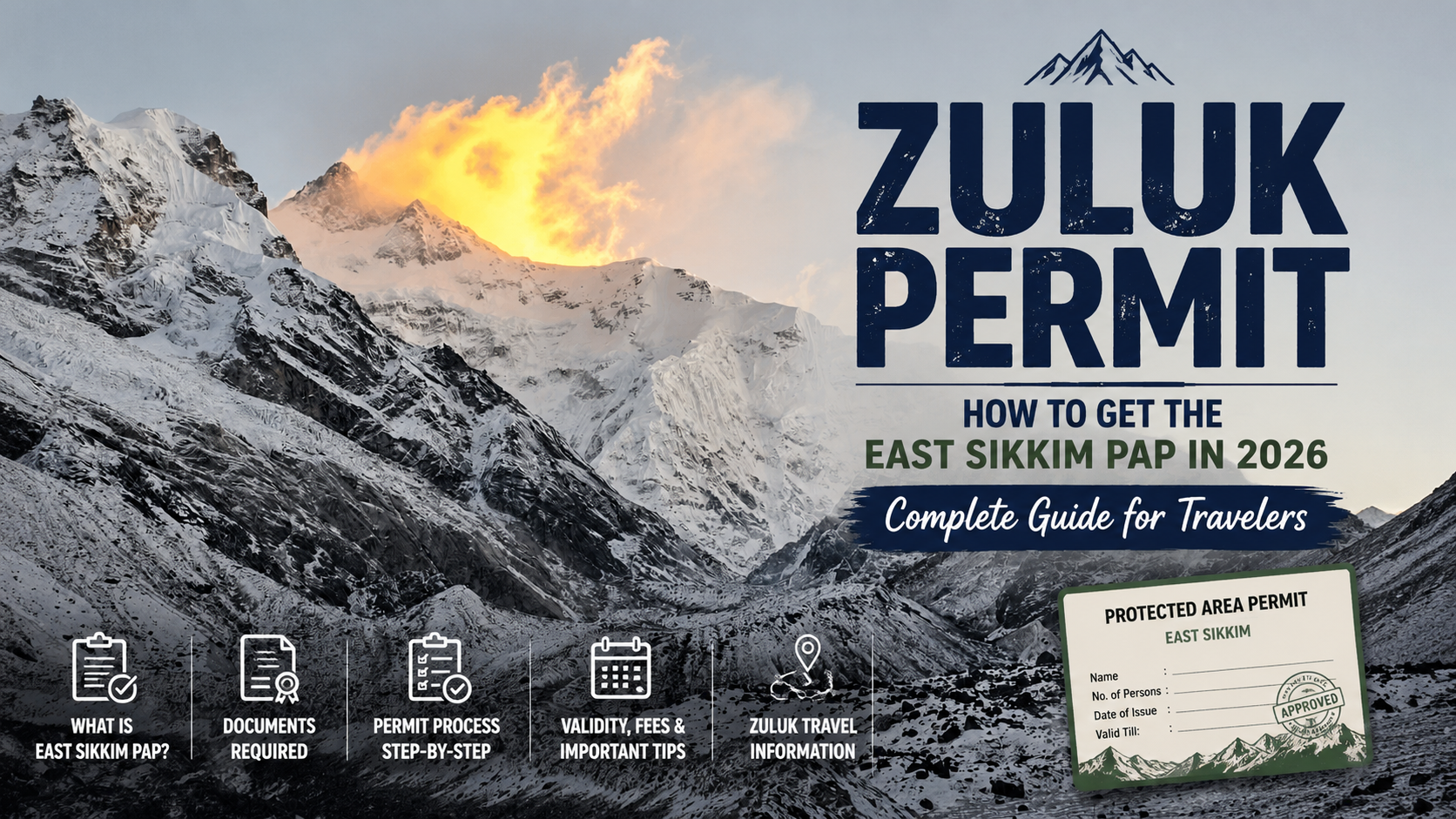
- East Sikkim Protected Area Permit, issued through registered Sikkim tour operators only — there is no individual application counter and no self-drive option on this circuit. We arrange it as part of every package.
- Documents: original photo ID (Aadhaar, passport, voter ID or driving licence) plus 3–4 photocopies and 4 passport-size photographs per traveller, including children (school ID or birth certificate).
- Timing: documents with us at least 2 days before travel. The permit is checked at Rongli on the way in and at posts along the high route.
For foreign travellers — the honest answer
Foreign nationals are generally not permitted on the Zuluk Silk Route circuit. The Zuluk-Nathang-Kupup road runs close to the border and sits inside a zone where the Protected Area Permit regime for foreigners does not currently extend, unlike Tsomgo Lake or North Sikkim‘s Yumthang side. You will find websites — including, until we fix it, a USD price on our own product page — implying otherwise; the checkpoint at Rongli is where that theory ends. If you are an international traveller who loves the sound of this circuit, the closest legally-available alternatives are the Tsomgo Lake day permit (available to foreigners with restrictions) or the Yumthang side of North Sikkim on a PAP. Rules along border corridors do change; we confirm the current position for every enquiry rather than quoting last year’s answer.
Read more: Full Sikkim permits explainer across all regions
8. Best Time for the Zuluk Silk Route
| Season | What you get | Watch out for | Verdict |
|---|---|---|---|
| Apr–May (spring) | Rhododendrons flowering around the bends; mild days | Pre-noon cloud can hide Kanchenjunga; book Thambi for sunrise | Best for flowers |
| Jun–Aug (monsoon) | Intense green; waterfalls at full flow | Landslides and road closures; leeches in the forest belt; views mostly gone | Avoid |
| Sep–Nov (autumn) | Sharpest Kanchenjunga views; copper grass at Nathang; stable road | Cold nights from late October — pack properly | Best overall |
| Dec–Feb (winter) | Snow on the 32 bends and deep snow at Nathang — the famous white Silk Route | Road above Thambi closes intermittently; itinerary becomes weather-dependent; genuine cold | Spectacular, for flexible travellers |
My recommendation for a first visit: October or November. You get the postcard clarity at Thambi, the copper autumn light at Nathang, and the most dependable road of the year. Come back a second time in late December or January for the snow version — many of our repeat Silk Route travellers do exactly that, and the two trips barely resemble each other.
9. Zuluk Silk Route Cost in 2026
Our 2026 Zuluk Silk Route package is ₹12,000 per person for Indian travellers on twin-sharing. Here is the line-item honesty:
| Cost head | Status |
|---|---|
| Standard package (4N/5D, Bagdogra/NJP to Bagdogra/NJP) | ₹12,000 per person |
| East Sikkim Protected Area Permit + checkpoint fees | Included |
| Zuluk homestay nights (twin-share, Days 1–3) | Included |
| Gangtok hotel night (twin-share 3-star, Day 4) | Included |
| All transport in registered East Sikkim SUV | Included |
| Meals: breakfast + dinner throughout (MAP) | Included |
| Thambi sunrise excursion and full high-route day | Included |
| Lunches and personal expenses | Not included (~₹1,200 for the trip) |
| Flights / trains to Bagdogra or NJP | Not included |
| GST 5% | Not included |
| Tips for driver and homestay families (suggested) | ₹500–800 |
A realistic all-in budget for an Indian traveller, including GST, lunches and tips (excluding flights), is ₹14,000–15,500 per person. Groups of four to six sharing one SUV get the best per-head economics. Peak snow weekends in January can carry a small seasonal surcharge on the homestay nights — we quote it upfront, never at the checkpoint.
10. Who This Tour Is For
The Silk Route is right for you if
- You have already done — or deliberately want to skip — the Gangtok-Tsomgo-Nathula standard circuit
- You care about photography: the 32 bends, Nathang’s light and the snow season are among Sikkim’s best frames
- You are comfortable with three nights of genuine village homestays (clean, warm, simple — no hotels exist)
- You like your destinations with history attached — this is a road with a story, not just a viewpoint list
- You are travelling with children aged 5+ or active older family members: the tour is vehicle-based with minimal walking, and the sleep-low-visit-high design keeps the altitude exposure sensible
Pick a different Sikkim trip if
- You need hotel-grade comforts every night — take the Gangtok-Pelling classic instead
- You are a foreign national — the circuit is generally closed to you; consider Tsomgo or North Sikkim’s Yumthang side
- Your dates fall in the June–August monsoon — the route is at its least reliable and least rewarding then
- Anyone in the group has serious cardiac or respiratory conditions — the Day 3 high route touches 4,100m; consult your doctor and tell us at booking
11. Why Book the Silk Route with Glacier Treks & Adventure
Zuluk rewards operators who know its specifics — which homestays have attached bathrooms and heaters, which viewpoint railing gives you all thirty-two bends, what time the Rongli checkpoint queue builds, and when the Nathang road genuinely closes versus when a driver simply does not want to go. We have run this circuit for years with the same care structure as our treks:
- Long-standing relationships with named Zuluk homestay families — we know exactly where you are sleeping, because we have slept there
- Permits handled in-house with document checks before travel, not surprises at Rongli
- Thambi sunrise built into the itinerary with a second-chance window on Day 3 if the first morning clouds over
- Sleep-low-visit-high altitude design as standard, and honest medical screening questions at booking
- Registered East Sikkim vehicles with drivers who run this road across all seasons, including the snow window
- Fifteen years of Sikkim operations, IMF-certified leadership, and affiliation with Sikkim Tourism, TAAS, YTDC and SAMA
- Line-item quotes — the ₹12,000 price includes what this page says it includes
12. Frequently Asked Questions
What is the Zuluk Silk Route?
The Zuluk Silk Route is the East Sikkim section of the old mule-trade road that connected Lhasa in Tibet with Kalimpong in India via the Jelep La pass, carrying wool, silk and salt until the border closed in 1962. Today it is a 4-night, 5-day road circuit covering Zuluk village, the 32 hairpin bends, Thambi Viewpoint, Nathang Valley, Kupup Lake and the Old Baba Mandir.
What is the altitude of Zuluk and the Silk Route circuit?
Zuluk village sits at approximately 3,000 metres (10,000 feet), where you sleep. The high day-route through Nathang Valley and Kupup reaches roughly 4,000–4,100 metres. The sleep-low-visit-high structure keeps the altitude exposure short and manageable for most healthy travellers, including children aged 5 and above.
How many hairpin bends does the Zuluk road have?
Thirty-two hairpin bends climb the mountainside above Zuluk, best viewed from Thambi Viewpoint at around 3,400 metres. Sunrise is the time to see them — Kanchenjunga stands behind the bends in the dawn light, and clouds typically hide the view from mid-morning onward.
Can foreigners visit the Zuluk Silk Route?
Generally no. The Zuluk-Nathang-Kupup corridor is a protected border zone where the foreigner permit regime does not currently extend, and the checkpoint at Rongli enforces this. International travellers wanting a comparable Sikkim experience should look at the Tsomgo Lake day permit or the Yumthang side of North Sikkim on a Protected Area Permit. Border-zone rules change, so we confirm the current position for every international enquiry.
What is the cost of the Zuluk Silk Route package?
Our 2026 package is ₹12,000 per person for Indian travellers on twin-sharing, including the East Sikkim permit, all transport in a registered vehicle, three Zuluk homestay nights, one Gangtok hotel night, and breakfast plus dinner throughout. A realistic all-in budget with GST, lunches and tips is ₹14,000–15,500, excluding flights.
Are there hotels in Zuluk?
No — Zuluk has no hotels at all. Every stay in the village is a family homestay: clean, simple twin rooms, heavy blankets, home-cooked Sikkimese food, and hot water by geyser or bucket depending on the house. Any listing that advertises a ‘hotel in Zuluk’ is a homestay under another name. The homestay economy is the village’s livelihood and, for most travellers, the highlight of the trip.
Is the Silk Route open in winter? Can I see snow?
Yes — December to February is the famous snow window, when the 32 bends are outlined in white and Nathang Valley lies under deep snow. The trade-off is reliability: the road above Thambi closes intermittently after heavy snowfall, so winter itineraries need a flexible day and warm gear. If snow is your priority and your dates can flex, the winter Silk Route is one of the most spectacular sights in Sikkim.
How do I reach Zuluk?
Zuluk is reached by road from Bagdogra Airport or NJP railway station via Rangpo and Rongli — roughly 130 kilometres and 6–7 hours including the permit stop at Rongli. There is no self-drive option; the circuit requires a registered East Sikkim vehicle with a local driver, which is included in every package.
Is the Zuluk Silk Route safe for children and older travellers?
Yes, with the standard cautions. The tour is vehicle-based with minimal walking, and nights are spent at 3,000 metres rather than on the high route. We recommend it for children aged 5 and above and for active older travellers; anyone with cardiac, blood-pressure or respiratory conditions should consult a doctor about the 4,100-metre day and tell us at booking so we can adjust the plan.
Zuluk Silk Route or North Sikkim — which should I choose?
They solve different briefs. North Sikkim (Gurudongmar, Yumthang) is the bigger, higher, more famous landscape — and the busier one. The Silk Route is lower-key: fewer vehicles, homestay culture, a genuine historical thread, and the single most photogenic road in Sikkim. If you have done the classic circuits and want the version of Sikkim that still feels undiscovered, choose Zuluk. Many of our travellers do North Sikkim on one trip and the Silk Route on the next.
Ready to Book Your Zuluk Silk Route Tour?
The Silk Route is the Sikkim itinerary for travellers who want their mountains with a story — a trade road that connected Lhasa to India for centuries, thirty-two bends coiled beneath a sunrise viewpoint, and village homestays that carry the road’s history in living memory. Our 2026 departures run April–May and September through the winter snow window, with the monsoon months deliberately left off the calendar.
Book the Zuluk Silk Route now: Call/WhatsApp +91 7407248200 · Email contact@trekinsikkim.in
Read more: View the Zuluk Silk Route product page and book online
Read more: Compare all 10 Sikkim tour packages before deciding
Read more: Want the high-altitude classic instead? Read the North Sikkim guide
Read more: Browse all our Sikkim tours
About the author
Kiran Gurung is the founder of Glacier Treks & Adventure, an IMF-certified mountaineer, and a long-time Sikkim resident based in Yuksom, West Sikkim. Alongside the company’s trekking and expedition portfolio, he has operated East Sikkim Silk Route tours for years, with long-standing homestay partnerships in Zuluk village and a safety culture drawn from high-altitude expedition leadership. Glacier Treks & Adventure is affiliated with the Sikkim Department of Tourism, the IMF, TAAS, YTDC and SAMA.