By Kiran Gurung · Founder, Glacier Treks & Adventure · Yuksom, West Sikkim
Published: 10 August 2026 · Last updated: 10 August 2026
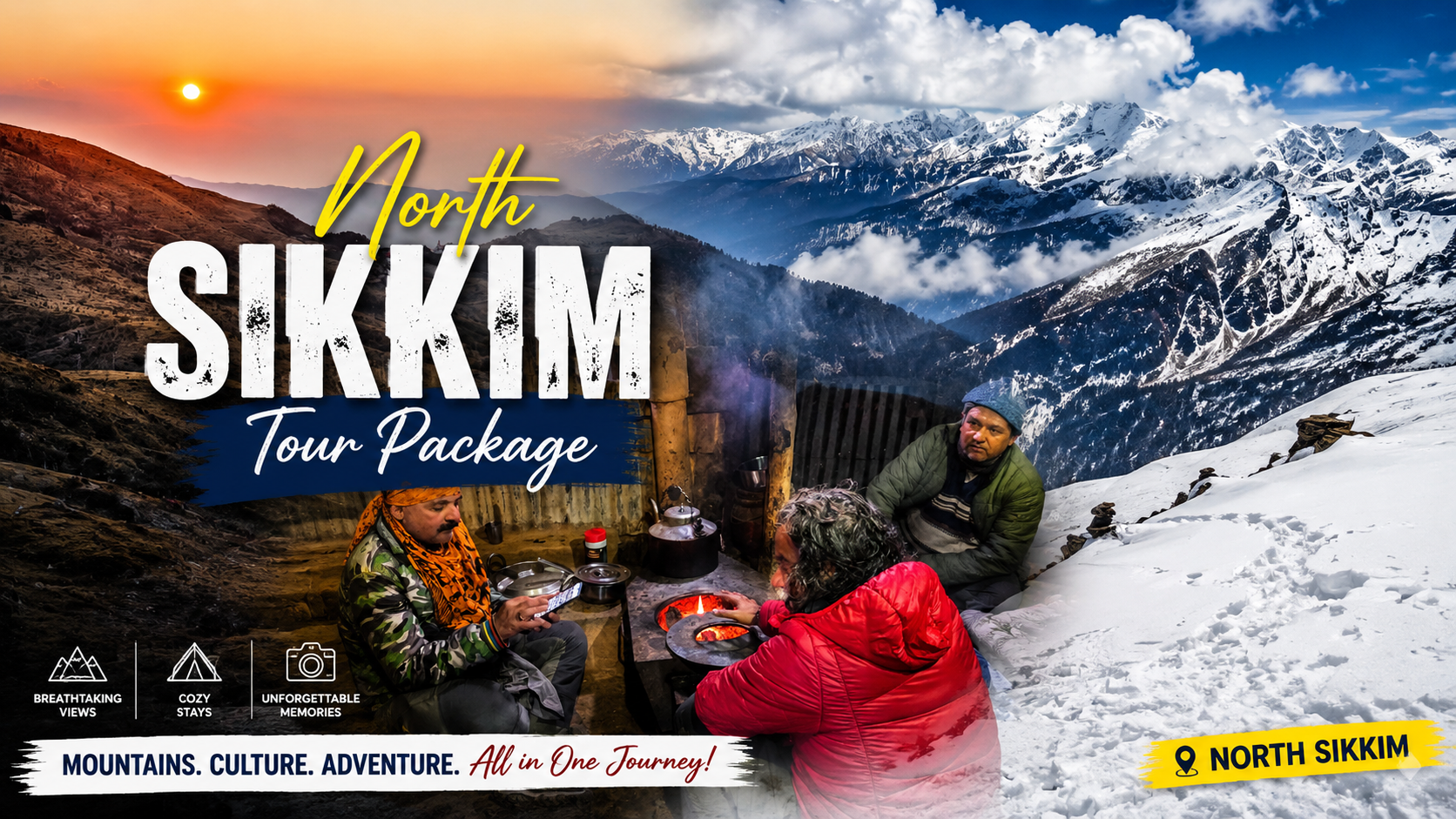
The North Sikkim tour package is a 4-night, 5-day road journey from Gangtok through the restricted valleys of Lachen and Lachung, covering Gurudongmar Lake (5,430m — one of the highest motorable lakes in the world), Yumthang Valley (3,564m, the ‘Valley of Flowers’), and Zero Point (4,572m). The route requires an Inner Line Permit for Indian travellers, arranged only through registered Sikkim operators, and covers roughly 300 kilometres of mountain road. Cost: ₹15,000 per person for Indians and $350 for foreign travellers — though foreign nationals face additional restrictions and are generally not permitted at Gurudongmar Lake itself. Best months: October to December and March to May. The single most important thing to understand before booking: this tour takes you from 1,650m to 5,430m in under 48 hours, which is faster altitude gain than any Himalayan trek would ever allow.
North Sikkim is the most spectacular road journey in the Indian Himalaya, and it is also the one I brief travellers about most carefully before they book. Here is why: on a Goechala trek, we take five days to climb from 1,780 metres to 4,500 metres, with acclimatization built into every stage. On the North Sikkim tour, a vehicle takes you from Gangtok at 1,650 metres to Gurudongmar Lake at 5,430 metres in under 48 hours. That is nearly a thousand metres higher than the Goechala viewpoint, reached roughly five times faster — by people who are mostly not trekkers, often travelling with children and parents.
Most North Sikkim tour pages will not tell you this, because altitude warnings do not sell packages. But I have operated in these mountains for fifteen years, and I would rather brief you honestly and have you arrive prepared than have your Gurudongmar morning ruined by a splitting headache — or worse, cut short by a medical emergency at a place that is four hours’ drive from the nearest hospital. This guide covers the full 5-day itinerary, the permits, the costs, the honest accommodation picture in Lachen and Lachung Package, and — most importantly — how to do the Gurudongmar morning safely.
Read more: Comparing all Sikkim tour options first? Start with the complete Sikkim Tour Packages guide
1. North Sikkim Tour Quick Facts
| Attribute | Detail |
|---|---|
| Route | Gangtok → Lachen → Gurudongmar → Lachung → Yumthang / Zero Point → Gangtok |
| Duration | 4 nights / 5 days |
| Total road distance | Approximately 300 km of mountain driving |
| Highest point | Gurudongmar Lake — 5,430m (17,800 ft) |
| Other altitudes | Gangtok 1,650m · Lachen 2,750m · Lachung 2,700m · Yumthang 3,564m · Zero Point 4,572m |
| Cost (Indian) | ₹15,000 per person |
| Cost (Foreign) | $350 per person (with Gurudongmar restrictions — see permits section) |
| Permits | Inner Line Permit (Indians) / Protected Area Permit (foreigners), operator-arranged only |
| Best time | October–December and March–May |
| Accommodation | Hotels in Gangtok; basic lodges/homestays in Lachen and Lachung |
| Mobile network | Jio/Airtel in Gangtok; BSNL intermittent in Lachen/Lachung; nothing at Gurudongmar or Zero Point |
| Vehicle | Shared or private SUV (Innova/Xylo class) — mandatory registered North Sikkim vehicle |
2. What Makes North Sikkim Different From the Rest of Sikkim
North Sikkim is the largest and least populated district of Sikkim, pressed against the Tibetan plateau. Almost the entire district is a restricted area — the roads north of Chungthang were built by the Border Roads Organisation for military access, and civilian tourism operates on a permit system layered over that military infrastructure. This is why you cannot drive yourself into North Sikkim, why permits are checked at multiple army posts, and why the tour operates only through registered vehicles with registered drivers.
Three things define the North Sikkim experience:
- The landscape transition is the most dramatic in Sikkim. In two days of driving you pass from Gangtok’s subtropical urban ridge through temperate river gorges at Chungthang, into alpine valleys at Lachen, and finally onto the high-altitude cold desert plateau at Gurudongmar — terrain that looks like Ladakh, not like the Sikkim most visitors imagine.
- It is a road journey, not a trek. Everything is vehicle-based. The walking involved is minimal — a few hundred metres at each stop. This makes North Sikkim accessible to families and older travellers who would never attempt a trek, which is exactly why the altitude briefing matters so much: the tour reaches trekking-expedition altitudes without any of a trek’s built-in acclimatization.
- The valleys hold real village culture. Lachen and Lachung are working Lepcha-Bhutia villages with their own traditional governance system — the Dzumsa — which still administers both villages in place of the panchayat system found everywhere else in India. The Lachung monastery dates to 1880, and both valleys empty of tourists by early evening, leaving something close to their ordinary rhythm.
3. The 5-Day North Sikkim Itinerary — Day by Day
Day 1 — Arrival at Bagdogra / NJP, drive to Gangtok (1,650m)
Distance: 125 km · Time: 4–5 hours
Arrive at Bagdogra Airport or New Jalpaiguri Railway Station by early afternoon; our vehicle brings you up the Teesta valley to Gangtok by evening. Check in, then spend the evening on M.G. Marg — Gangtok’s pedestrian high street — for dinner. Sleep early. This first night at 1,650m is doing quiet acclimatization work; treat it as part of the tour, not just transit.
Day 2 — Gangtok to Lachen (2,750m)
Distance: 108 km · Time: 6–7 hours with stops
The permit checkpoints begin today — carry your documents in your daypack, not in the boot. The road follows the Teesta north through the Seven Sisters Waterfalls and the Singhik viewpoint (on a clear day, your first big Kanchenjunga panorama), then reaches Chungthang, where the Lachen and Lachung rivers meet and the road forks into the two valleys. We take the left fork to Lachen, arriving late afternoon. Dinner is early and simple; the wake-up call tomorrow is pre-dawn. Drink 3–4 litres of water today and skip alcohol entirely — tomorrow’s altitude will find any shortcut you take tonight.
Day 3 — Lachen to Gurudongmar Lake (5,430m), then Lachung (2,700m)
Distance: 65 km each way to the lake + 50 km to Lachung · Time: full day, 4 AM start
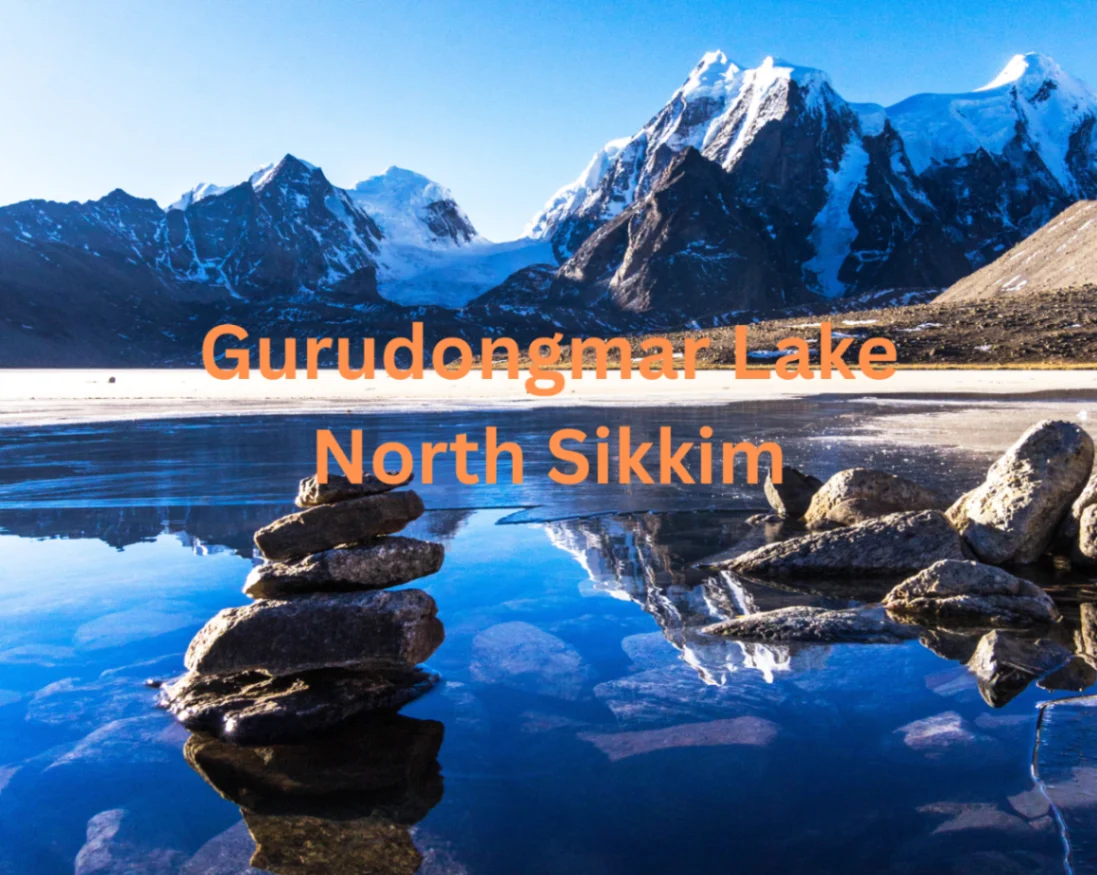
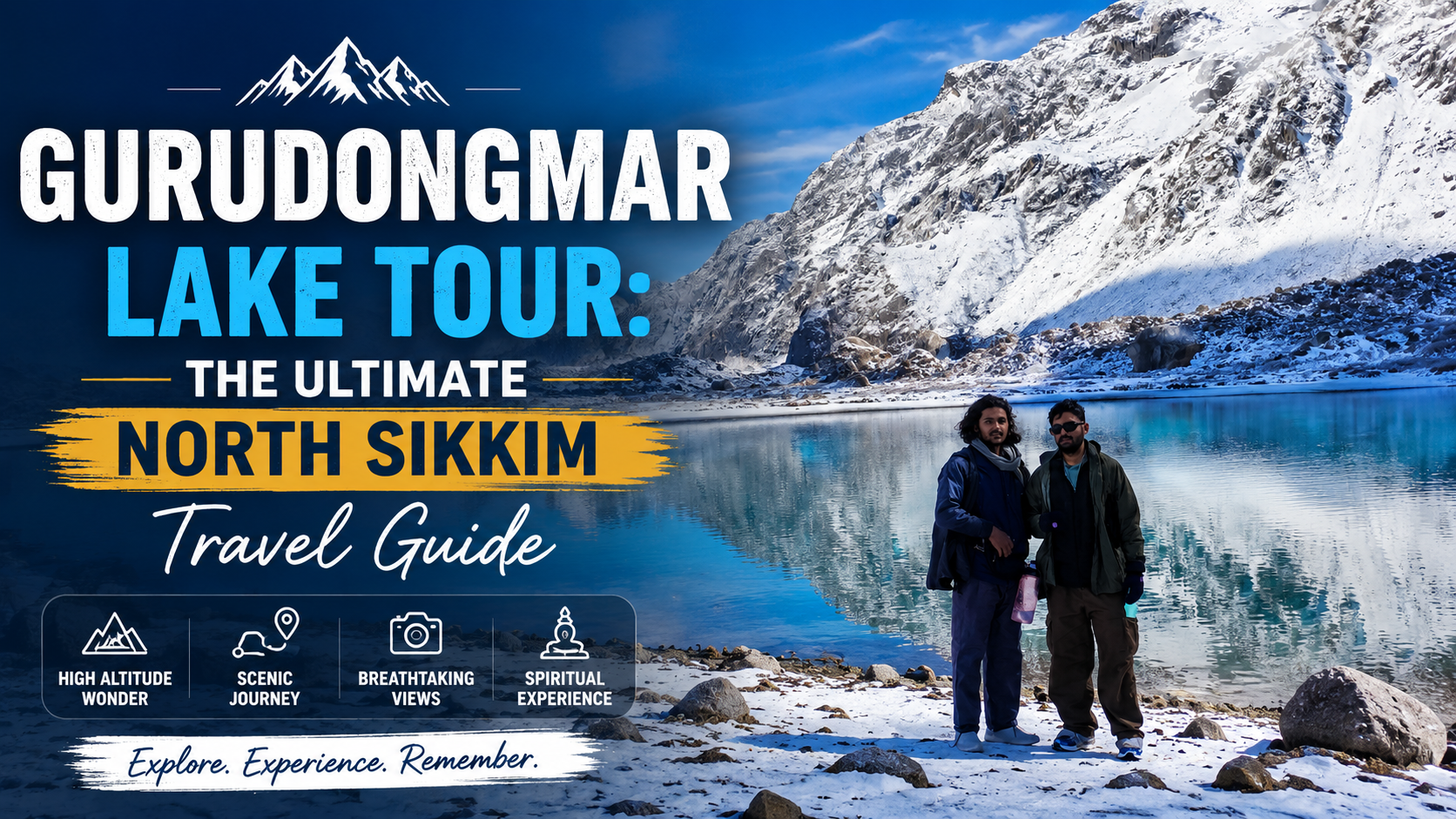
The centrepiece day. Vehicles leave Lachen around 4–5 AM to reach Gurudongmar before the winds pick up — the lake is best (and safest) before 11 AM. The road climbs through Thangu (3,960m) onto the plateau, and the landscape strips itself of trees, then of shrubs, then of almost everything except stone, snow and sky. Gurudongmar sits at 5,430m — a turquoise lake sacred to both Buddhists and Sikhs, ringed by snow peaks, at one of the highest motorable points in the world. Time at the lake is limited to roughly 20–30 minutes; this is an altitude-safety rule, not an itinerary economy (Section 4 explains why). We descend to Lachen for a late breakfast, then drive to Lachung via Chungthang for the night.
Day 4 — Lachung to Yumthang Valley (3,564m) and Zero Point (4,572m), return to Gangtok
Distance: 25 km to Yumthang + 23 km to Zero Point + 103 km back to Gangtok · Time: full day
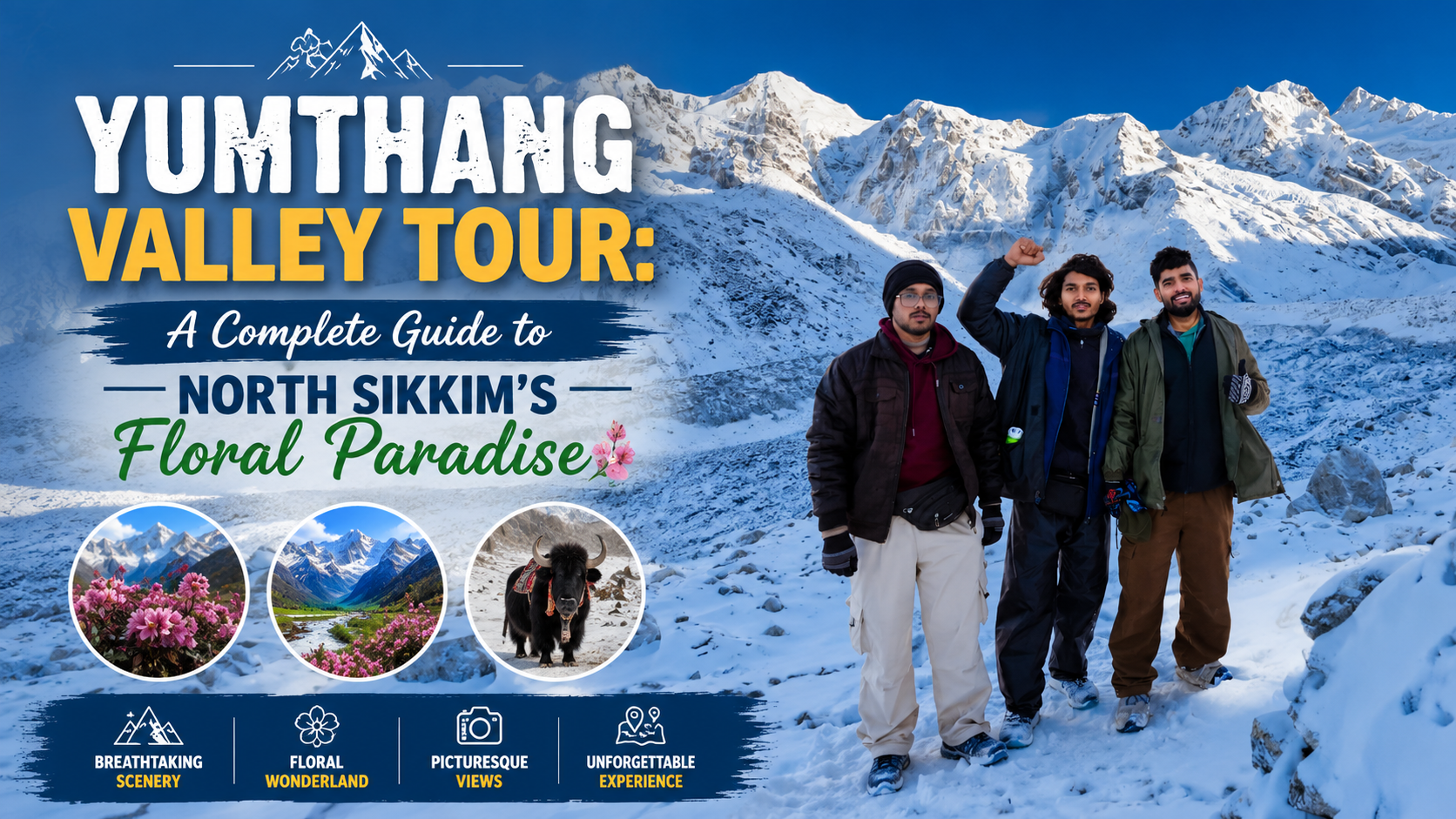
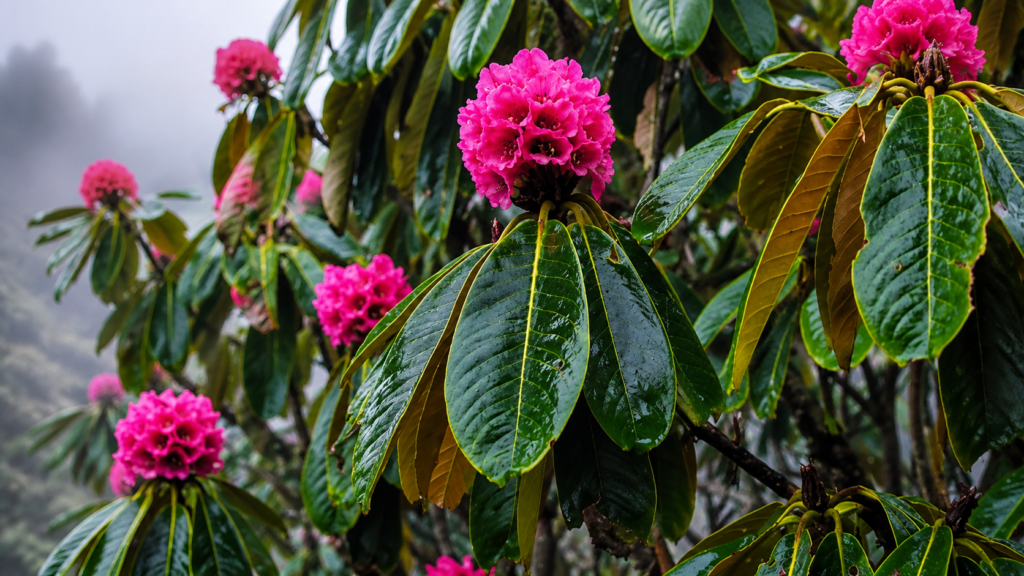
Morning drive to Yumthang, the ‘Valley of Flowers‘ — a wide alpine valley on the Lachung river that turns into a carpet of rhododendron and primula blooms between late March and early June. Beyond Yumthang, the road continues to Zero Point (Yume Samdong) at 4,572m, where the civilian road literally ends — snow is present here most of the year and the army post marks the limit. After lunch back in Lachung, we make the long descent to Gangtok, arriving by evening.
Day 5 — Gangtok to Bagdogra / NJP departure
Distance: 125 km · Time: 4–5 hours
After breakfast, the drive back down the Teesta valley. If your flight or train is in the evening and the season is right, Teesta river rafting can be added as a final activity on the way down — mention it at booking so we can schedule the departure time around it.
Read more: View the North Sikkim tour product page with 2026 dates and booking
4. Gurudongmar Lake — The Altitude Truth
This is the section I most want you to read, because it is the section most tour pages skip. Gurudongmar Lake sits at 5,430 metres. For perspective: that is higher than Everest Base Camp in Nepal (5,364m), higher than the Kongmaru La pass on the Markha Valley Trek (5,260m), and nearly a full kilometre higher than the Goechala viewpoint (4,500m) that trekkers spend ten days preparing for. On this tour, you reach it on the morning of Day 3 — roughly 40 hours after arriving at 1,650m.
Your body cannot acclimatize meaningfully in 40 hours. What protects Gurudongmar visitors is not acclimatization — it is exposure time. You are at extreme altitude for only 20–30 minutes, and the vehicle then carries you back down. This works for most healthy people, but only if the rules are respected:
The Gurudongmar rules we enforce on every departure
- Maximum 20–30 minutes at the lake. Not negotiable, whatever the photographs still left untaken. Extended time at 5,430m without acclimatization is how emergencies happen.
- Walk slowly, or not at all. The car park to the lakeshore is a short walk that feels like nothing at sea level and like a staircase sprint at 5,430m. Move at half your normal pace. Do not run, jump for photos, or climb the surrounding slopes.
- Hydrate the day before, not the morning of. The 3–4 litres you drink on Day 2 in Lachen do more for your Gurudongmar morning than anything you drink in the car.
- No alcohol on Day 2, full stop. Alcohol plus rapid altitude gain is the most common cause of the headaches, vomiting and aborted lake visits we see.
- Eat light before the climb. A heavy pre-dawn breakfast diverts blood to digestion exactly when your body needs it for oxygen transport. Tea and biscuits before departure; proper breakfast after descent.
- Tell your driver the moment you feel unwell. Persistent headache, nausea, dizziness or confusion at altitude means one thing: descend now. The treatment for altitude sickness at Gurudongmar is the road down, taken immediately.
Who should not go to Gurudongmar
- Children under 5 — most operators, including us, do not take infants and toddlers above Thangu, and army checkpoints may turn them back
- Anyone with uncontrolled blood pressure, cardiac conditions, or severe asthma
- Pregnant women
- Anyone who developed serious AMS symptoms on a previous high-altitude trip
Travellers in these categories can still do a wonderful North Sikkim tour — the itinerary simply pivots to Lachung, Yumthang and Zero Point (4,572m, with the same short-exposure logic but nearly 900m lower), while skipping the Gurudongmar morning. Tell us at booking and we adjust the plan without drama. Roughly one in ten of our North Sikkim bookings takes this variant, usually for a grandparent or a small child in the group.
5. Yumthang Valley and Zero Point
Yumthang Valley sits at 3,564 metres on the Lachung river — a wide, flat-floored alpine valley inside the Shingba Rhododendron Sanctuary. If your tour falls between late March and early June, Yumthang is the highlight of the trip: over twenty rhododendron species flower in sequence across those weeks, and the valley floor becomes the ‘Valley of Flowers’ the brochures promise. In autumn the flowers are gone but the light is sharper, the river runs clear, and the yak herders are back on the valley floor. There is a small hot spring (Yumthang Tsa-Chu) across a footbridge on the river’s far side.
Zero Point Sikkim — properly Yume Samdong — is 23 kilometres beyond Yumthang at 4,572 metres, where the civilian road ends. Snow is present most of the year, which is precisely why it is popular: for many Indian visitors, Zero Point is their first touch of snow. It is also 1,000 metres higher than Yumthang, so the same short-exposure altitude logic applies — 20–30 minutes, move slowly, and descend. Zero Point is an optional add-on in most packages (the vehicle charge is usually extra and payable locally); in our package it is included when the road is open.
A correction worth making because it appears on many websites (including, at the time of writing, our own product page — being fixed): Yumthang Valley is at approximately 11,700 feet (3,564m), NOT 20,000 feet. At 20,000 feet Yumthang would be higher than Gurudongmar. If a tour page cannot get the altitude of its main attraction right, read the rest of its claims accordingly.
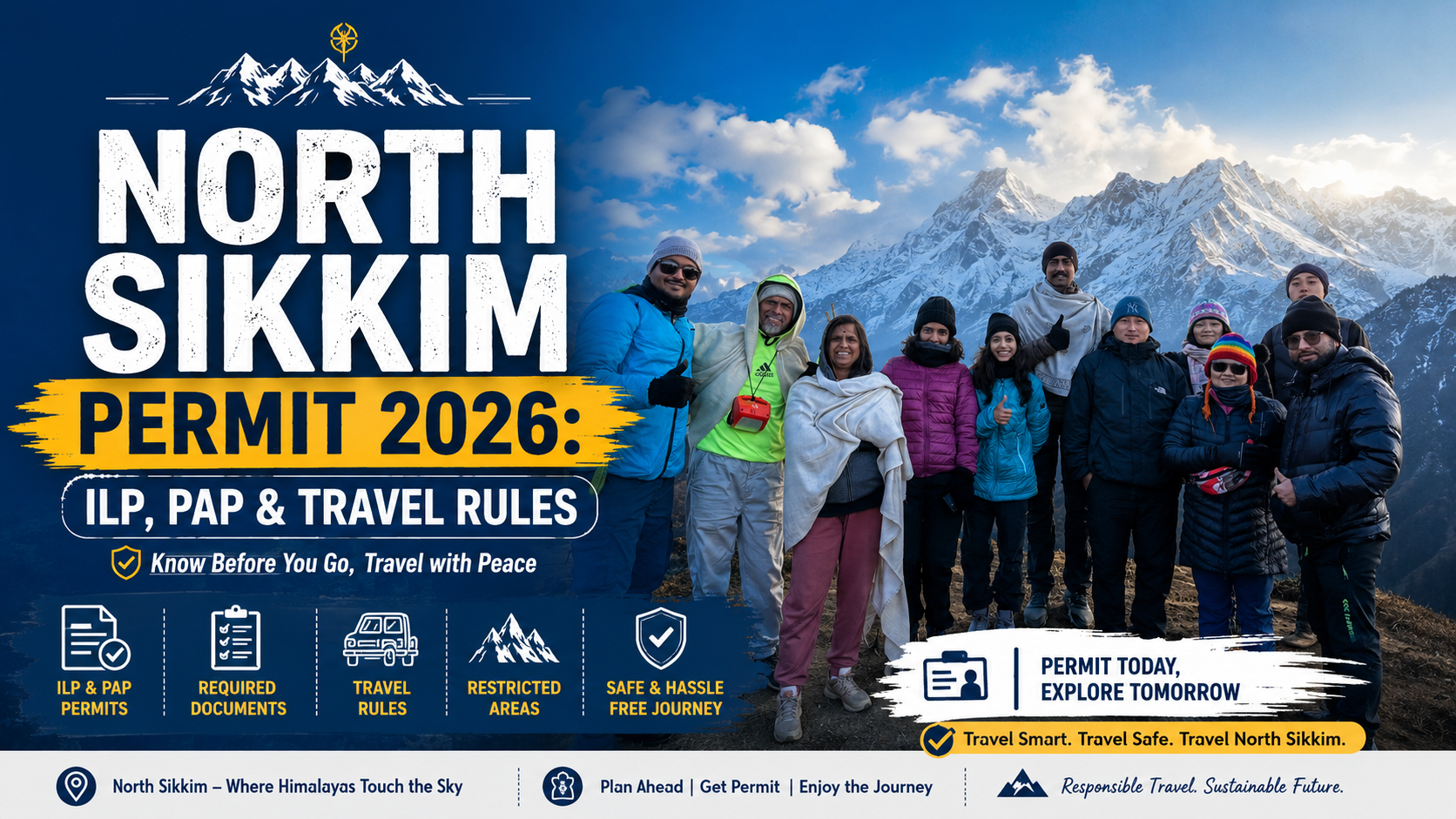
6. Permits for North Sikkim (and the Rules for Foreigners)
Everything north of Chungthang is restricted territory, and the permit system is absolute — there is no self-drive option, no permit-free route, and no talking your way through an army checkpoint. Here is how it works in practice:
For Indian travellers
- Inner Line Permit (ILP), issued by the Sikkim administration and applied for only through a registered tour operator — you cannot apply as an individual. We handle it as part of every package.
- Documents: original photo ID (Aadhaar, passport, voter ID or driving licence) plus 4 photocopies, and 4 passport-size photographs per traveller. Children need ID too — a school ID or birth certificate works.
- Timing: we need your documents at least 2 days before the Lachen departure. Same-day permits are not a thing in North Sikkim, whatever anyone on the phone promises.
For foreign travellers — read this before booking
- Protected Area Permit (PAP) required, applied through a registered operator, with a minimum group size of two foreign nationals.
- Gurudongmar Lake is generally NOT open to foreign nationals. Foreigners are typically permitted up to Thangu (3,960m); the final stretch to the lake is restricted to Indian citizens under current rules. Yumthang and Zero Point are open to PAP holders. These rules shift with the security situation, so we confirm the current position at the time of booking — but plan your expectations around Yumthang, not Gurudongmar.
- Documents: passport with valid Indian visa, 6 photocopies of the photo and visa pages, and 6 passport-size photographs.
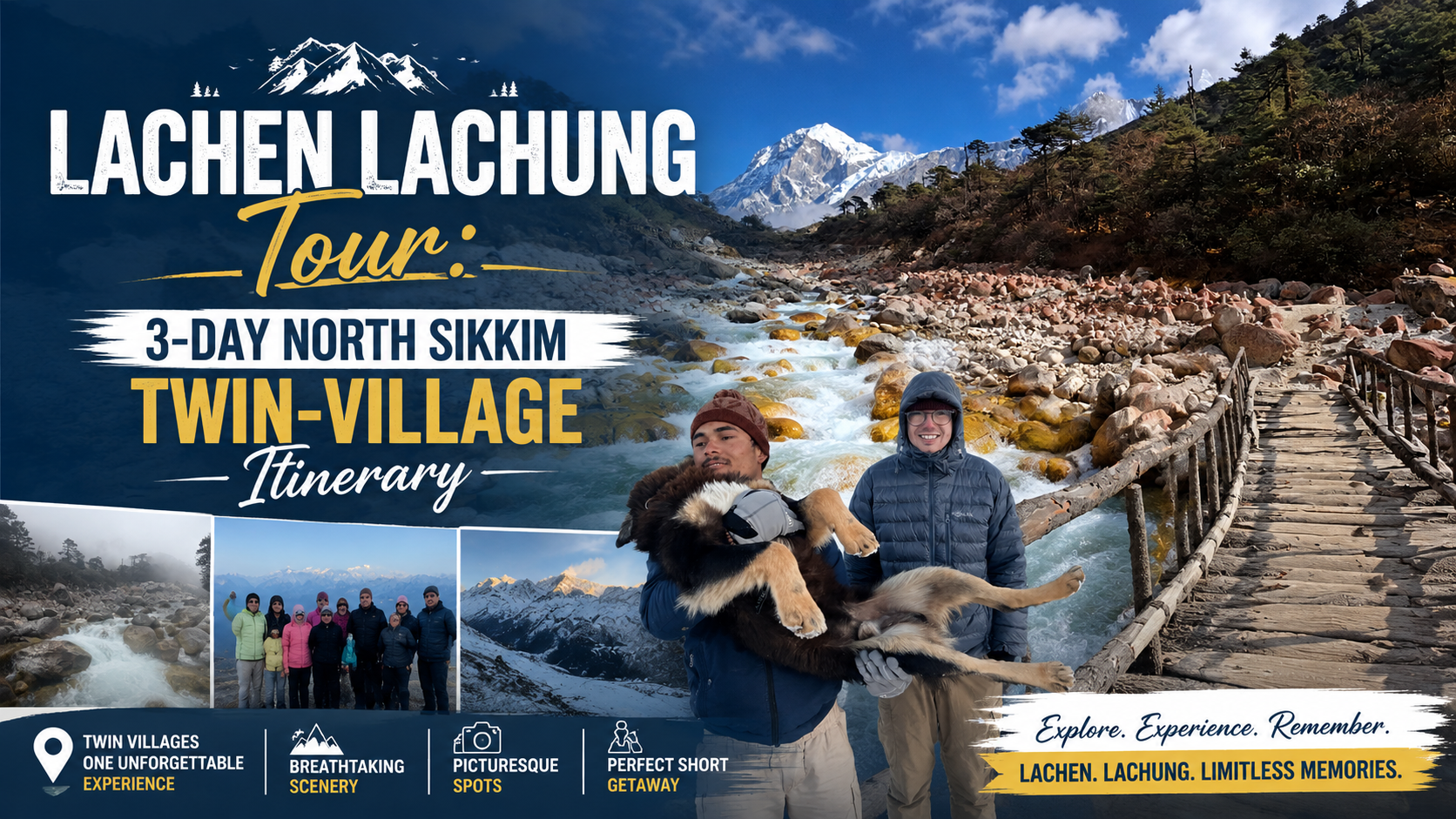
Read more: Compare the Lachen–Lachung 3-Day Itinerary and choose the best route for your journey.
7. North Sikkim Tour Cost in 2026
Our 2026 North Sikkim package is ₹15,000 per person for Indian travellers (twin-sharing, all permits, transport and MAP meals in the valleys) and $350 for foreign travellers on the Yumthang-focused variant. Here is where the money actually goes, and what a realistic all-in budget looks like:
| Cost head | Indian travellers (INR) | Foreign travellers (USD) |
|---|---|---|
| Standard package (Gangtok to Gangtok arrangements, 4N/5D) | ₹15,000 | $350 |
| Inner Line Permit / PAP + all checkpoint fees | Included | Included |
| Gangtok hotel (Days 1 & 4, twin-share 3-star) | Included | Included |
| Lachen + Lachung lodges (Days 2 & 3, twin-share) | Included | Included |
| All transport in registered North Sikkim SUV | Included | Included |
| Meals: breakfast + dinner (MAP) | Included | Included |
| Zero Point extension | Included when road open | Included when road open |
| Lunches and personal expenses | Not included (~₹1,500) | Not included |
| Flights / trains to Bagdogra or NJP | Not included | Not included |
| GST 5% | Not included | Not included |
| Tips for driver (suggested) | ₹500–800 | $10–15 |
A realistic all-in budget for an Indian traveller, including GST, lunches and tips (but not flights), is ₹17,500–19,000 per person. Beware of ₹8,000–10,000 ‘North Sikkim packages‘ advertised online — at that price something is missing: usually the Gangtok hotel nights, sometimes the permits, occasionally the vehicle itself beyond Chungthang. Ask any operator for a line-item quote and compare like with like.
Read more: Learn about North Sikkim Permit, ILP & PAP Rules before booking your trip.
8. Where You Actually Stay — The Honest Lachen and Lachung Picture
Gangtok has proper hotels in every category, and your Day 1 and Day 4 nights there are conventional hotel stays. Lachen and Lachung are a different proposition, and I would rather set expectations here than have you discover them at 8 PM in the mountains: these are remote villages at 2,700 metres, supplied by one mountain road, with electricity that flickers and water heated by geyser or bucket. The lodges are clean and the blankets are heavy, but there are no 4-star properties in either valley regardless of what a booking site badge claims.
- Rooms: simple twin rooms with attached bathrooms; hot water usually by geyser in the evening hours, sometimes by bucket in the mornings.
- Heating: no central heating anywhere in either valley. Extra blankets are always available; nights drop below freezing from November to March, so pack thermals for sleeping.
- Food: lodge kitchens serve simple, hot, fresh meals — rice, dal, vegetables, eggs, noodles, momos. Menus are short because everything is trucked in. It is honest mountain food and it is the right thing to eat before a 4 AM Gurudongmar start.
- Electricity and charging: power cuts are routine. Charge everything in Gangtok and carry a power bank for the valley nights.
9. Best Time for the North Sikkim Tour
| Season | What you get | Watch out for | Verdict |
|---|---|---|---|
| Mar–May (spring) | Rhododendron bloom at Yumthang; mild days | Pre-monsoon cloud can hide peaks by noon | Best for flowers |
| Jun–Sep (monsoon) | Green valleys | Landslides close the North Sikkim road frequently; trips get cancelled mid-way | Avoid |
| Oct–Dec (autumn/early winter) | Sharpest mountain views of the year; snow at Zero Point; stable road | Cold nights in the valleys (pack properly) | Best overall |
| Jan–Feb (deep winter) | Deep snow scenery | Road to Gurudongmar and Zero Point closes intermittently; itinerary becomes weather-dependent | Only for flexible travellers |
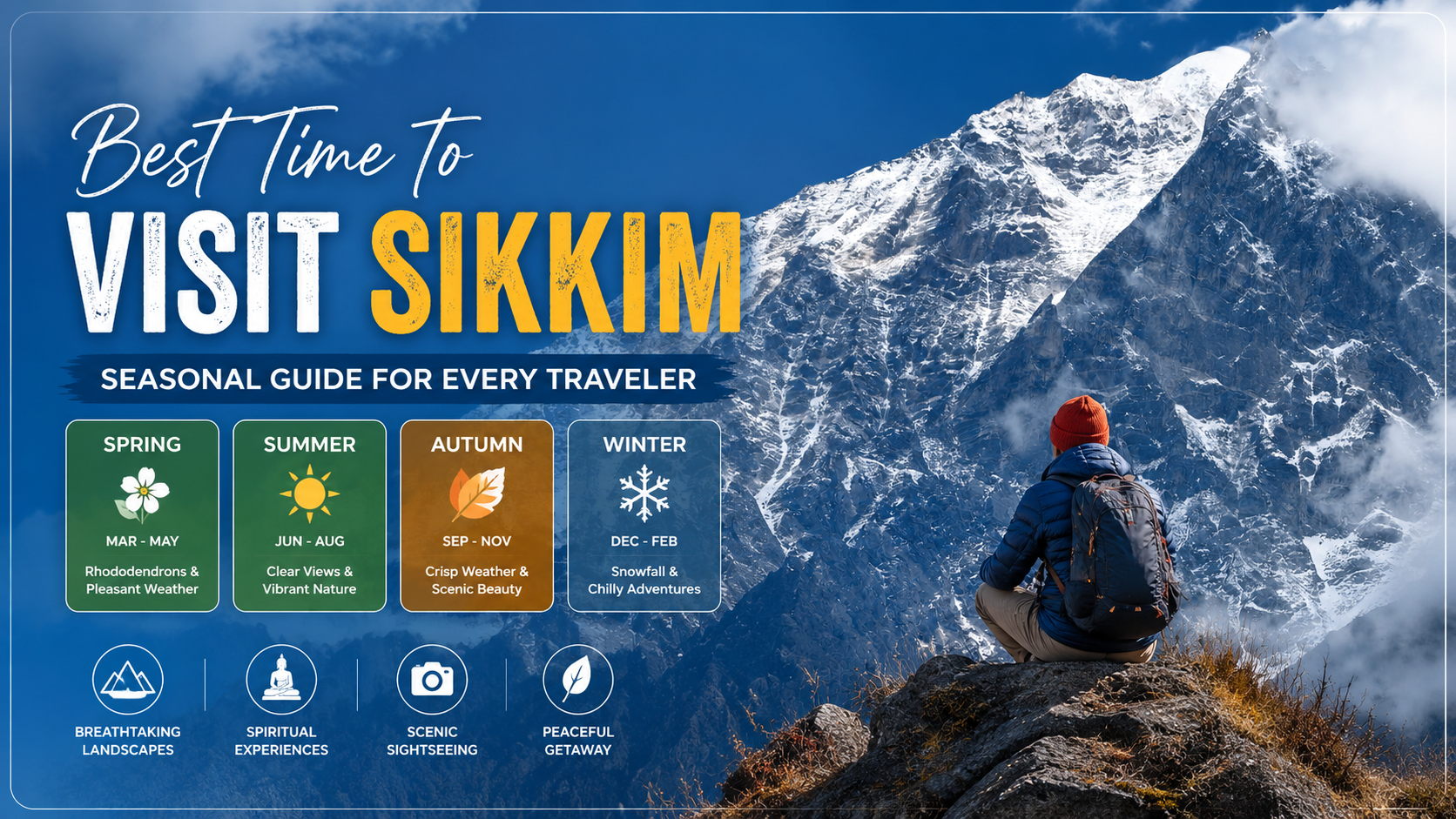
If I had to pick one window: mid-October to mid-December. The post-monsoon air gives you the Kanchenjunga views from Singhik, the plateau light at Gurudongmar is at its cleanest, and the road is at its most reliable. Spring is the right answer only if the Yumthang bloom is specifically what you are coming for.
10. Who Should (and Should Not) Take This Tour
North Sikkim is right for you if
- You want the most dramatic Himalayan scenery available in India without trekking
- You are reasonably healthy and can follow the altitude rules in Section 4
- You are comfortable with two nights of basic (clean, warm, simple) village lodges
- You have at least 5 full days — squeezing this route into 3–4 days means either skipping Gurudongmar or gambling with altitude safety
Think twice, or take the Yumthang-only variant, if
- You are travelling with children under 5 or family members over 70 with health conditions
- Anyone in the group has cardiac, blood-pressure or respiratory conditions
- You need hotel comforts every night of a trip
- Your schedule cannot absorb a weather delay — the North Sikkim road answers to the mountain, not to your return flight
11. Why Book North Sikkim with Glacier Treks & Adventure
Most
sold online are aggregator listings passed to whichever Gangtok vehicle operator has a free SUV that week. We run the route as mountain operators, not resellers — the same safety culture that runs our Goechala and expedition batches runs our North Sikkim departures. Concretely:
- An altitude briefing before Day 3, every departure, every time — plus a driver instructed to descend first and apologise later if anyone shows AMS symptoms
- Registered North Sikkim vehicles and drivers who have run the Gurudongmar road across seasons, not hires-of-the-week
- Permits handled in-house, with document checks before you travel rather than surprises at Chungthang
- Honest itinerary variants for families with small children or elderly travellers (Yumthang-focused, Gurudongmar-free)
- Fifteen years of Sikkim operations, IMF-certified leadership, and affiliation with Sikkim Tourism, TAAS, YTDC and SAMA
- Transparent line-item quotes — the ₹15,000 price includes what this page says it includes
12. Frequently Asked Questions
What is the altitude of Gurudongmar Lake?
Gurudongmar Lake sits at approximately 5,430 metres (17,800 feet), making it one of the highest motorable lakes in the world — higher than Everest Base Camp in Nepal. Visitors reach it by vehicle from Lachen in a pre-dawn drive and spend 20–30 minutes at the lake before descending, which is the safe-exposure protocol for unacclimatized travellers.
Is the North Sikkim tour safe for children and elderly travellers?
The Lachung–Yumthang side is suitable for most ages. Gurudongmar, at 5,430m, is not recommended for children under 5, travellers over 70 with health conditions, or anyone with cardiac, blood-pressure or respiratory problems — army checkpoints may also turn back very young children. We run a Yumthang-focused variant of the tour for exactly these groups; tell us your group composition at booking.
Can foreigners visit Gurudongmar Lake?
Under current rules, generally no. Foreign nationals need a Protected Area Permit for North Sikkim (minimum group of two, operator-arranged) and are typically permitted up to Thangu, while the final stretch to Gurudongmar is restricted to Indian citizens. Yumthang Valley and Zero Point are open to PAP holders. Rules change with the security situation, so we confirm the current position for every international booking.
How many days do I need for North Sikkim?
Five days from Bagdogra/NJP back to Bagdogra/NJP is the standard, safe format: two travel days, one Lachen–Gurudongmar day, one Lachung–Yumthang day. Compressed 3-day versions exist in the market, but they either drop Gurudongmar or reach it with even less altitude preparation — we do not recommend them.
What is the cost of the North Sikkim tour package?
Our 2026 package is ₹15,000 per person for Indian travellers on twin-sharing, including all permits, registered vehicle transport, Gangtok hotel and valley lodge nights, and breakfast plus dinner throughout. Foreign travellers pay $350 on the Yumthang-focused variant. A realistic all-in budget including GST, lunches and tips is ₹17,500–19,000, excluding flights.
Can I do North Sikkim on my own, without a package?
No. Everything north of Chungthang is restricted territory: permits are issued only through registered operators, vehicles must be registered North Sikkim tourist vehicles with local drivers, and self-drive is not permitted. This is one region of India where the package is not a convenience — it is the only legal way in.
Will I get mobile network in North Sikkim?
Expect to be offline for most of Days 2–4. Jio and Airtel work in Gangtok; in Lachen and Lachung only BSNL has intermittent coverage; at Gurudongmar, Yumthang and Zero Point there is no network of any kind. Tell family before you leave Gangtok that you will be intermittently unreachable for two days.
What should I pack for the North Sikkim tour?
Layered warm clothing year-round: thermal base layer, fleece, and a proper insulated jacket (nights in the valleys drop below freezing from November to March, and the Gurudongmar morning is brutally cold even in May). Add sunglasses with strong UV protection (plateau glare is intense), SPF 50+ sunscreen, lip balm, a power bank, personal medicines, and your original photo ID with photocopies and passport photos for the permits.
Is the Zero Point visit included in the package?
In our package, yes — when the road is open, which it is for most of the season outside deep winter. In many market packages, Zero Point is a locally-payable vehicle surcharge of ₹3,000–4,000 per vehicle; check the line items on any quote you compare against ours.
What happens if the road closes due to weather or landslides?
The North Sikkim road answers to the mountain. If a closure blocks the Lachen or Lachung leg, we re-sequence the itinerary where possible, substitute the accessible valley, or — if the whole district closes — pivot the days to East Sikkim (Tsomgo Lake side) and adjust costs transparently. What we do not do is promise the road will always be open; no honest operator can.
Ready to Book Your North Sikkim Tour?
North Sikkim compresses the most dramatic landscape transition in the Indian Himalaya into five road days — subtropical ridge to Tibetan plateau and back. Done with proper altitude discipline and honest logistics, it is the trip people talk about for years. Our 2026 departures run October through May, with the monsoon months deliberately left off the calendar.
Book the North Sikkim tour now: Call/WhatsApp +91 7407248200 · Email contact@trekinsikkim.in
Read more: View the North Sikkim tour product page and book online
Read more: Compare all 10 Sikkim tour packages before deciding
Read more: Prefer off-beat East Sikkim? Read the Zuluk Silk Route guide
Read more: Browse all our Sikkim treks.
About the author
Kiran Gurung is the founder of Glacier Treks & Adventure, an IMF-certified mountaineer, and a long-time Sikkim resident based in Yuksom, West Sikkim. Alongside the company’s trekking and expedition portfolio, he has operated North Sikkim tours for fifteen years with a safety culture drawn from high-altitude expedition leadership — including the altitude protocols that govern every Gurudongmar departure. Glacier Treks & Adventure is affiliated with the Sikkim Department of Tourism, the IMF, TAAS, YTDC and SAMA.