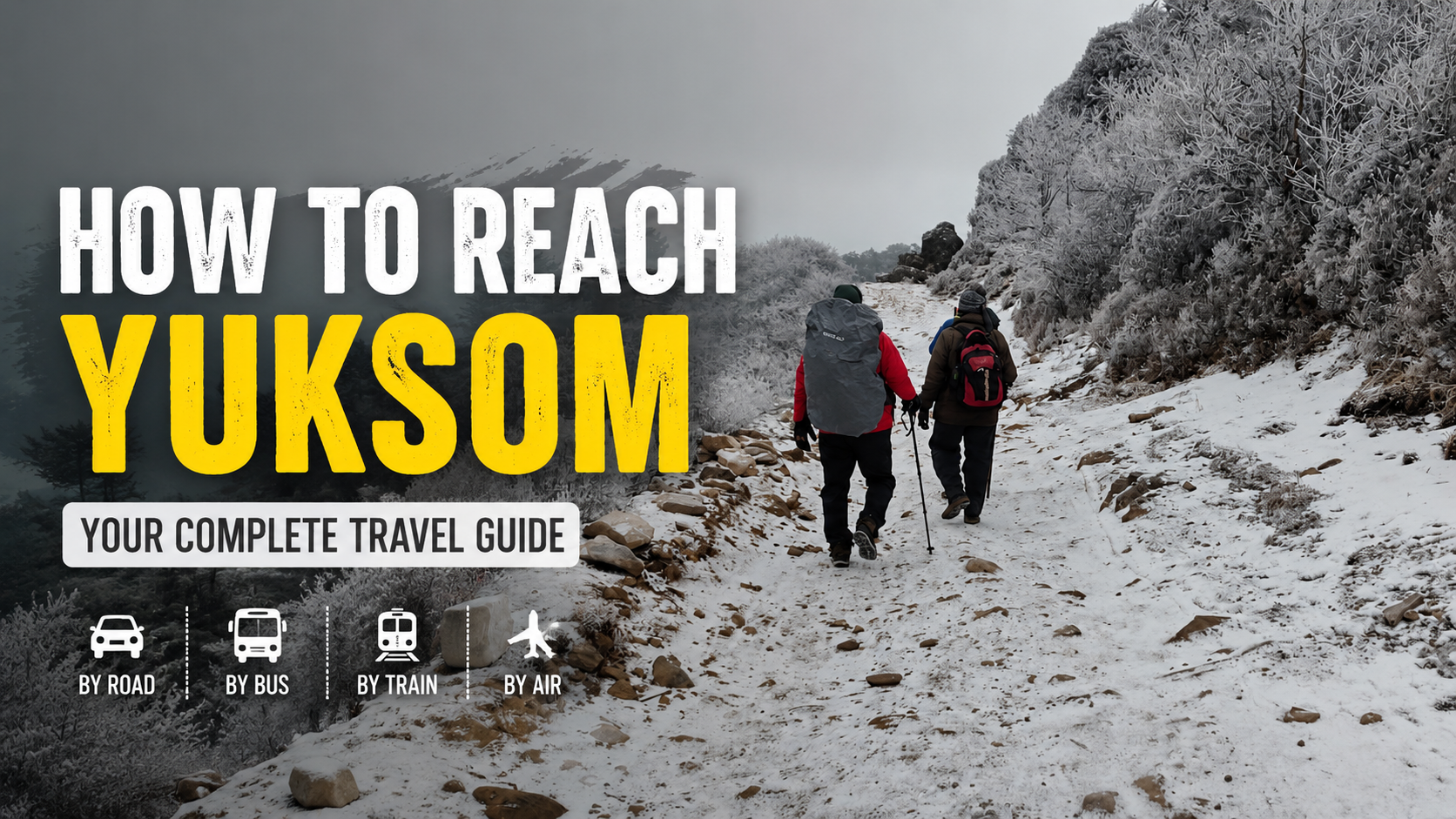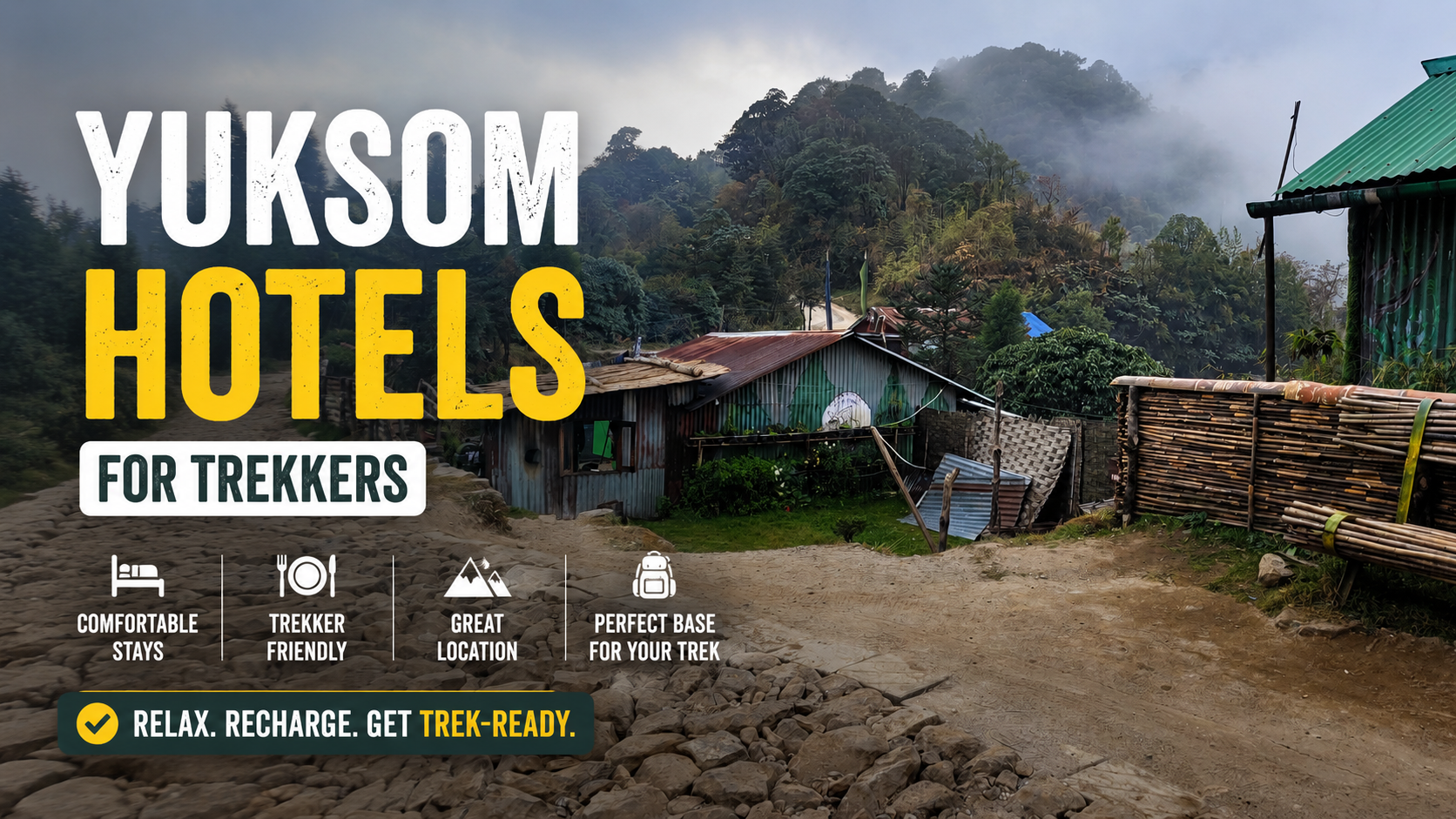
Setting out on a high-altitude Himalayan journey requires precise planning. Especially when it comes to your final night off the grid, it needs a proper blueprint. The Goechala Trek and the Dzongri trail are the historical first capital of Sikkim. The small town of Yuksom welcomes thousands of mountaineers every season. Securing the right Yuksom hotels for trekkers can define how well-rested, packed, and acclimatized you are before hitting the trail.
This trail is different from the mainstream tourist destinations. A base camp settlement operates on its own terms. Trekkers need more than just a bed; they require reliable hot water, high-calorie meals, stable cellular networks to send final updates to family, and secure storage to stash travel luggage for over a week. This guide outlines the best available options to lock in your perfect Yuksom base camp accommodation.
Navigating the Tiers of Yuksom Accommodations
The lodging landscape along Yuksom Bazar Main Road and the quiet paths extending up toward Dubdi Monastery falls into three distinct categories. Depending on your team size, budget boundaries, and comfort preferences, you can easily find properties built to support outdoor expeditions.
1. Standard Mid-Range Hotels (₹1,800 – ₹3,500 per night)
If you are booking a fully guided package or traveling in a group, mid-range hotels offer the most seamless logistical experience. Renowned local properties like Hotel Yangri Gang, Hotel Tashi Gang, Hotel Pemathang, and Hotel Demazong are the longest-running establishments catering specifically to trekking teams.
These properties feature comfortable twin-sharing rooms, attached bathrooms with functional geysers, dependable lobby Wi-Fi, and on-site restaurants that serve hearty meals starting early in the morning to match strict trail departure schedules.
2. Authentic Sikkimese Homestays (₹1,200 – ₹2,200 per night)
For travelers searching for deep cultural immersion and local insight, choosing the best homestay in Yuksom is an unmatched option. These traditional, wood-accented Sikkimese family homes host travelers with remarkable hospitality.
While the setups are occasionally simpler—sometimes utilizing clean, shared family bathrooms—the value lies in the home-cooked meals (featuring local organic vegetables, Thukpa, and traditional hospitality) and direct access to hosts who have spent decades navigating the surrounding valleys.
3. Budget Guesthouses & Trekkers’ Lodges (₹700 – ₹1,200 per night)
Solo backpackers, independent alpine climbers, and student groups looking for basic, no-frills budget hotels in Yuksom will find practical dormitories and basic private rooms clustered near the main bazaar.
Properties like Hotel Dragon fall squarely into this bracket. While continuous running hot water is not universally guaranteed here, they provide clean, heavy blankets, basic toilet facilities, and a secure spot to sleep.
Read more: Learn everything about visiting Yuksom before your trek begins
The 2026 Yuksom Hotels Price List
To help you budget your expedition effectively, here is a breakdown of what to expect from a typical Yuksom hotel’s price list during peak climbing seasons:
| Accommodation Tier | Featured Properties | Average Nightly Tariff | Key Trekker Amenities |
| Budget Lodges | Hotel Dragon & Local Guesthouses | ₹700 – ₹1,200 | Central bazaar access, basic bedding, ultra-low cost. |
| Sikkimese Homestays | Local Family-Run Homes | ₹1,200 – ₹2,200 | All meals included, home-cooked local diet, cultural trail tips. |
| Mid-Range Hotels | Hotel Yangri Gang, Hotel Tashi Gang, Hotel Pemathang, Hotel Demazong | ₹1,800 – ₹3,500 | Geyser hot water, dedicated luggage storage, lobby Wi-Fi, and early breakfast. |
Location Strategy: Why Proximity to Administrative Hubs Matters
When choosing your stay, the geographic location within the town is vital. Day 1 of your trek involves a strict timeline of administrative checks before you can step onto the mountain trail. Choosing hotels in Yuksom near Ddzongri trek corridors or close to the main administrative hub saves immense time on your departure morning.
A typical Day-1 departure morning follows this strict logistical timeline:
- 07:00 AM: Heavy breakfast at your hotel restaurant.
- 07:45 AM: Mandatory walk-in registration and document verification at the Yuksom Police Station.
- 08:15 AM: Processing entry permits and clearing conservation fees at the Khangchendzonga National Park (KNP) forest checkpost.
- 08:45 AM: Final gear check and handoff of heavy duffels to the local mule and porter teams.
- 09:00 AM: Setting out past the western farmlands to enter the trail.
Staying at well-positioned hotels in Yuksom near Dzongri trek start lines ensures your group can easily walk to the police station and forest gate without adding extra transport delays to your morning schedule. Additionally, reputable Yuksom hotels for trekkers feature dedicated cloakrooms. There, you can safely store your clean travel clothing and extra suitcases for the entire duration of your trek, free of cost.
Read more: Explore the historic monasteries and sacred sites that make Yuksom culturally unique
Read more: Prepare for the Goechala Trek with our dedicated Yuksom travel guide
Frequently Asked Questions (FAQ)
Q1: What amenities should I prioritize when looking for Yuksom hotels for trekkers?
You should look for properties that guarantee dedicated, secure luggage storage while you are away on the trail, functioning water heaters (geysers) for a final hot shower, and a kitchen willing to prepare early breakfasts by 6:30 AM. Stable Wi-Fi or mobile network connectivity in the lobby is also highly valuable for downloading offline maps and sending final messages before going off-grid.
Q2: How do I book the best homestay in Yuksom?
While a few options are slowly appearing on digital booking sites, the most authentic, family-run homestays are best booked directly through local operators or via personal phone connections upon reaching West Sikkim. Because space is limited to a few rooms per family, making early arrangements before arriving at your Yuksom base camp accommodation is highly recommended during the peak trekking months of autumn and spring.
Q3: Do budget hotels in Yuksom provide reliable hot water?
In the lowest price tier (₹700 to ₹1,200 per night), continuous running hot water from an attached bathroom geyser is rarely guaranteed. Most budget lodges will provide hot water manually in buckets upon request, or offer shared bathroom water heaters. If an attached geyser is an absolute necessity for you, look into mid-range properties on the Yuksom hotels price list.
Q4: Can I rent missing trekking gear directly from my hotel?
While some hotels maintain small gear lockers for emergencies, the majority of specialized high-altitude rentals (such as down jackets, sub-zero sleeping bags, and adjustable trekking poles) are handled through local trek operators located right on the Yuksom Bazar Main Road.
Lock In Your Base Camp Arrangements
Choosing the perfect base camp lodging is the final detail that sets up your entire expedition for success. Whether you prefer the community feel of a local homestay or the structured convenience of a mid-range hotel, getting a peaceful night’s rest ensures you’re ready to tackle the steep mountain passes ahead.
Ready to Start Your Goechala Trek from Yuksom?
Yuksom is more than the starting point on a map. It is a 17th-century Buddhist capital, the home village of the team that will guide your trek, and a place worth spending more time in than most trekkers do. If you are planning your 2026 Goechala Trek, build in an extra Yuksom day if you can — and reach out to us for any local questions that this guide has not answered. The office is open six days a week, and walk-ins are welcome.
Visit or book: Yuksom Bazar Main Road, near Hotel Yangri Gang · Call/WhatsApp +91 7407248200 · Email contact@trekinsikkim.in
Read more: Read the complete Goechala Trek guide (itinerary, cost, difficulty, packing)
Read more: Find the fastest and most convenient ways to reach Yuksom from Siliguri, NJP, and Bagdogra
Read more: Browse all our treks and tours from Yuksom
Read more: Book the Goechala Trek online
About the author
Kiran Gurung is the founder of Glacier Treks & Adventure and a long-time resident of Yuksom, West Sikkim. Born in a remote Sikkimese village, he has spent his entire adult life operating treks and expeditions from the Yuksom trailhead. An IMF-certified mountaineer, he has personally led more than 200 Goechala expeditions and is a founding member of the Yuksom Tourism Development Committee (YTDC). His office on Yuksom Bazar Main Road has been the starting point for over 12,000 trekkers across fifteen seasons.