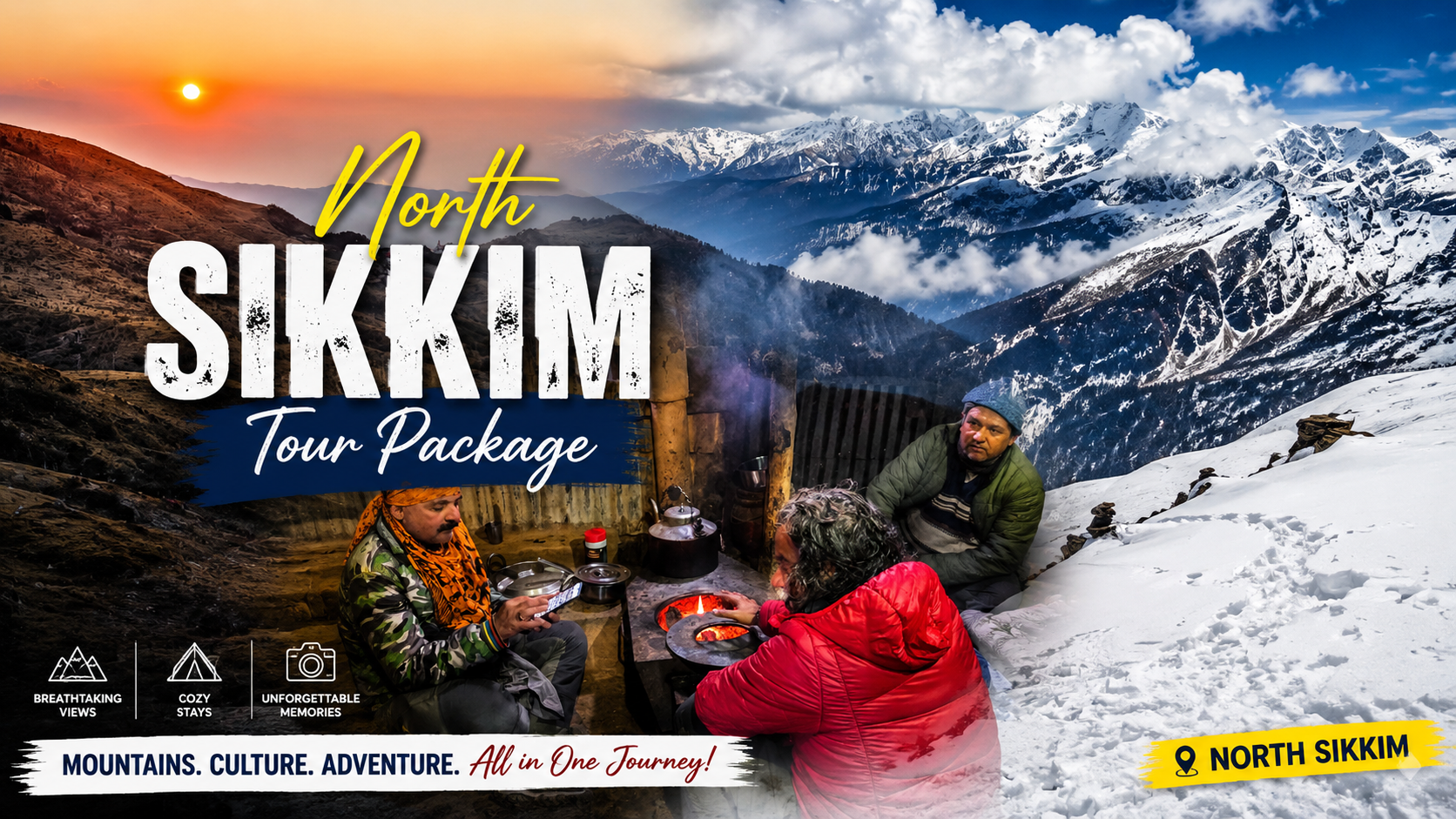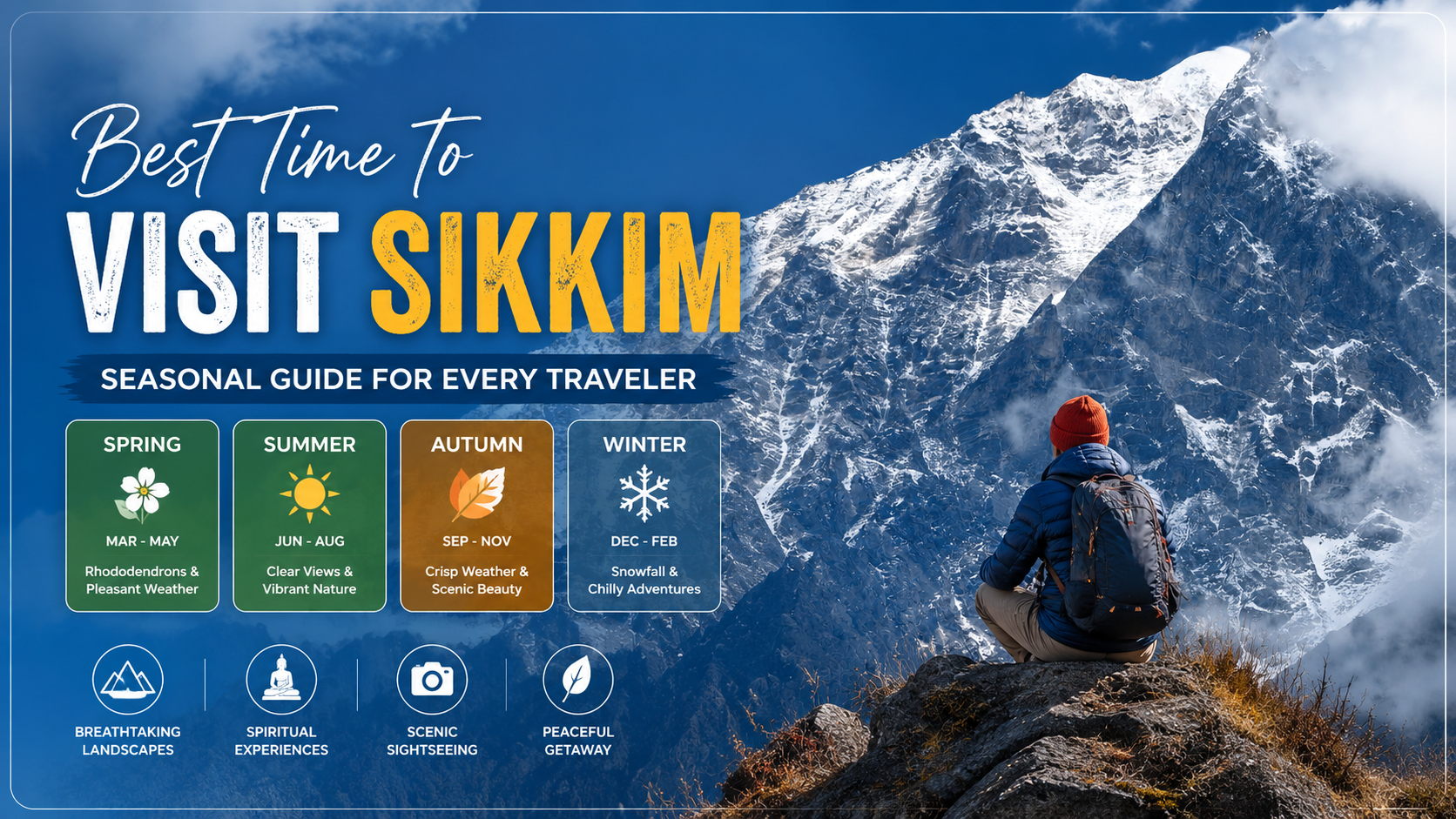
Picture this: you’re standing at the edge of the Zemu Glacier, the crisp Himalayan air filling your lungs, and the mighty Kanchenjunga glowing in the morning sun. But here’s the truth I tell every adventurer who calls me—getting this view depends entirely on choosing the best time to visit Sikkim. If you push me for my honest, local verdict? October wins, hands down. It’s the safest, prettiest, and most reliable month—the one I personally book for my own family.
My second pick is mid-March to mid-April, when the valleys explode in a riot of red and pink rhododendrons and the high mountain passes shake off their winter slumber. And if you’re looking for a budget-friendly secret, November is the quieter, cheaper cousin of October—colder nights, thinner crowds, but the same jaw-dropping peaks.
Now, looking at the numbers for the Sikkim travel season 2025, December actually recorded the highest monthly tourist footfall, with the traditional peak windows of April–May and October–December drawing the heaviest crowds. So, whether you’re chasing snow or sunshine, let me guide you through every month so you know exactly when to pack your bags.
Sikkim’s Four Seasons at a Glance
| Season | Months | Weather Feel | Crowd | Best For |
| Spring | March – May | Mild, clear, colourful | High | Sightseeing, trekking, rhododendrons |
| Monsoon | June – September | Rainy, misty, slow | Low | Quiet stays, lush greenery |
| Autumn | October – November | Cool, crisp, calm | Moderate | Clear mountain views, culture |
| Winter | December – February | Cold, snowy at altitude | Moderate | Snow experiences, winter festivals |
Month-by-Month Weather Breakdown
January — Deep Winter & Snow
The coldest month of the year. Gangtok hovers between 4°C and 10°C during the day, with nights dropping below zero. Nathang and Aritar get their deepest snow — sometimes a foot overnight. Tsomgo Lake freezes hard enough to walk on.
Best for: Snow-chasers heading to Nathang or Aritar, honeymooners wanting cold, clear air and empty hotels
Avoid if: This is your only Sikkim trip — too much is shut
February — Still Cold, Rhododendrons Begin
Still cold, but less snow than in January. The last two weeks have seen the first rhododendrons appear in the lower valleys around Pelling and Hilley. North Sikkim roads reopen around mid-February if the weather permits. February is the cheapest month for top-end hotels in Gangtok.
Festival alert: Bhumchu Festival at Tashiding Monastery (late February–early March) — the sacred water ceremony is one of Sikkim’s most spiritually significant events. Losar (Tibetan New Year) is also celebrated in February.
March — The Season Changes
By the second week of March, almost everything opens. Rhododendrons start blooming at Barsey Sanctuary, Hilley, and Versey. Days warm to 18–22°C in Gangtok. This is the single best month, in my experience, for a first-time mixed Sikkim-Darjeeling trip.
Best for: First-time visitors, mixed itineraries, rhododendron lovers
My tip: Crowds are still small in early March. Book with us at Glacier Trek & Adventure for a guided experience!
April — Rhododendron Peak
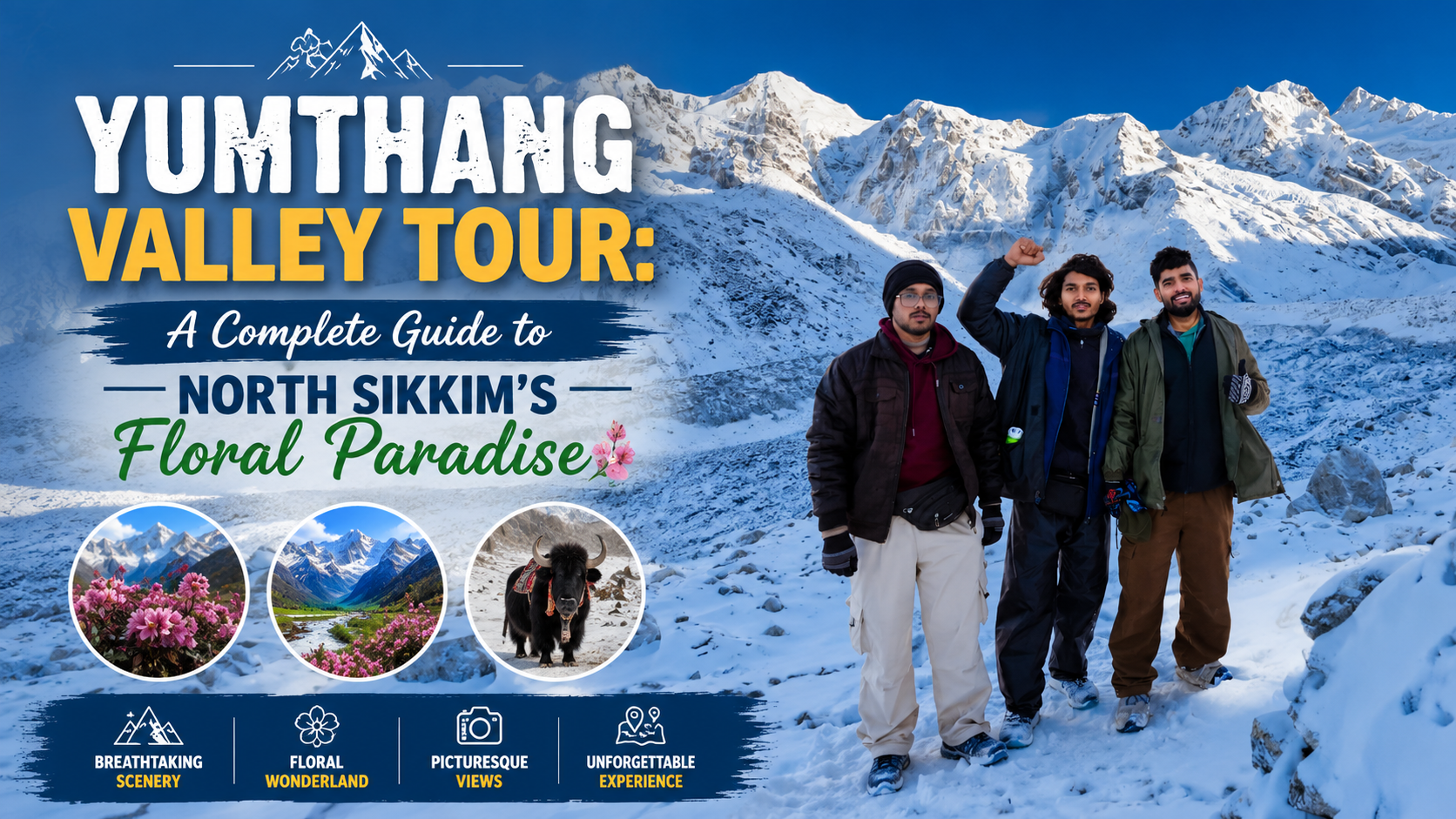
Rhododendron peak. Yumthang Valley of Flowers is a famous one — over 20 species of rhododendrons turn the landscape vibrant with shades of pink, red, purple, and white. But Hilley-Versey on the Singalila ridge has more species in fewer square kilometres.
This is one of the best months to visit Sikkim for snow at higher altitudes while enjoying pleasant weather in the valleys. Temperatures range from 5°C to 20°C.
Adventure alert: This is the best time for you if you are planning for the Goechala Trek and the Green Lake Trek — stable weather and spectacular views. April is also ideal for the Kanchenjunga Base Camp Trek.
May — Pre-Monsoon Greenery
The landscape turns lush and green when the monsoon approaches. Days are warm and sunny, and nights remain cool. This is the shoulder window between spring and monsoon — smart travellers book this quietly.
Festival alert: Saga Dawa (May–June) — commemorates Buddha’s birth, enlightenment, and Mahaparinirvana. Rumtek Monastery is the focal point.
June — Monsoon Arrives
June marks the arrival of the monsoon. Gangtok temperatures stay between 15°C and 21°C — pleasant enough — but rainfall becomes frequent and intense. The landscape turns an extraordinary shade of green, and waterfalls appear on every hillside.
Travel advisory: Heavy rainfall can cause landslides and road blockages. Trekking routes become muddy and visibility drops. North Sikkim roads become risky.
Pro tip: If you must travel in June, stick to the first half of the month.
July–August — Peak Monsoon
Heavy rainfall continues. The state receives significant downpours. This is the off-season in Sikkim — consistent heavy rains make travel harder, and landslides are common.
Silver lining: The landscape is breathtakingly green, waterfalls are at their most dramatic, and you’ll find the most affordable accommodation.
Festival alert: Pang Lhabsol (late August–early September) — Sikkim’s unique patron-deity festival celebrating Mount Khangchendzonga.
September — Monsoon Retreats
The rains begin to ease by mid-September. This is the golden window — mid-September through November brings the cleanest air of the year. Roads reopen, and the best season for Sikkim tour begins.
My tip: September is when we at Glacier Trek & Adventure start our high-altitude expeditions again. The Zemu Glacier and Green Lake treks become accessible.
October — The Absolute Peak
This is it. The best time to visit Sikkim.
Post-monsoon air is crystal clear, Kanchenjunga is visible most mornings, daytime temperatures in Gangtok range from 8–15°C, and every road is open. October is the Peak season in Sikkim for tourism within the autumn window.
Why October wins:
Clearest mountain views of the year
All trekking routes open and stable
Perfect temperatures for outdoor activities
Tihar/Diwali festivals (October–November) — the Nepali community’s festival of lights
Book early! Hotels fill up fast. Contact Kiran Gurung at Glacier Trek & Adventure for guaranteed availability.
November — Quiet Perfection
The quieter, cheaper version of October — colder nights, fewer people, same mountains. This is one of the best months to visit Sikkim for snow at higher elevations while enjoying clear skies.
Festival alert: Temi Tea Autumn Cherry Festival in Namchi — celebrates cherry blossoms and the region’s organic tea.
Trekking: Ideal for the Goecha La Trek and Kanchenjunga Base Camp — stable weather and excellent mountain visibility.
December — Winter Arrives
Cold but dry. Late December hosts Losoong/Namsoong — the Sikkimese harvest festival marking the Bhutia/Lepcha new year, with Cham dances at major monasteries. The Red Panda Winter Festival typically takes place in Gangtok.
December 2025 recorded the highest monthly tourist arrivals in Sikkim — nearly 2 lakh tourists.
Read More: Sikkim Tour Package for Couples — Handpicked itineraries for honeymooners and couples.
Quick Decision Guide
| What You Want | Best Time to Visit |
| Rhododendron blooms | Late March – April |
| Clear mountain views | October – November |
| Snow experience | December – February |
| Trekking & adventure | April – May, October – November |
| Budget travel | July – August (monsoon off-season) |
| Festivals | February (Losar/Bhumchu), August (Pang Lhabsol), December (Losoong) |
Essential 2026 Travel Update
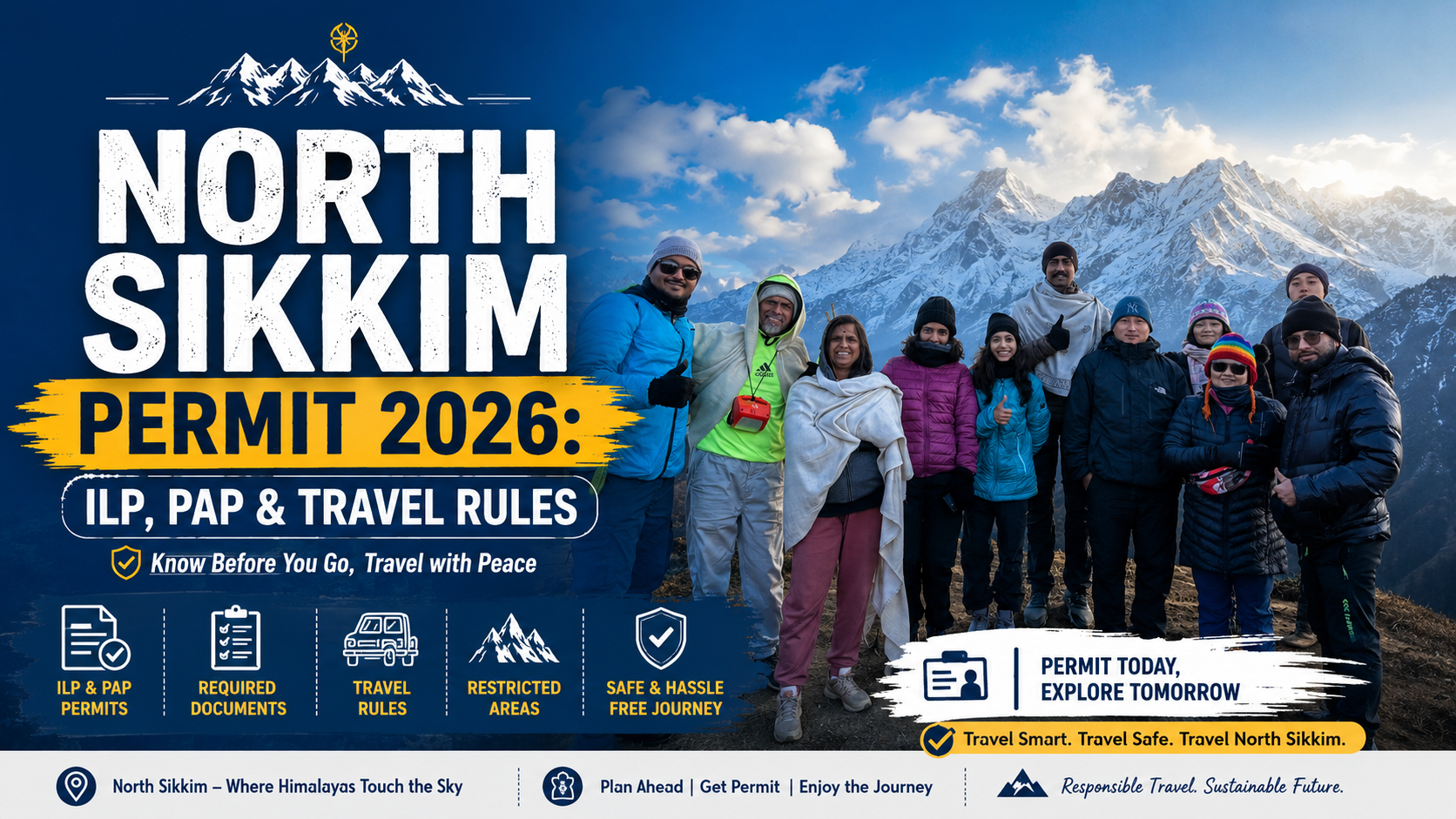
As of January 12, 2026, Sikkim has gone 100% digital for permits. Physical Protected Area Permits (PAP) and Restricted Area Permits (RAP) are no longer issued. All permits are now QR-coded approvals on your phone.
For Indian travellers: Permits for North Sikkim, Tsomgo Lake, Nathula, and Zero Point must be arranged through a registered tour operator, ideally 1–3 weeks before travel. Same-day permits are no longer available.
Why Trek with Glacier Trek & Adventure?
I’m Kiran Gurung — born and raised in these mountains. I know every trail, every weather pattern, and every local story that makes Sikkim special. When you trek with us:
- Local expertise — I’ve guided these routes for over a decade
- All-inclusive packages — permits, accommodation, meals, equipment
- Safety first — proper acclimatisation, experienced crew, emergency protocols
- Sustainable tourism — we respect the land and the communities
The best time to visit Sikkim for trekking is April–May and October–November. Book your slots early!
Final Word from a Local Guide
Sikkim is not just a destination — it’s an experience. The best season for Sikkim tour depends on what you seek. Spring brings colour, autumn brings clarity, winter brings snow, and monsoon brings solitude.
But if you ask me — as a guide who has walked these trails in every season — October is when Sikkim truly shines. The mountains open their arms, the skies are impossibly blue, and every breath feels like a blessing.
Plan wisely. Trek responsibly. And let me show you my home.
Best Time to Visit Sikkim: FAQs
1. What is the best time to visit Sikkim for a complete holiday experience?
The best time to visit Sikkim is from March to June and September to November. During these months, the weather is pleasant, the skies are clear, and most tourist attractions remain easily accessible.
2. Which is the best season for a Sikkim tour?
The Sikkim weather and best time to visit depends on your travel goals. Spring (March–May) is ideal for rhododendron blooms and sightseeing, while autumn (September–November) offers crystal-clear mountain views and comfortable temperatures.
3. How is the Sikkim weather and best time to visit different regions?
When considering Sikkim weather and best time to visit, note that Gangtok and Pelling can be visited year-round, while North Sikkim is best explored between April and June or October and November when roads are more reliable and weather conditions are favorable.
4. When is the peak season in Sikkim for tourism?
The peak season in Sikkim for tourism falls during April–June and October–December. These months attract the highest number of visitors due to pleasant weather, festive celebrations, and spectacular views of Kanchenjunga.
5. What are the best months to visit Sikkim for snow?
The Best season for Sikkim tour are December to February. Destinations such as Tsomgo Lake, Nathula Pass, Lachung, Yumthang Valley, and Zero Point often experience snowfall, creating a magical winter landscape for travelers.
Ready to Book Your Sikkim Tour Package?
Sikkim is best experienced when the logistics are handled and you can focus on the mountains, monasteries and momos. Our 2026 packages run year-round (avoiding the monsoon for North Sikkim routes), with peak availability in spring and autumn. Every package above is bookable today, and we can quote a custom itinerary if none of these ten fits your dates exactly.
Plan your Sikkim tour now: Call/WhatsApp +91 74072 48200 · Email contact@trekinsikkim.in
Need More Travel Ideas? Read More: Sikkim Tour Package — Browse our most popular itineraries across North, East, West, and South Sikkim.
Ultimate Planning Guide: Read More: Sikkim Tour Packages Guide — Costs, routes, seasons, and must-visit places in one comprehensive resource.
About the author
Kiran Gurung is the founder of Glacier Treks & Adventure, based in Yuksom, West Sikkim. An IMF-certified mountaineer, he has personally led more than 200 Goechala expeditions over fifteen years. Glacier Treks & Adventure is affiliated with the Department of Sikkim Tourism, the IMF, TAAS, YTDC and SAMA.