By Kiran Gurung · Founder, Glacier Treks & Adventure · Resident of Yuksom, West Sikkim
Published: 1 June 2026 · Last updated: 1 June 2026
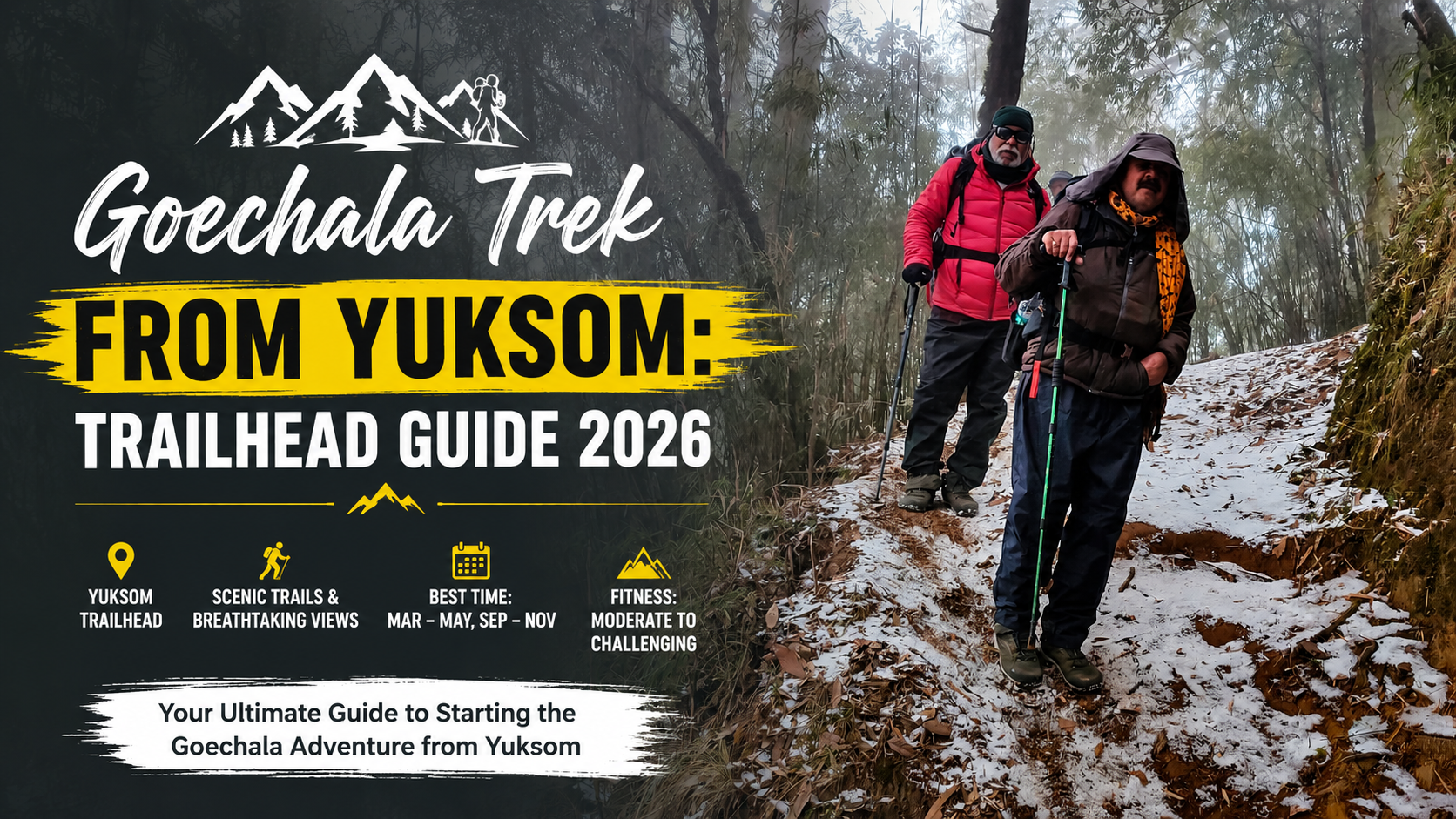
Yuksom (1,780m) is the trailhead for the Goechala Trek — it is the official starting and ending point of the route, located in West Sikkim approximately 150 kilometres from NJP railway station and Bagdogra airport. Yuksom was the first capital of the Buddhist kingdom of Sikkim from 1642 to 1670, and today it hosts the Khangchendzonga National Park forest check post, the Yuksom Police Station (for mandatory trekker registration), permit-issuing offices, and most local trek operators. Trekkers typically arrive in Yuksom on Day 0 by road from NJP or Bagdogra (6–7 hours), spend the evening on light acclimatization at heritage sites like Norbugang and Dubdi Monastery, complete permit formalities on the morning of Day 1, and begin walking by 9 AM.
I live in Yuksom. My office is on Yuksom Bazar Main Road, near Hotel Yangri Gang, and my home is fifteen minutes away on foot. I have watched fifteen years of Goechala trekkers arrive at this town, spend a night, and walk out of it at sunrise the next morning toward the Prek Chu valley. Most of them tell me afterwards that they wished they had known more about Yuksom itself before they came — that the town is not just a logistics waypoint, but a 17th-century Buddhist capital with monasteries, sacred lakes and heritage walks that are part of the Goechala trek Yuksom experience if you let them be.
This guide is the local view. It covers how to reach Yuksom (with the real costs and times, not the optimistic ones), where to stay and eat once you arrive, the Day-0 walks that genuinely help with acclimatization, the permit and police-registration logistics on Day 1, and the practical details — ATMs, mobile signal, gear rental, weather — that we wish more visiting trekkers knew. If you are starting your Goechala Trek from Yuksom in 2026, read this before you book your flight.
Read more: If you have not yet read the main Goechala Trek guide, start there
1. Why Yuksom Is Where Your Goechala Trek Begins
Yuksom — pronounced ‘yook-som’ and meaning ‘the meeting place of three lamas’ in Bhutia — was the first capital of the Buddhist kingdom of Sikkim from 1642 to 1670. The town was where Phuntsog Namgyal was crowned the first Chogyal (king) of Sikkim by three visiting lamas at the Norbugang Coronation Throne, which still stands at the edge of the village. This history is not background colour — it is why the Khangchendzonga National Park trekking routes start here. The Buddhist sites of Yuksom and the trail itself form a continuous cultural and pilgrimage corridor that has been walked, in some form, for nearly four hundred years. That’s why Goechala trek Yuksom beggines.
Operationally, Yuksom to Goechala is the trailhead because everything you need to start the trek is here in one small town:
- The Khangchendzonga National Park forest check post (Day 1 permit verification)
- Yuksom Police Station (mandatory trekker registration)
- All Goechala trek Yuksom operators, including ours, with offices on the main road
- A small but functional cluster of hotels, homestays and basic restaurants
- Gear rental availability through trek operators
- The heritage sites that double as Day-0 acclimatisation walks
Yuksom sits at 1,780 metres — high enough that an evening walk to Dubdi Monastery (2,100m) gives you a useful 320-metre altitude exposure before Day 2 begins. This is not accidental. The town’s geography is part of why Goechala has the safety record it does.
2. How to Reach Yuksom — NJP/Bagdogra to Yuksom Transfer Options
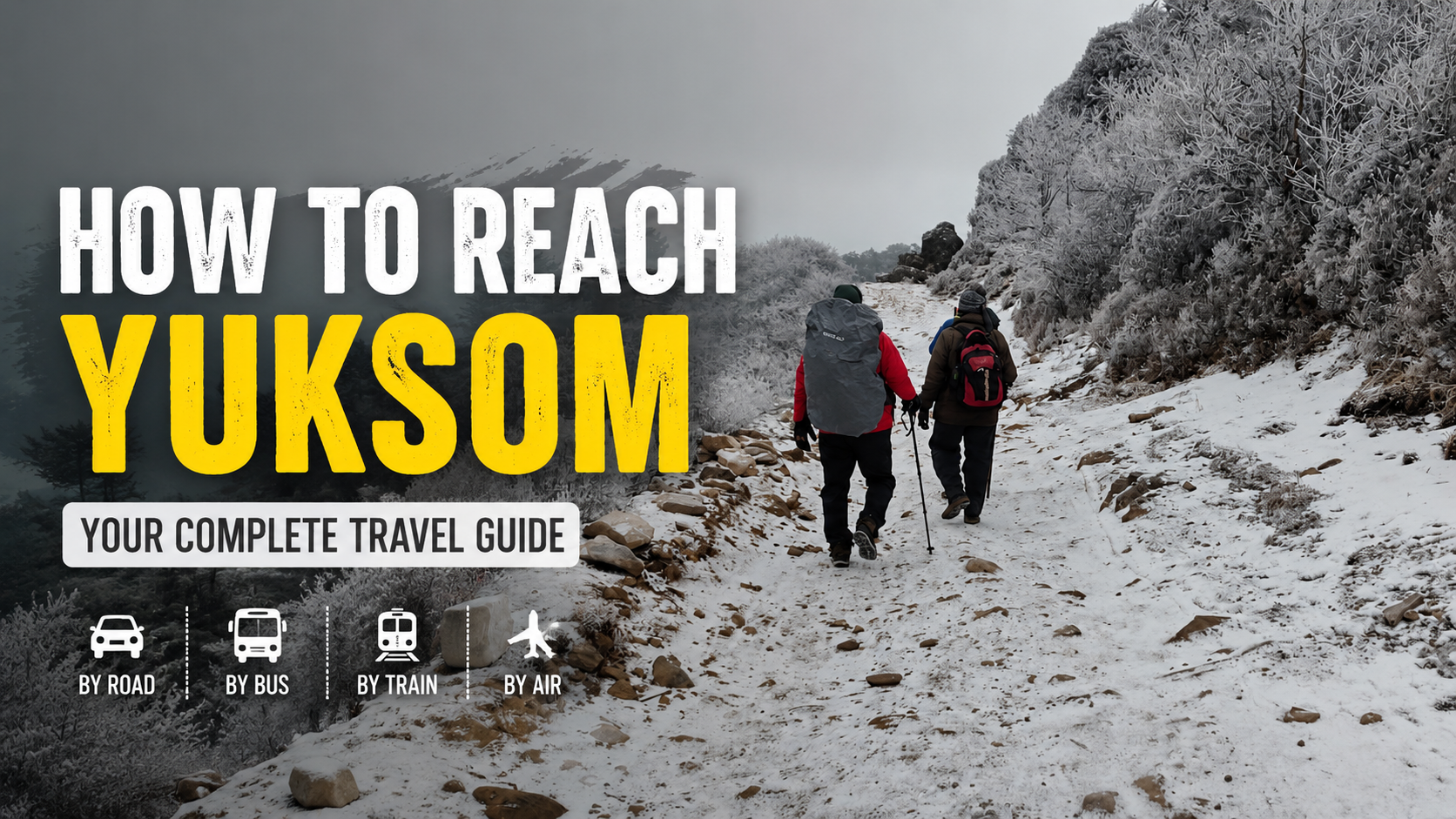
There is no airport, railway station or direct public transport to Yuksom. Every trekker arrives by road from one of two access points in West Bengal: New Jalpaiguri railway station (NJP) or Bagdogra airport (IXB). The road journey is the single most underestimated leg of a Goechala trip — it is longer, slower and more winding than most people expect.
| Route | Distance | Time | Cost (per head) |
|---|---|---|---|
| Bagdogra Airport (IXB) → Yuksom | 150 km | 6–7 hours | Shared ₹600–800 / Private ₹6,500–8,500 |
| NJP Railway Station → Yuksom | 150 km | 7–8 hours | Shared ₹600–800 / Private ₹6,500–8,500 |
| Glacier Treks shared transfer (NJP or Bagdogra) | 150 km | 6–7 hours | ₹3,200 per head |
| Bagdogra → Pelling → Yuksom | Via Pelling overnight | Split into 2 days | ₹4,000 per head |
The standard route — Bagdogra/NJP to Yuksom
The road climbs continuously after Jorethang, passes through Geyzing and Pelling, and finally drops into the Yuksom basin via a series of more than 200 hairpin bends after Pelling. We recommend motion-sickness tablets if you are even mildly prone — by the time most trekkers reach Yuksom, around 30% have felt nauseous somewhere on the road. Tea and bathroom stops happen roughly every two hours; the most reliable midway stop is Jorethang for lunch.
The slower, gentler option — break the journey at Pelling
Splitting the road journey into two days, with an overnight at Pelling, is a strategy I recommend for older trekkers and anyone susceptible to motion sickness. Pelling sits at 2,150 metres and has good hotels with Kanchenjunga-facing views (Hotel Sikkim Tourist Centre and Hotel Norbu Ghang are reliable choices). The second day’s drive from Pelling to Yuksom is only 2.5 hours — gentle, with a stop at Pemayangtse Monastery on the way.
Other access — Gangtok to Yuksom
Trekkers arriving from East Sikkim can reach Yuksom via Gangtok → Ravangla → Yuksom, taking approximately 6 hours. This route is useful if you are combining the Goechala trek starting point with a Gangtok or North Sikkim tour. Shared jeeps run from Gangtok M.G. Marg taxi stand every morning.
Read more: Detailed NJP / Bagdogra to Yuksom transfer guide
3. What to Do in Goechala trek yuksom — Day-0 Acclimatisation Walks
Most trekkers arrive in Yuksom by late afternoon on Day 0 (the day before the trek formally begins) and have a half-day before dinner. This Yuksom day 1 acclimatization matters. A gentle 200–300 metre altitude exposure walk does meaningful work for your acclimatisation — it lets your body register the elevation gain before Day 2’s harder climb begins. It also means you get to see the heritage of the place you are walking into.
Here are the four walks I recommend in order of how strongly I would suggest doing them on a Day-0 evening:
1. Norbugang Coronation Throne (gentle, 30 minutes round trip)
Norbugang is the open-air stone throne where Phuntsog Namgyal was crowned the first king of Sikkim in 1642. The site sits at the edge of the village, surrounded by an open meadow with several large prayer flag poles. It is a flat, easy walk from the centre of Yuksom — perfect for the late-afternoon hour after arrival when your legs are stiff from the road journey. There is also a small footprint stone said to belong to one of the three founding lamas. Most trekkers spend about twenty minutes here taking photographs.
2. Kathok Lake (gentle, 40 minutes round trip)
Kathok Lake is a small sacred lake near the Norbugang site, surrounded by old-growth forest and a wooden boardwalk. It is one of the seventeen sacred lakes of Sikkim and is associated with the lamas who founded Yuksom. The walk to Kathok and back fits naturally with a Norbugang visit — most trekkers do them together in a 1-hour evening loop.
3. Dubdi Monastery (moderate, 1.5 hours round trip — best for acclimatization)
Dubdi Monastery is the oldest monastery in Sikkim, founded in 1701, sitting at 2,100 metres above Yuksom — a useful 320-metre climb that does real acclimatisation work. The walk up is a steady forest trail with stone steps, taking about 45 minutes one-way at a slow pace. The monastery is small but genuinely beautiful, with a working monastic presence and an elderly caretaker who, on a quiet day, will tell you about the founding of Sikkim if you ask. This is the walk I most strongly recommend if you have only one Day-0 afternoon in Yuksom.
4. Khangchendzonga Falls — Phamrong (vehicle access, 1 hour round trip)
Phamrong Falls is the largest waterfall in West Sikkim, accessible by a 15-minute drive from Yuksom plus a short walk down to the viewing platform. It does not contribute much to acclimatisation, but it is a striking photograph. Worth visiting if you arrive in Yuksom before 2 PM and have time after the other walks.
If you have two days in Goechala trek Yuksom before the trek (which I would actively recommend, especially for international trekkers who have just flown in from a tropical climate), use Day -1 for Norbugang/Kathok in the morning and Pemayangtse Monastery (a 1-hour drive away) in the afternoon, then Day 0 for Dubdi Monastery. This gives you two evenings at moderate altitude with two structured walks, and you will arrive at Day 2 of the trek significantly better acclimatized than someone who landed in Yuksom only the previous evening.
4. Where to Stay in Yuksom — Hotels and Homestays
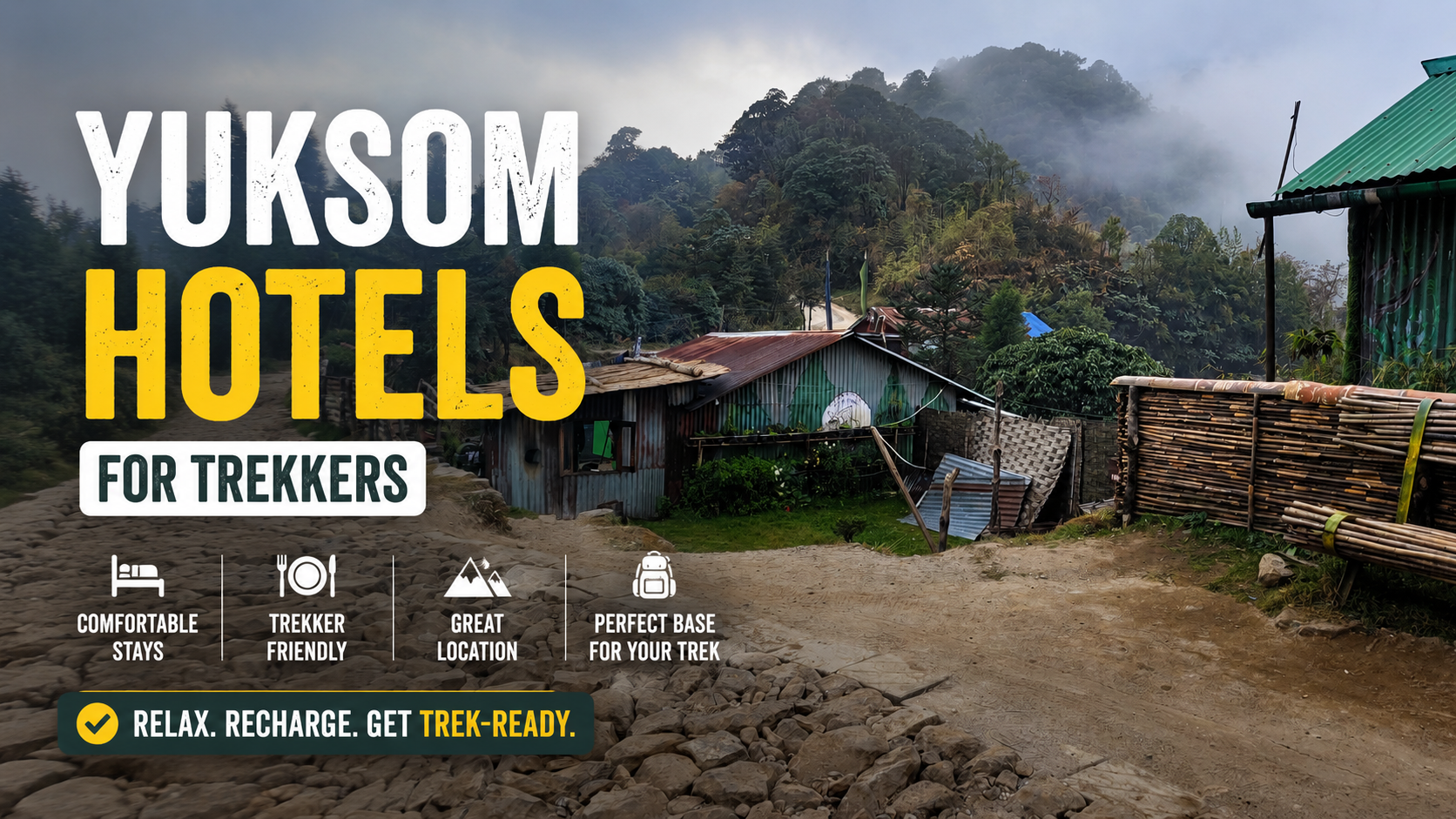
Yuksom is a small town. There are roughly twenty Yuksom hotels for trekkers, along with homestays. It is mostly clustered along Yuksom Bazar Main Road and the lane leading up to Dubdi Monastery. There are no luxury hotels and no chain properties. That’s why Yuksom base camp Accommodation falls into three honest categories:
Standard mid-range hotels (₹1,800–3,500 per night, twin-share)
Hotel Yangri Gang (our office is next door), Hotel Tashi Gang, Hotel Pemathang and Hotel Demazong are the longest-running mid-range options. Twin-share rooms, attached bathrooms with hot water (geyser or instant), basic restaurants on-site, dependable Wi-Fi in the lobby. These are the hotels most of our package trekkers stay in on the night before and after the trek.
Sikkimese homestays (₹1,200–2,200 per night, including meals)
A handful of homestays operate around Yuksom, run by local Sikkimese families. The accommodation is simpler — wooden Sikkimese houses, sometimes shared bathrooms, basic but clean rooms. The food is genuinely home-cooked, and the cultural exposure is significant. Homestays are the option I personally recommend for trekkers who want to experience Yuksom rather than just sleep in it. Bookings are best made through us or directly with the homestay owners; online platforms list few of them.
Budget guesthouses and trekkers’ lodges (₹700–1,200 per night)
Budget options exist for solo trekkers and students — typically dormitory or shared-room arrangements with basic toilet facilities. Hotel Dragon and a handful of smaller guesthouses near the bazaar fall in this category. Reliable hot water is not guaranteed; bring a quick-dry travel towel, and lower your expectations and you will be fine.
Read more: Detailed Yuksom hotels and homestays guide for trekkers
5. Permits, Police Registration and the KNP Check Post — Day-1 Logistics
The morning of Day 1 has a specific sequence of administrative steps that need to happen before you can walk out of Goechala trek yuksom full trail. If you are booking with a registered operator (us or another), the operator handles the entire process for you — but knowing what is happening saves time and confusion.
The Day-1 morning sequence
- 7:00 AM — Breakfast at your hotel. Heavy enough to last until lunch. Most Yuksom hotels serve breakfast from 6:30 AM onwards during trekking season.
- 7:45 AM — Yuksom Police Station registration. Walk-in registration with photo ID. Three photocopies of your Aadhaar / passport required. Takes 15–20 minutes for a standard group of 12 trekkers. Without this stamp, the forest check post will not let you proceed.
- 8:15 AM — Khangchendzonga National Park forest check post. The KNP entry permit and forest fee is paid here. Approximately ₹700 per Indian trekker; foreign trekkers pay approximately ₹5,000 (around USD 60). Camera and additional fees may apply. The receipt is checked at multiple points on the trail.
- 8:45 AM — Final gear check and bag-loading. If you are offloading your main backpack (₹4,500 for the full trek), this is where the mule team loads it. Carry only your day pack from here.
- 9:00 AM — Walking starts. Out of Yuksom through the farmland on the western edge of the village, down to the Prek Chu river, and the trek properly begins.
A note on permit timing: do not arrive in Yuksom on the evening before the trek with documents missing or expired. The KNP check post does not have a back-up office, copy shop or photo studio. If you discover at 8 AM on Day 1 that you forgot photocopies, the morning is gone. Carry six passport-size photographs and three photocopies of your photo ID — minimum.
6. Gear Rental and Last-Minute Shopping in Yuksom
Yuksom has no large outdoor-gear retail store — there is no Decathlon, no Wildcraft showroom, no Adventure Worx outlet within 150 kilometres. What does exist is the gear-rental network operated through trek operators. We rent equipment from our office on Yuksom Bazar Main Road, and most other registered operators offer similar arrangements.
What you can rent in Yuksom
| Item | Cost (full Goechala trek) | Notes |
|---|---|---|
| Down or synthetic jacket (-10°C) | ₹400–600 | Sanitised between rentals |
| Sleeping bag (-10°C rated) | ₹500–700 | Cleaned bag liners provided |
| Trekking poles (pair) | ₹150–250 | Aluminium adjustable |
| Daypack (25L) | ₹150–250 | If you have offloaded main bag |
| Headlamp | ₹100–150 | Bring spare batteries |
| Rain jacket / poncho | ₹150–250 | Recommended; trail can hit rain even in October |
| Full gear set (jacket + bag + poles) | ₹2,500 | Discounted bundle |
We recommend bringing personal items — base layers, trekking pants, socks, footwear, sunglasses, sunscreen, lip balm, personal medical kit — from home, since these are size-fit-specific and the Yuksom range is limited. For bulky items like the down jacket and sleeping bag, renting in Yuksom is genuinely more practical than buying or carrying.
Last-minute essentials in Yuksom
Yuksom bazaar has a handful of small grocery shops where you can buy energy snacks (nuts, chocolates, biscuits, Tang or electrolytes), basic toiletries, batteries, water bottles, and disposable rain ponchos. The selection is limited but functional. There is one small pharmacy near the police station with paracetamol, Diamox, ORS, basic antiseptics, and band-aids — adequate for restocking a personal medical kit but not for sourcing prescription drugs. Bring your own prescription medicines.
7. ATMs, Mobile Signal and Practical Logistics
ATMs and cash
Yuksom has had ATM access intermittently over the years — at the time of writing in 2026, one State Bank of India ATM operates in the village but it is frequently out of cash, particularly in peak season. Do not rely on it. Carry ₹5,000–10,000 in cash with you when you arrive — this covers tips for the support team, any personal purchases in Yuksom, gear rental, and the road journey home. The nearest reliable ATMs are at Geyzing (1.5 hours away) and Jorethang (2 hours away), well before Yuksom.
Mobile signal
BSNL and Jio both work in Yuksom town, with intermittent 4G coverage. Airtel signal is patchy. Once you leave Yuksom on Day 2, signal disappears entirely from somewhere between Sachen and Tshoka, and there is no mobile network for the remaining 7–8 days of the trek. Tell family and work contacts before you leave Yuksom that you will be unreachable. We carry a satellite communicator for emergencies.
Electricity and charging
Reliable mains electricity in Yuksom hotels — charge everything (phones, cameras, headlamps, power banks) the evening before the trek. On the trail, Tshoka and Bakhim have intermittent solar charging at the trekkers’ huts (you may have to wait an hour for your turn), but everything above Dzongri has no charging facility. A 10,000mAh power bank is essential.
Drinking water
Yuksom tap water is generally safe to drink but visitors are usually given bottled water at hotels. On the trek, water is provided from spring sources that are filtered or boiled by the kitchen team — safe to drink. Some trekkers carry a Steripen or chlorine tablets as backup; this is not essential but does no harm.
8. Where to Eat in Yuksom
Yuksom’s food scene is small but genuine. Most trekkers eat at their hotel restaurants — these are the safest bet for portion size, hygiene and timing. Outside the hotels, there is a small cluster of independent cafes and dhabas along the main road. Three I have personally eaten at over the years and recommend:
- Gupta Restaurant. On the bazaar road. Reliable Indian and Tibetan menu — thukpa, momos, fried rice, chicken curry and dal-bhat. The thukpa here is what I order before a Goechala departure when I want a heavy meal.
- Yuksom Residency Cafe. Slightly more western menu — pasta, pancakes, omelettes, French press coffee. Popular with international trekkers; reliable Wi-Fi.
- Local Sikkimese homestay kitchens. If you are staying at a homestay, eat there. The Sikkimese home cooking — rice, dal, gundruk (fermented greens), local cheese, sometimes momos or sel roti — is genuinely better than the restaurant fare.
On the trek itself, the food question disappears — our kitchen team handles every meal from Day 1 dinner onwards. Yuksom dining matters mainly for the Day 0 arrival dinner and the Day 10 return celebration.
9. Yuksom Weather Through the Trekking Season
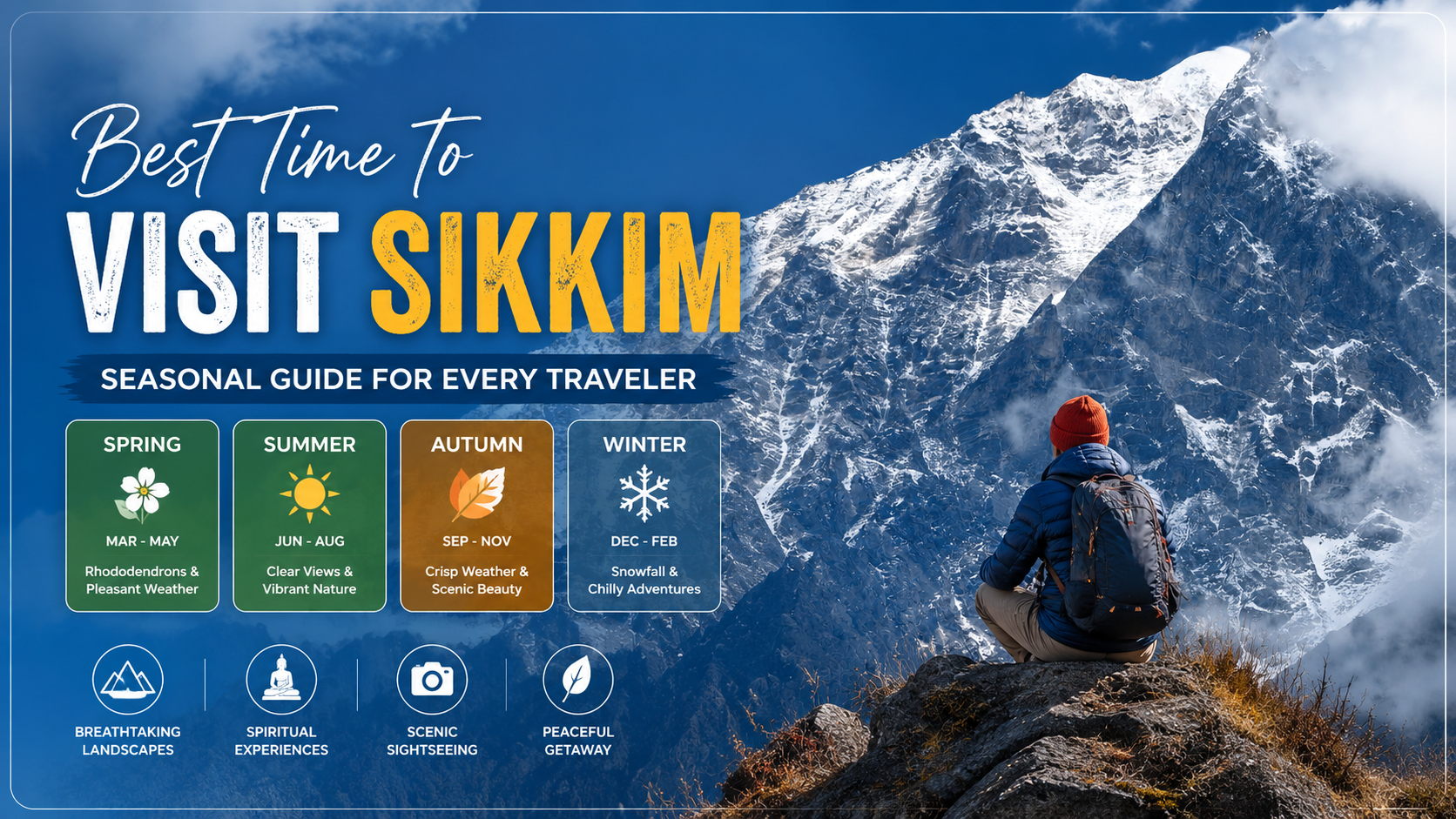
Goechala trek Yuksom sits in the rain shadow of the Singalila Ridge but is still affected by the south-west monsoon between June and September. The trekking season is divided into two windows — spring (March-May) and autumn (September-December) — and Yuksom’s weather changes meaningfully across them.
| Month | Day temperature | Night temperature | Notes |
|---|---|---|---|
| March | 10°C – 18°C | 3°C – 8°C | Cool mornings, mild afternoons. Rhododendrons start blooming. |
| April | 14°C – 22°C | 8°C – 12°C | Most pleasant Yuksom month. Peak rhododendron season. |
| May | 16°C – 24°C | 10°C – 14°C | Warm afternoons, occasional pre-monsoon showers. |
| June-Aug | 18°C – 25°C | 14°C – 18°C | Monsoon — leeches, landslides on access road. Do not trek. |
| September | 14°C – 22°C | 8°C – 13°C | Post-monsoon clarity, lush green forest, fresh waterfalls. |
| October | 10°C – 20°C | 4°C – 10°C | Peak trekking month. Crisp, clear, stable. |
| November | 8°C – 18°C | 0°C – 6°C | Cold nights, very clear skies. Photographer’s month. |
| December | 5°C – 14°C | -2°C – 4°C | Cold, occasional snow on higher trail. Strong trekkers only. |
If you are arriving in Yuksom in November or December, bring warmer evening wear than you might expect for a 1,780-metre town — the wind off the Prek Chu valley drops night temperatures more than the altitude alone would suggest. A fleece and a windproof outer layer make the evening hour at Norbugang or Dubdi considerably more pleasant.
10. Booking Your Goechala Trek Yuksom— The Glacier Treks Advantage
There are roughly twelve registered Goechala trek operators in Yuksom. We are one of them. The honest case for booking with us specifically — rather than with a national aggregator that subcontracts to one of our neighbours, or with a budget Yuksom operator that cuts safety contingencies — comes down to four things you can verify.
- We are on Yuksom Bazar Main Road. Our office address is verifiable — Yuksom Bazar Main Road, near Hotel Yangri Gang, West Sikkim 737113. You can walk in. You can meet the team that will lead your trek before you book.
- Our founder is on the trail. Kiran Gurung is IMF-certified and personally leads roughly half of every Goechala season. Other batches are led by senior trek leaders who have apprenticed under him.
- Contingency days are included. Every Goechala itinerary we run includes a contingency day at Dzongri or Lamuney for acclimatization or weather, built into the package price. We do not bill it as an add-on.
- Our local team has worked with us for years. 100% of our field team is from Yuksom and the surrounding West Sikkim villages. Average tenure of our senior guides is over seven years. The team running your trek is not seasonal labour.
Read more: Read more about Glacier Treks & Adventure — founder, team, certifications
Read more: Book the Goechala Trek directly on the product page
11. Frequently Asked Questions
How far is Yuksom from NJP railway station?
Yuksom is approximately 150 kilometres from NJP railway station by road. The drive takes 7-8 hours including stops. The same distance from Bagdogra airport takes 6-7 hours since the airport is closer to the highway entrance.
Can I reach Yuksom by direct flight or train?
No. There is no airport in Yuksom and no railway station within 130 kilometres. Every trekker arrives by road from NJP or Bagdogra. Pakyong Airport (Sikkim’s only operational airport, in East Sikkim) is 165 kilometres from Yuksom and not a practical access point.
What altitude is Goechala trek Yuksom?
Yuksom sits at 1,780 metres (5,840 feet) above sea level. This is high enough to begin altitude exposure for trekkers coming from sea level, but well below the AMS risk threshold. A Day-0 evening walk to Dubdi Monastery (2,100m) is the standard acclimatisation aid we recommend.
Is one day in Yuksom enough before the Goechala Trek?
Most trekkers arrive in Yuksom base camp on Day 0 evening and start the trek on Day 1 morning — and this works for the vast majority. If you have flown in from Mumbai or Delhi on the same morning, however, two days in Yuksom (Day -1 and Day 0) give you meaningfully better acclimatisation. We strongly recommend the extra day for international trekkers, anyone over 50, and anyone with a history of altitude sickness.
Can I visit Yuksom without doing the Goechala Trek?
Yes. Goechala trek Yuksom is a destination in its own right for Sikkim cultural tourists — Norbugang, Dubdi Monastery, Kathok Lake, Pemayangtse (one hour away), Khecheopalri sacred lake (one hour away) and Tashiding Monastery (one hour away) form a substantial 2-3 day Buddhist heritage circuit. Yuksom monasteries are most attractive part in this trek who have deep interest on Sikkim culture. We operate Yuksom-centric tour packages alongside the trek portfolio.
Are there any ATMs in Yuksom?
There is one State Bank of India ATM in Goechala trek Yuksom, but it frequently runs out of cash, particularly in peak season. Treat it as a backup, not a reliable source. Withdraw the cash you need at Geyzing or Jorethang before reaching Yuksom — both have multiple working ATMs.
Where can I rent trekking gear in Yuksom?
Gear rental in Yuksom is run through trek operators rather than dedicated retail shops. We rent down jackets, sleeping bags, trekking poles, headlamps, daypacks and rain gear from our office. Most other registered Yuksom operators offer similar arrangements. There is no large outdoor-gear retail store in Yuksom or within 150 kilometres.
What time should I arrive in Yuksom on Day 0?
Aim to reach Yuksom by 4 PM on Day 0. This gives you time to settle into your hotel, complete a Day-0 or Yuksom day 1 acclimatization walk (Norbugang or Dubdi Monastery), have an early dinner, and sleep early. If you arrive after 6 PM, skip the Dubdi walk and do Norbugang instead — it stays open and accessible after dark with a torch.
Is Yuksom safe for solo female travellers?
Yes Goechala trek Yuksom is a small, tightly-knit Sikkimese town where everybody knows everybody, and solo female travellers — both Indian and international — visit and trek through it without incident. We have hosted many female solo trekkers over the years. The Sikkimese social fabric is genuinely welcoming and protective of visitors.
Ready to Start Your Goechala Trek from Yuksom?
Yuksom is more than the starting point on a map. It is a 17th-century Buddhist capital, the home village of the team that will guide your trek, and a place worth spending more time in than most trekkers do. If you are planning your 2026 Goechala trek yuksom, build in an extra Yuksom day if you can — and reach out to us for any local questions that this guide has not answered. The office is open six days a week and walk-ins are welcome.
Visit or book: Yuksom Bazar Main Road, near Hotel Yangri Gang · Call/WhatsApp +91 7407248200 · Email contact@trekinsikkim.in
Read more: Read the complete Goechala Trek guide (itinerary, cost, difficulty, packing)
Read more: If you have only 7 days, consider the Dzongri Trek (also starts from Yuksom)
Read more: Browse all our treks and tours from Yuksom
Read more: Book the Goechala Trek online
About the author
Kiran Gurung is the founder of Glacier Treks & Adventure and a long-time resident of Yuksom, West Sikkim. Born in a remote Sikkimese village, he has spent his entire adult life operating treks and expeditions from the Yuksom trailhead. An IMF-certified mountaineer, he has personally led more than 200 Goechala expeditions and is a founding member of the Yuksom Tourism Development Committee (YTDC). His office on Yuksom Bazar Main Road has been the starting point for over 12,000 trekkers across fifteen seasons.