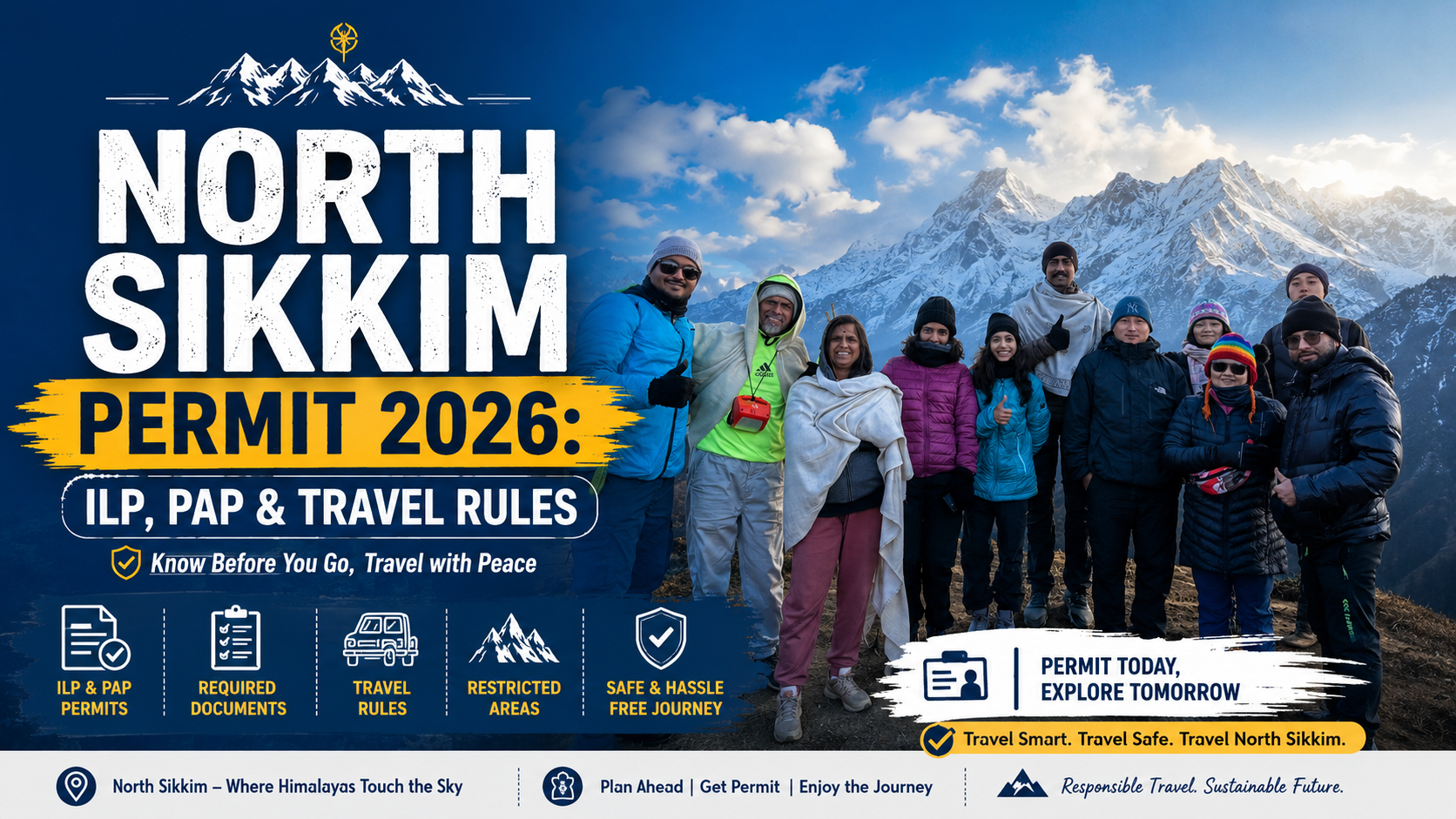
If you are planning a Himalayan trek in 2026, understanding Sikkim trek permits is essential before confirming your itinerary. Most trekking routes in Sikkim — especially in North and West Sikkim — fall inside protected border regions, national parks, or ecologically sensitive zones. Depending on your nationality and trekking route, you may need a Protected Area Permit (PAP), Inner Line Permit, forest entry permissions, Kanchenjunga National Park fees, and registered guide approvals.
As someone who organizes trekking expeditions across Sikkim every season, I can confidently say that permits are one of the most misunderstood parts of trekking preparation. Many trekkers focus only on fitness and packing, but permit regulations directly affect where you can trek, how long you can stay, and whether independent trekking is allowed. In this guide, I will explain everything about Sikkim trekking permits for 2026, including permit types, fees, required documents, rules for Indian and foreign trekkers, and how the application process actually works on the ground.
Why Are Trekking Permits Required in Sikkim?
Sikkim shares sensitive international borders with Nepal, Bhutan, and Tibet (China), which is why many high-altitude mountain regions are protected and carefully regulated by the government. Because of this, trekkers need official permissions before entering several trekking zones, national parks, and remote border areas.
Trekking permits help authorities monitor border-area movement, protect fragile Himalayan ecosystems, regulate tourism inside national parks, and maintain trekking safety standards in remote mountain regions. These regulations also help control overcrowding and reduce environmental pressure on ecologically sensitive trekking trails.
| Purpose of Permit | Why It Matters |
| Border Security | Monitors movement near international borders |
| Environmental Protection | Helps preserve fragile Himalayan ecosystems |
| Tourism Regulation | Controls visitor access inside protected regions |
| Trekker Safety | Assists authorities during emergencies and rescue operations |
Most major trekking routes in Sikkim require official permits, including the Goechala Trek, Green Lake Trek, Dzongri Trek, Kanchenjunga National Park routes, and several North Sikkim expeditions. Without proper permits, entry into many trekking regions is simply not allowed.
Main Types of Sikkim Trekking Permits
1. Protected Area Permit (PAP)
The Protected Area Permit, commonly called PAP, is mandatory for many restricted areas in Sikkim.
| Attribute | Details |
| Permit Name | Protected Area Permit (PAP) |
| Required For | Restricted & border regions |
| Applicable To | Foreign nationals |
| Issued By | Tourism & Government Authorities |
| Validity | Route & itinerary specific |
Foreign trekkers entering protected trekking zones require PAP approval through a registered local operator. In most cases, solo foreign trekking in Sikkim is not permitted in restricted areas.
2. Inner Line Permit (ILP)
Foreign nationals entering Sikkim generally require an Inner Line Permit before traveling into the state.
| Attribute | Details |
| Permit Name | Inner Line Permit (ILP) |
| Required For | Foreign Nationals |
| Entry Purpose | Tourism & Travel |
| Common Entry Points | Bagdogra, Rangpo, Siliguri |
| Fee | Usually Free |
The ILP is different from trekking permits. It allows foreign travelers to enter Sikkim, while additional trekking permissions may still be required for protected mountain regions.
3. Kanchenjunga National Park Permit
Many famous trekking routes pass through Kanchenjunga National Park (KNP), which requires separate entry permissions and conservation fees.
| Attribute | Details |
| Permit Name | Kanchenjunga National Park Permit |
| Required For | All trekkers entering KNP |
| Applicable To | Indian & Foreign Trekkers |
| Includes | Conservation & Entry Fees |
| Validity | Trek duration |
Treks requiring KNP permits include Goechala Trek, Dzongri Trek, Kasturi Orar Trek, and several alpine camping routes. These permits are usually arranged through the trekking agency before departure.
4. Forest Entry Permits
Certain trekking routes also require additional forest permissions.
| Attribute | Details |
| Permit Type | Forest Entry Permit |
| Purpose | Entry into protected forest zones |
| Issued By | Forest Department |
| Required For | Selected trekking routes |
Forest permits help regulate campsite usage and environmental management in ecologically sensitive regions.
Read more: 10 Easy treks in Sikkim: The dream destination for you
Sikkim Trek Permits for Indian Trekkers
Indian citizens generally face fewer trekking restrictions in Sikkim compared to foreign nationals. However, permits are still mandatory for several trekking activities, especially when entering national parks, protected forest zones, high-altitude trekking routes, and certain regions of North Sikkim. Popular treks like Goechala, Dzongri, and other Kanchenjunga National Park routes usually require official permissions before departure.
| Documents Usually Required | Purpose |
| Government-issued Photo ID | Required for identity verification and permit approval |
| Passport-size Photographs | Needed for permit applications and official records |
| Emergency Contact Details | Used for safety and emergency coordination during the trek |
Indian trekkers can usually complete permit formalities more easily through a registered local trekking operator. In most cases, agencies arrange the required permissions, park documentation, and route approvals before the trek begins.
Sikkim Trek Permits for Foreign Trekkers
Permit regulations are stricter for foreign nationals because many trekking regions are located near international borders.
Important Rules for Foreign Trekkers
- PAP is mandatory in many trekking zones: Foreign trekkers require a Protected Area Permit (PAP) to enter several restricted and border-region trekking routes in Sikkim.
- Trekking with a registered guide is compulsory: Many high-altitude routes officially require trekkers to travel with authorized local guides for safety and regulation purposes.
- Independent trekking is restricted in several regions: Solo or unguided trekking is not allowed in many protected areas, especially near international borders.
- Minimum group-size rules may apply in some areas: Certain trekking routes may require foreign trekkers to travel in groups, depending on current government regulations.
- Passport and visa copies are required: Foreign nationals must submit valid passport documents, Indian visa copies, and photographs during the permit application process.
Documents Required
| Document | Requirement |
| Passport Copy | Mandatory |
| Indian Visa Copy | Mandatory |
| Passport Photos | Required |
| Travel Itinerary | Required |
| Hotel & Trek Details | Often Required |
Foreign trekkers should apply well in advance because processing may take additional time during peak trekking seasons.
How to Apply for Sikkim Trekking Permits
In reality, most trekkers obtain permits through registered local trekking agencies.
- Submitting ID documents: Trekkers must provide valid identity proofs such as passports, visas, or government-issued photo IDs for permit verification.
- Confirming trek itinerary: Authorities require confirmed trekking routes, travel dates, and campsite plans before approving permits.
- Sharing photographs: Passport-size photographs are needed for official permit records and documentation purposes.
- Completing tourism department formalities: Trekking agencies coordinate with tourism and forest departments to complete required approvals and paperwork.
- Paying permit & conservation fees: Trekkers must pay national park entry charges, forest fees, and conservation-related permit costs before departure.
As a trekking organizer, we generally arrange permits before trekkers arrive in Yuksom or Gangtok so the expedition starts smoothly. Trying to arrange everything independently can become confusing, especially for first-time visitors.
Are Solo Treks Allowed in Sikkim?
This is one of the most common questions I receive from trekkers planning a Himalayan expedition in Sikkim. In many protected trekking zones, solo trekking is restricted, registered guides are mandatory, and foreign nationals cannot independently access several remote mountain regions. These regulations are especially strict in North and West Sikkim because several trekking routes pass through sensitive border areas and protected national park zones.
| Regulation Purpose | Why It Matters |
| Border Security | Helps authorities monitor movement near international borders |
| Safety Concerns | Reduces risks during high-altitude trekking emergencies |
| Rescue Logistics | Makes evacuation and rescue coordination easier in remote areas |
| Environmental Protection | Helps control tourism impact in fragile Himalayan ecosystems |
For remote routes like the Green Lake Trek and the upper Kanchenjunga regions, guided trekking is strongly recommended even for experienced trekkers. Weather conditions, isolation, and altitude challenges make local knowledge extremely valuable during these expeditions.
Common Treks & Permit Requirements
| Trek | Permit Requirement |
| Goechala Trek | KNP Permit + Forest Permit |
| Dzongri Trek | KNP Permit |
| Green Lake Trek | PAP + Forest + Special Permissions |
| Kanchenjunga Base Camp Region | PAP + Multiple Permissions |
| Singalila Ridge Trek | Route-dependent permissions |
Permit requirements can change depending on seasonal government regulations.
Trekking Agencies & Permit Support
Most trekkers choose local operators because permit coordination can become complicated across multiple departments.
A reliable trekking agency usually helps with:
- Permit processing: Completes all necessary trekking permit applications and government approvals before departure.
- Route permissions: Secures official access for restricted trekking trails and protected mountain regions.
- Forest fees: Handles forest department charges and conservation-related trekking fees.
- National park documentation: Arranges required paperwork for entering national parks and protected trekking zones.
- Guide arrangements: Provides registered local trekking guides according to route regulations and safety requirements.
- Emergency coordination: Assists with communication, rescue support, and logistical coordination during emergencies in remote areas.
For difficult expeditions like the Green Lake Trek, proper local support becomes extremely important.
Final Thoughts
Understanding Sikkim trek permits is one of the most important parts of planning a Himalayan trek in the region. Whether you are attempting the Goechala Trek, Green Lake Trek, or a remote Kanchenjunga expedition, permits are not optional paperwork — they are a mandatory part of trekking responsibly and legally in Sikkim.
For Indian trekkers, the process is usually straightforward. For foreign trekkers, additional regulations like PAP and restricted-area permissions require extra planning and coordination.
My advice is simple: finalize your trek route early, work with a reliable local trekking operator, and complete permit formalities in advance. Proper preparation always makes a Himalayan trek smoother and safer.
Read more: 10 Best Treks in Sikkim: From Beginner Day Hikes to High-Altitude Expeditions
FAQs
1. Do I need permits for trekking in Sikkim?
Yes, most major trekking routes require Sikkim trek permits, especially in North and West Sikkim.
2. What is a PAP in Sikkim trekking?
PAP stands for Protected Area Permit, which is required for foreign nationals entering restricted trekking regions.
3. Can foreigners trek independently in Sikkim?
In many protected regions, independent trekking is restricted, and foreign trekkers must trek with registered guides.
4. Is a Kanchenjunga National Park permit mandatory?
Yes, treks entering Kanchenjunga National Park require separate entry permits and conservation fees.
5. How long does Sikkim permit processing take?
Most permits are processed within a few days, but foreign trekker permissions may require additional time during peak seasons.
Book Your Sikkim Trek for 2026
Now that you know exactly what the Goechala Trek costs — and what you are paying for — you can book with confidence. Our 2026 season runs from May to December, with batches capped at 12 trekkers and a 30% advance to confirm your seat.
Book now: ₹20,000 per person · Call/WhatsApp +91 74072 48200 · Email kiran.yuksom@gmail.com
Read more: 10 Best Treks in Sikkim: From Beginner Day Hikes to High-Altitude Expeditions
Read more: Best Time to Trek in Sikkim: Season-by-Season Guide
Read more: 7 High-Altitude Treks in Sikkim Above 4,000m
About the author
Kiran Gurung is the founder of Glacier Treks & Adventure, based in Yuksom, West Sikkim. An IMF-certified mountaineer, he has personally led more than 200 Goechala expeditions over fifteen years. Glacier Treks & Adventure is affiliated with the Department of Sikkim Tourism, the IMF, TAAS, YTDC, and SAMA.