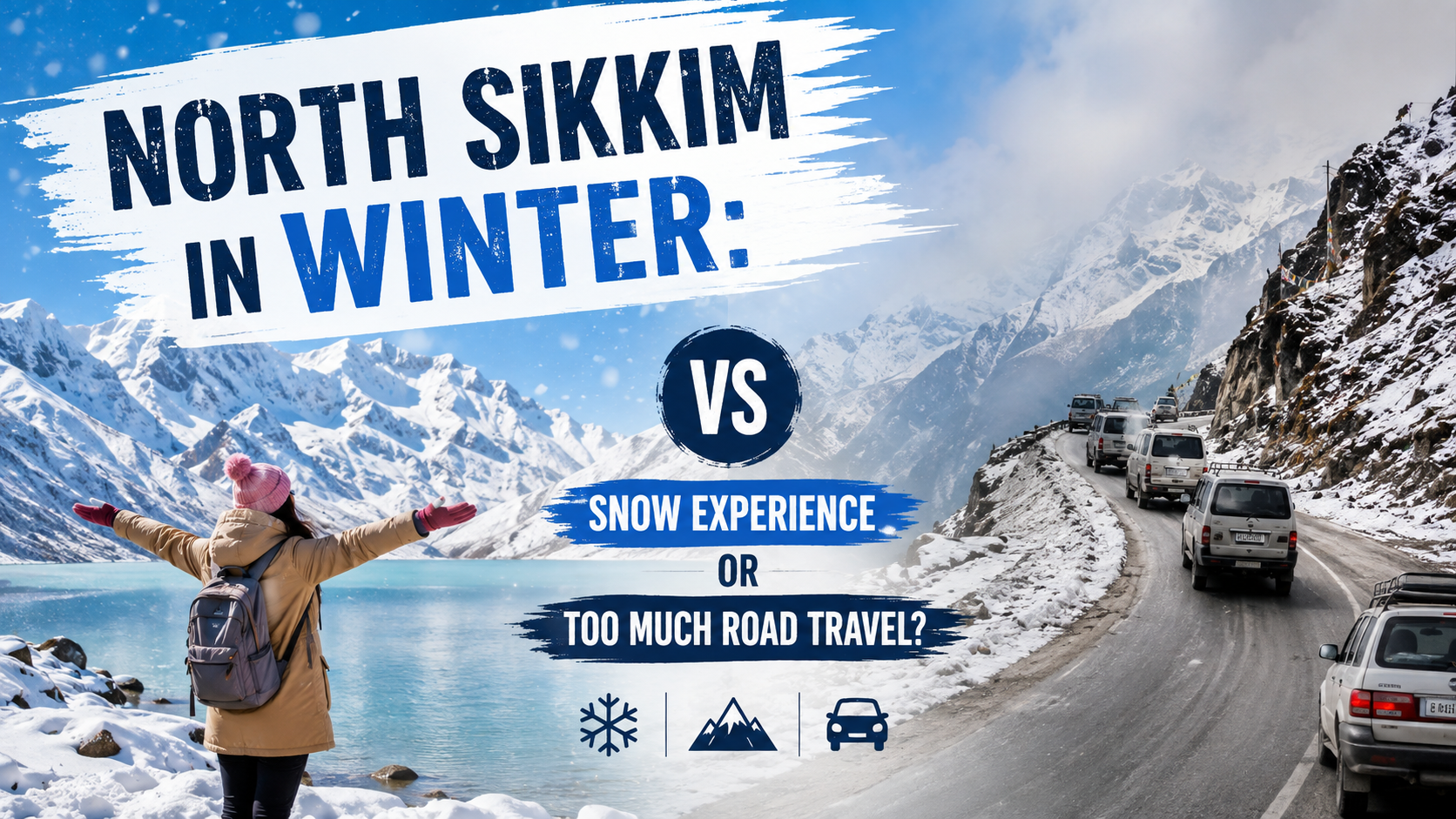
Few destinations in the Indian Himalayas evoke as much awe—and as many questions—as North Sikkim in winter. Pictures of frozen high-altitude lakes, white-capped alpine valleys, and dramatic snowscapes draw thousands of travelers every year. However, behind the breathtaking photographs lies a high-altitude road journey that tests your endurance, flexibility, and cold tolerance.
If you are planning to book a North Sikkim Tour Package, the central decision isn’t just about seeing snow; it’s about weighing the surreal appeal of snow against long, rugged road days, freezing temperatures, permit logistics, and unpredictable road conditions.
In this complete guide, we address the exact questions every traveler—especially first-time visitors—must evaluate before heading north from Gangtok.
1. Quick Overview: North Sikkim Tour At a Glance
Before evaluating the trade-offs, let us review the core facts of this Himalayan road trip:
| Attribute | Details & Specifications |
| Standard Route | Gangtok → Lachen → Gurudongmar Lake → Lachung → Yumthang Valley / Zero Point → Gangtok | |
| Ideal Duration | 4 Nights / 5 Days (Minimum 3N/4D for a quick circuit) |
| Total Road Distance | About 300 km of high-altitude mountain roads and terrain. |
| Maximum Altitude | Gurudongmar Lake: 5,430 m (17,800 ft) · Zero Point: 4,572 m (15,000 ft) |
| Base Elevations | Gangtok (1,650 m) · Lachen (2,750 m) · Lachung (2,700 m) |
| Permit Mandate | Protected Area Permit (PAP) / Inner Line Permit (ILP) required for all visitors |
| Ideal Seasons | October–December (Clear skies & snow) & March–May (Flowers & snow) |
2. Is North Sikkim a Better Option for First-Time Visitors?
The short answer: Yes, but only if you are prepared for an adventurous road trip rather than a relaxed luxury vacation.
For a first-time visitor to Sikkim, North Sikkim offers a landscape dramatically different from the rest of the state. Within 48 hours, you transition from the subtropical river gorges of Gangtok into the high-altitude cold desert plateau bordering Tibet.
Why It Works for First-Time Visitors:
- No High-Altitude Trekking Required: Unlike grueling multi-day treks (such as the Goechala Trek), North Sikkim delivers alpine scenery directly via vehicle. Walking is minimal—usually just a few hundred meters at sightseeing spots.
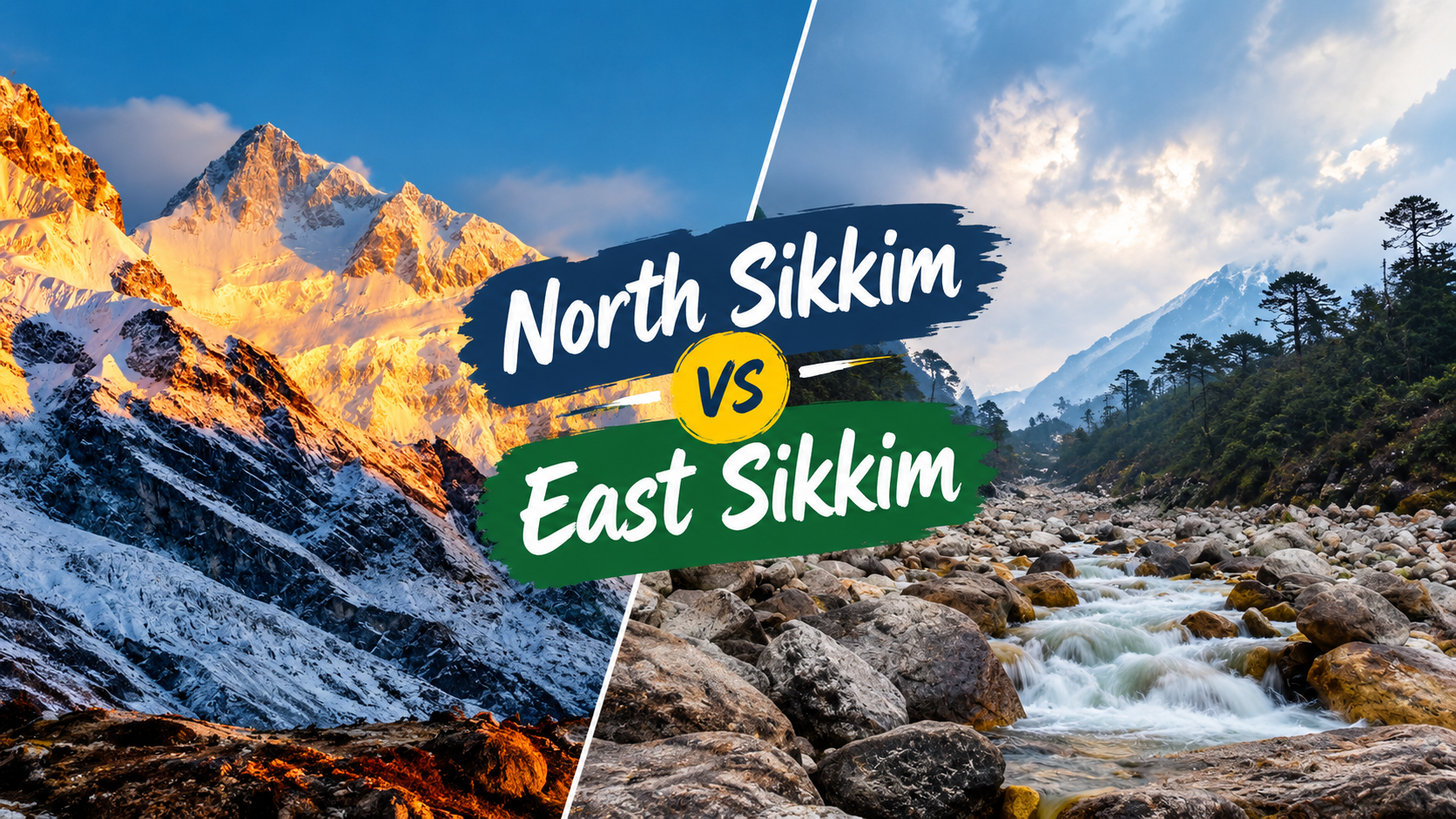
- Unmatched Snow & Mountain Vistas: If your goal is to experience pristine snow, frozen lakes, and high mountain passes, North Sikkim outshines West or East Sikkim in scale and grandeur.
- Rich Cultural Context: Staying in remote mountain villages like Lachen and Lachung provides direct exposure to traditional Bhutia and Lepcha culture, administered under the unique local governance system known as the Dzumsa.
The Catch for Beginners:
- Altitude Gain: You travel from Gangtok (1,650 m) to Gurudongmar Lake (5,430 m) in less than 48 hours. This quick rise in altitude can cause mild Acute Mountain Sickness (AMS). Drink plenty of water, walk slowly, and give your body time to adjust.
- Rugged Infrastructure: Accommodation in Lachen and Lachung consists of basic, clean homestays or budget lodges. Electricity can flicker, and sub-zero night temperatures mean hot water is limited.
3. Sightseeing vs. Trekking: Understanding the Difference
A common misconception among first-time visitors is confusing a sightseeing road package with a Himalayan trek.
- Sightseeing Tour (Vehicle-Based): You travel in dedicated 4×4 or SUV vehicles (Innova, Xylo, or Scorpio) driven by local drivers accustomed to high-altitude ice and terrain. You step out to explore at key viewpoints. This is what our standard 4-night/5-day tour covers.
- Himalayan Trekking (Foot-Based): Involves multi-day hiking with backpack gear, acclimatization walk-days, camping, and physical conditioning.
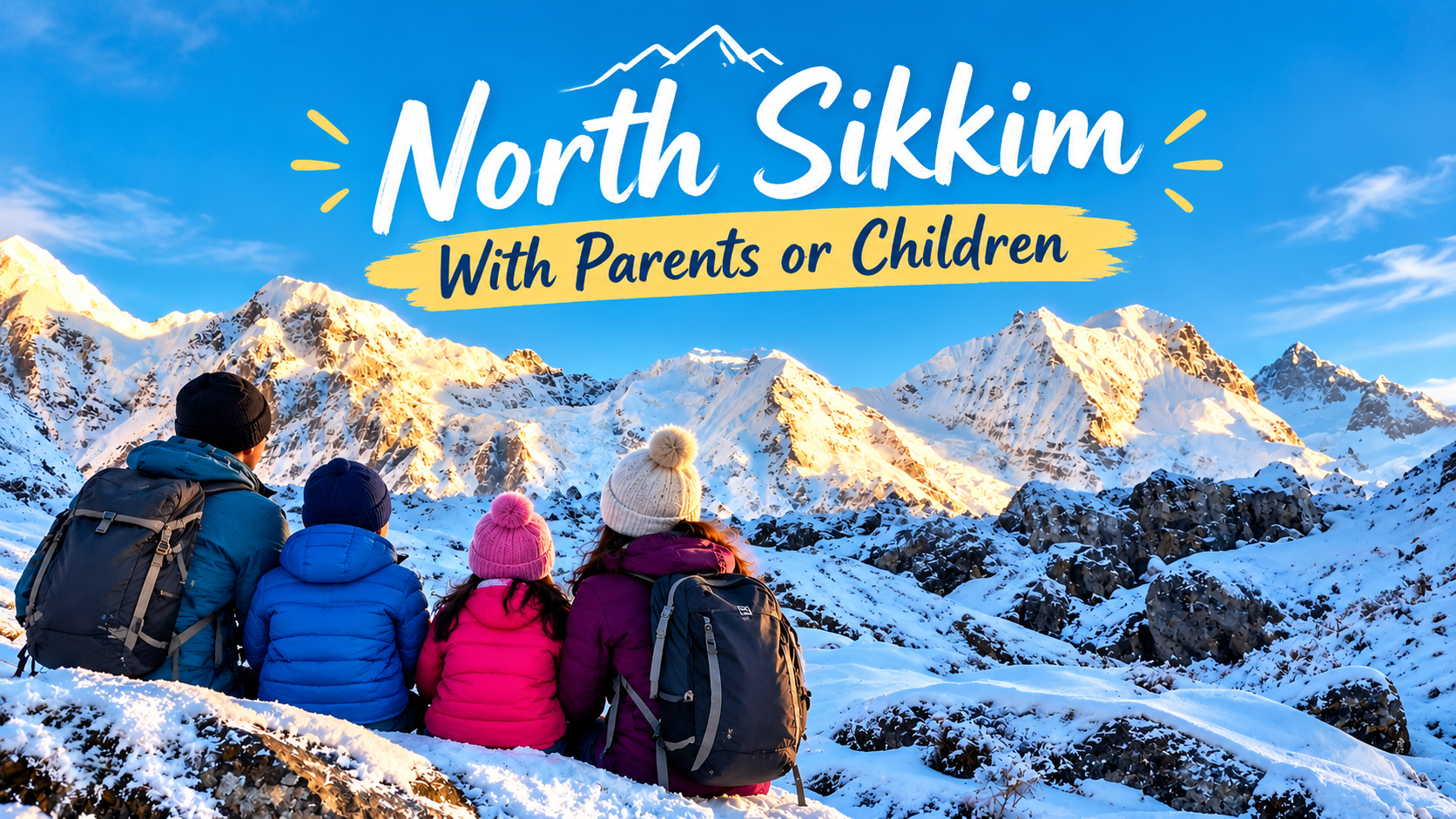
Because North Sikkim is vehicle-based, it is accessible to families, senior citizens, and first-timers—provided they respect altitude guidelines and cold-weather precautions.
4. Which Month is Best for a North Sikkim Tour?
Choosing when to visit depends on whether your priority is clear blue skies, flowering valleys, or deep winter snow.
| Season / Months | Weather & Conditions | Highlights | Travel Considerations |
| October to December (Autumn / Early Winter) | Crisp, clear skies, with daytime temperatures of 5°C to 15°C and freezing nights. | Sharpest Kanchenjunga views, frozen lake views, stable road conditions. | Best Overall Window. High demand; early permit booking recommended. |
| January to February (Deep Winter) | Heavy snowfall and very cold weather, with temperatures in Lachen dropping as low as -15°C. | Breathtaking, pure white snowscapes across Yumthang & Zero Point. | Roads to Gurudongmar/Zero Point can close temporarily due to heavy snow. Requires itinerary flexibility. |
| March to May (Spring) | Mild days; snow melting at lower levels; rhododendron bloom begins. | Yumthang Valley turns into the “Valley of Flowers.” Snow still present at Zero Point. | Excellent time for nature lovers and families seeking comfortable weather. |
| June to September (Monsoon) | Heavy rainfall across sub-Himalayan belt. | Lush green landscapes. | Avoid. Landslides frequently disrupt mountain highways. |
For detailed insights on seasonal logistics, check out our North Sikkim Tour Package Guide.
5. Key Sites You Can Cover in North Sikkim
A structured North Sikkim circuit covers several legendary natural and cultural landmarks:
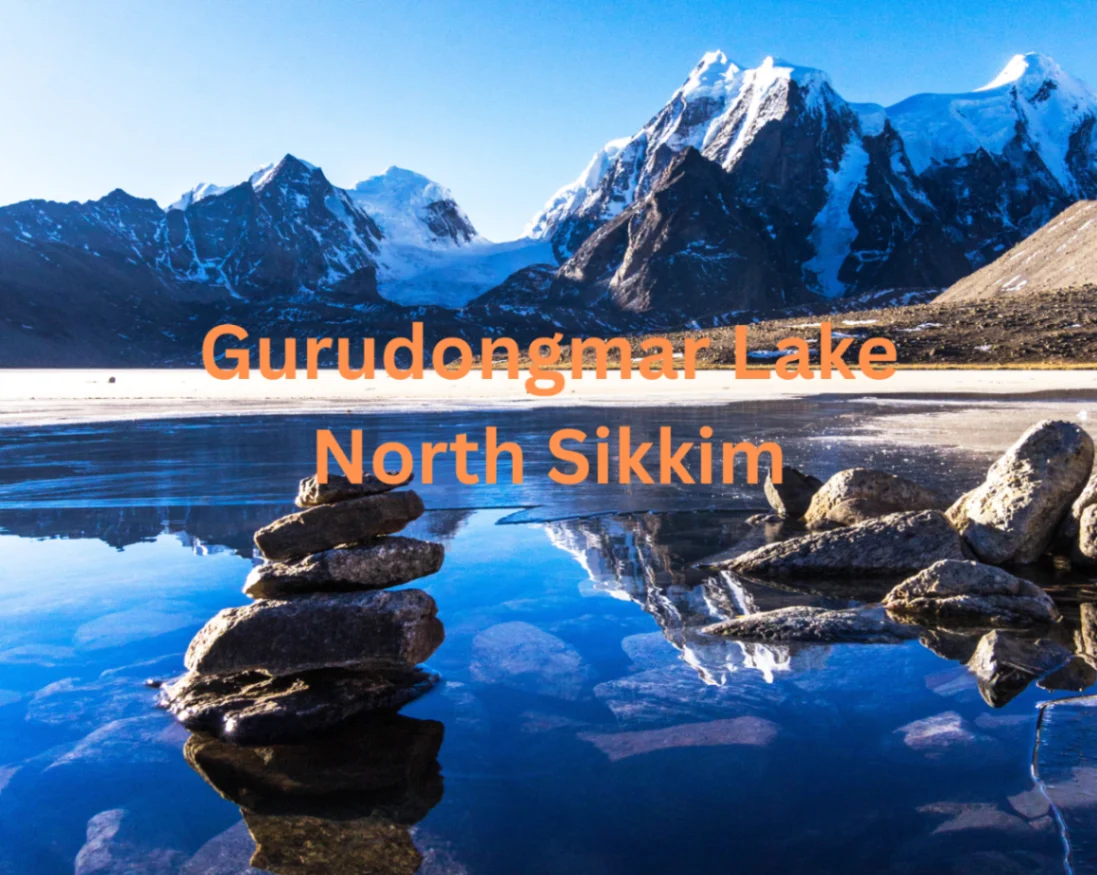
Gurudongmar Lake 5,430 m (17,800 ft):
One of the highest motorable lakes in the world. Revered by both Buddhists and Sikhs, its turquoise waters remain partially unfrozen even in harsh winter.
Yumthang Valley 3,564 m (11,693 ft):
Famous as the “Valley of Flowers,” surrounded by snow-capped peaks and pine forests inside the Shingba Rhododendron Sanctuary.
Zero Point / Yume Samdong 4,572 m (15,000 ft):
The end of the civilian road near the Indo-China border, where visitors routinely find thick layers of snow through winter and early spring.
Lachen & Lachung Villages:
Picturesque high-altitude settlements offering authentic Sikkimese hospitality, traditional wooden architecture, and ancient monasteries like the Lachung Monastery (built in 1880).
En-Route Attractions:
Seven Sisters Waterfalls, Singhik Viewpoint (offering views of Kanchenjunga on clear days), and the confluence of the Lachen and Lachung rivers at Chungthang.
6. How Many Days Do You Need to Cover North Sikkim?
To comfortably complete the circuit without altitude exhaustion or rushed driving, 4 Nights / 5 Days starting from Bagdogra/NJP (or 3N/4D starting from Gangtok) is ideal.
Recommended 5-Day Detailed Itinerary
- Day 1: Arrival in Bagdogra / NJP → Drive to Gangtok 1,650 m
- Arrive by early afternoon and enjoy a scenic $125\text{ km}$ drive along the Teesta River. Check into your hotel and stroll along M.G. Marg in the evening.
- Day 2: Gangtok → Lachen2,750 m
- Briefing and permit verification. Drive north ($108\text{ km}$) past Seven Sisters Waterfalls and Chungthang. Reach Lachen by late afternoon. Early dinner and rest for tomorrow’s high-altitude drive.
- Day 3: Lachen → Gurudongmar Lake 5,430m → Lachung 2,700 m
- Early 4:00 AM start towards Thangu Valley and Gurudongmar Lake. Experience the cold desert landscape. Spend 20–30 minutes at the lake to manage altitude exposure before returning to Lachen for lunch, followed by a transfer to Lachung.
- Day 4: Lachung→ Yumthang Valley & Zero Point 4,572 m → Return to Gangtok
- Morning drive to the snows of Zero Point via Yumthang Valley. After exploring, drive back to Gangtok by evening for a relaxing night.
- Day 5: Gangtok→ Bagdogra Airport / NJP Station Departure
- Breakfast and check-out. Optional river rafting on the Teesta River on your way down if flight/train schedules permit.
7. Crucial Survival Tips for Winter Road Travel
To ensure your snow experience outweighs the fatigue of long road travel:
- Hydrate Constantly: Cold weather reduces thirst, but dehydration worsens altitude sickness. Drink 3–4 liters of water daily.
- Dress in Layers: Temperatures drop rapidly when moving between valleys and high passes. Wear thermal innerwear, a windproof down jacket, gloves, and woolen caps.
- Limit Time at High Altitude: Do not stay longer than 20–30 minutes at Gurudongmar Lake or Zero Point. This brief window lets you enjoy the landscape without risking severe AMS.
- Carry Cash & Power Banks: Mobile networks (outside Gangtok) can be intermittent, and power outages occur in remote villages during cold spells.
8. Why Choose Glacier Treks & Adventure?
When navigating high-altitude zones, restricted area permits, and unpredictable winter weather, having an experienced, locally rooted operator makes all the difference.
- Experienced Mountain Leadership: Founded in 2010 by Mr. Kiran Gurung, a native mountain explorer, our team brings over 15 years of ground expertise across the Himalayas.
- Safety-First Operations: We closely monitor weather and road conditions at army checkpoints before proceeding, ensuring driver and passenger safety above all else.
- Affordable & Honest Pricing: We provide clear line-item packages without hidden charges, ensuring comfortable stays and verified 4×4 vehicles.
- Government-Recognized: Affiliated with Sikkim Tourism, TAAS, YTDC, SAMA, and IMF.
9. Frequently Asked Questions (FAQ)
Q1: Is a permit mandatory for visiting North Sikkim?
Yes. North Sikkim shares sensitive international borders. All travelers require a Protected Area Permit (PAP) / Inner Line Permit (ILP), arranged exclusively through registered Sikkim tour operators. You must provide passport-sized photos and valid government photo IDs (Aadhaar/Voter ID/Passport).
Q2: Can foreign nationals visit Gurudongmar Lake?
Due to border regulations, foreign passport holders are generally restricted from visiting Gurudongmar Lake. However, foreign nationals can obtain permits to visit Lachung, Yumthang Valley, and Zero Point when traveling in groups of two or more through a registered agency.
Q3: Are children and senior citizens allowed at Gurudongmar Lake?
Infants under 5 years old are generally not recommended to travel above Thangu ($3,960\text{ m}$) due to severe risk of rapid altitude sickness. Senior citizens with controlled health conditions can travel, provided they consult a doctor beforehand and follow altitude exposure guidelines.
Q4: What happens if roads close due to heavy winter snowfall?
In case of sudden road blockades between Lachen and Gurudongmar or Yumthang, local authorities and drivers re-route itineraries to open, accessible areas (such as shifting focus to Lachung or Gangtok day-tours). Safety remains the primary consideration.
10. Contact Us & Plan Your Journey
Ready to experience the snow-capped majesty of North Sikkim with an experienced Himalayan team? Get in touch with our travel experts today for customized itineraries, permit assistance, and live weather updates.
===================================================================
GLACIER TREKS & ADVENTURE
===================================================================
Head Office : Yuksom Bazar Main Road, Near Hotel Yangri Gang,
West Sikkim, Pin Code: 737113, India
Phone / Call: +91 7407248200
Email Direct: contact@trekinsikkim.in
Web Portal : https://trekinsikkim.in
===================================================================
Read More & Related Resources
- Explore our flagship product page: Book the Official North Sikkim Tour Package
- Read our in-depth logistical guide: North Sikkim Tour Package Guide: Altitude, Permits & Costs
- Learn more about our team and mission: About Glacier Treks & Adventure
- Have custom questions? Contact Glacier Treks & Adventure