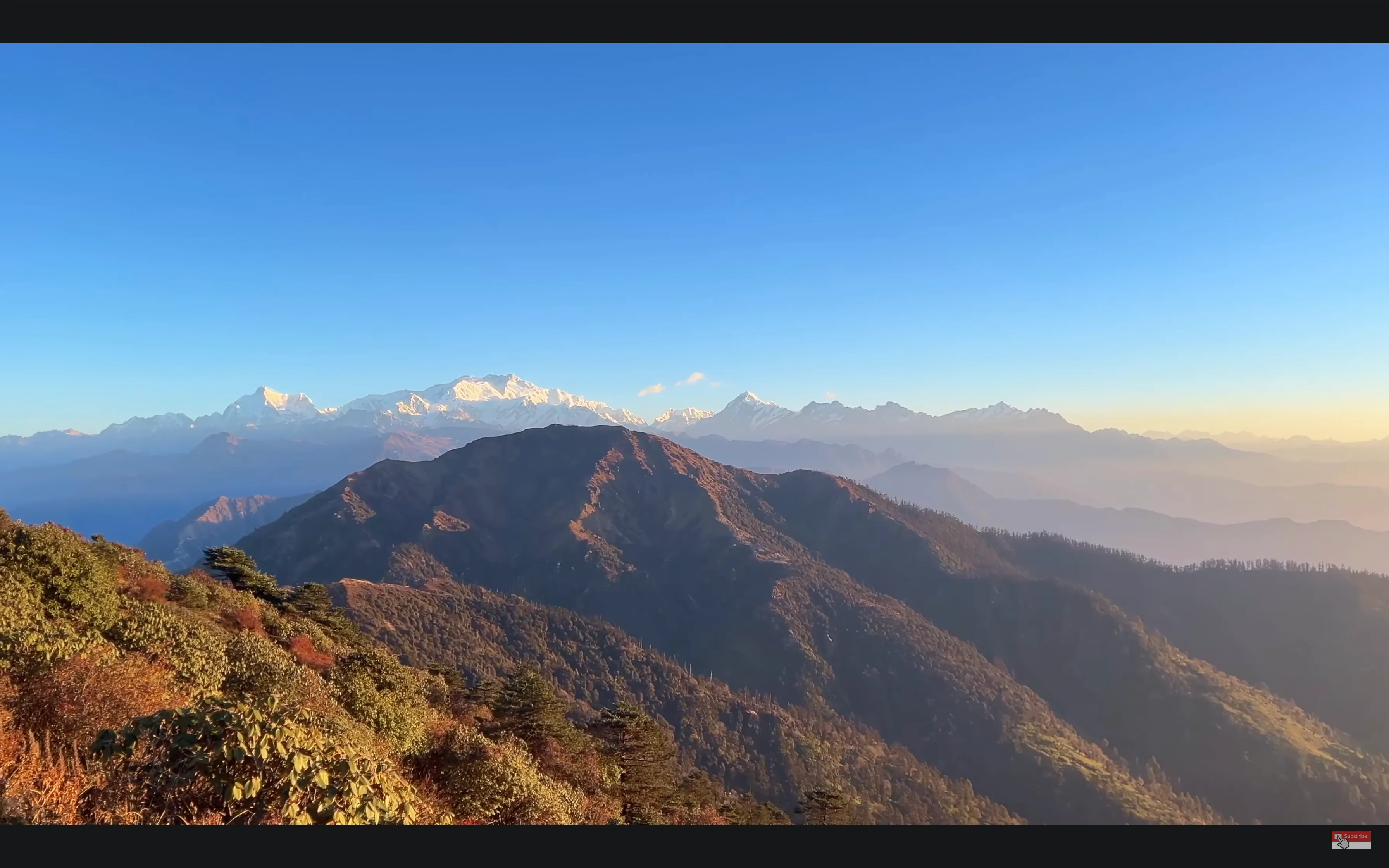
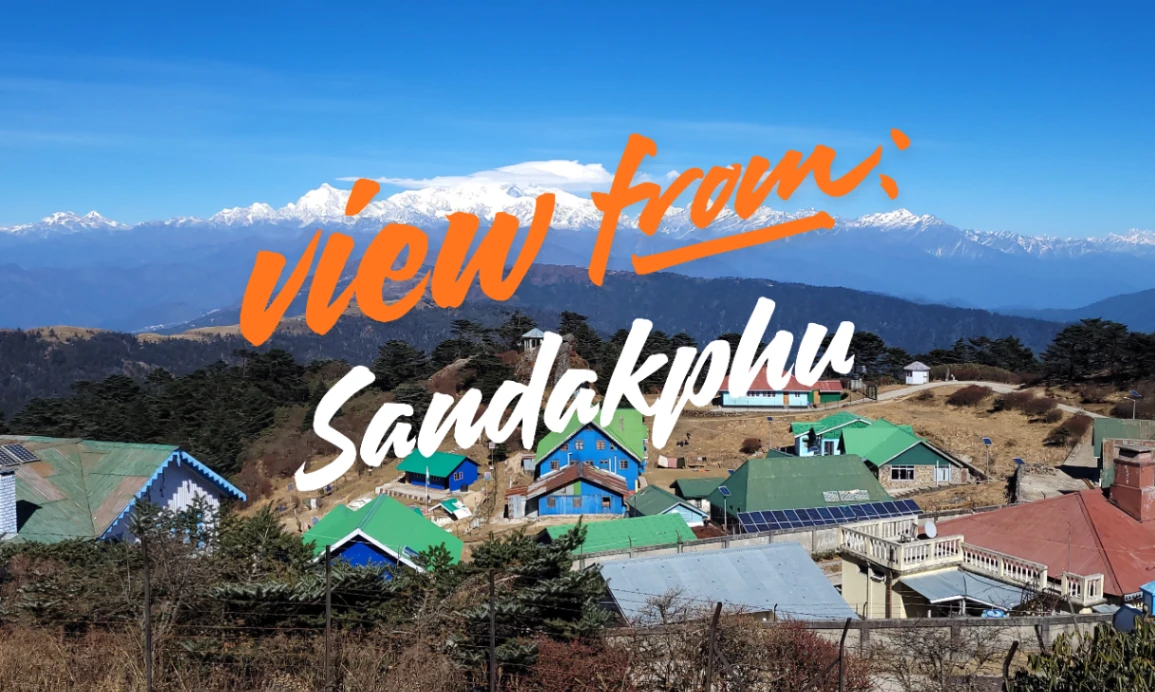
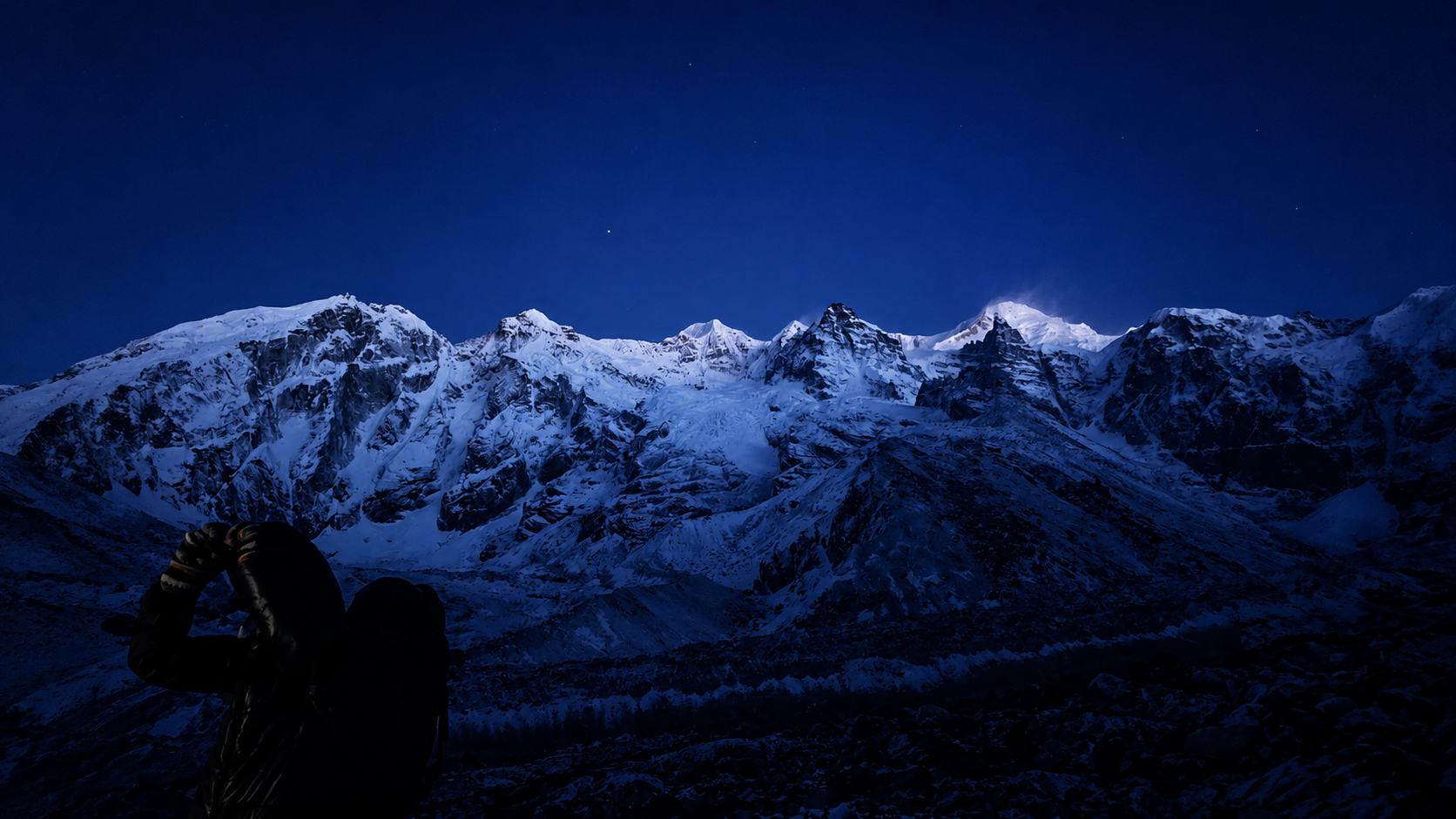
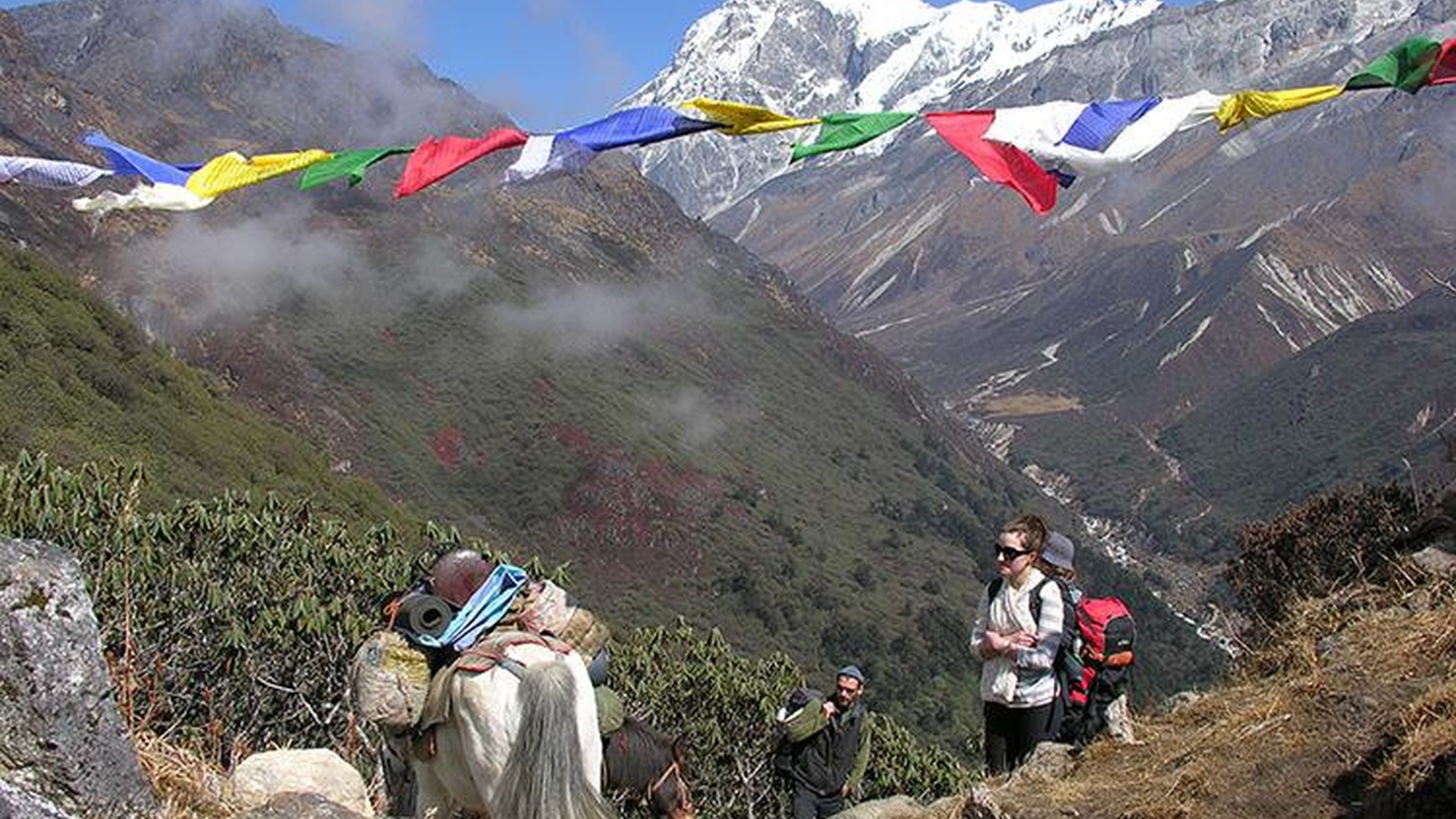
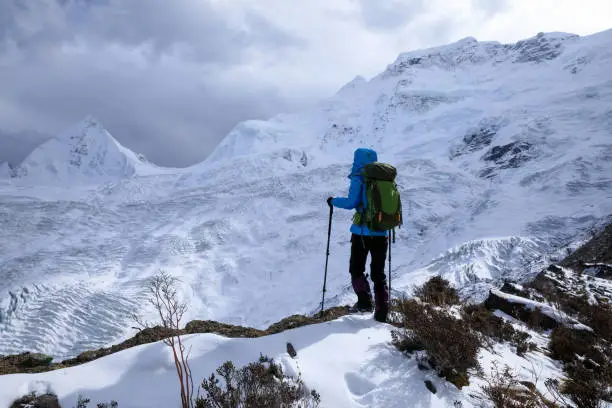
The Sandakphu Trek and Sandakphu–Phalut Trek follow the same beautiful mountain region along the Singalila Ridge in the Eastern Himalayas. Both routes offer remarkable views of four of the world’s highest mountains: Everest, Kanchenjunga, Lhotse and Makalu.
The main difference is how far you want to walk. The classic Sandakphu route takes you to Sandakphu, the highest point in West Bengal. The extended Sandakphu–Phalut route continues along an open mountain ridge towards Phalut before descending through Gorkhey and the surrounding forest.
If you have limited time or prefer a shorter trekking programme, the classic Sandakphu route may be the better choice. If you have more time and want to experience the quieter ridge beyond Sandakphu, the Phalut extension offers a longer adventure.
In this guide, we compare both routes using their actual trail characteristics, distance, altitude, accommodation and walking demands so you can decide which one suits your plans.

Overview of the Sandakphu Trek and Sandakphu–Phalut Trek
The two treks share much of the same route before reaching Sandakphu. The difference begins after you arrive at the summit.
Sandakphu Trek: This route takes you through the Singalila region to Sandakphu at approximately 3,636 metres (11,930 feet). It is known for its panoramic Himalayan views and traditional mountain settlements.
Sandakphu–Phalut Trek: This is the extended route. After reaching Sandakphu, you continue for approximately 21 km towards Phalut, at around 3,600 metres (11,811 feet). From Phalut, the trail descends towards Gorkhey and Sepi through quieter mountain and forest landscapes.
Both treks involve uphill walking, uneven paths and changing weather. The extended route requires additional endurance because of its longer walking distance.
Core Comparison: Sandakphu vs Sandakphu–Phalut
| Category | Sandakphu Trek | Sandakphu–Phalut Trek |
|---|---|---|
| Route | Manebhanjan region to Sandakphu, followed by the planned return or exit route | Manebhanjan to Sandakphu, onward to Phalut, then descent towards Gorkhey and Sepi |
| Highest point | Sandakphu – 3,636 m | Sandakphu – 3,636 m |
| Phalut altitude | Not included | Approximately 3,600 m |
| Duration | 5 nights / 6 days on the listed package | Depends on the full itinerary; the listed route has six trekking stages |
| Distance | 60 km on the listed Sandakphu package | Approximately 79 km when adding the six stages listed in the Phalut route itinerary |
| Difficulty | Moderate | Moderate to challenging, depending on pace and fitness |
| Main attraction | Panoramic views from Sandakphu | Extended ridge walk and the quieter Phalut landscape |
| Accommodation | Homestays and trekker lodges along the route | Homestays and lodges on much of the route; basic accommodation at Phalut |
| Best suited for | Trekkers wanting a shorter programme | Trekkers comfortable with longer walking days |
Distance and duration depend on the starting point, exit route and itinerary. The figures above refer to the routes listed on our respective package pages, not a universal distance for every Sandakphu itinerary.
| Category | Sandakphu Trek | Sandakphu Phalut Trek |
| Total Distance | 30–35 miles | 45–50 miles |
| Highest Point | 11,930 ft (Sandakphu) | 11,811 ft (Phalut) |
| Duration | 5–6 days | 6–7 days |
| Difficulty | Moderate | Moderate–Challenging |
| Best Feature | 4-peak panorama | Sleeping Buddha: closest view |
| Trail Type | Forests + ridge | The long ridges and isolated areas |
1. Terrain and Trail Conditions
What is the terrain like on the Sandakphu Trek?
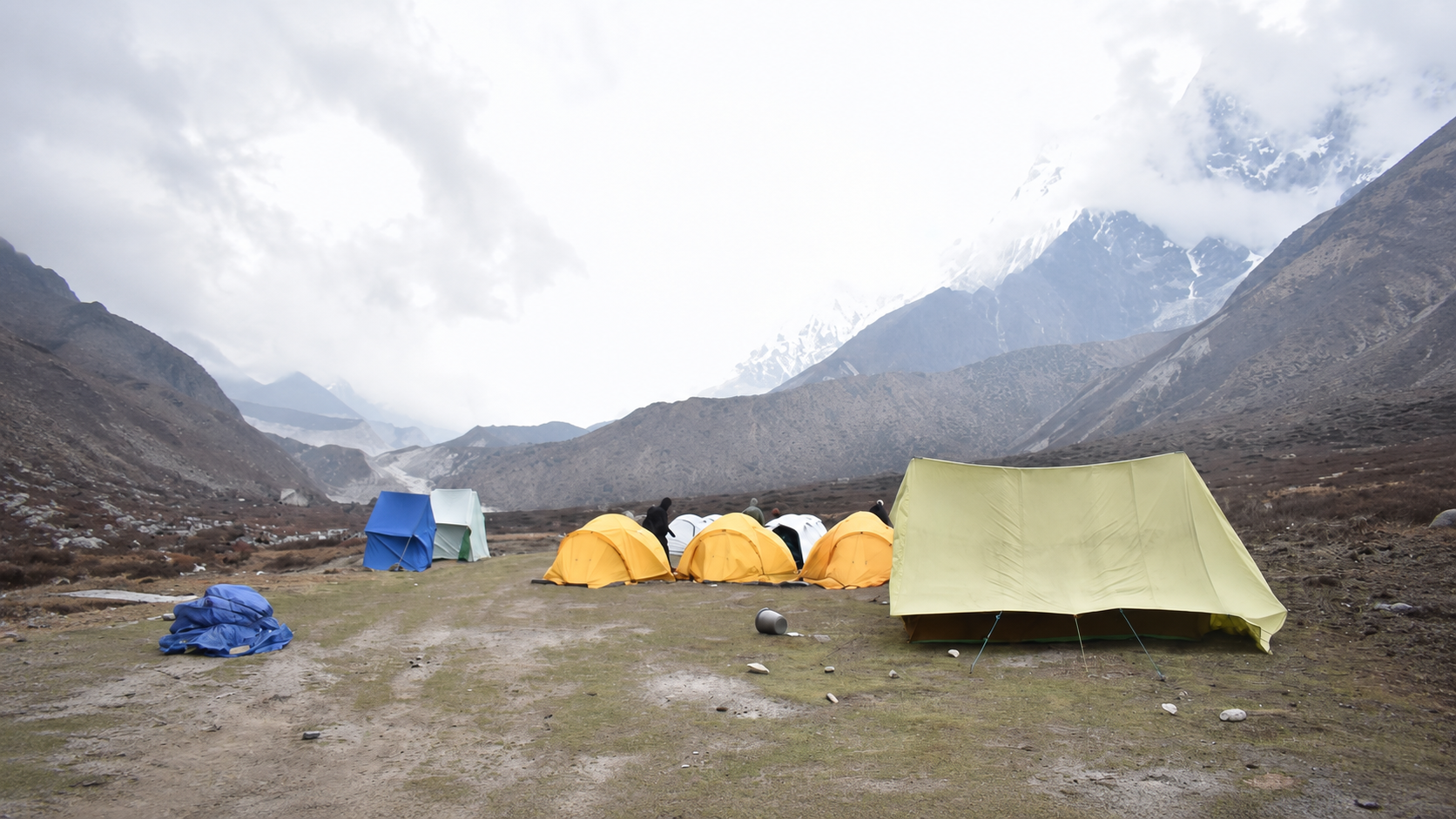
The Sandakphu route passes through a mixture of forest trails, mountain settlements, stone paths and open ridges. Lower sections include wooded areas with oak, magnolia and rhododendron, depending on the season.
As you gain altitude, the forest gradually gives way to more open mountain scenery. Some uphill sections can feel demanding, particularly on the approach to Sandakphu.
You can expect:
- Forest paths and sections of stone-paved trail.
- Gradual and steeper uphill stretches.
- Mountain villages and traditional homestays.
- Open viewpoints with wide Himalayan panoramas.
- Changing trail conditions depending on rain, snow and temperature.
The route is a good option for fit beginners who are comfortable walking for several hours and have prepared properly.
What changes on the Sandakphu–Phalut route?
The main difference appears after Sandakphu. Instead of turning back or following a shorter exit plan, you continue along the ridge towards Phalut.
The Sandakphu–Phalut section is approximately 21 km in the listed itinerary. It is a long stretch with open views, rolling terrain and fewer settlement options than the more frequently visited sections.
You can expect:
- Long stretches of open ridge walking.
- Exposed sections where wind and cold can be more noticeable.
- Broad mountain views along the route.
- Fewer accommodation choices around Phalut.
- A long descent through forest towards Gorkhey and Sepi.
The Phalut extension is not necessarily difficult because of steep climbing throughout. Its challenge comes mainly from the additional distance, extended walking time and exposure to changing mountain weather.
Terrain Comparison
| Trail condition | Sandakphu Trek | Sandakphu–Phalut Trek |
|---|---|---|
| Forest sections | Present | Present, especially on the approach and descent |
| Open ridge walking | Present | More extended |
| Wind exposure | Can be significant near Sandakphu | More noticeable on exposed ridge sections |
| Long walking stretches | Depends on itinerary | Greater distance after Sandakphu |
| Settlement access | Available at several route points | More limited around the Phalut section |
| Overall walking demand | Moderate | Higher endurance requirement |
2. Mountain Views and Scenery
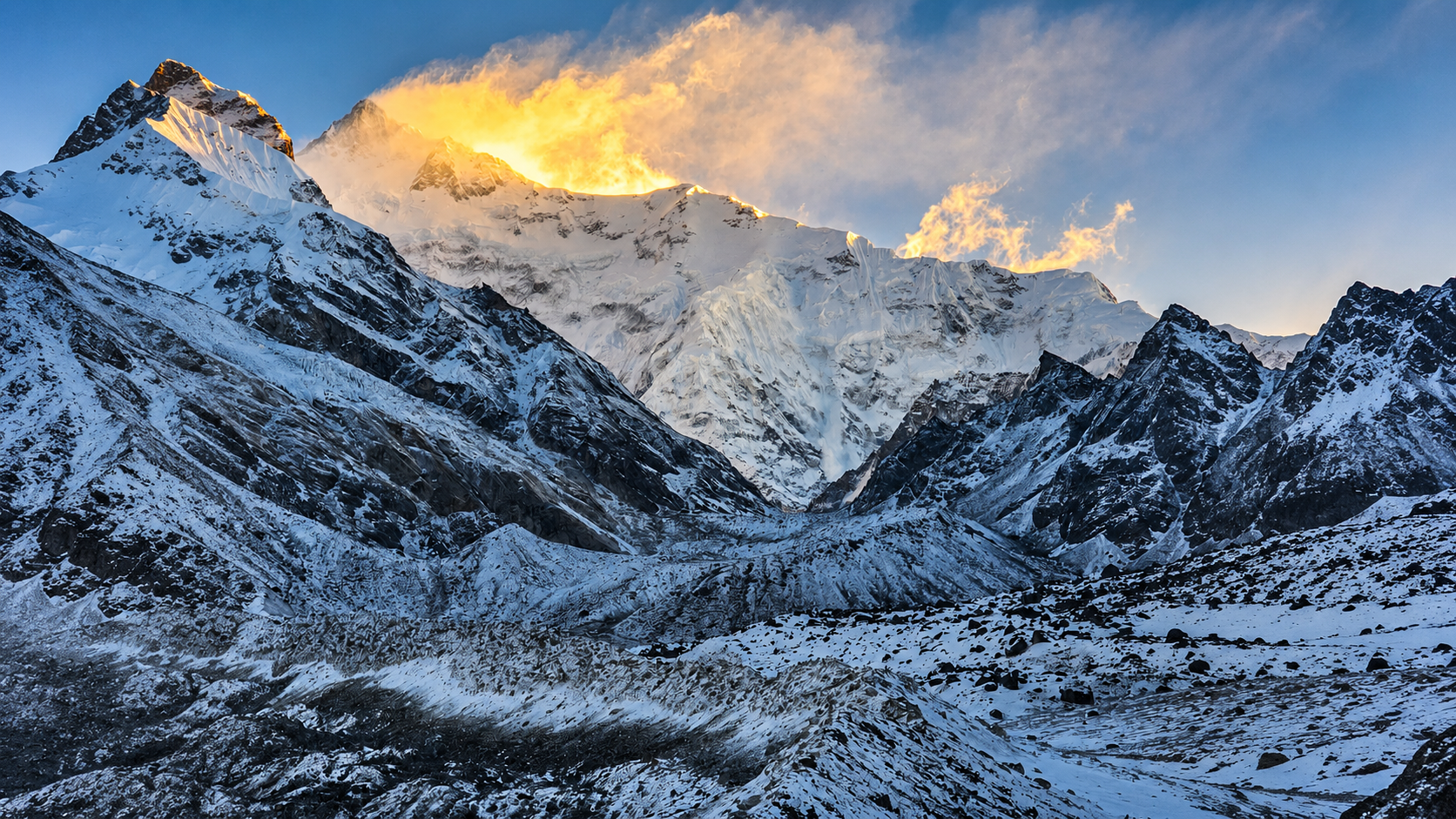
Both routes offer some of the finest mountain panoramas in the Singalila region. On a clear day, trekkers can see Everest, Lhotse, Makalu and the Kanchenjunga range.
The famous Sleeping Buddha appearance is formed by the peaks of the Kanchenjunga massif. Its visibility depends on weather, cloud cover and the viewing point.
Views from Sandakphu
Sandakphu is famous for its wide Himalayan panorama. From the summit area, you can enjoy an impressive view of the surrounding mountain ranges.
Highlights include:
- Panoramic views of Kanchenjunga and the Sleeping Buddha formation.
- Views of Everest, Lhotse and Makalu in favourable weather.
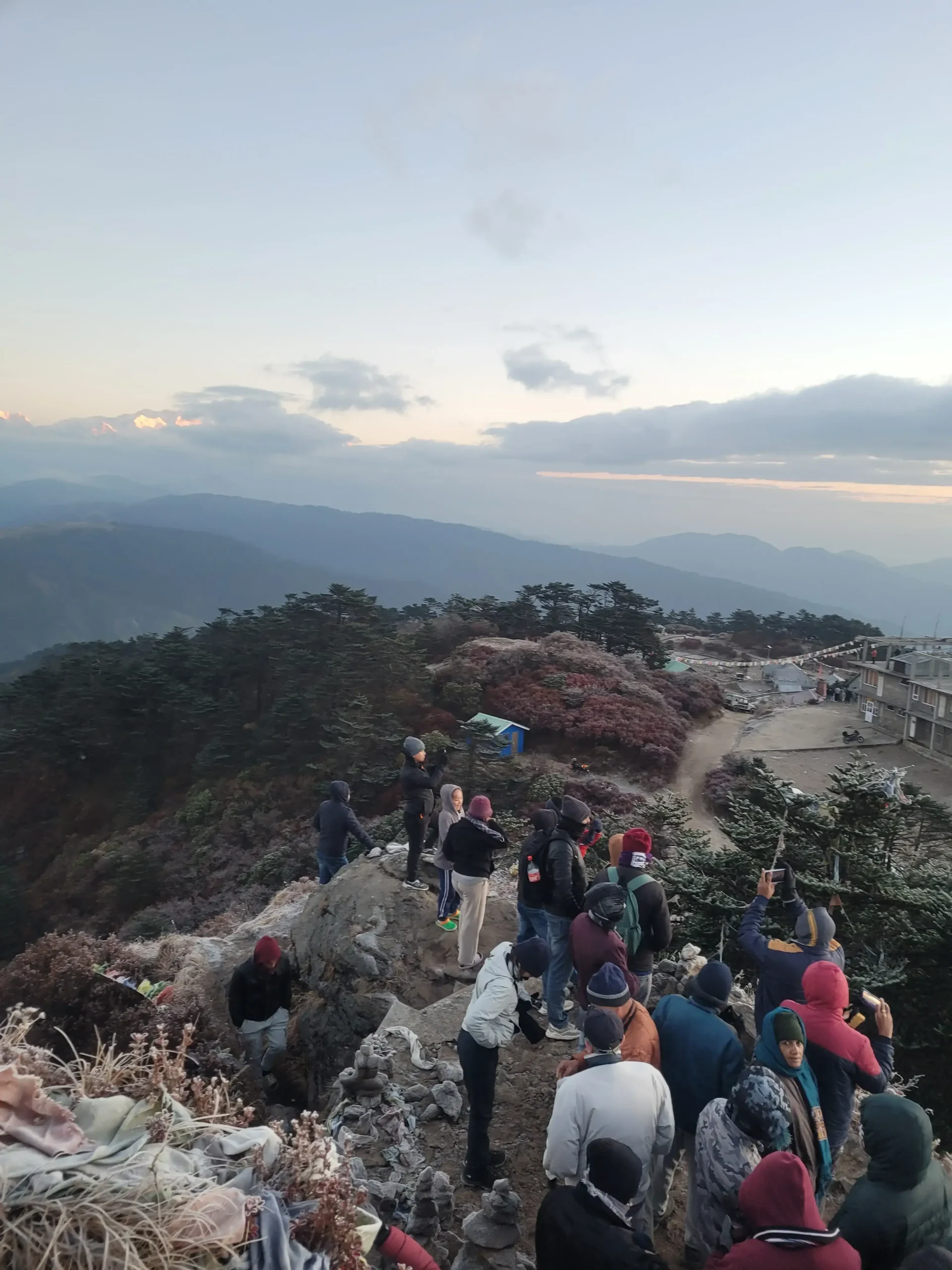
- Sunrise and sunset colours across the Himalayan peaks.
- Open mountain scenery around the Sandakphu summit.
For many trekkers, reaching Sandakphu is the main highlight of the journey. You do not need to continue to Phalut to experience the famous mountain panorama.
Views along the Sandakphu–Phalut route
The route towards Phalut offers a different experience. Rather than returning after Sandakphu, you spend more time walking along the open ridge, with changing views of the mountains and surrounding valleys.
Highlights include:
- Extended views of the Kanchenjunga massif.
- Wide open landscapes along the ridge.
- Quieter sections away from the busier Sandakphu area.
- Different perspectives of the Himalayan peaks as you approach Phalut.
Phalut is particularly attractive to trekkers who enjoy open mountain landscapes and photography. However, it is better not to describe it as the guaranteed closest or clearest view of the Sleeping Buddha. Visibility changes with the weather and the exact viewpoint.
Which route offers better scenery?
Choose Sandakphu if you want the classic panoramic viewpoint without adding the longer Phalut section. Choose Sandakphu–Phalut if you want more time on the ridge and a longer experience of the surrounding mountain landscape.
3. Trek Duration and Walking Effort
The time required is one of the most important differences between these two routes.
Sandakphu Trek duration
Our listed Sandakphu package is planned for 5 nights and 6 days, with a total trekking distance of approximately 60 km.
The daily walking hours depend on the itinerary, starting point, weather and group pace. Some days involve steady uphill walking, while others may include longer distances over rolling terrain.
This option is suitable for trekkers who want to experience Sandakphu within a planned six-day programme.
Sandakphu–Phalut Trek duration
The Phalut extension adds a substantial stretch to the journey. In our listed route, the stages are:
- Manebhanjan to Chitrey to Tonglu: 9 km.
- Tonglu to Gairibas to Kalipokhri: 13 km.
- Kalipokhri to Sandakphu: 6 km.
- Sandakphu to Phalut: 21 km.
- Phalut to Gorkhey: 15 km.
- Gorkhey to Sepi: 15 km.
The listed stages add up to approximately 79 km. The Sandakphu–Phalut section alone is around 21 km, making it a long day of walking.
This route is better suited to people who have enough time and are comfortable with extended trekking days.
4. Weather and Best Time to Visit
Weather can change quickly along the Singalila Ridge. Even when the lower villages feel comfortable, the temperature at Sandakphu and Phalut can be much colder.
Best seasons
March to May: Spring brings blooming rhododendrons and fresh forest scenery. Temperatures can still be cold at higher elevations, particularly in the early morning and evening.
October to November: Autumn is a popular period for mountain views. The weather is often more stable, although clear visibility is never guaranteed.
Winter: Winter can bring very cold nights, frost and snow. Trekkers need proper winter clothing and should check current trail and weather conditions before departure.
Monsoon: Heavy rain, mist, slippery paths and poor visibility can make trekking less comfortable. It is generally better to avoid planning the trek during periods of persistent monsoon rainfall.
Weather differences between the two routes
Both routes experience cold conditions at higher elevations. However, the extended ridge walk towards Phalut can feel more exposed because there are long open sections with limited shelter.
Carry warm layers, a windproof outer jacket, gloves and suitable trekking footwear. Do not underestimate the wind, even on a sunny day.
5. Accommodation and Food Facilities
Accommodation is an important consideration, especially if you are planning the longer Phalut route.
Accommodation on the Sandakphu Trek
The Sandakphu trail has several established settlements and accommodation points. Trekkers can find homestays, lodges and basic food facilities at various stops along the route.
Facilities are simple rather than luxurious, but they provide places to rest and eat during the journey.
Accommodation on the Sandakphu–Phalut Trek
The Phalut extension has fewer accommodation choices in its more remote sections. At Phalut, trekkers generally depend on basic trekker accommodation, including the government trekkers’ hut.
Facilities may be limited, so it is important to arrange overnight stays and food requirements in advance.
Accommodation Comparison
| Feature | Sandakphu Trek | Sandakphu–Phalut Trek |
|---|---|---|
| Homestays and lodges | Available at several settlements | Available along parts of the route |
| Phalut accommodation | Not required | Basic trekkers’ hut or available arranged accommodation |
| Food options | Available at established stops | More limited around Phalut |
| Comfort | Basic mountain accommodation | Basic, with fewer choices on the extended section |
| Planning | Accommodation should be arranged in advance | Extra care is needed for the Phalut overnight stop |
Do not expect hotel-style facilities on either trek. Accommodation availability, food choices, electricity and heating can vary by season and property.
6. Difficulty: Which Trek Is More Challenging?
Both routes require reasonable fitness. Neither should be treated as an effortless sightseeing walk.
Sandakphu Trek difficulty
The Sandakphu Trek is generally considered moderate. It includes uphill sections, uneven trails and walking at elevations above 3,000 metres.
You should be comfortable with:
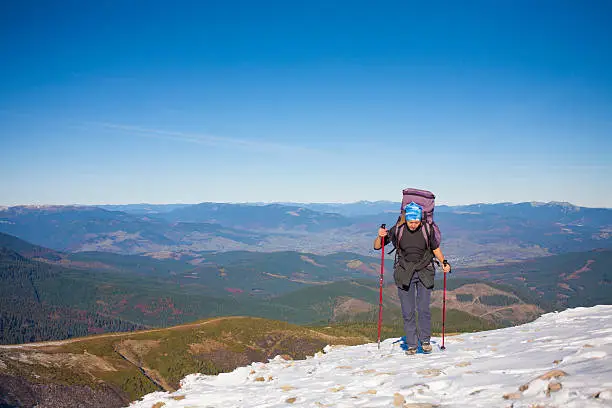
- Walking for several hours on consecutive days.
- Climbing uphill on uneven mountain paths.
- Carrying a daypack.
- Managing cold temperatures and changing weather.
A first-time trekker with good basic fitness can consider this route after proper preparation.
Sandakphu–Phalut Trek difficulty
The extended route requires more endurance because of the additional distance and long ridge section between Sandakphu and Phalut.
The main challenges are:
- The approximately 21 km Sandakphu–Phalut stretch.
- Longer periods of walking in exposed conditions.
- Limited accommodation choices around Phalut.
- A further descent towards Gorkhey and Sepi.
The route may suit fit beginners with good preparation, but it is more comfortable for trekkers who already have experience with long-distance walking.
7. Which Trek Should You Choose?
The right choice depends on your available time, fitness and the kind of mountain experience you want.
Choose the Sandakphu Trek if:
- You have around six days for the trip.
- You want to experience the famous Sandakphu viewpoint.
- You prefer a shorter trekking programme.
- You are a fit beginner planning your first Himalayan trek.
- You want more established accommodation stops along the route.
Explore our Sandakphu Trek package for itinerary and booking details.
Choose the Sandakphu–Phalut Trek if:
- You have additional time for a longer trek.
- You want to continue beyond Sandakphu.
- You enjoy long ridge walks and open mountain landscapes.
- You are comfortable walking longer distances.
- You prefer a quieter experience along the Phalut section.
Explore the Sandakphu–Phalut Trek route for the extended itinerary.
8. Pros and Cons of Both Routes
Sandakphu Trek
Advantages
- Shorter planned trekking programme.
- Famous panoramic Himalayan viewpoint.
- Several established accommodation stops.
- Suitable for fit beginners with preparation.
- Less walking than the full Phalut extension.
Things to consider
- The uphill approach to Sandakphu can be demanding.
- Weather can affect mountain visibility.
- The route can be busy during popular trekking seasons.
- You miss the extended ridge walk beyond Sandakphu if you turn back.
Sandakphu–Phalut Trek
Advantages
- Longer experience along the Singalila Ridge.
- Extended views of the Himalayan landscape.
- Quieter walking sections beyond Sandakphu.
- Opportunity to visit Phalut and descend towards Gorkhey.
- A rewarding option for trekkers who enjoy longer routes.
Things to consider
- More total walking distance.
- A long Sandakphu-to-Phalut section.
- Fewer accommodation choices around Phalut.
- Greater exposure to wind and cold.
- Requires more careful itinerary and fitness planning.
Frequently Asked Questions
1. Is the Sandakphu–Phalut Trek harder than the Sandakphu Trek?
Generally, yes. The Phalut extension adds a long ridge walk and more total distance. The main challenge is endurance rather than reaching a higher altitude, because Sandakphu is slightly higher than Phalut.
2. How far is Phalut from Sandakphu?
The Sandakphu-to-Phalut section is approximately 21 km in the route listed on our website. Walking time depends on weather, trail conditions, fitness and group pace.
3. How many days are needed for the Sandakphu–Phalut Trek?
The duration depends on the starting point, exit route and pace. Our listed route includes six trekking stages, from Manebhanjan through Tonglu, Kalipokhri, Sandakphu and Phalut to Gorkhey and Sepi. Allow enough time for the full itinerary rather than trying to rush the route.
4. Can beginners do the Sandakphu–Phalut Trek?
Fit beginners may be able to complete it with proper preparation and a well-planned itinerary. However, the longer walking days make it more demanding than the classic Sandakphu route.
5. Which trek has better views of Kanchenjunga?
Both routes offer excellent views of the Kanchenjunga range in clear weather. Sandakphu is famous for its wide panorama, while the Phalut extension offers additional viewpoints along the ridge. Cloud cover and visibility determine what you can actually see.
6. Is accommodation available at Phalut?
Accommodation at Phalut is basic and more limited than at the established settlements along the Sandakphu route. Trekkers generally need to plan around the available trekkers’ hut or other confirmed arrangements.
7. What is the best time for the Sandakphu and Phalut treks?
March to May and October to November are popular periods. Spring offers flowering forests, while autumn is often preferred for clearer mountain views. Weather conditions can still change, so check the forecast before departure.
8. Are Sandakphu and Phalut in Sikkim?
No. Both Sandakphu and Phalut are in the Singalila region of West Bengal, near the India–Nepal border. They are not located in Sikkim, although the mountain views include the Kanchenjunga range and surrounding Eastern Himalayan landscape.
Final Verdict: Sandakphu or Sandakphu–Phalut?
The Sandakphu Trek is a good choice if you want to experience the famous Himalayan panorama within a shorter, planned trekking programme. It offers a rewarding mountain journey without adding the long ridge walk towards Phalut.
The Sandakphu–Phalut Trek is the better option if you have more time and want to explore beyond Sandakphu. Its longer ridge section, quieter landscapes and descent towards Gorkhey make it a more extended trekking experience.
At Glacier Treks & Adventure, we help trekkers choose a route according to their available time, fitness and expectations. Our local team can guide you through the itinerary, accommodation arrangements and trail conditions before your journey begins.
Planning your Sandakphu adventure?
Contact Glacier Treks & Adventure:
- Phone / WhatsApp: +91 7407248200
- Email: contact@trekinsikkim.in
- Address: Yuksom Bazar Main Road, near Hotel Yangri Gang, West Sikkim, PIN 737113
Explore our Sandakphu Trek package or Sandakphu–Phalut Trek package and contact us to plan your route.