By Kiran Gurung · Founder, Glacier Treks & Adventure · Yuksom, West Sikkim
Published: 15 June 2026 · Last updated: 15 June 2026
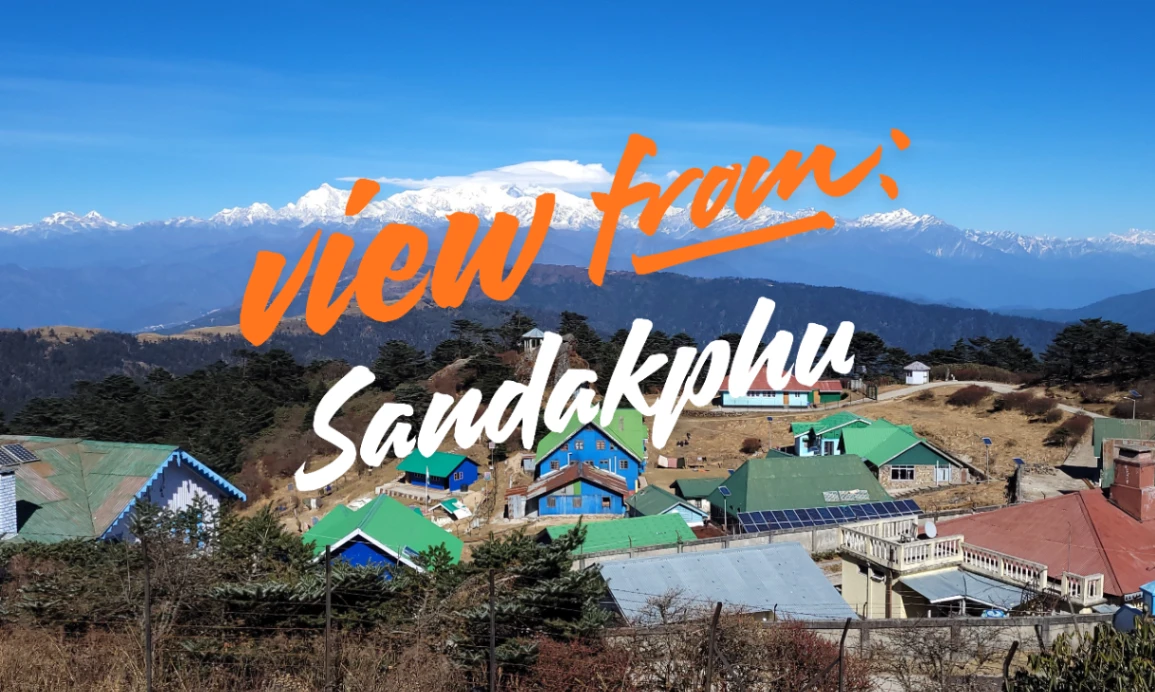
The Sandakphu Trek is a 6-day, 60-kilometre Himalayan trek to 3,636m — the highest point in the Singalila Ridge between India and Nepal. It is the only trek in India from where you can see four of the world’s five highest peaks (Everest, Kanchenjunga, Lhotse and Makalu) in a single panorama, along with the iconic ‘Sleeping Buddha‘ silhouette of the Kanchenjunga massif. The trek starts from Maneybhanjyang near Darjeeling and is rated easy-to-moderate, suitable for first-time Himalayan trekkers. Best months: March–May and October–December. Cost: ₹9,000 per person (₹11,000 list price) or $300 for international trekkers specially from our Glacier Trek & Adventure.
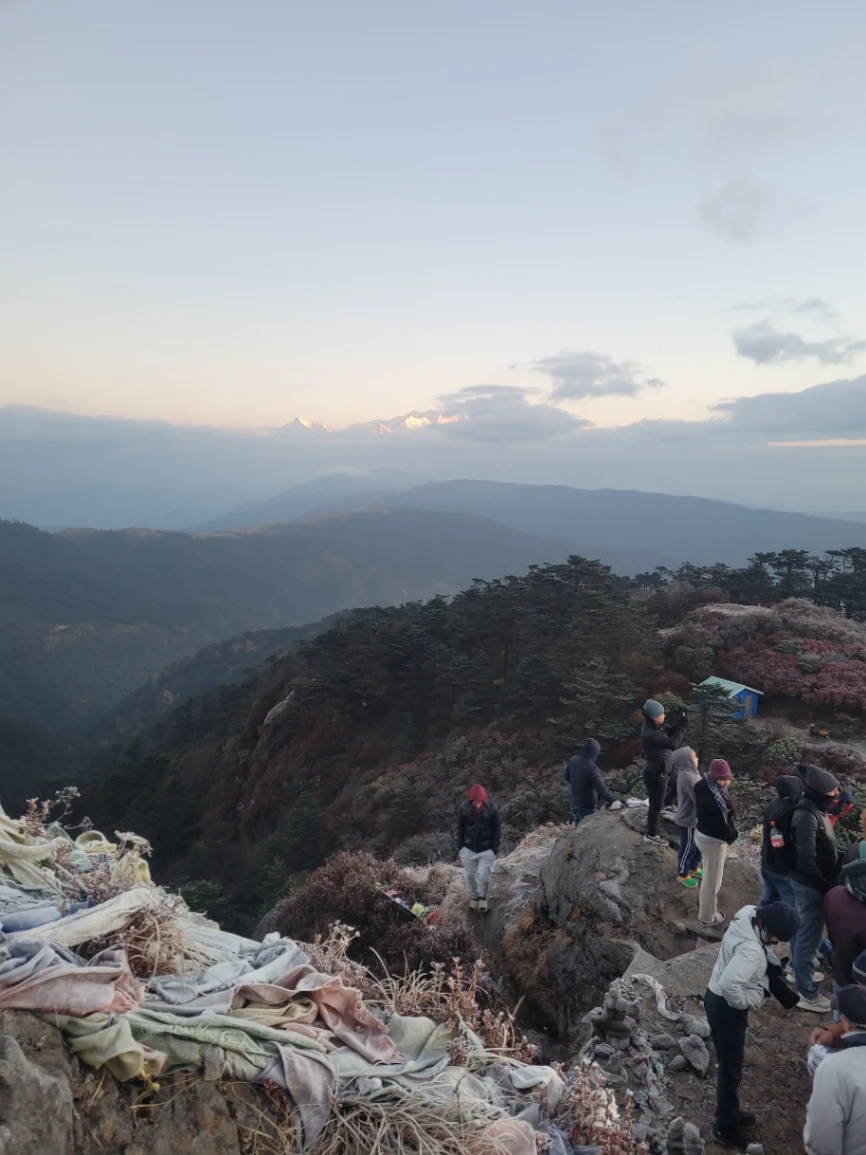
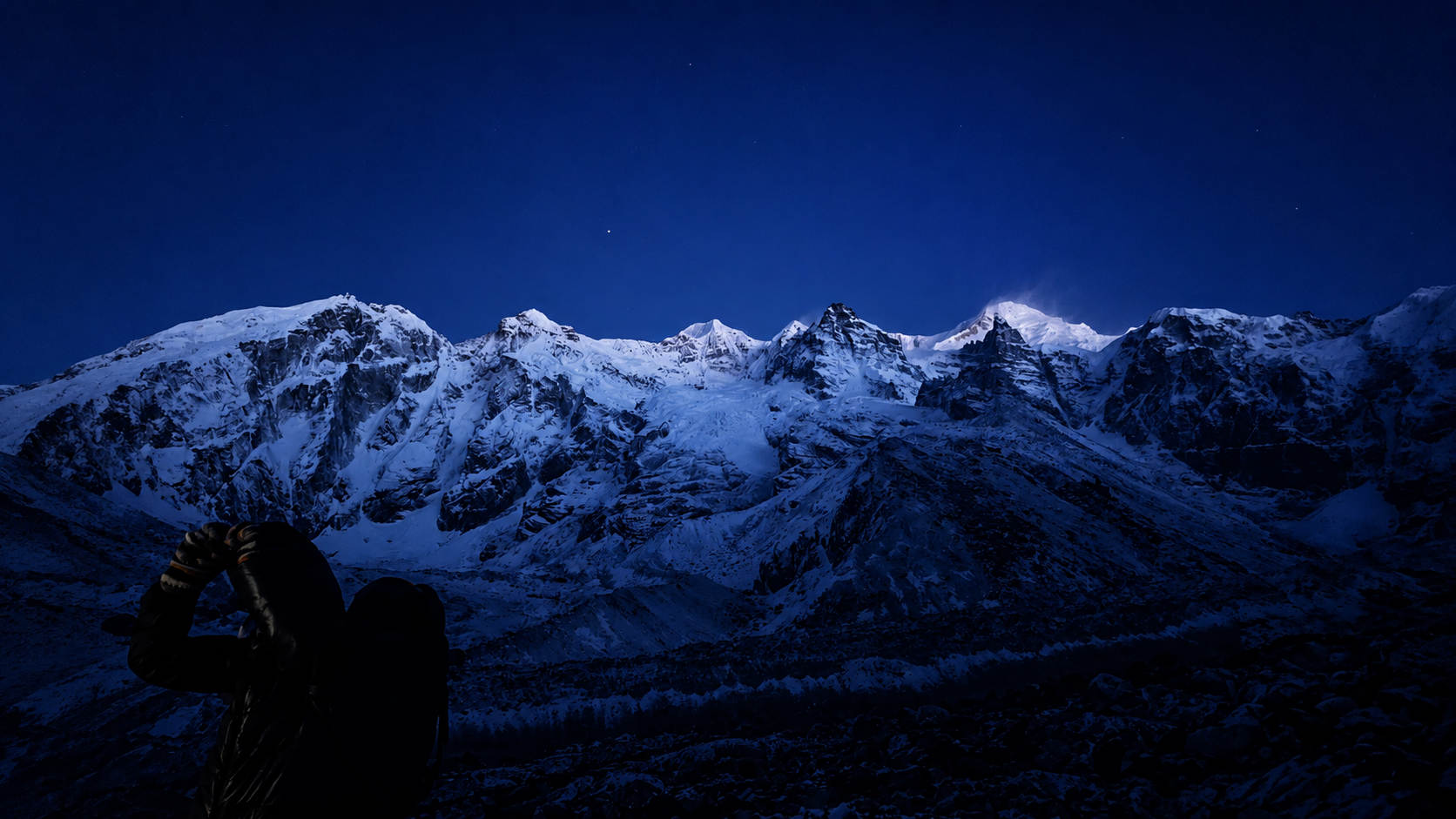
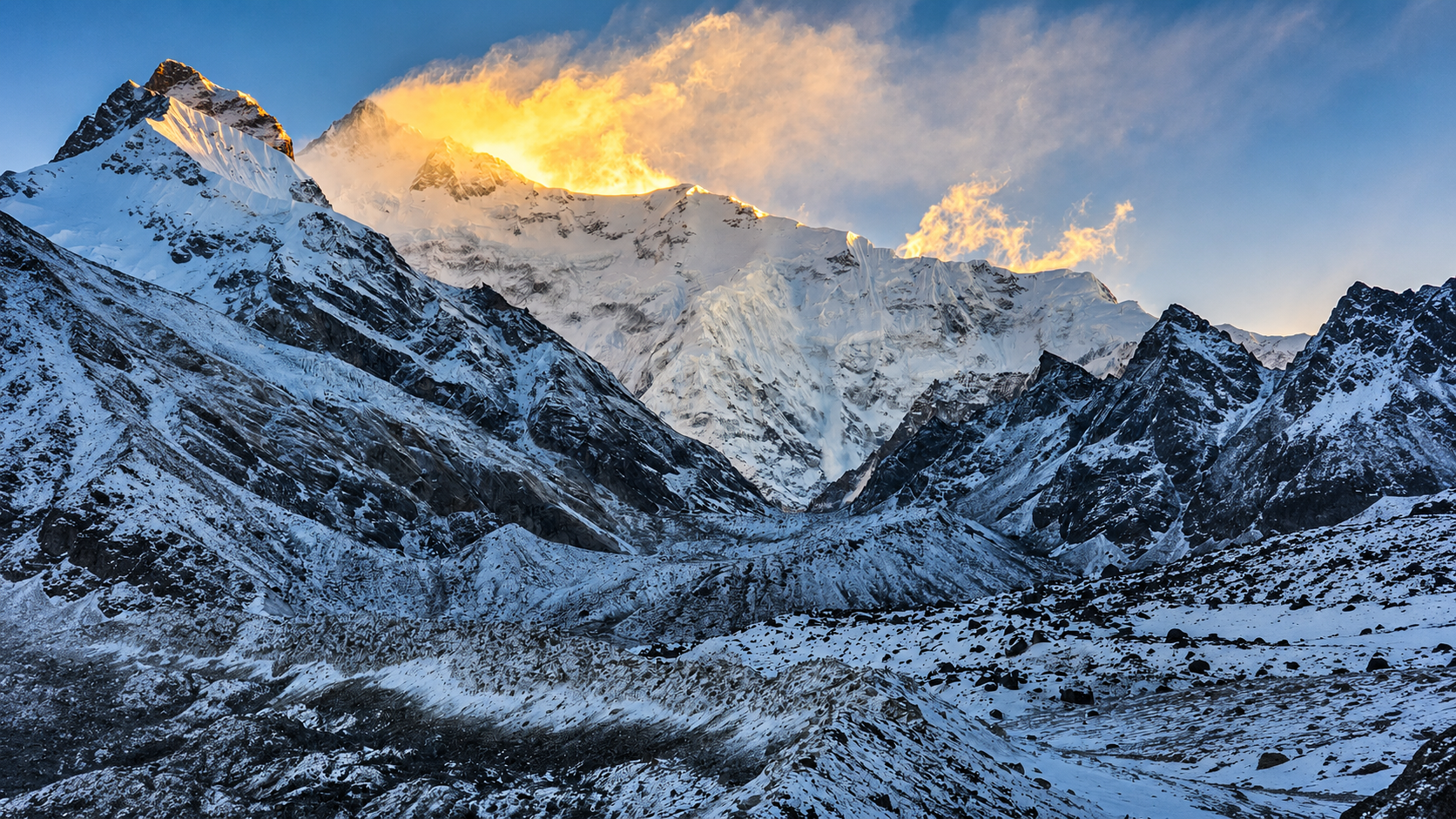
There is one image that sells the Sandakphu Trek before any words do — the moment a clear morning lights up the Sleeping Buddha. The Kanchenjunga massif, when seen from the Sandakphu summit at sunrise, forms a perfect outline of a reclining figure. The head, chest, hands and feet of the Buddha are made of Kabru, Talung, Kanchenjunga main, Pandim and Simvo. On the same morning, looking westward, you can pick out Everest, Lhotse and Makalu in the distance. There is no other commercial trek in India that offers this view from a 3,636-metre summit you can walk to in four days.
I have been running the Sandakphu Trek, alongside our Sikkim portfolio for over a decade, and it remains the trek I most often recommend to first-time Himalayan trekkers. It is gentle enough for a fit beginner, scenic enough for an experienced trekker, and short enough to fit into a regular work leave. This guide covers everything — the day-by-day itinerary, the real 2026 cost, the trek-versus-Land-Rover decision (we operate both), and the practical details that will help you book with confidence.
1. Sandakphu Trek Quick Facts
| Attribute | Detail |
|---|---|
| Region | Singalila National Park, West Bengal (India-Nepal border) |
| Trail name | Sandakphu Trek (also spelt ‘Sandakfu’ or ‘Sandakphoo’) |
| Start point | Maneybhanjyang (2,134m), 26km from Darjeeling |
| End point | Srikhola, exit via Rimbick |
| Highest point | Sandakphu summit — 3,636m (11,929 ft) |
| Duration | 5 nights / 6 days from Maneybhanjyang |
| Trek distance | Approximately 60 kilometres total |
| Difficulty | Easy to Moderate (suitable for first-time Himalayan trekkers) |
| Best time | March–May (spring) and October–December (autumn) |
| Suitable age | 12 to 65 years (medical clearance over 60) |
| Cost (Indian) | ₹9,000 per person (₹11,000 list price) |
| Cost (Foreign) | $300 per person (excludes additional permit charges) |
| Permits needed | Singalila National Park permit, ID proof |
| Mountain views | Everest (8,848m), Kanchenjunga (8,586m), Lhotse (8,516m), Makalu (8,485m), Sleeping Buddha massif |
| Trail type | Mostly lodges and teahouses; minimal camping required |
2. Where Is Sandakphu and Why Is It Special
Sandakphu sits on the Singalila Ridge — a long, narrow mountain spine that forms the natural border between the Indian state of West Bengal and the Mechi province of Nepal. The trek is contained within Singalila National Park, which was established in 1992 and upgraded to a national park in 1992. The ridge runs north-to-south for nearly 50 kilometres, and Sandakphu, at 3,636 metres, is its highest point and the highest accessible summit in West Bengal.
Three things, in my experience, make Sandakphu genuinely special — not marketing copy, but specifics:
- Four of the world’s five highest peaks in one view. From the Sandakphu summit on a clear morning, you can see Everest (8,848m), Kanchenjunga (8,586m), Lhotse (8,516m) and Makalu (8,485m). K2 is the missing one — it lies in Pakistan. No other commercial trekking summit in India offers this.
- The Sleeping Buddha. The Kanchenjunga massif, when viewed from Sandakphu, forms the unmistakable outline of a reclining figure. Kabru forms the head, Kumbhakarna the hands, Kanchenjunga the main body, Pandim and Simvo the feet. It is one of the most photographed mountain silhouettes in the Himalaya.
- You cross between two countries seven times. The trail genuinely zigzags along the India-Nepal border. You will stop for tea in a Nepali village, walk back into India, and cross the next morning again. No permit is needed for these crossings — the ridge is an old trade route, and the practice is centuries old.
Beyond these, Sandakphu rewards repeat visits with seasonal variety. In April, the entire ridge below 3,200 metres bursts into rhododendron bloom — pink, white, red, and the rare ‘campbelliae’ magenta. In October, the post-monsoon clarity gives the most consistent mountain views of the year. In December, light snow on the ridge transforms the same trail into something altogether different. Few treks in India give you four genuinely distinct seasons in one route.
3. Sandakphu Trek Itinerary — Day by Day
Below is the standard 6-day Sandakphu Trek itinerary we run. The pace is comfortable for first-time trekkers, with the toughest day (Day 4 — the summit push) deliberately kept short. Distances and times are real numbers from our most recent batches.
Day 1 — Arrival at NJP / Bagdogra, transfer to Maneybhanjyang
Distance: 110km by road from NJP railway station / Bagdogra airport. Travel time: 4–5 hours. Altitude: Maneybhanjyang 2,134m.
You arrive at NJP by overnight train or Bagdogra by morning flight. Our vehicle picks up between 9 AM and 11 AM. The drive climbs steadily through tea gardens and pine forest, with a tea stop at Mirik or Darjeeling before continuing to Maneybhanjyang — the trek’s base. We reach by mid-afternoon, settle into a guesthouse, and the trek leader runs through the briefing over dinner. Spend the evening walking around Maneybhanjyang to begin gentle altitude exposure.
Day 2 — Maneybhanjyang to Tonglu / Tumling via Chitrey
Distance: approximately 11km (including a vehicle transfer to Chitrey for the first 4km). Walking time: 5–6 hours. Altitude: Tonglu 3,070m / Tumling 2,970m.
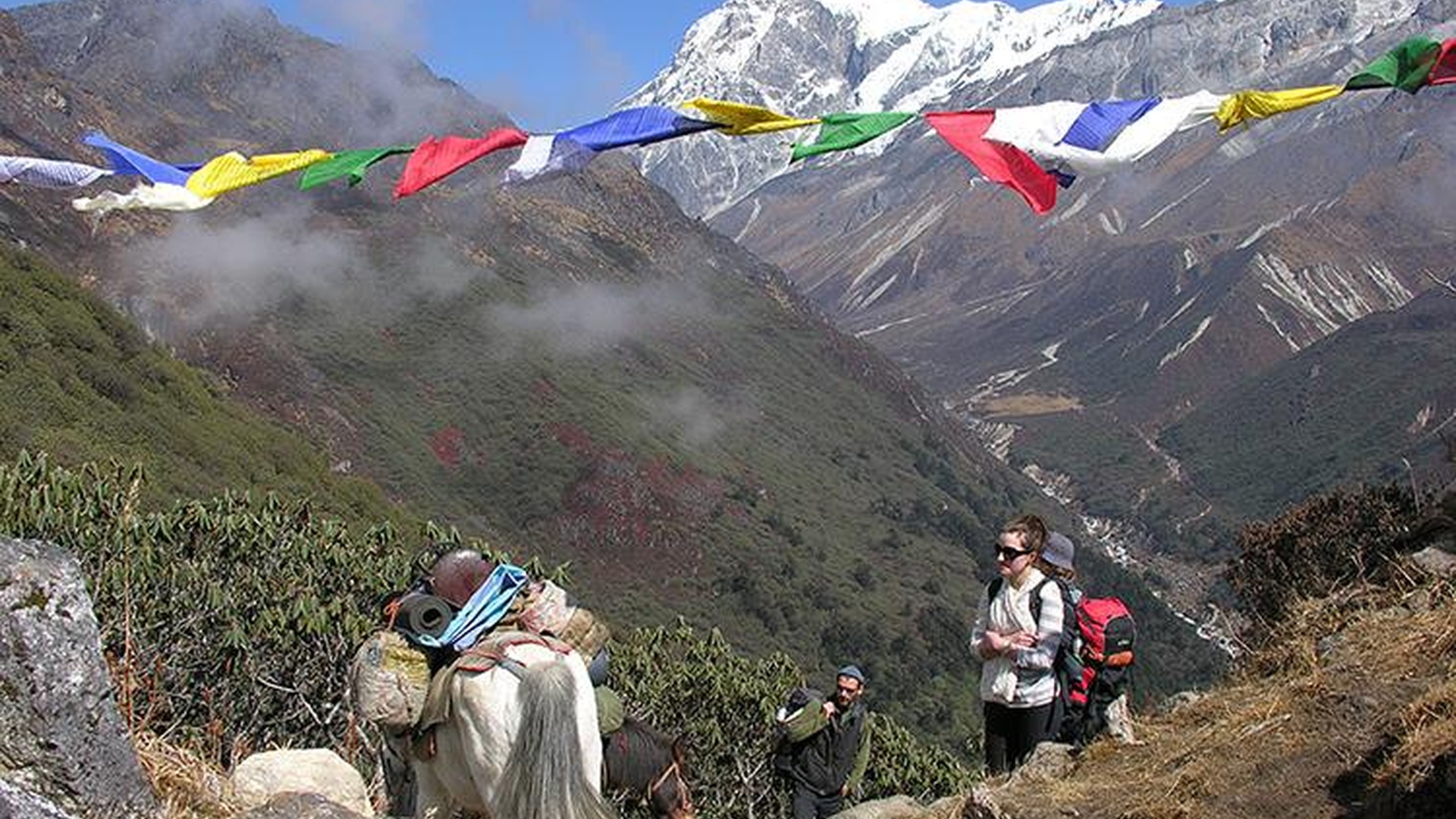
The first proper trekking day. We drive 4km to Chitrey to skip the steep tarmac start, then begin walking through dense magnolia and oak forest. The trail crosses into Nepal at Lamaydhura, and within the first three hours, you reach Meghma — a small Nepali village with a 200-year-old monastery worth a 15-minute visit. From Meghma, a steady climb brings you to the meadows above Tonglu, where the Sleeping Buddha appears for the first time on a clear afternoon. Most groups stay at Tumling or Tonglu lodge for the night.
Day 3 — Tonglu / Tumling to Kalipokhri via Gairibas
Distance: approximately 15km. Walking time: 6–7 hours. Altitude: Kalipokhri 3,186m.
The longest distance day. The trail rolls along the Singalila Ridge with views opening up on both sides — Kanchenjunga to the east, the deep Nepal valleys to the west. Lunch is at Gairibas (2,621m), a small dhaba cluster halfway. The afternoon involves a 600-metre climb to Kalipokhri, named after its small ‘black lake’ which never freezes even in mid-winter — a fact local tradition links to the goddess Kali. Kalipokhri has a handful of basic lodges and is our most comfortable evening of the trek, since the next day is the summit push.
Day 4 — Kalipokhri to Sandakphu summit
Distance: approximately 6km. Walking time: 3–4 hours. Altitude: Sandakphu 3,636m.
Deliberately short, because today the altitude jumps from 3,186m to 3,636m, and you need energy in the legs for the summit. The trail climbs steeply to Bikheybhanjyang (the ‘pass of poisonous plants’, named after wild aconite that grows here), then zigzags up the final ridge to Sandakphu. We arrive by lunch, settle into the Sandakphu trekkers’ hut, and have the entire afternoon to rest, hydrate and acclimatise. The summit sunrise the next morning is the moment you came for.
Day 4 is the day we watch trekkers most carefully. The altitude gain is modest, but the cumulative effect of three days at over 3,000m can show up here. Drink at least 4 litres of water, eat dinner even if you do not feel hungry, and report any persistent headache to the trek leader. We carry pulse oximeters and check readings at Kalipokhri and Sandakphu evenings.
Day 5 — Sandakphu sunrise, descend to Srikhola via Gorkhey
Distance: 16km descent. Walking time: 7–8 hours. Altitude: Srikhola 2,070m.
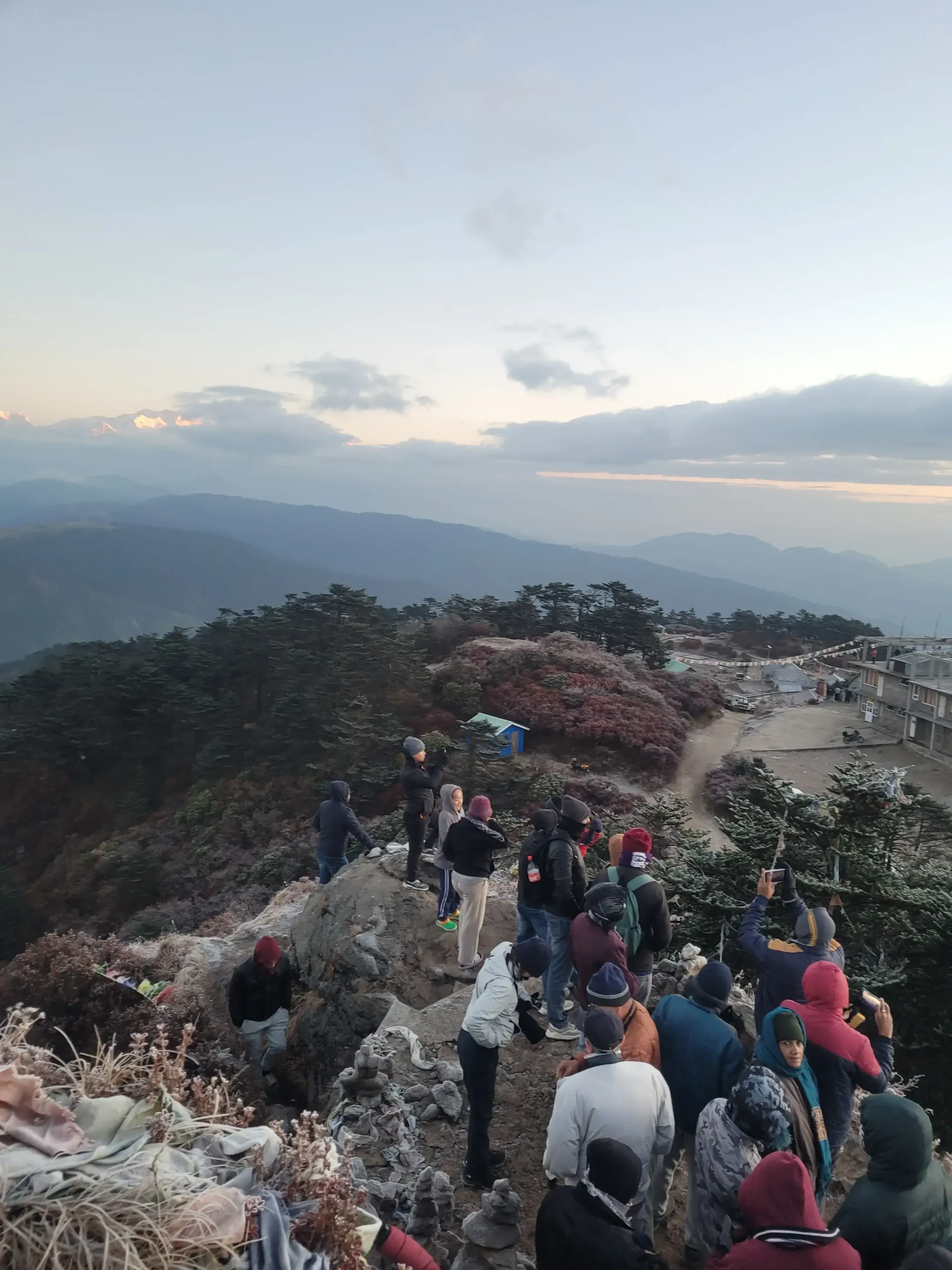
Wake up at 4:30 AM. We walk five minutes to the summit viewpoint to catch sunrise on the Sleeping Buddha — the entire massif lights up in pre-dawn pink, then orange, then full golden within twelve minutes. After breakfast, we descend the eastern side of the ridge through dense forest to Gorkhey, a small village by a glacial stream that is one of the loveliest spots on the whole route. From Gorkhey, the final stretch to Srikhola is a gentle riverside walk. Srikhola has decent lodges for your last night on the trail.
Day 6 — Srikhola to NJP / Bagdogra
Distance: 110km by road. Travel time: 6–7 hours.
Early morning departure by vehicle through Rimbick, Lodhama, Maneybhanjyang, Darjeeling and down to the plains. We typically reach Bagdogra airport by 3 PM and NJP railway station by 4 PM. Keep your onward flight or train booking after 5 PM for safety.
The Sandakphu trek from NJP concludes in 6 days.
Read more: Day-by-day itinerary with altitudes and campsite photos
4. Sandakphu Trek Cost in 2026 (Full Breakdown)
Our 2026 Sandakphu Trek package is priced at ₹9,000 per person for Indian nationals (discounted from a list price of ₹11,000) and $300 for international trekkers. Below is the full breakdown of what is included, and the realistic extras you should budget for.
| Cost head | Indian trekkers (INR) | Foreign trekkers (USD) |
|---|---|---|
| Standard package (Maneybhanjyang to Srikhola) | ₹9,000 | $300 |
| List price (before discount) | ₹11,000 | $350 |
| Singalila National Park permit | Included | Higher rate at the check post |
| NJP/Bagdogra to Maneybhanjyang transfer (shared) | ₹2,500 | $40 |
| Srikhola to NJP/Bagdogra return transfer (shared) | ₹2,500 | $40 |
| Bag offloading (porter, full trek) | ₹3,500 | On request |
| Gear rental (jacket, sleeping bag, poles) | ₹1,800 (full set) | $30 |
| GST (mandatory) | 5% | 5% |
| Tips for support team (suggested, per trekker) | ₹400–800 | $10–12 |
What is included in the package: all meals from Day 1 dinner to Day 6 breakfast, twin-share lodge or trekkers’ hut accommodation throughout, a qualified trek leader, local Nepali-speaking guide, support staff, all Singalila National Park entry fees and forest permits, basic medical kit with portable oxygen, and pulse oximeter monitoring at higher camps.
What is not included: transport between NJP/Bagdogra and Maneybhanjyang, personal trekking gear (rentable from us in Maneybhanjyang), personal medical insurance, GST of 5%, tips, and anything not listed in the inclusions.
A realistic all-in budget for an Indian trekker arriving at NJP and departing from NJP works out to roughly ₹16,000–18,000 — that is the ₹9,000 package + 5% GST + ₹5,000 round-trip transfers + optional offloading + tips. For foreign trekkers, the equivalent is around $400–450 all-in. Add your own flights or trains separately.
Read more: Full cost breakdown with hidden charges explained
5. Trek on Foot vs Sandakphu by Land Rover — Which Option Is Right For You
Sandakphu is the only major Himalayan summit in India that can be reached either by trekking or by riding up a fleet of vintage Land Rovers — old British-era 4WDs that have been ferrying tourists up the Singalila Ridge since the 1950s. We operate both. They are very different experiences, and choosing between them is the most important decision in planning this trip.
| Factor | Trek on foot (6 days) | Land Rover tour (4 days) |
|---|---|---|
| Duration | 5 nights / 6 days | 3 nights / 4 days |
| Total walking | 60 km over 4 trekking days | Optional short walks only |
| Difficulty | Easy to Moderate (real fitness needed) | None — drive up, drive down |
| Best for | Trekkers wanting the full Himalayan experience | Older travellers, families with young children, people with limited mobility |
| Time to summit | Day 4 morning | Day 2 morning |
| Cost (Indian) | ₹9,000 + transport | Land Rover tour package, separate quote |
| Experience | Forest, meadow, ridge walks; teahouse stays | Vintage 4WD experience; views from the road |
| Photography | Time at every viewpoint | Limited stops, but quick coverage |
| Acclimatization | Gradual over 3 days | Rapid — altitude impact possible |
My honest recommendation: if you are reasonably fit and you can afford the six days, trek on foot. The ridge experience and the way the mountains slowly reveal themselves are the entire point of Sandakphu, and that reveal does not happen from a vehicle window. If you have a family with grandparents and children, or you genuinely cannot take six days off, the Land Rover tour delivers the same view from the same summit and is a legitimate, well-loved Darjeeling-region experience in its own right.
Read more: Sandakphu by Land Rover — full tour details
6. Best Time to Do the Sandakphu Trek (Month by Month)
Sandakphu trek has two clear trekking windows: spring (March to May) and autumn (October to December). The trek is technically open in winter, but the trail above Kalipokhri can be under snow, and the lodge facilities are reduced to a minimum. June through September is monsoon, and the trek is closed by our policy — landslides on the access roads and clouded views make it both risky and pointless.
| Month | Weather | Mountain visibility | Crowds | Recommended for |
|---|---|---|---|---|
| March | Cool, mild days | Very good | Light | First-time trekkers |
| April | Mild, rhododendrons peak | Excellent | High | Flower photographers, families |
| May | Warmer, occasional pre-monsoon clouds | Good | High | Late spring trekkers |
| June–Sep | Monsoon (closed) | Very poor | — | Do NOT trek |
| October | Crisp, post-monsoon clarity | Excellent | Very high | Anyone — best month overall |
| November | Cold mornings, clear skies | Excellent | High | Photographers |
| December | Cold (-2°C nights), light snow | Very good | Moderate | Snow lovers, well-equipped trekkers |
| Jan–Feb | Severe cold, heavy snow | Variable | Light | Experienced trekkers with full winter kit |
If I had to recommend a single window, I would say the last two weeks of October. The monsoon has fully cleared, the air is at its most transparent of the entire year, the rhododendron forest is starting its autumn colours, and the morning sky over the Sleeping Buddha holds steady for at least an hour after sunrise. We have run over 40 batches in this two-week window across the last decade and missed the summit sunrise only once.
Read more: Month-by-month weather and visibility analysis
7. Sandakphu Trek Difficulty and Fitness
The Indian Himalayan Sandakphu trekking difficulty is rated on an easy-to-moderate scale. It is one of the most beginner-friendly summit treks in the country — but ‘beginner-friendly’ does not mean ‘no preparation needed’. Sixty kilometres over four trekking days at altitudes between 2,134m and 3,636m will challenge anyone who has not walked regularly in the eight weeks before the trek.
What makes Sandakphu manageable for first-time trekkers
- Maximum altitude of 3,636m — well below the high-altitude pulmonary risk zone of 4,500m+
- Lodges and trekkers’ huts every night — no continuous camping required
- Short summit day (only 3–4 hours of walking to reach Sandakphu from Kalipokhri)
- Gradual altitude gain of approximately 250–500m per day
- Trail is mostly well-defined and graded; no technical sections, no glacier crossings
What still challenges trekkers
- Day 3’s 15km distance with rolling hills
- Day 5’s 16km descent, which is hard on the knees if you are unprepared
- Cold pre-dawn temperatures on summit morning (often below 0°C in October-December)
- Carrying a 6–8kg day pack continuously for six days
Recommended 8-week pre-trek fitness routine
| Week | Cardio | Strength | Endurance benchmark |
|---|---|---|---|
| 1–2 | Walk 4km in 45 min, 4 days/week | Bodyweight squats, planks (15 min, 3 days/week) | — |
| 3–4 | Brisk walk 6km in 60 min, 4 days/week | Add a 5kg backpack to walks | 5km in <55 min |
| 5–6 | Jog/walk 7km in 70 min, 4 days/week | Step-ups, lunges, calf raises | 8km hill walk in <90 min |
| 7–8 | Run/walk 8km in 75 min OR cycle 20km | Maintain a strength routine | 10km with 6kg pack in <2 hr |
Read more: Full difficulty rating and complete fitness plan
8. Sandakphu Trek Packing List
Sandakphu has a quirk that catches first-timers — the temperature can range from a sunny 18°C at mid-day in Tumling to -2°C at Sandakphu before sunrise, all in 36 hours. You pack for both, not either. Anything marked ‘rentable in Maneybhanjyang’ can be hired from our base on Day 1.
Clothing — layering system
- Thermal base layer: 1 top + 1 bottom (merino or synthetic, NOT cotton)
- Mid layer: 1 fleece jacket + 1 light down or synthetic-fill jacket (rentable)
- Outer shell: 1 waterproof and windproof jacket + 1 waterproof trouser
- Trekking pants: 2 pairs (quick-dry — denim is not suitable)
- T-shirts: 3 dri-fit (full sleeve preferred for sun)
- Innerwear: 5 pairs
- Socks: 4 pairs (2 thick woollen + 2 trekking socks)
Footwear and accessories
- Trekking shoes: ankle-high, waterproof, broken in — never new
- Slippers/camp shoes for evenings in lodges
- Woollen cap, sun cap with brim, optional balaclava for summit morning
- Sunglasses: UV-400, category 3 (snow glare on the ridge can be intense)
- Gloves: 1 fleece inner + 1 waterproof outer
- Trekking poles: 1 pair (rentable in Maneybhanjyang)
- Headlamp with extra batteries for the 4:30 AM summit walk
Gear and miscellaneous
- Backpack: 45–55 litres with rain cover (or 25-litre day pack if you offload)
- Sleeping bag: rated to -5°C (rentable in Maneybhanjyang — we provide cleaned bags)
- Water bottles: 2 × 1-litre + small thermos flask
- Personal medical kit: Diamox, paracetamol, ORS, blister patches, your prescription medicines
- Toiletries: SPF 50+ sunscreen, lip balm, basic kit
- Energy snacks: nuts, chocolates, electrolytes
- Documents: original photo ID, 3 photocopies, 6 passport photos, insurance copy
9. Permits, Rules and How to Reach Maneybhanjyang
Permits required for the Sandakphu Trek
Sandakphu lies inside Singalila National Park, which means every trekker — Indian or foreign — needs a Forest Department permit. We arrange this for you as part of the package.
- Singalila National Park entry permit. Issued by the West Bengal Forest Department at Maneybhanjyang on the morning of Day 2. Approximately ₹300–500 per Indian trekker; higher rates for foreign trekkers. Camera and group fees apply.
- Photo identification. Indian trekkers — Aadhaar / driving licence/voter ID with two photocopies. Foreign trekkers — passport with a valid Indian visa, two photocopies of the passport photo page and visa page.
- Guide accompaniment is mandatory. Solo trekking is not permitted inside Singalila National Park. We always send an authorised guide with every group, so this is automatically taken care of.
How to reach Maneybhanjyang
Maneybhanjyang is in the Darjeeling district of West Bengal, roughly 26km from Darjeeling town and 110km from the nearest railway station (NJP) and airport (Bagdogra).
| Mode | Time | Cost (approx) |
|---|---|---|
| Shared jeep — NJP to Maneybhanjyang (via Darjeeling) | 5–6 hours | ₹400–600 per seat |
| Private taxi — NJP/Bagdogra to Maneybhanjyang | 4–5 hours | ₹3,500–5,000 per vehicle |
| Glacier Treks shared transfer (per head) | 4–5 hours | ₹2,500 |
Most trekkers fly into Bagdogra airport (IXB) on a morning flight from Delhi, Kolkata, Mumbai or Guwahati. The NJP railway station is well-connected by overnight trains from Kolkata, Patna, Guwahati and Delhi (Rajdhani / Mahananda routes). We send a shared vehicle that picks up at both NJP and Bagdogra on Day 1.
10. Accommodation and Food on the Trail
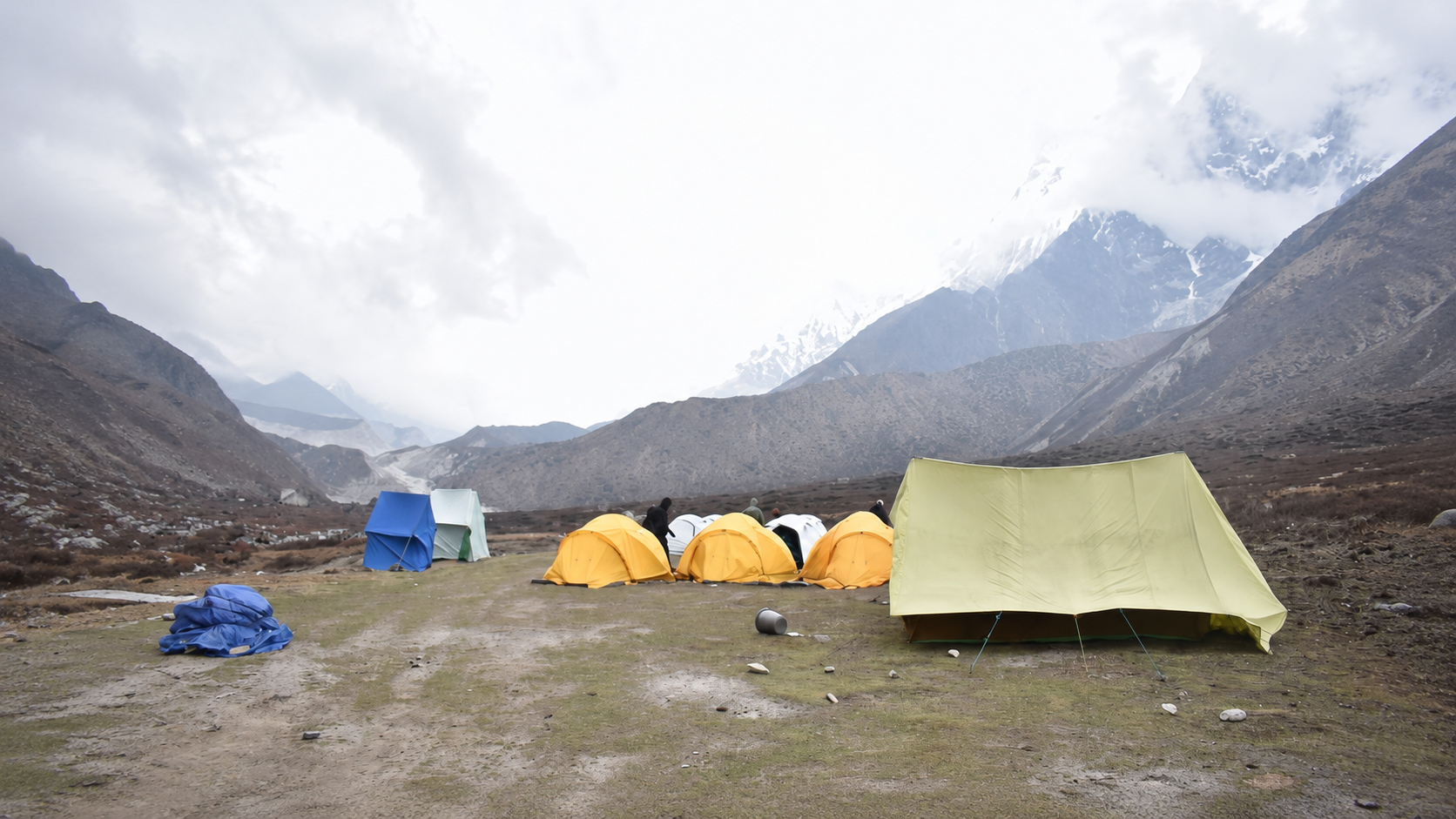
Unlike Goechala or most other high-altitude Himalayan treks, Sandakphu does not require continuous camping. You stay in lodges and trekkers’ huts every single night of the trek — a feature that makes it especially comfortable for first-time Himalayan trekkers.
Lodges and trekkers’ huts
Accommodation is twin-share or four-share in basic but clean wooden lodges run by local families. The rooms have wooden beds, blankets and thick mattresses (we recommend bringing or renting a sleeping bag for the colder nights). Shared washrooms with bucket hot water are available at most stops. Power supply is intermittent — Tumling and Sandakphu have evening electricity for 2–3 hours; some smaller stops rely on solar and may not have charging facilities.
Food on the trek
Meals on the Sandakphu Trek lean Nepali-Indian, which works well at altitude — rice, dal, vegetables, eggs, paneer, momos, thukpa, and the famous Singalila ridge tea. A typical day’s food looks like this:
- 6:30 AM — Bed tea with biscuits.
- 7:30 AM — Breakfast: porridge or oats, toast and eggs, paratha, tea/coffee, jam, peanut butter.
- 12:30 PM — Lunch: rice, dal, sabzi, salad, pickle, papad — usually packed on long walking days.
- 4:00 PM — Evening tea with pakoras, momos or biscuits.
- 7:30 PM — Dinner: soup, rice, roti, dal, sabzi, paneer or egg curry on alternate days, fruit or kheer as dessert.
Vegetarian, vegan and Jain food are available with prior intimation. Meat is occasionally available at lower lodges, but we do not serve it above Tumling, since cold storage is unreliable at altitude.
11. Sandakphu vs Phalut vs Goechala — How to Choose
These three are the most commonly compared treks for first-time Himalayan trekkers in the eastern Himalaya. Each has a clear personality. Here is how they actually compare on the factors that matter:
| Factor | Sandakphu | Sandakphu-Phalut | Goechala |
|---|---|---|---|
| Duration | 5N / 6D | 7N / 8D | 9N / 10D |
| Highest altitude | 3,636m | 3,636m | 4,500m |
| Difficulty | Easy–Moderate | Moderate | Moderate–Difficult |
| Accommodation | Lodges throughout | Lodges + 1 night basic hut | Tented camping for 7 nights |
| Cost (Indian) | ₹9,000 | Slightly higher | ₹19,500 |
| Best for first-timer | Yes | Yes (if extra time) | No, not ideal first trek |
| Mountain view | 4 of the world’s 5 highest | 4 of the world’s 5 highest + extra ridge | Kanchenjunga south face (very close) |
| Crowds (peak season) | High | Moderate | Low |
Plain answer: If you have 6 days and no Himalayan trekking experience, do Sandakphu Trek. If you have 8 days, do Sandakphu-Phalut — it adds two days on a quieter ridge and is a meaningfully more complete trek. If you have 10 days and reasonable fitness, do Goechala — it is a different category of experience entirely, with Kanchenjunga so close it fills your field of vision.If you want to start your trekking journey with us, our Glacier trek and Adventure give you the best Sandakphu-Phalut experience as per your requirements.
Read more: Compare with the 10-day Goechala Trek
Read more: Extended Sandakphu-Phalut Trek 7-day itinerary
12. Why Trek the Sandakphu with Glacier Treks & Adventure
There are dozens of operators running the Sandakphu Trek. Most are aggregators based in Delhi or Bangalore who forward bookings to local Maneybhanjyang teams. We are the local Maneybhanjyang team — and we also run the Land Rover tour, the Phalut extension, and connect Sandakphu to our wider Sikkim and Darjeeling portfolio. Booking direct cuts the middle layer and means the people who run your trek are the people you spoke to before booking.
In plain numbers:
- 15 years operating in the Eastern Himalaya — Sandakphu, Goechala, Dzongri and Singalila routes
- 150+ guided treks across the Indian Himalaya
- 12,000+ trekkers safely brought back home, including first-time trekkers, families with children, and senior trekkers
- Founder Kiran Gurung is an IMF-certified mountaineer and a working trek leader
- Affiliated with the Sikkim Department of Tourism, IMF, TAAS, YTDC and SAMA
- Both trek and Land Rover options under one operator — easy to combine
- 100% local support team — guides, cooks and porters from the Maneybhanjyang and Yuksom valleys
Read More: Planning ‘Sleeping Buddha View Point’? See Here.
13. Frequently Asked Questions
Is the Sandakphu Trek suitable for beginners?
Yes — Sandakphu is one of the most genuinely beginner-friendly summit treks in the Indian Himalaya. The altitude tops out at 3,636m, which is below the serious AMS-risk zone; the trail has lodges every night so no camping skill is needed, and the daily distances are manageable. That said, ‘beginner-friendly’ means a fit beginner — you should still be able to walk 8km in under 90 minutes before booking.
How many days does the Sandakphu Trek take?
Our standard package is 5 nights and 6 days from NJP/Bagdogra to NJP/Bagdogra. The Sandakphu-Phalut extension adds two more days for trekkers who want a longer experience on the quieter section of the ridge.
What is the actual cost of the Sandakphu Trek?
Our 2026 package price is ₹9,000 per person (discounted from a list price of ₹11,000) and $300 for international trekkers. A realistic all-in budget including NJP-Maneybhanjyang round-trip transfers, GST and tips works out to ₹16,000–18,000 for Indian trekkers and $400–450 for foreign trekkers, not counting flights or trains to NJP.
Can I do the Sandakphu Trek without a guide?
No. Singalila National Park rules mandate an authorised guide for every trekking party — solo unguided trekking is not permitted. We always send an authorised local guide with each batch, so this is handled within your package.
How is the Sleeping Buddha trek best photographed?
Position yourself at the Sandakphu summit viewpoint by 5:00 AM on Day 5. Use a wide-angle lens (24mm equivalent or wider) to capture the entire massif horizontally. The best light lasts about 12 minutes from first colour to full sunrise. A tripod helps in low light, but it’s not essential — modern phone cameras handle the scene surprisingly well at f/1.8 settings.
Is a mobile network available on the Sandakphu Trek?
Patchy. BSNL has the best coverage along the ridge — you will get an intermittent signal at Tumling, Kalipokhri and Sandakphu. Jio and Airtel work at Maneybhanjyang and lower stops, but disappear above Tonglu. Tell your family to expect erratic communication. We carry a satellite communicator for emergencies.
Can I see red pandas on the Sandakphu Trek?
Singalila National Park is one of the few places in India where red pandas are reasonably sighted, but they are shy and arboreal — you would need to be looking carefully in the right bamboo-rhododendron forest sections, especially between Tumling and Kalipokhri. Approximately one in twenty of our batches gets a brief sighting. Bring binoculars and lower your expectations — the trek view is the headline attraction, not wildlife.
Are children allowed on the Sandakphu Trek?
Yes, from age 12. Children must be accompanied by a parent or guardian and should ideally have done at least one shorter trek (Triund or Kheerganga type) before attempting Sandakphu. We have had healthy 12-year-olds complete the trek without issue when they have parents who paced them properly.
What if the weather is bad on summit morning?
Sandakphu is famously fickle — about one in three October-November mornings has full clarity, the rest range from partial cloud to total whiteout. We attempt the sunrise viewpoint every morning regardless of weather, but if the weather is heavy, we offer a second attempt on Day 5 afternoon as we wait at the summit lodge. Around 80% of our groups get at least one good viewing window across their two opportunities.
Ready to Book Your Sandakphu Trek?
Sandakphu is a trek that delivers more than it asks. It is short enough to fit into one work leave, easy enough for a first-time Himalayan trekker, and scenic enough that veteran trekkers come back for repeat visits. Our 2026 season is open from March through May and again from October through December.
Book the Sandakphu Trek now: ₹9,000 per person · Call/WhatsApp +91 74072 48200 · Email kiran.yuksom@gmail.com
See our full package of Sandakphu Trek
Read more: View the Sandakphu Trek product page and book online
Read more: Prefer to ride up? See the Sandakphu Land Rover tour
Read more: Want a longer route? Read the Sandakphu-Phalut 7-day guide
Read more: Want a higher altitude challenge? See the Goechala Trek
About the author
Kiran Gurung is the founder of Glacier Treks & Adventure, based in Yuksom, West Sikkim. Born in a remote Sikkimese village, he has spent most of his life on the trails of the Eastern Himalaya, working as a guide, expedition leader and mountaineer. He is certified by the Indian Mountaineering Foundation. Glacier Treks & Adventure operates the Sandakphu Trek, Sandakphu Land Rover Tour, Sandakphu-Phalut Trek, Goechala Trek, Dzongri Trek and the full Sikkim and Ladakh expedition portfolio. The company is affiliated with the Department of Sikkim Tourism, the IMF, TAAS, YTDC and SAMA.