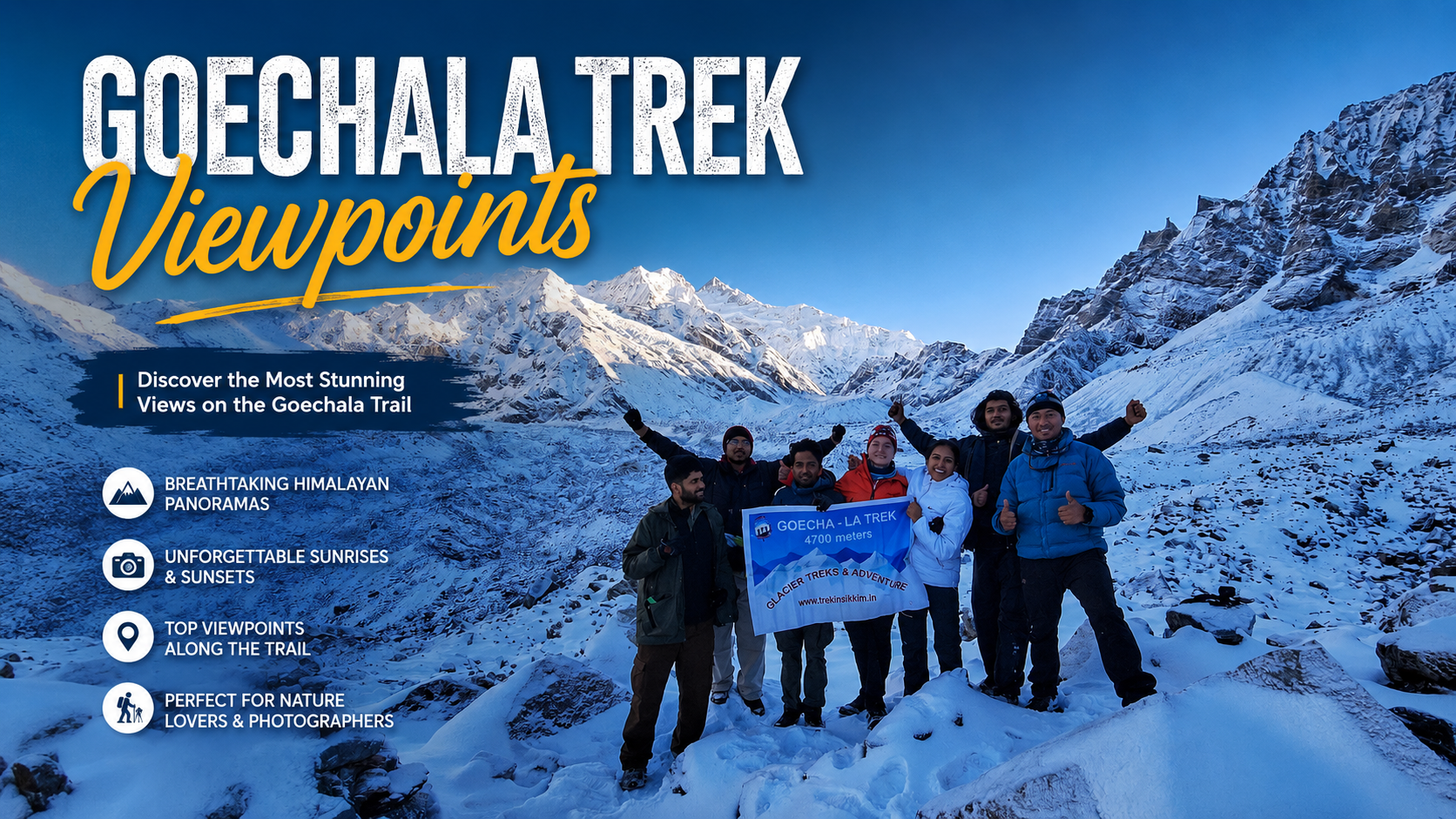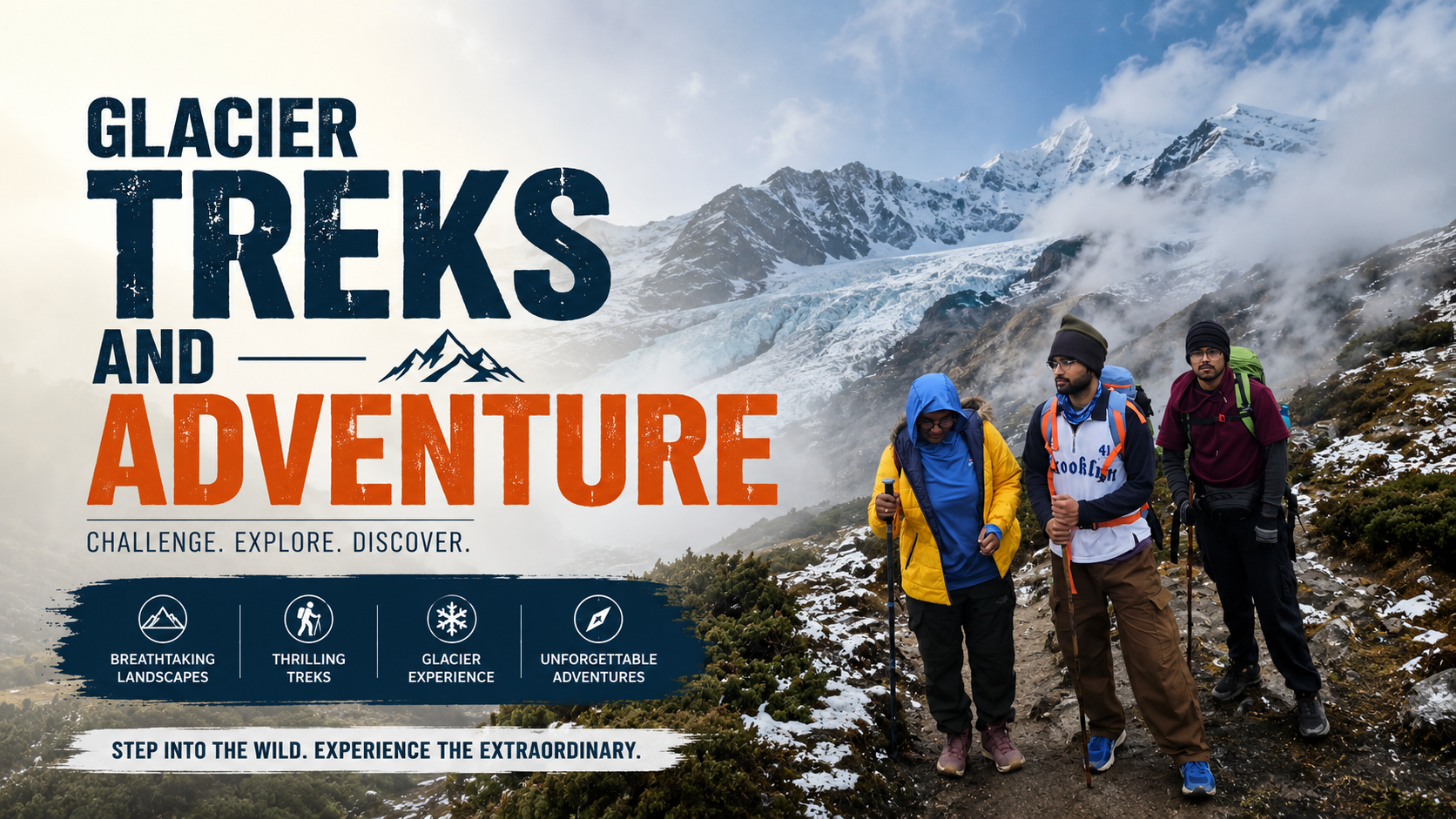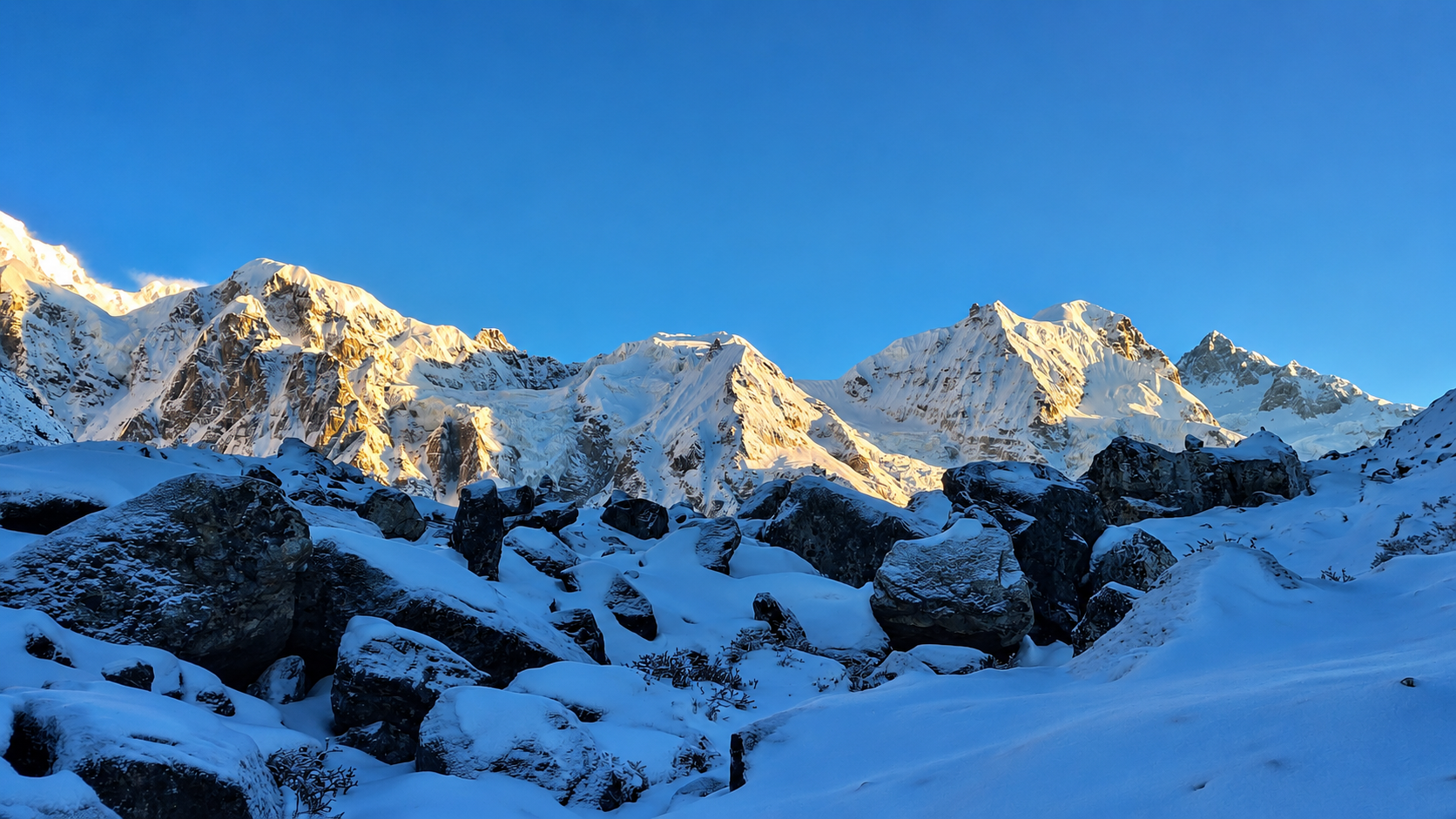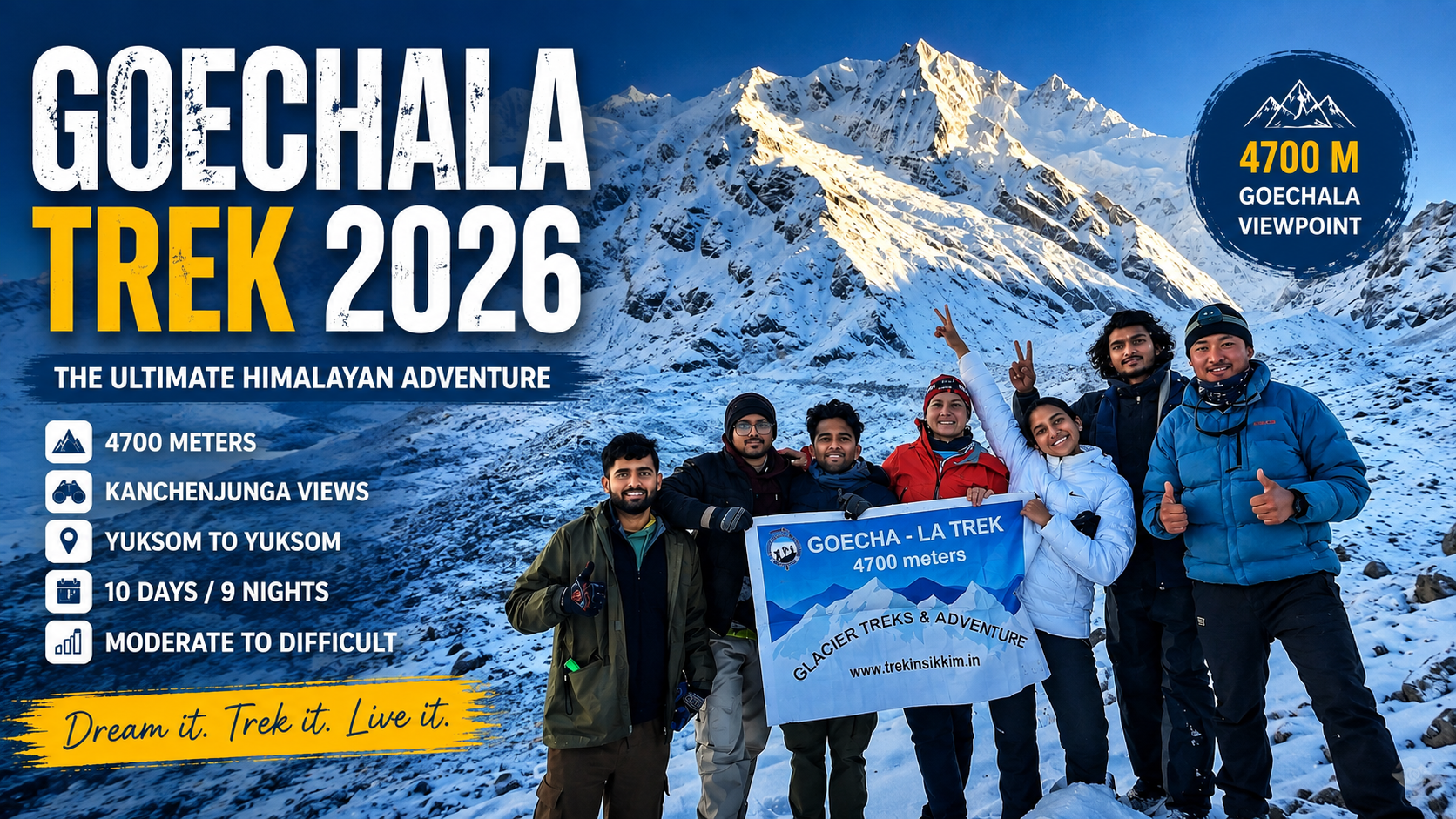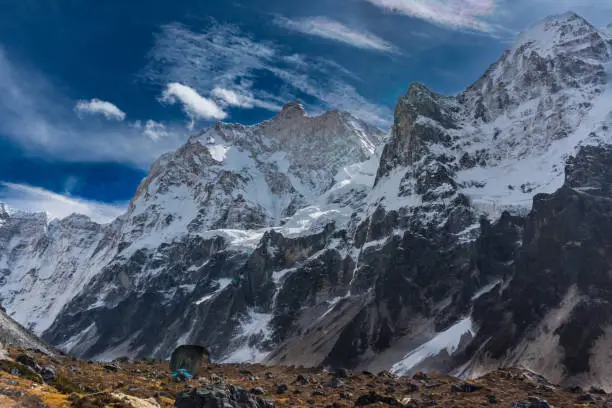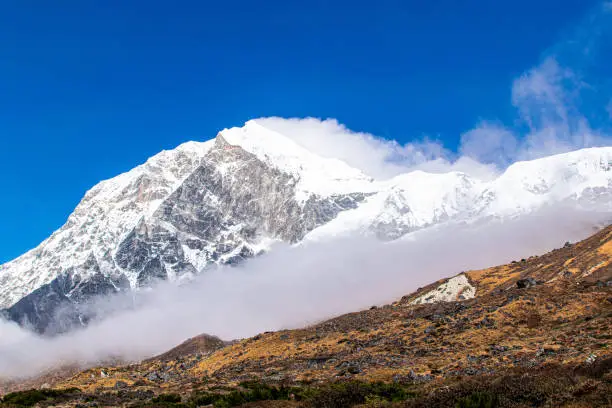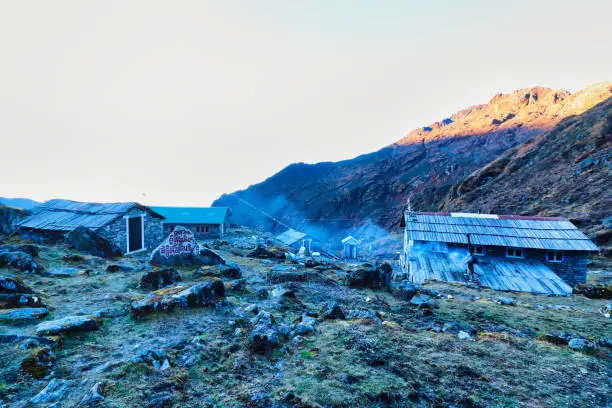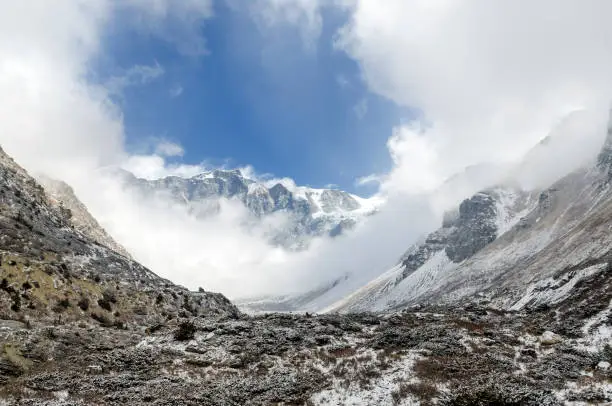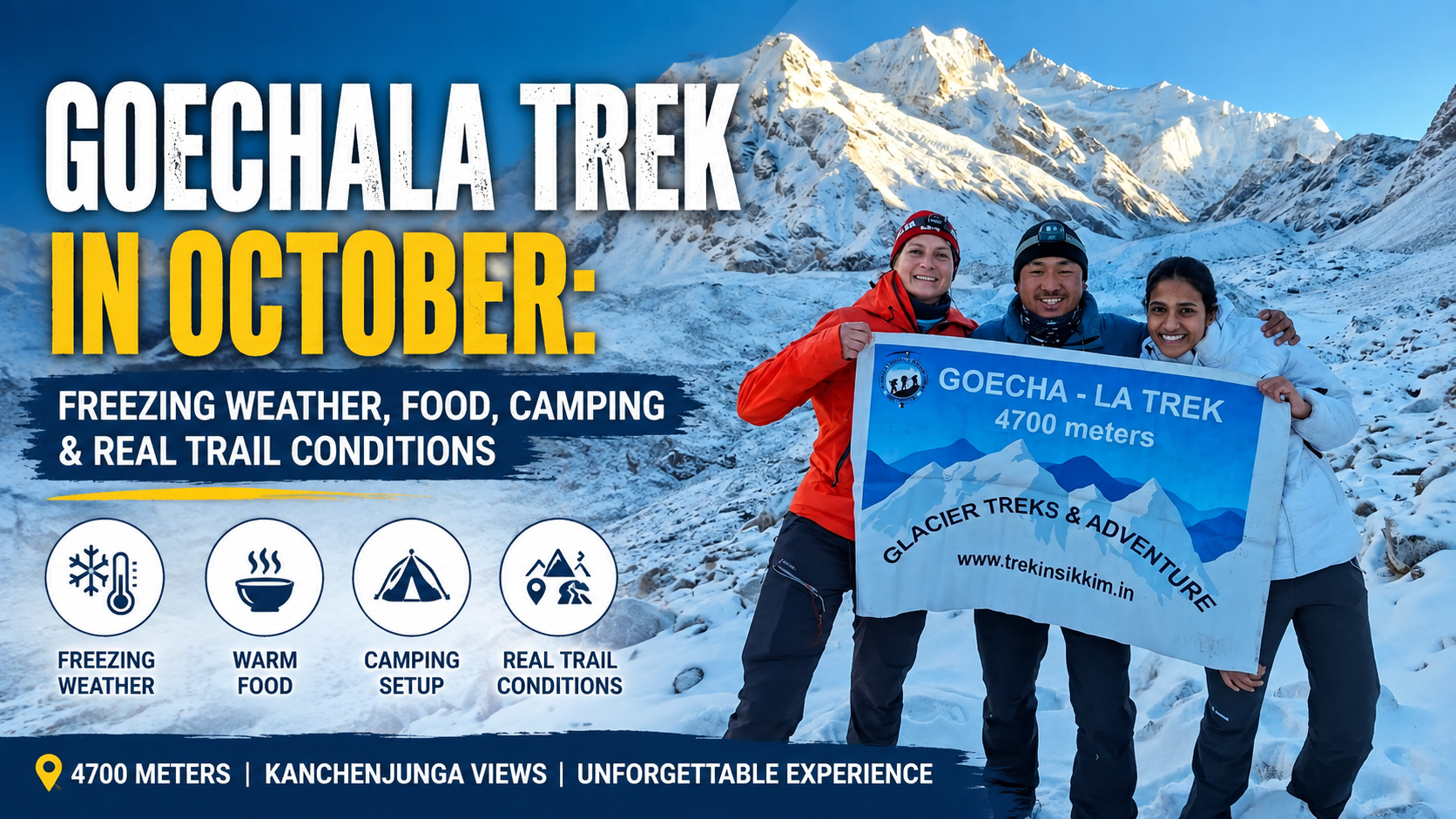
October is one of the most rewarding months for the Goechala Trek. The monsoon has generally passed; the trails are drier, visibility is often clearer, and the mountain views can be spectacular. But October also marks the beginning of much colder conditions at higher elevations.
While daytime trekking can feel comfortable under the sun, temperatures drop rapidly after sunset. At higher camps such as Dzongri, Thangsing, and Lamuney, trekkers need to be prepared for freezing nights, frost and very cold early mornings.
This guide explains the practical reality of Goechala Trek in October, including weather, temperature, freezing conditions, camping, food, and trail conditions.
Goechala Trek October Weather: What Should You Expect?
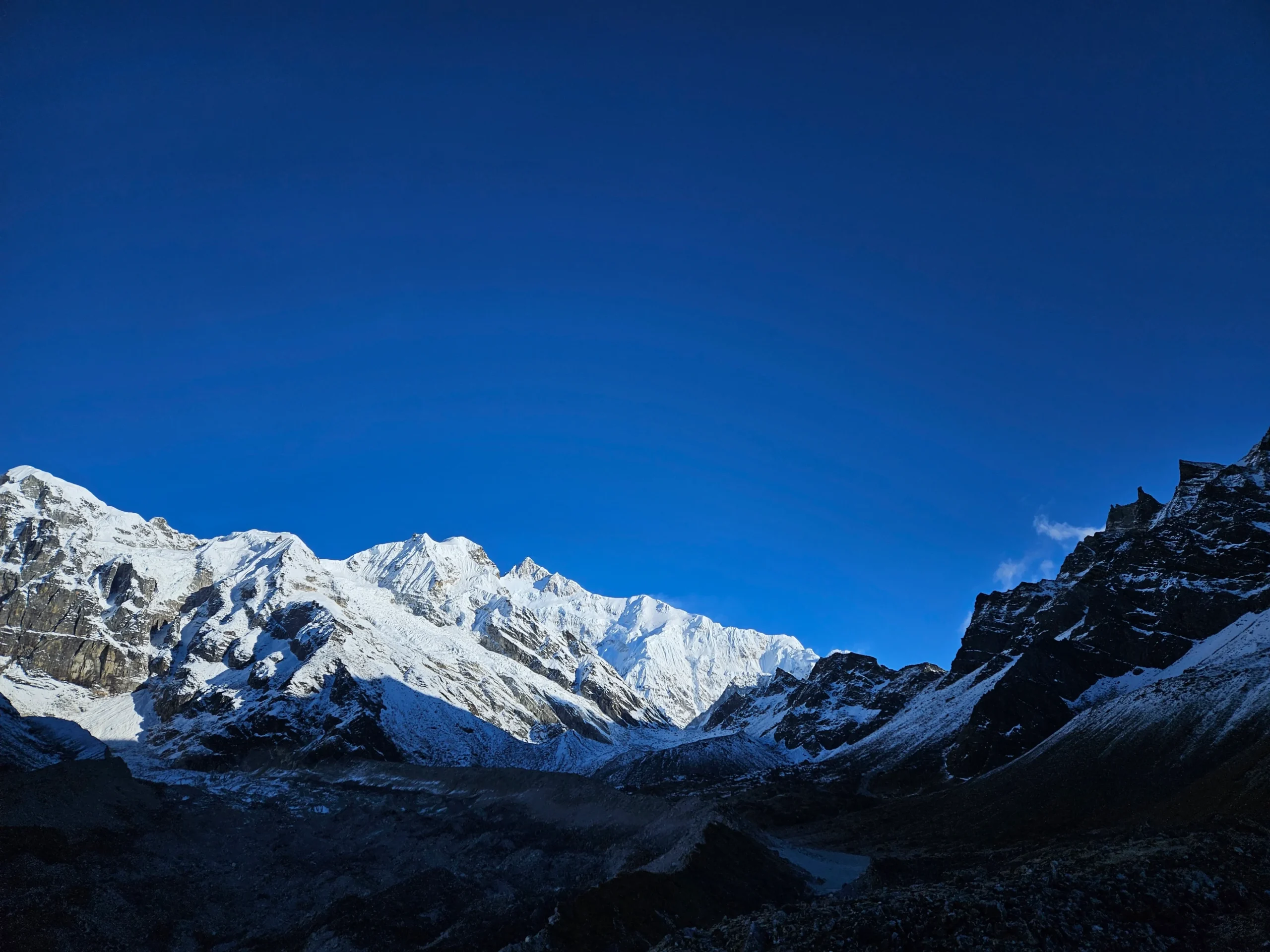
The Goechala Trek October weather is generally more stable than during the monsoon season. Clearer skies can provide excellent mountain visibility, while the lower sections of the trail are usually much drier.
However, the weather changes considerably with altitude. Yuksom and the lower forest sections can feel relatively comfortable during the day, whereas the higher camps become increasingly cold after sunset.
Early October can still feel like autumn, while the second half of the month can bring much colder nights and a greater possibility of frost or occasional snowfall at higher elevations.
This means trekkers should prepare for both pleasant daytime walking and freezing nighttime conditions.
Goechala Trek October Temperature: How Cold Does It Get?
The temperature varies significantly throughout the route. The higher you climb, the more important cold-weather preparation becomes.
| Trekking Area | October Conditions |
| Yuksom | Relatively mild compared with higher camps |
| Tshoka | Cool to cold mornings and evenings |
| Dzongri | Very cold nights; frost is possible |
| Thangsing | Freezing temperatures possible at night |
| Lamuney | Sub-zero conditions can occur |
| Goechala Viewpoint | Extremely cold before sunrise, especially with wind |
So, how cold is Goechala Trek in October? There is no single temperature for the entire trek. Higher camps can experience freezing or sub-zero conditions, with late October generally feeling colder than early October.
The early-morning summit push is usually the coldest part because trekkers begin walking before sunrise, when temperatures are at their lowest.
Goechala Trek in October Weather Conditions at Higher Camps
The most important thing to understand about the Goechala Trek in October weather conditions is that conditions at the base and at high altitude can feel completely different on the same day.
A sunny afternoon at Dzongri does not mean the night will remain comfortable. Once the sun disappears, temperatures can fall quickly. At Thangsing and Lamuney, wind exposure can make the cold feel even stronger.
Frost can form overnight, particularly on exposed surfaces. In colder conditions, water may become extremely cold or even freeze if left exposed.
This is why October trekkers need to prepare for the nighttime environment, not just the daytime forecast.
Goechala Trek Freezing Temperature: What Does It Actually Feel Like?
Reading about a temperature below zero is very different from experiencing it in a tent.
At freezing temperatures, small everyday tasks become noticeably harder. Changing clothes, handling trekking equipment, tying shoelaces or opening zippers can become uncomfortable when your fingers are cold.
Inside the tent, your sleeping bag provides your primary warmth. Getting out of it before sunrise can be particularly difficult, especially on summit day.
The cold also affects water and food. Water needs to be protected from freezing conditions, while hot meals cool much faster than they would at lower elevations.
This is why proper layering, a suitable sleeping bag, warm gloves, and insulated water bottles are essential for an October Goechala Trek.
Can You Find Frost or Ice on Goechala in October?
Yes, frost and icy patches are possible at higher elevations, particularly during early mornings and later in October.
The areas around Lamuney and the Goechala viewpoint are more exposed to cold temperatures and wind. Depending on recent weather, trekkers may encounter frost, icy surfaces or patches of snow.
However, it is important not to assume that the entire Goechala route will be covered in snow in October. Early October can remain relatively dry, while the possibility of snowfall increases towards the end of the month.
Therefore, October is better described as a period of cold, frost, and possible early winter conditions, rather than a guaranteed snow-covered trek.
Goechala Trek Trail Conditions in October
The Goechala Trek trail conditions in October are generally more favourable than during the wet monsoon months. The lower forest trails are usually drier, but the trek becomes increasingly challenging as you gain altitude.
The route from Yuksom towards Tshoka takes you through forested terrain with streams, bridges, and gradual elevation gain. From Tshoka to Dzongri, the climb becomes more demanding, and the increasing altitude starts to affect your pace.
Beyond Dzongri, the landscape becomes more open and alpine. The route towards Thangsing and Lamuney can be colder and more exposed.
The final section from Lamuney towards the Goechala viewpoint is particularly demanding because of the early start, darkness, altitude, cold and uneven terrain. Frost or icy patches can make footing more difficult, so careful pacing and appropriate footwear are important.
What Is Goechala Trek Camping Like in October?
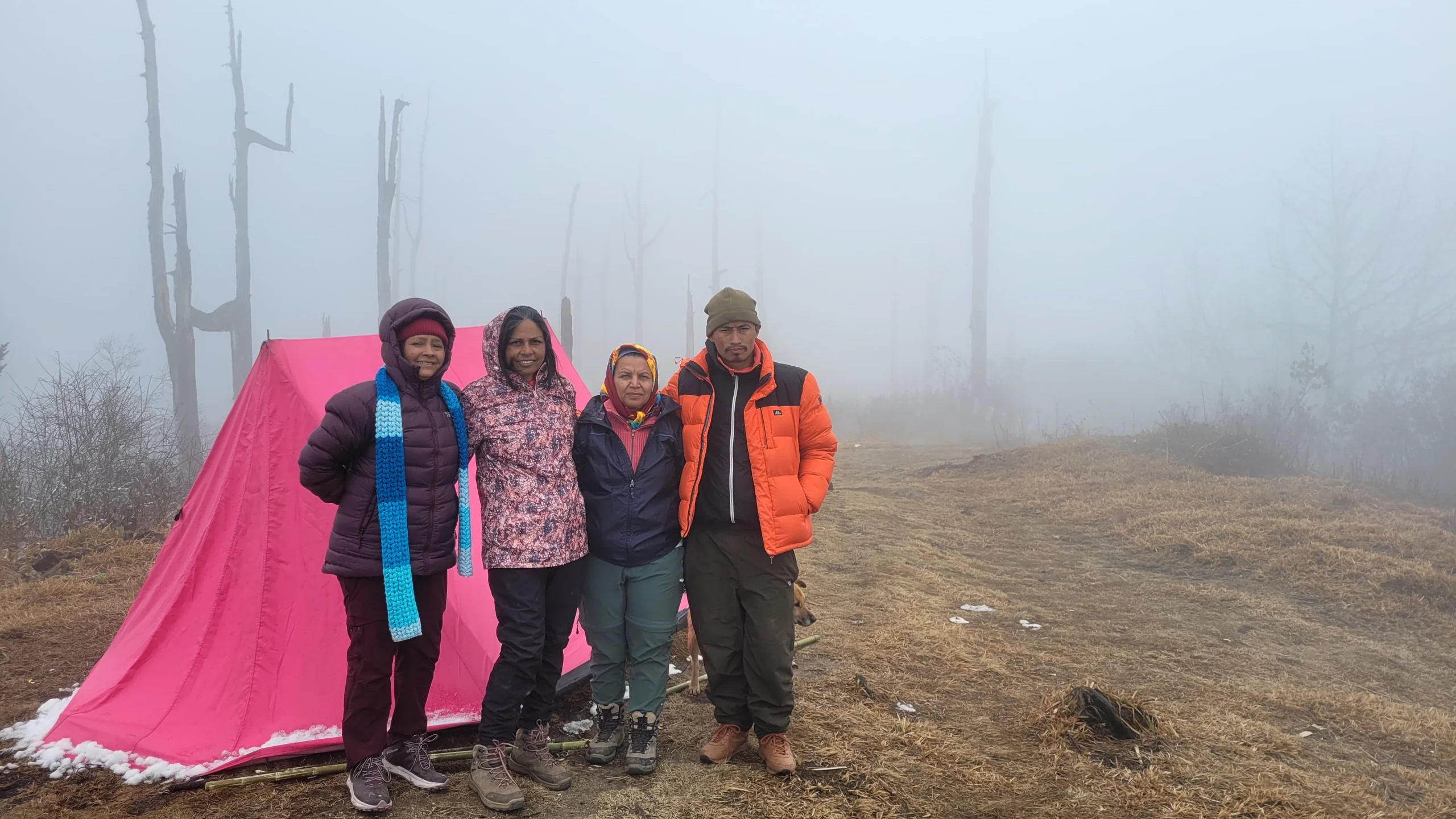
Goechala Trek in October camping is a very different experience from staying in a hotel or lodge.
At higher camps, there is no heated room to escape into after sunset. The temperature inside the tent can become very low, making a good sleeping bag and proper insulation extremely important.
The morning can be the hardest part. You may have to leave your sleeping bag before sunrise while the temperature is still below freezing, get dressed in several layers, and begin walking in darkness.
For October camping, trekkers should carry thermal base layers, an insulated jacket, warm gloves, woollen socks, suitable trekking shoes, a good sleeping bag, a headlamp, and insulated water bottles.
The better prepared you are, the easier it becomes to manage the cold.
What Food Can You Get on the Goechala Trek?
Food is an important part of the trek because you need enough energy for long walking days and cold conditions.
A guided Goechala Trek generally provides practical trekking meals such as rice, dal, vegetables, noodles, soup, eggs, breakfast items and hot drinks such as tea and coffee. Special dietary requirements can usually be arranged with prior notice.
At higher camps, hot food becomes especially valuable. Meals cool quickly in freezing conditions, while preparing water and food requires more effort.
Trekkers should also carry personal snacks such as nuts, dry fruits, energy bars or other lightweight foods that provide quick energy during the trail.
The main challenge is therefore not simply food availability. It is maintaining hot food, water and energy while camping in a freezing environment.
What Do You Need to Survive the Cold?
The key to managing an October Goechala Trek is preparation.
Your clothing should follow a proper layering system, with thermal innerwear, an insulating middle layer and a windproof or weather-resistant outer layer. Warm gloves, socks and a cap are particularly important because hands, feet and the head can lose heat quickly.
A suitable sleeping bag is one of the most important pieces of equipment for high-altitude camping. An insulated water bottle, headlamp, trekking shoes and personal medication should also be part of your preparation.
Most importantly, don’t underestimate the combination of cold, altitude and physical exertion.
Why Choose Glacier Treks & Adventure?
Glacier Treks & Adventure is based in Yuksom, West Sikkim, giving our team local knowledge of the Goechala route and surrounding Himalayan terrain.
Our trekking team provides local guides, experienced trek leaders, camping support and organized meals while following a safety-focused approach. Our Goechala package is designed to provide the essential support required for a high-altitude trekking experience.
For an October trek, local knowledge is particularly valuable because weather and trail conditions can change as you move from the lower forests to the exposed high-altitude camps.
Frequently Asked Questions
How cold is Goechala Trek in October?
Higher camps can experience freezing and sub-zero nighttime temperatures. Late October is generally colder than early October, although actual conditions vary with weather and altitude.
Does Goechala Trek have snow in October?
Snowfall is possible at higher elevations, particularly later in October, but continuous snow cover is not guaranteed.
Can you see frost on Goechala Trek?
Yes. Frost and icy patches can occur at higher elevations, especially during early mornings.
Is camping difficult on Goechala Trek in October?
Camping becomes more challenging because of freezing nighttime temperatures. A suitable sleeping bag, thermal layers and proper insulation are essential.
What food is available during the Goechala Trek?
Trekkers can generally expect practical hot meals such as rice, dal, vegetables, noodles, soup, breakfast items and hot drinks during an organized trek.
Is Goechala Trek suitable for beginners?
It can be attempted by properly prepared first-time high-altitude trekkers, but Goechala is a challenging trek requiring good fitness, acclimatization and appropriate equipment.
Plan Your Goechala Trek in October
If you want to experience clear Himalayan views while also experiencing the raw beauty of early winter conditions, Goechala Trek in October can be an unforgettable adventure.
Glacier Treks & Adventure offers guided Goechala Trek experiences from Yuksom, West Sikkim, with local trekking support, camping and meals as included in the selected package.
For trek dates, itinerary and package information, visit the Goechala Trek page.
For booking assistance or questions about October trekking conditions, contact Glacier Treks & Adventure.
You can also learn more about our experience and trekking approach on our About Us page.
October offers some of the clearest views of Goechala, but the higher you climb, the more seriously you need to respect the cold. Prepare properly, trek responsibly and let the mountains do the rest.