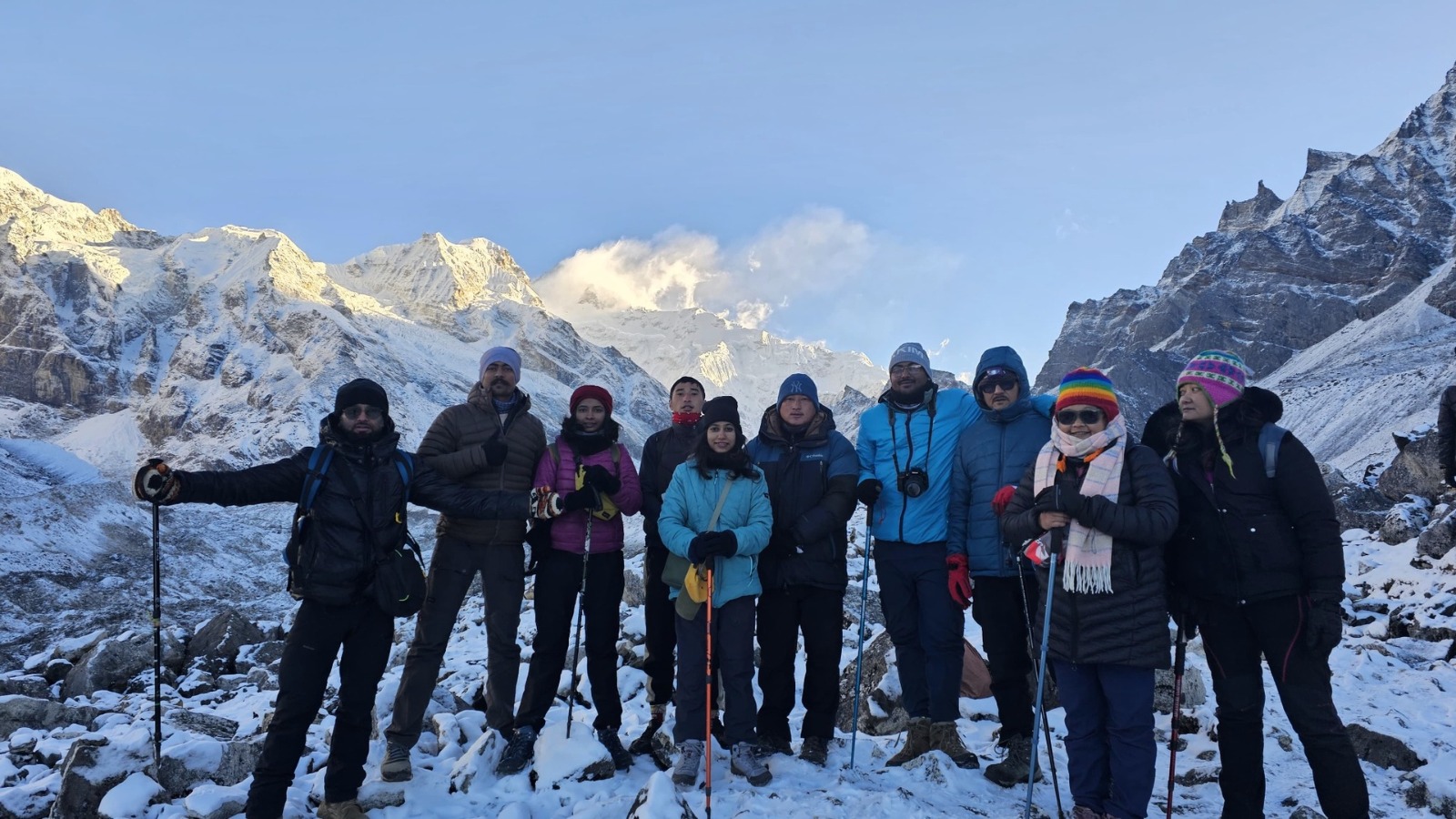
The Goechala Trek is one of the more demanding high-altitude treks in Sikkim. The route does not involve technical climbing, but trekkers have to manage sustained ascents, long days on the trail, changing mountain weather and elevations reaching around 4,600 m at Goechala Viewpoint 1.
The difficulty does not come from one particular section. It increases gradually as the trail climbs from the forests above Yuksom towards Tshoka, Dzongri, Thansing, Lamuney and the higher alpine terrain near Samiti Lake and Goechala Viewpoint 1.
Understanding where the trek becomes difficult, how altitude affects walking and what level of fitness is useful can make preparation much easier.
How Difficult Is the Goechala Trek?
Goechala is best considered a difficult high-altitude trek rather than a technical mountain route. You do not need mountaineering or climbing skills, but you do need enough endurance to walk for several hours on consecutive days.
The trek begins at Yuksom at around 1,780 m and gradually climbs to approximately 4,600 m at Goechala Viewpoint 1. Most regular trekking days involve around 5–8 hours of walking, although the longer high-altitude day towards Viewpoint 1 can take considerably more time.
The challenge becomes more noticeable from Tshoka onwards. The trek to Dzongri is a considerable uphill effort and the trail past Dzongri enters higher alpine country where lower oxygen levels mean the same pace of walking feels more strenuous.
Add to that cold mornings, rough trails, basic camps and little time to recover between trekking days.
Can Beginners Do the Goechala Trek?
Goechala is not an ideal first trek for someone with low fitness or little preparation. However, a physically fit first-time high-altitude trekker may be able to attempt the route with appropriate training, a well-paced itinerary and proper support.
Previous trekking experience is highly beneficial, particularly because it gives you some idea of how your body responds to sustained climbing, colder conditions, basic camps and increasing altitude.
Experience alone, however, does not guarantee that someone is ready for Goechala. Fitness, pacing and acclimatisation remain equally important.
Before choosing the trek, you should be comfortable with long uphill sections, uneven trails and several consecutive days of walking. You should also be prepared to stay in tents or basic trekker huts during the route.
If you currently struggle with a few hours of continuous walking or regular uphill exercise, it is better to improve your endurance before attempting Goechala.
What Makes the Goechala Trek Difficult?
Several factors combine to make Goechala physically demanding.
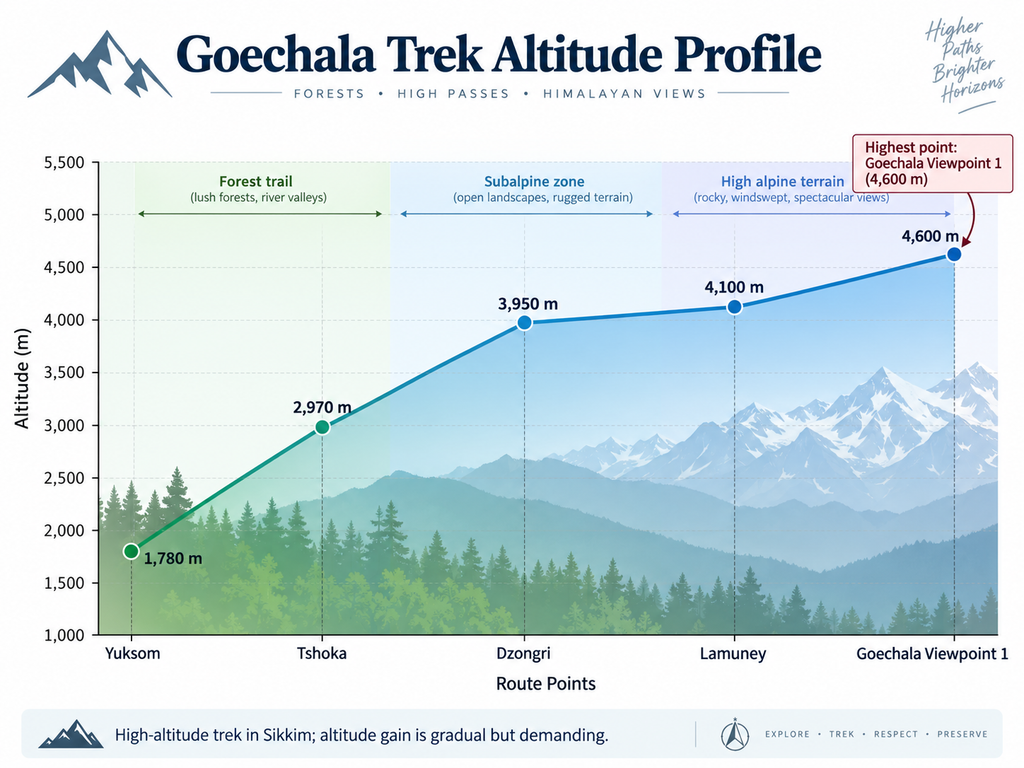
The first is elevation gain. The route starts at around 1,780 m in Yuksom and reaches approximately 4,600 m at Goechala Viewpoint 1. The body therefore has to adjust to increasing elevation while you continue trekking for several hours each day.
The Tshoka–Dzongri section is one of the main difficulty points. The trail climbs from around 2,970 m at Tshoka to approximately 3,950 m at Dzongri. The sustained ascent and considerable elevation gain make this one of the tougher sections of the trek.
The second challenge is the number of consecutive trekking days. Recovery matters almost as much as daily fitness because you have to walk again the following morning.
The third factor is the high-altitude day towards Goechala Viewpoint 1. This section normally begins very early in cold conditions. Walking above 4,000 m requires a slower pace, and even moderate uphill sections can demand more effort.
The terrain too changes during the trek. The lower route passes through forests, while the higher sections become more open and alpine. Trekkers encounter repeated climbs, descents and uneven mountain paths rather than a consistently smooth trail.
Weather can make individual days harder as well. Rain, snow, wind, cold temperatures or poor visibility can significantly change trail conditions and walking speed.
How Difficult Is Each Day of the Goechala Trek?
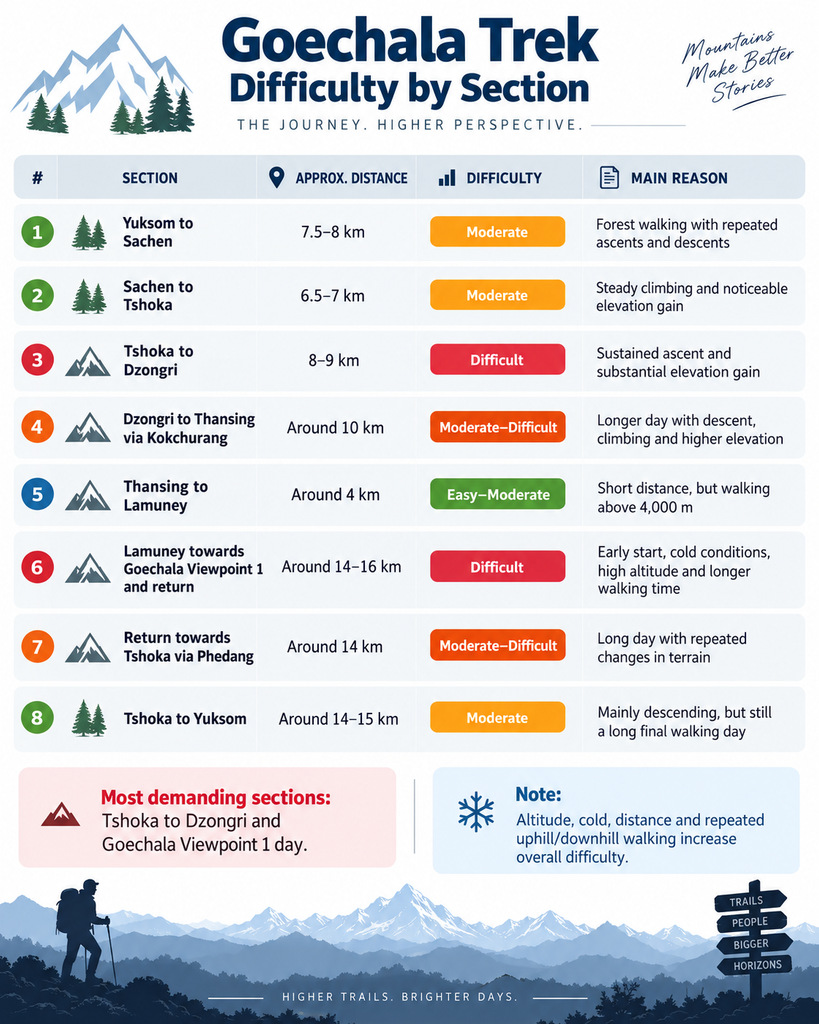
Difficulty varies from day to day. Some stages are comparatively short, while others combine distance, elevation gain and high-altitude conditions.
| Trekking Section | Approx. Distance | Relative Difficulty | Main Reason |
|---|---|---|---|
| Yuksom to Sachen | 7.5–8 km | Moderate | Forest walking with repeated ascents and descents |
| Sachen to Tshoka | 6.5–7 km | Moderate | Steady climbing and noticeable elevation gain |
| Tshoka to Dzongri | 8–9 km | Difficult | Sustained ascent and substantial elevation gain |
| Dzongri to Thansing via Kokchurang | Around 10 km | Moderate–Difficult | Longer day with descent, climbing and higher elevation |
| Thansing to Lamuney | Around 4 km | Easy–Moderate | Short distance, but walking above 4,000 m |
| Lamuney towards Goechala Viewpoint 1 and return | Around 14–16 km | Difficult | Early start, cold conditions, high altitude and longer walking time |
| Return towards Tshoka via Phedang | Around 14 km | Moderate–Difficult | Long day with repeated changes in terrain |
| Tshoka to Yuksom | Around 14–15 km | Moderate | Mainly descending, but still a long final walking day |
For many trekkers, the climb from Tshoka to Dzongri is the first day when the difficulty becomes obvious. The Viewpoint 1 day is usually the more demanding overall stage because altitude, cold, distance and an early start come together.
The descent also deserves attention. Long downhill sections can place considerable strain on the knees and legs, especially after several days of trekking.
Is Altitude a Problem on the Goechala Trek?
The height is one of the main factors which makes Goechala difficult.
Yuksom is at about 1,780 m, Tshoka at 2,970 m, Dzongri at 3,950 m, Lamuney at 4,100 m and Goechala Viewpoint 1 at 4,600 m.
At higher altitudes, the air pressure is lower, so there’s less oxygen in each breath. This is why walking can feel slower and more tiring as the route climbs higher.
Some trekkers may experience headache, nausea, unusual fatigue, loss of appetite, dizziness or disturbed sleep after gaining elevation. These symptoms should not be hidden or ignored in order to continue with the group.
A gradual itinerary, adequate hydration, a controlled walking pace and attention to symptoms are important. If you feel unwell, inform the trek leader rather than trying to push through worsening symptoms.
Good fitness helps with the physical effort of walking, but it does not prevent altitude illness. Even strong trekkers can be affected if they gain elevation too quickly or do not acclimatise well.
For this reason, Goechala should not be approached as a trek where reaching camp as quickly as possible is the goal. A steady pace is usually more appropriate at higher elevations.
Goechala Trek Height Chart
How Fit Should You Be for Goechala?
You do not need to be an athlete, but you should arrive with good cardiovascular endurance and enough leg strength to handle repeated climbs and descents.
A useful level of readiness is being able to walk or hike comfortably for several hours without becoming exhausted. Just as importantly, you should recover well enough to remain active again the following day.
Uphill fitness matters because sections such as Tshoka to Dzongri involve sustained climbing rather than short bursts of effort. Strong legs are also useful during the return journey, when repeated downhill walking can become tiring.
Preparation should therefore include both endurance and strength. Someone who can run well on flat ground may still find long mountain ascents difficult if they have not trained on hills or stairs.
The better prepared you are, the easier it becomes to maintain a controlled pace without using all your energy on every climb.
How Should You Train for the Goechala Trek?
Training should begin several weeks before departure rather than being concentrated into the final few days.
Start with regular brisk walking, jogging, cycling or another cardiovascular activity that you can maintain consistently. Gradually increase the duration of your sessions as your endurance improves.
Include stair climbing or hill walking whenever possible. Goechala involves sustained ascents, so training only on flat roads will not fully prepare your legs for the route.
Strength work does not need to be complicated. Squats, lunges, step-ups, calf raises and basic core exercises can help prepare the body for repeated uphill and downhill movement.
As the trek approaches, include some longer walks on consecutive days. This helps you become more comfortable exercising again before the body has completely recovered from the previous session.
If you plan to carry a daypack, practise walking with a similar load. It is also useful to train in the trekking shoes you intend to wear so that your feet and footwear are accustomed to longer days.
Reduce very hard exercise shortly before departure. The aim is to arrive at Yuksom fit and rested rather than tired from last-minute training.
Goechala vs Dzongri Trek
Goechala and Dzongri share the same initial route from Yuksom through Sachen and Tshoka, including the demanding climb towards Dzongri.
The main difference is that the Dzongri Trek turns back earlier, while Goechala continues towards Thansing, Lamuney and Goechala Viewpoint 1.
Because Goechala continues into higher terrain and involves additional trekking days, it places greater demands on endurance, acclimatisation and recovery.
Dzongri can therefore be a more manageable option for trekkers who want to experience the Kanchenjunga landscape without completing the full Goechala route.
Goechala is better suited to trekkers who are prepared for a longer journey, higher elevations and more consecutive days on the trail.
Final Practical Advice
Do not judge the difficulty of Goechala only by daily distance. Walking 7 or 8 km at high altitude can feel very different from covering the same distance at lower elevation.
Arrive with adequate fitness, follow a gradual itinerary and keep your pace comfortable rather than trying to match faster trekkers. Eat and drink regularly, take recovery seriously and report altitude-related symptoms early.
Goechala is demanding, but with proper preparation, sensible pacing and respect for mountain conditions, the challenges are manageable for suitably prepared trekkers.
For the complete route, itinerary, accommodation, permits, cost and booking information, see our Goechala Trek page.