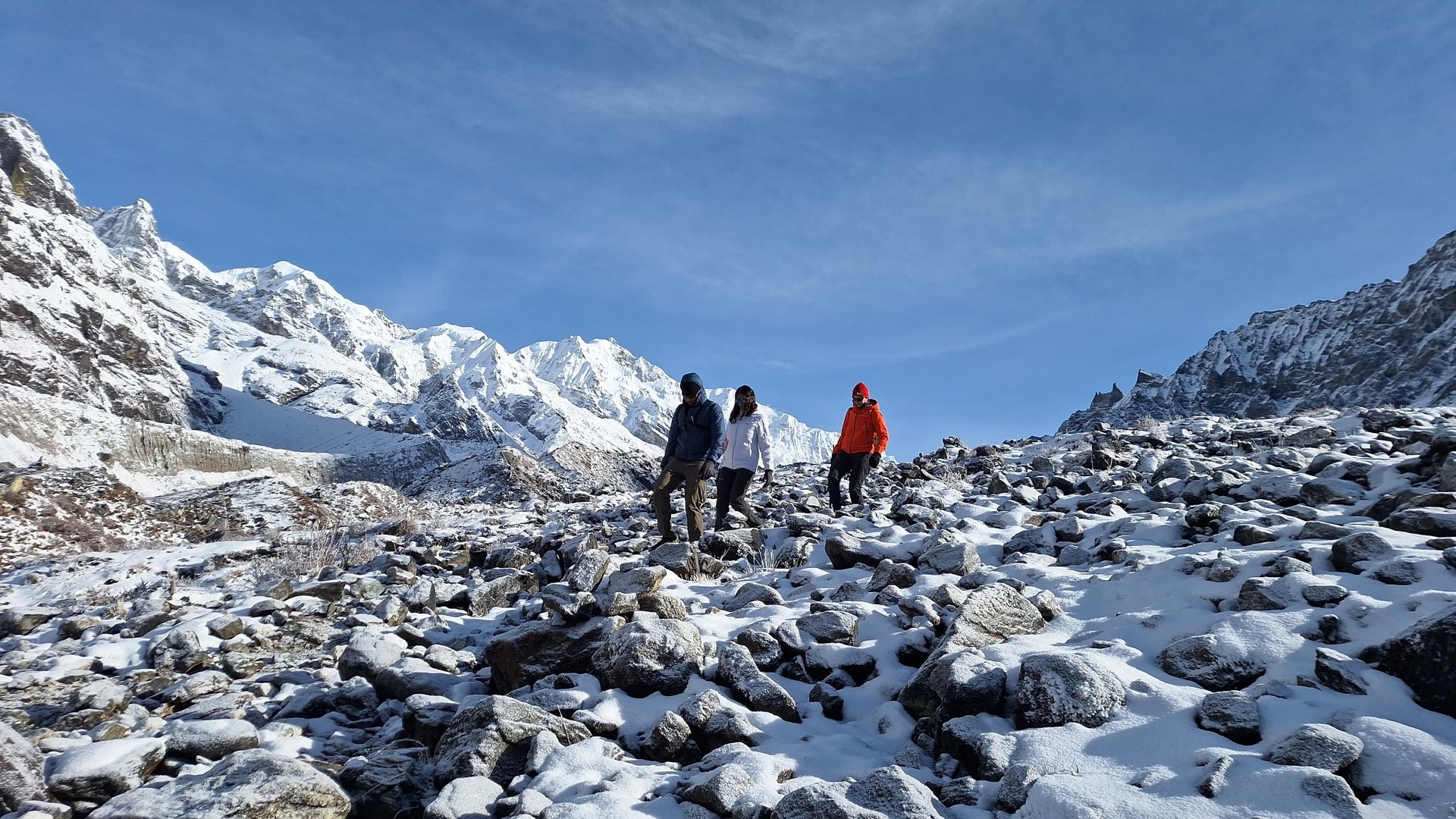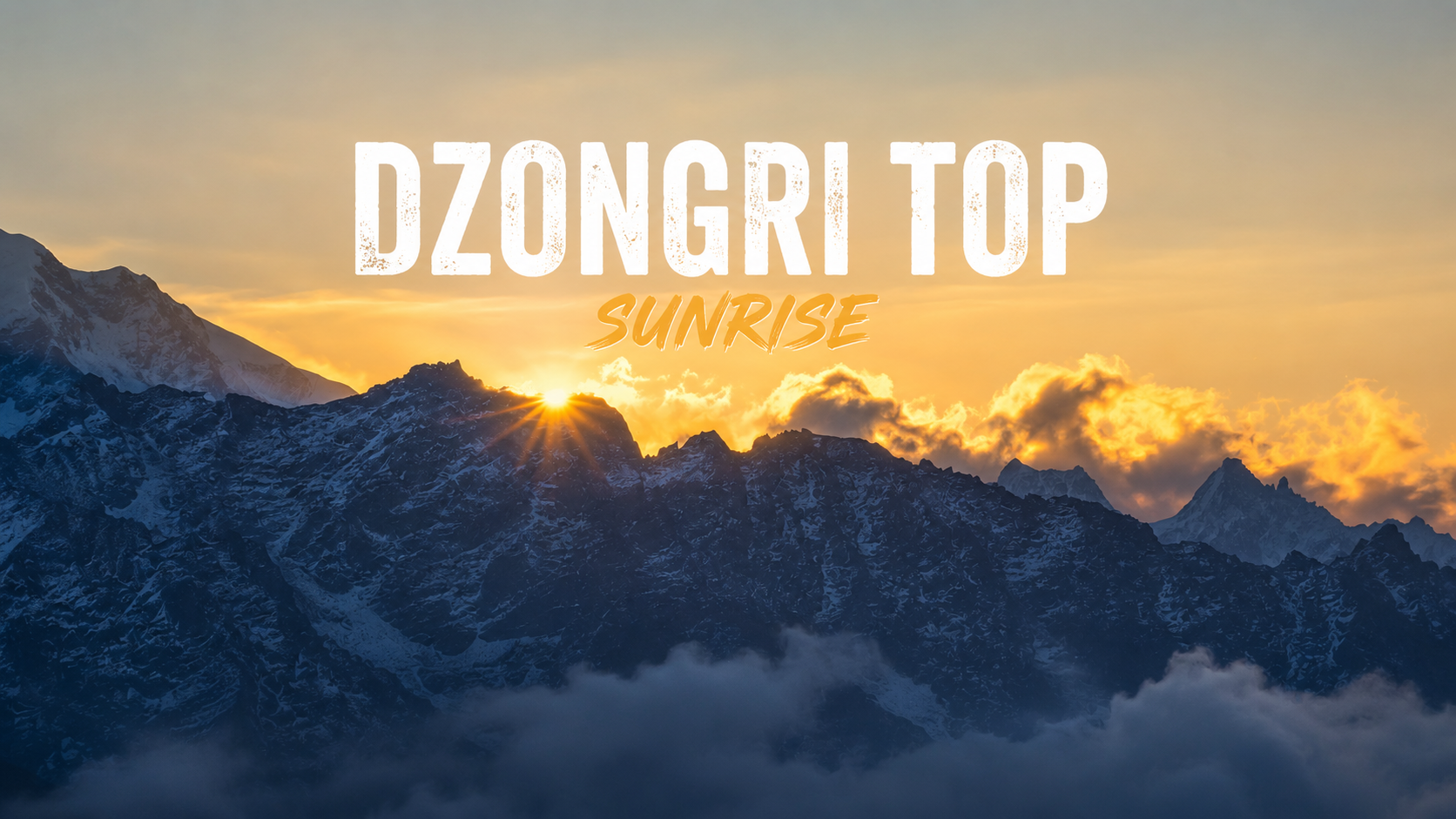
There is a reason I still wake up at 3:30 AM even after leading 100+ treks. The dzongri top sunrise is not just a view, it is a spiritual reset. At 4,200 metres, standing on that rocky outcrop in West Sikkim, you watch the first rays of the sun hit the third-highest mountain on earth. That moment changes you.
If you are planning a Dzongri trek, the sunrise is your ultimate reward. In this guide, I will tell you exactly what you will see, what time to start, what to wear, and why this is one of India’s best mountain sunrises.
The Pre-Dawn Trek: A 45-Minute Climb in Darkness
The dzongri top view point sits 200 metres above the Dzongri campsite (4,020m). The climb takes 30 to 45 minutes, and it is steep. You will use a headlamp because you start walking around 4:00 AM.
The air at that altitude is thin. Expect your heart to pound. But every step is worth it. As you gain height, the silhouette of the Kanchenjunga massif slowly emerges against a navy-blue sky. By the time you reach the top, the eastern horizon starts glowing orange.
Short Note – Do not rush. Start from camp early, walk slowly, and take small sips of water. I have seen trekkers miss the best colours because they arrived too late or too breathless.
What You Actually See at Dzongri Top Sunrise
The dzongri top sunrise is a three-act performance:
| Time (Approx.) | What Happens | Why It Matters |
| 4:45 AM | First grey light, mountains appear as shadows | You locate Kanchenjunga, Kabru, and Pandim |
| 5:15 AM | Alpenglow – soft pink and orange | The snow turns into cotton candy colours |
| 5:30 AM | Golden hour – direct sun hits the peaks | The classic “golden Kanchenjunga” moment |
The main peaks you will see from the dzongri top view point are:
- Mt. Kanchenjunga (8,586 m) – the world’s third-highest
- Mt. Kabru (7,338 m)
- Mt. Pandim (6,691 m)
- Mt. Rathong (6,679 m)
- Mt. Koktang (6,147 m)
The sunrise lasts only 15–20 minutes for perfect light. After that, the sun gets harsh, and the mountains become flat and white.
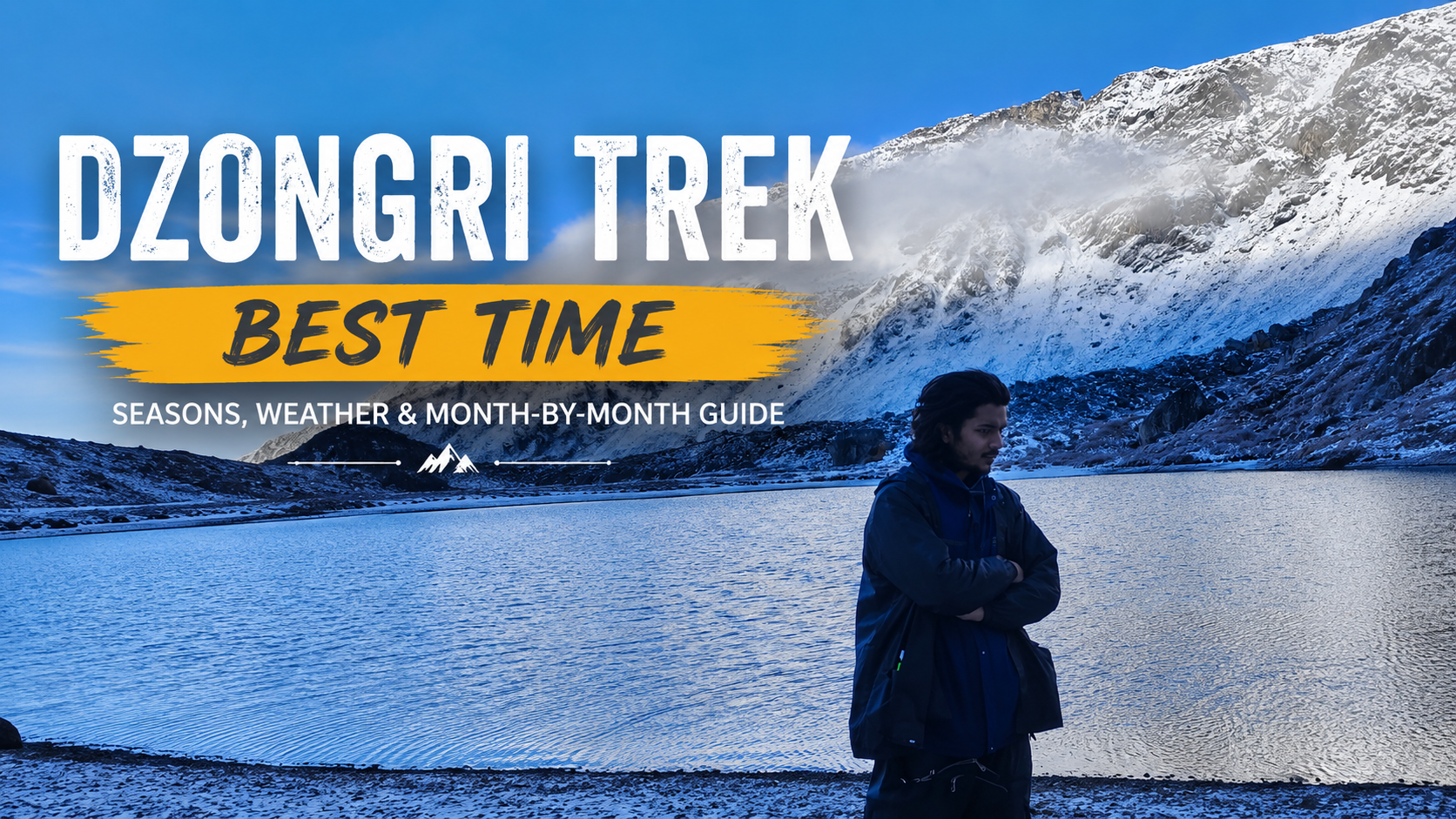
When to Go: The Dzongri Trek Best Time
To see the dzongri top sunrise without clouds or rain, you must choose the right season. The dzongri trek best time is:
Spring (April to June)
Rhododendrons in full bloom. Skies are mostly clear, though afternoon clouds can appear. Temperatures at sunrise: -2°C to 5°C.
Autumn (September to November)
Crystal-clear skies, almost no rain. This is the peak season. Sunrise temperatures: -5 °C to 2°C.
Avoid July–August (monsoon) – you will see only grey mist. December–March is possible but extremely cold (-10°C or lower), and snow often blocks the trail.
Short Note – October is my personal favourite. The air is so clear that Kanchenjunga looks like a painting.
Read more: See full price guidance of Dzongri trek.
What to Wear for the 4,200m Sunrise
The wind at Dzongri Top can cut through normal jackets. Here is my tried-and-tested clothing list for the Dzongri top sunrise:
| Layer | Item | Why |
|---|---|---|
| Base | Merino wool or synthetic thermal | Wicks sweat, keeps you dry |
| Mid | Fleece jacket (300–400g) | Traps body heat |
| Outer | Down jacket (800 fill or more) | Blocks wind and cold |
| Shell | Waterproof & windproof jacket | Sudden snow or wind gusts |
| Head | Balaclava + woollen cap | Ears and face freeze easily |
| Hands | Thick insulated gloves + liner | Your fingers will go numb without this |
| Feet | Two pairs of socks (thin + thick) | Prevents blisters and keeps toes warm |
Do not forget a headlamp (with spare batteries) and sunglasses — once the sun is up while dzongri trekking, the glare on snow is blinding.
Dzongri Top Photography: Capturing the Magic
If you love dzongri top photography, you need a plan. The window for great light is short.
Camera Settings
- Shoot in RAW for better editing
- ISO 100–400 (keep it low)
- Aperture f/8 to f/11 for deep focus
- Shutter speed: 1/100 to 1/400 depending on light
- White balance: “Cloudy” or “Shade” to enhance warm tones
Practical Tips from the Field
- Keep spare batteries in your inner pocket – cold drains them in minutes.
- Use a lightweight tripod (gorillapod works) for sharp images in low light.
- Arrive 20 minutes before first light to set your composition.
- Shoot vertical panoramas of the mountain range.
The best dzongri top photography happens between 5:15 AM and 5:45 AM. After that, the light becomes harsh.
Read more: Know best time to strat Dzongri Trek
Dzongri Trek Permit: Don’t Leave Home Without It
The dzongri trek permit is mandatory because the trek passes through Kanchenjunga National Park, a protected UNESCO World Heritage Site. Permits help regulate visitor numbers, protect the fragile Himalayan ecosystem, and ensure trekkers’ safety within the park.
All trekkers must obtain the required permits before starting the trek. These permits are typically arranged by a registered trekking agency, and a licensed guide is mandatory on the route.
Important: Carry a printed copy of your permit and a valid government-issued ID, as they may be checked at multiple checkpoints along the trail.
Short Note – Keep your permit and ID easily accessible during the trek to avoid delays at checkpoints.
Why This Is One of the Best Mountain Sunrises in India
I have seen sunrises in Uttarakhand, Himachal, and Nepal. The dzongri top sunrise stands apart for three reasons:
- Proximity – Kanchenjunga looks massive, almost close enough to touch.
- Panorama – You see not one peak but a full horseshoe of 6,000m–8,000m mountains.
- Drama – The shift from complete darkness to golden fire happens in under 10 minutes.
Many trekkers cry at that viewpoint. I am not ashamed to say I did on my first trip.
Final Tips from Kiran Gurung
- Acclimatize properly – Spend a night at Phedang or Dzongri before the sunrise climb.
- Carry a thermos of hot tea – Drinking something warm at the top doubles the joy.
- Pack light but warm – You do not need a heavy backpack for the sunrise climb.
- Book through a registered agency – We handle your Dzongri trek permit, guide, cook, and porters.
The Dzongri top sunrise is not a bucket list item. It is a memory that will sit inside you forever. Our Glacier Trek and adventure Trekking group give you the ultimate adventure experience.
Read more: See Dzongri trek Full Guidace.
Frequently Asked Questions
Q1: What time should I start the climb from Dzongri camp to the top?
Start at 4:00 AM. The climb takes 30–45 minutes. Aim to reach the top by 4:45 AM to see the full colour change.
Q2: Is the Dzongri trek difficulty manageable for a first-time trekker?
The dzongri trek difficulty is moderate to difficult. You need good fitness (able to walk 8–10 km uphill with a light pack). But no technical climbing is required.
Q3: Can I see the sunrise without camping at Dzongri?
No. You must stay at the Dzongri campsite or lodge.
Q4: Do I need a sleeping bag rated for sub-zero temperatures?
Yes. Nights at Dzongri drop below freezing. Bring a bag rated for -10°C or rent one from your agency.
Q5: Is there a mobile network at Dzongri Top?
No. There is zero network beyond Yuksom. Inform your family before you leave.
Book the Dzongri Trek now: ₹14,900 per person · Call/WhatsApp +91 74072 48200 · Email contact@trekinsikkim.in
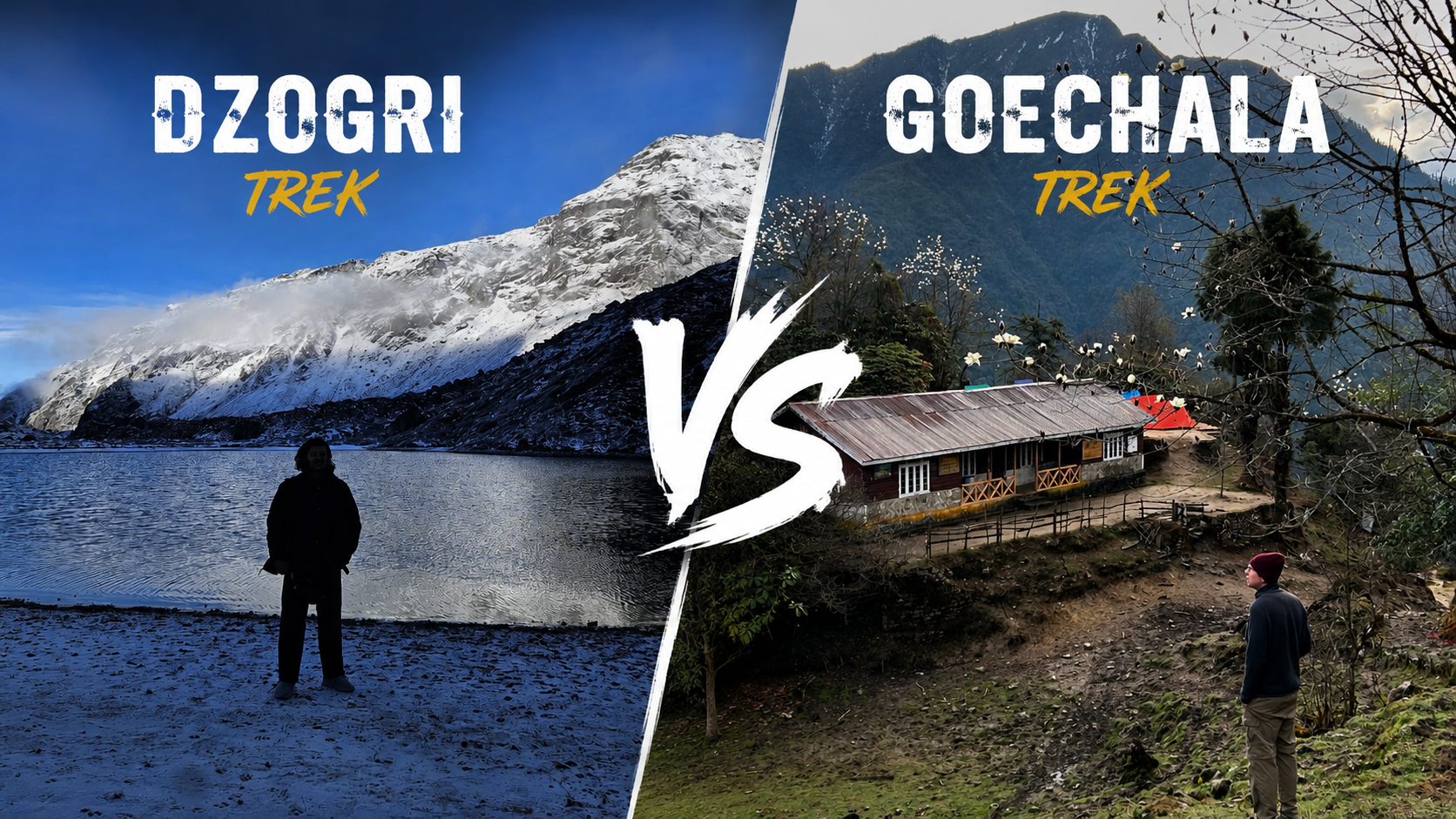
Read more: Confused about Goechala vs Dzongri? Here is the detail explanation.
Read more: Have ten days? Read the full Goechala Trek guide
Read more: Know best Sikkim treks to plan your next trek.
About the author
Kiran Gurung is the founder of Glacier Treks & Adventure, based in Yuksom, West Sikkim — the trailhead for the Dzongri and Goechala treks. An IMF-certified mountaineer, he has personally led more than 200 expeditions across the Indian Himalaya. Glacier Treks & Adventure is affiliated with the Department of Sikkim Tourism, the IMF, TAAS, YTDC and SAMA, and operates the full Sikkim trekking, Ladakh trekking and expedition portfolio.