Choosing the dzongri trek best time is the most critical decision for any trekker heading to the Kanchenjunga region. As the founder of Glacier Treks & Adventure, leading this route from Yuksom for over 15 years, I have seen trekkers enjoy spectacular sunrises and others return disappointed simply because they arrived in the wrong month.
The dzongri trek best time to visit is March to May (spring) and September to November (autumn). These windows offer stable weather, clear mountain views, and safe trail conditions. This guide breaks down every season honestly, so you can book with confidence.
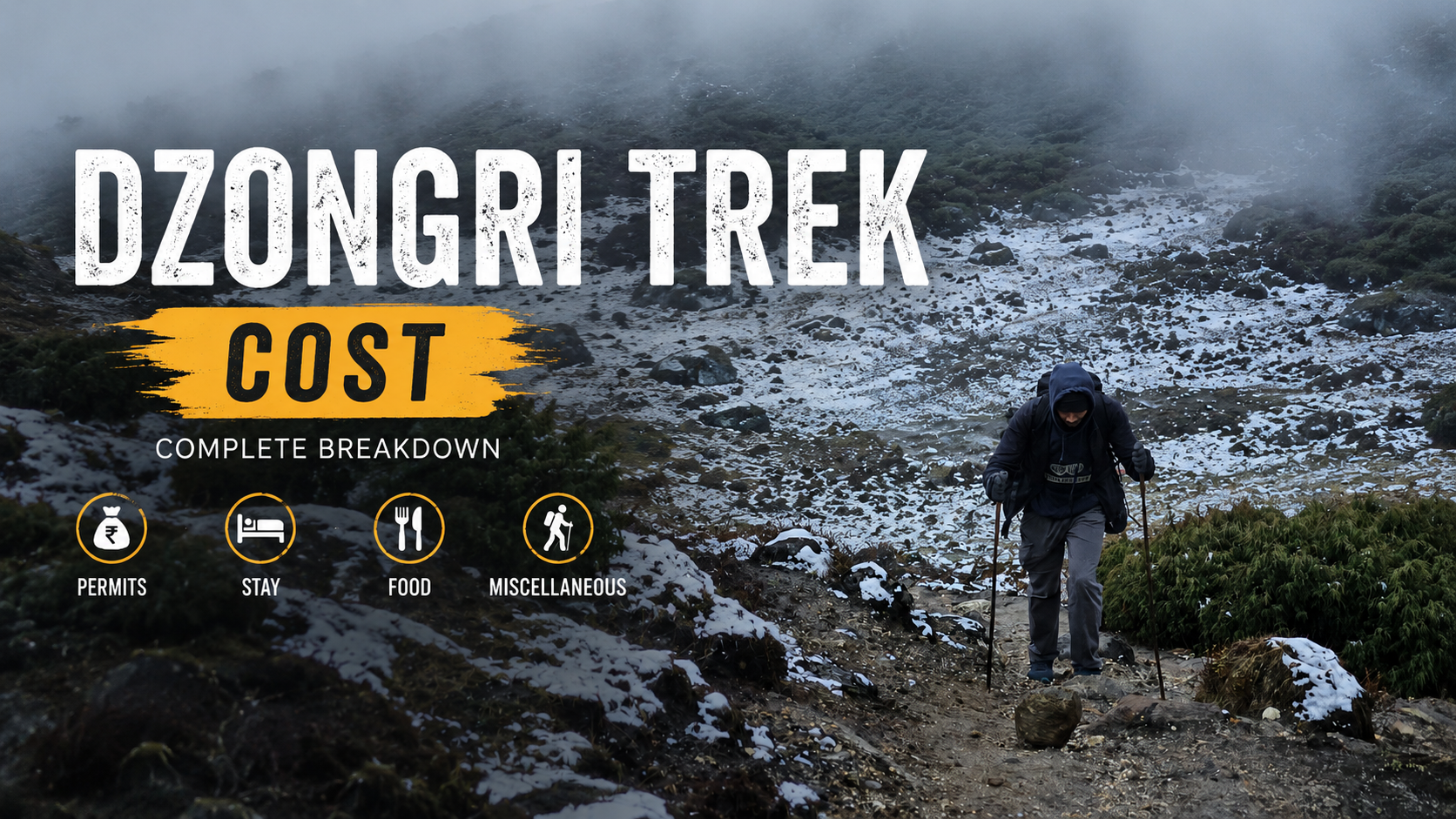
Read more: Dzongri trekking Cost explanation-See here
Spring Season (March to May): Rhododendron Bloom and Pleasant Days
Spring is the dzongri trek best time for nature lovers. The lower forests between Bakhim (2,700m) and Tshoka (3,400m) explode with pink and red rhododendrons, peaking in mid-April.
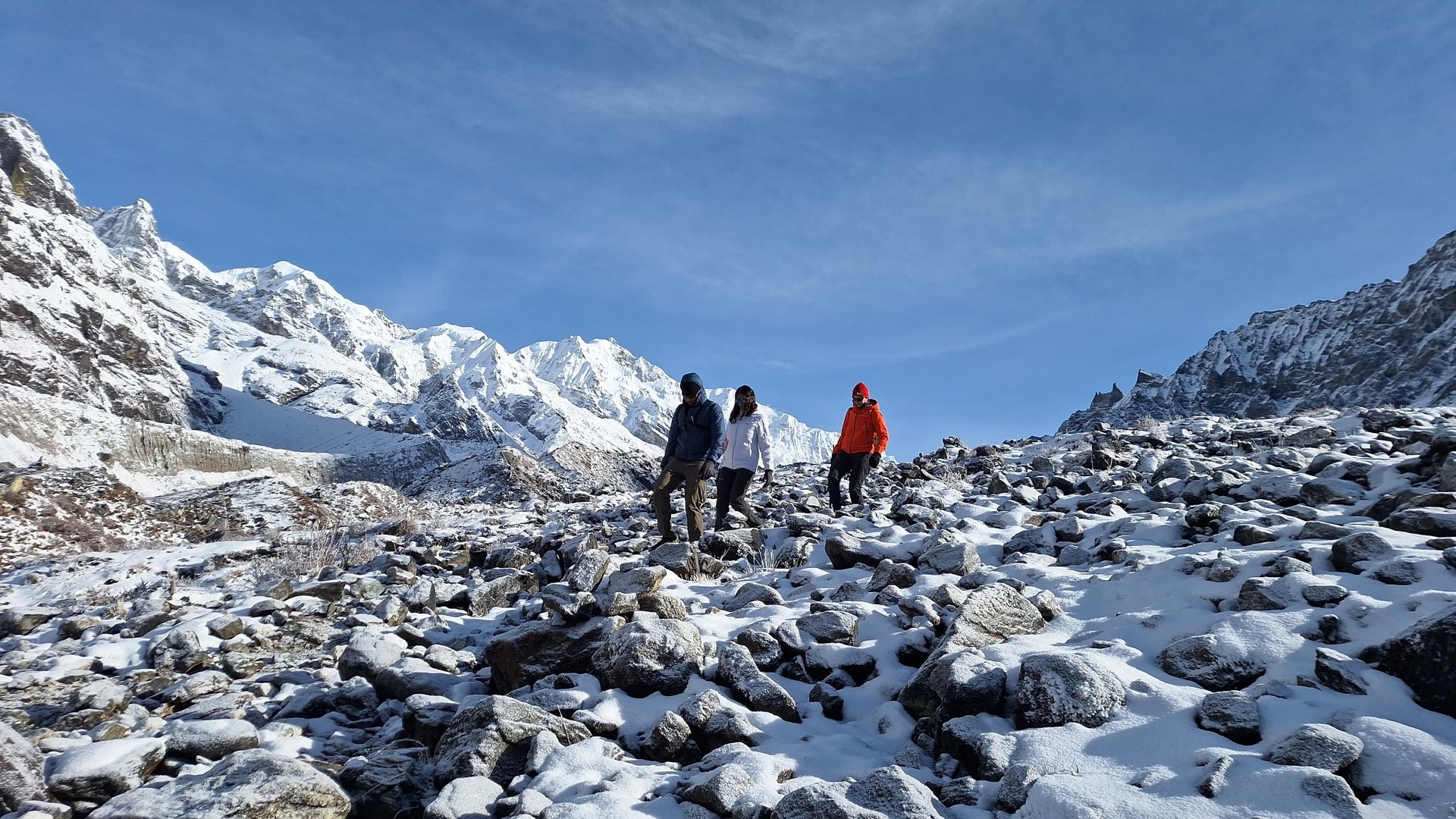
Daytime temperatures range from 8°C to 15°C, while nights at Dzongri (4,200m) drop to -2°C. Snow melts below 3,500m, making trails firm yet comfortable.
The dzongri trek difficulty level in spring is moderate – expect some residual snow near the top, but no technical gear is required.
Short Note: If you want to walk through rhododendron tunnels with Kanchenjunga in the background, book for the last week of April.
Autumn Season (September to November): Crystal Clear Sunrise Views
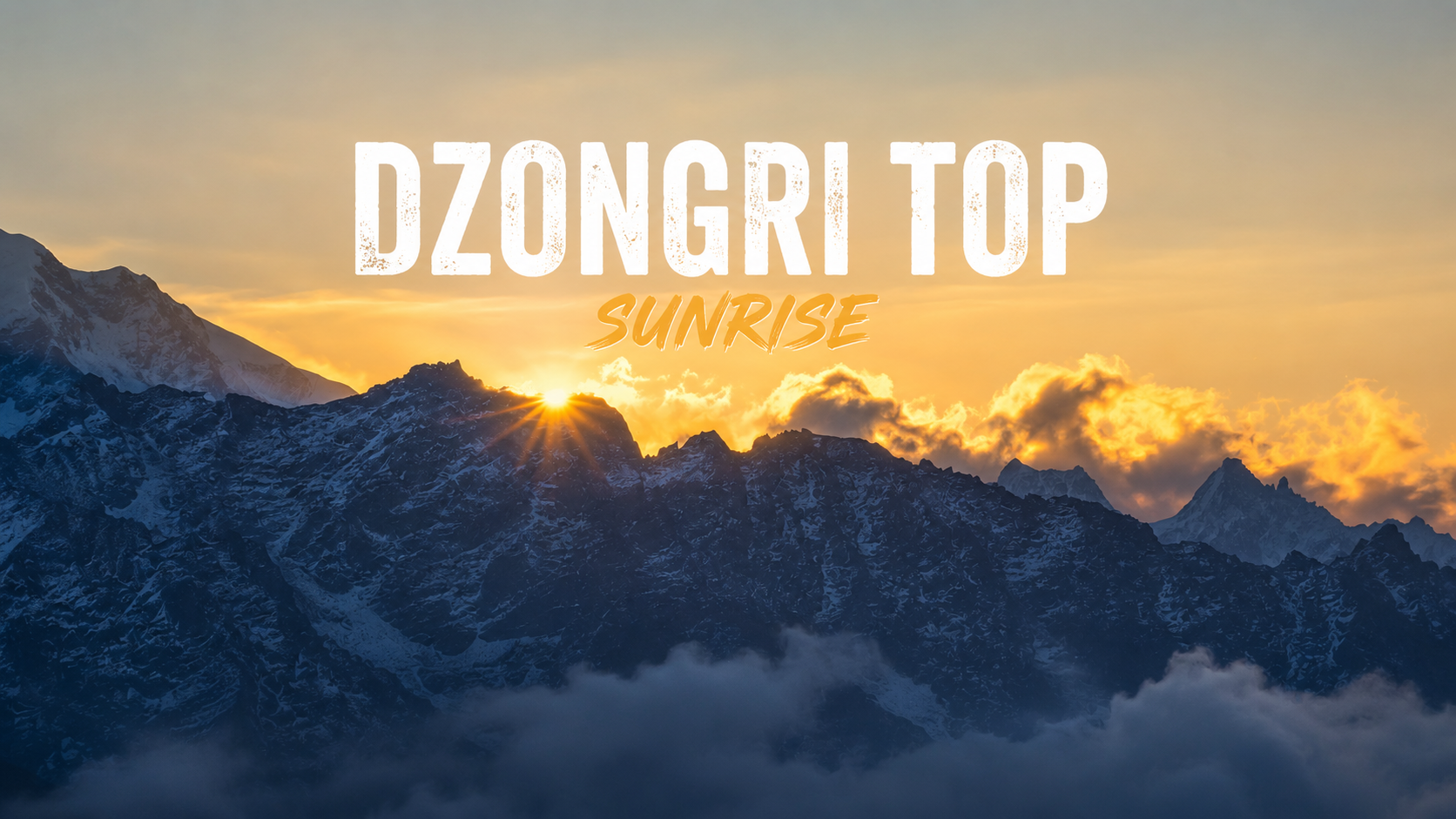
For the famous dzongri trek Kanchenjunga sunrise view, autumn is unrivalled. The monsoon rains wash away dust, leaving skies transparent.
From Dzongri viewpoint, you can see over fourteen peaks above 6,000m, including Pandim, Kabru, and Rathong.
Daytime temperatures are 8°C to 12°C; nights dip to -3°C. September offers lingering greenery, October gives the sharpest peaks, and November brings cold but empty trails.
The dzongri trek difficulty level in autumn is lower because the trail is dry and stable.
Short Note: October is the most popular month. Book your permits and homestays at least 45 days in advance.
Summer / Monsoon (June to August): For Experienced Trekkers Only
Summer is not the dzongri trek best time for beginners. Heavy rain makes trails slippery, leeches appear in lower sections, and clouds often block mountain views.
Daytime temperatures are warmer (12°C to 18°C), but visibility is a gamble.
If you must trek in summer, pack rain gear, waterproof boots, and gaiters. Accept that you may not see Kanchenjunga.
Winter (December to February): Extreme Challenge and Solitude
Winter transforms the Dzongri trek into an expedition. Snow buries trails from December to March, with night temperatures falling to -10°C or lower. This time increases Dzongri trek difficulty level.
Only experienced winter trekkers with crampons, gaiters, and four-season equipment should attempt this.
The dzongri trek’s best time is definitely not winter for most people, but for those seeking total solitude and a pristine white landscape, it offers a unique reward.
Seasonal Comparison Table
| Season | Months | Day Temp | Night Temp | Snow | Best For |
| Spring | Mar–May | 8-15°C | -2 to 5°C | Melting above 3,800m | Rhododendrons, pleasant hiking |
| Autumn | Sep–Nov | 8-12°C | -3 to 3°C | Minimal fresh snow | Clearest dzongri trek Kanchenjunga sunrise view |
| Summer | Jun–Aug | 12-18°C | 3 to 8°C | No snow, rain instead | Lush greenery, empty trails |
| Winter | Dec–Feb | 2-7°C | -10 to -5°C | Heavy, trails buried | Extreme adventure, solitude |
Read more: Dzongri trek Pricing Details- Everubody wants to know
Dzongri Trek Logistics and Costs
The dzongri trek permit cost is included in our package at Glacier Treks & Adventure. It covers Kanchenjunga National Park entry fees and the compulsory Yuksom police registration.
For 2026, our dzongri trek cost starts at ₹14,900 per person for Indian trekkers and $250 for international trekkers. This includes permits, equipment, three meals per day, a qualified guide, porters, and transport from Yuksom.
The standard dzongri trek itinerary 5 days is possible for fit trekkers, but our recommended 7-day package includes proper acclimatisation.
Short Note: The dzongri trek difficulty level is moderate. You need basic fitness and the ability to walk 6-8 hours per day at altitudes up to 4,200m. No prior trekking experience is required, but a regular cardio routine for 4-6 weeks before the trek is highly recommended.
Personal Advice from Kiran Gurung
I have stood at Dzongri Top on an April morning with rhododendrons blooming at my feet as the first rays hit Kanchenjunga. I have also stood there in July, seeing nothing but fog.
The mountain does not care about your schedule.
That is why choosing the correct dzongri trek best time matters so much.
For a deeper dive into the route and preparation, read our complete Dzongri Trek Complete Guide. You can also explore other Best Treks in Sikkim or learn about the historical Yuksom Pillar (P1), which marks the start of your journey.
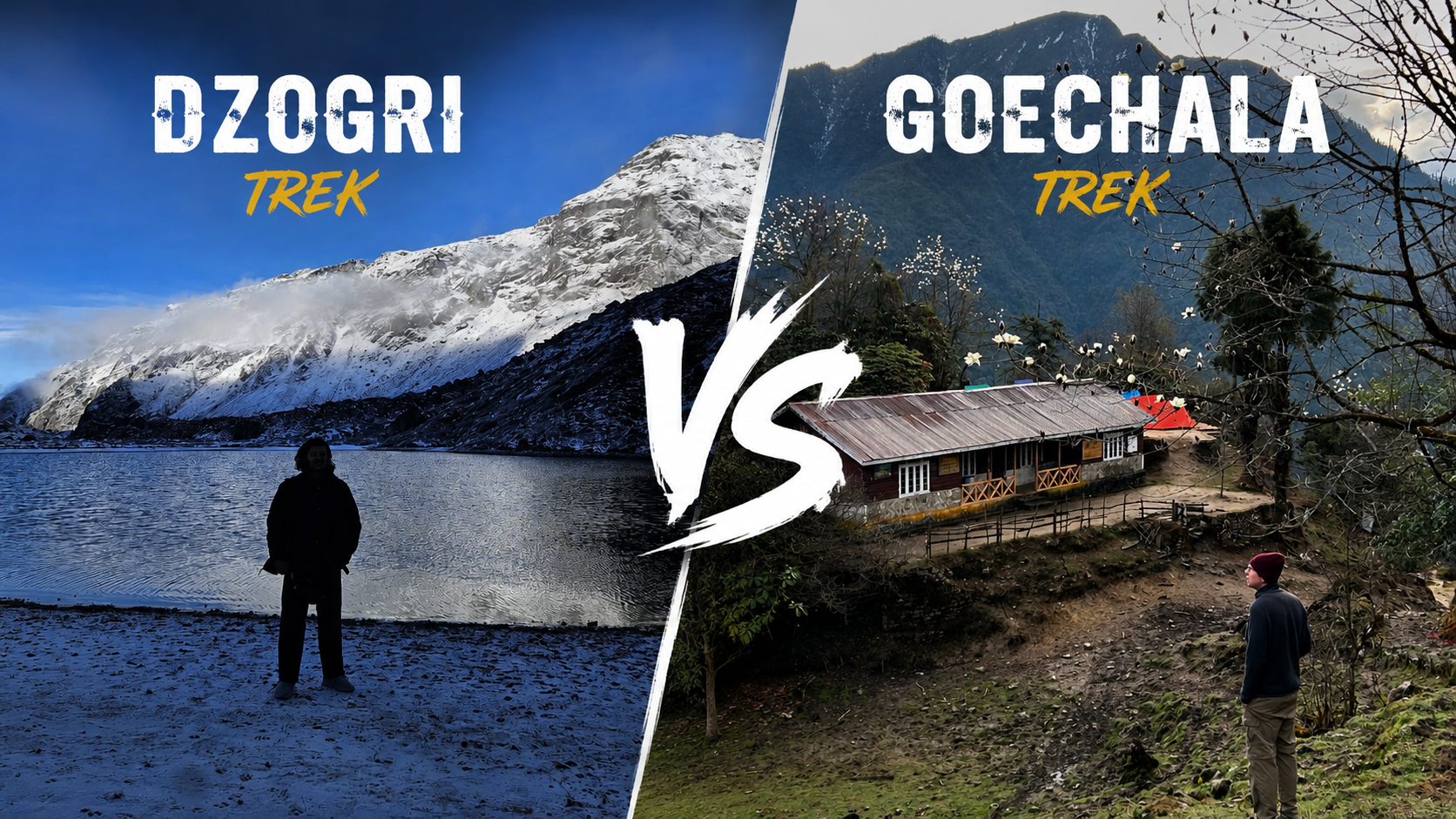
Read more: Dzongri trek vs. Goechala Trek- Which one you should choose?
Frequently Asked Questions (FAQ)
Q1: What is the absolute best month for the Dzongri trek?
A: October is widely considered the best month. Skies are crystal clear, temperatures are comfortable (8°C to 12°C daytime), and the dzongri trek Kanchenjunga sunrise view is spectacular. April is a close second if you prioritise rhododendron blooms.
Q2: Is the Dzongri trek suitable for beginners?
A: Yes, with proper preparation. The dzongri trek difficulty level is moderate. Beginners should choose spring or autumn, join a guided group, and complete a 7-day itinerary rather than a rushed dzongri trek itinerary 5 days version.
Q3: Can I see the Kanchenjunga sunrise in winter?
A: Possibly, but not recommended for most trekkers. Winter offers clear skies on some days, but temperatures below -10°C, deep snow, and trail closures make the trek dangerous without specialised gear. The dzongri trek best time for sunrise is autumn, not winter.
Q4: What is included in the dzongri trek permit cost?
A: The permit cost covers Kanchenjunga National Park entry fee (₹200 per day for Indians, $10 per day for foreigners) and the Yuksom police registration (₹50 per person). Glacier Treks & Adventure includes all permits in our package price.
Q5: How many days are needed for a comfortable Dzongri trek?
A: Our recommended 7-day itinerary from Yuksom to Dzongri and back allows proper acclimatisation. An aggressive dzongri trek itinerary 5 days, is possible for experienced trekkers, but the risk of altitude sickness increases significantly. We advise against a 5-day schedule for first-timers.
Q6: What is the total Dzongri trek cost in 2026?
A: For Indian trekkers, the full package starts at ₹14,900. For international trekkers, it starts at $250 USD. This includes permits, meals, guide, porters, camping equipment, and transport from Yuksom. Excluded are personal insurance, tips, and emergency evacuation.
Q7: Do I need prior trekking experience for the Dzongri trek?
A: No, but you need good fitness. The dzongri trek difficulty level involves walking 6-8 hours per day over uneven terrain, with altitude gains of 800-1,000 metres per day. A regular fitness routine (jogging, cycling, or stair climbing) for 6 weeks before the trek is strongly recommended.
Q8: Can I book the Dzongri trek directly through Glacier Treks & Adventure?
A: Yes. Visit our product page at Dzongri Trek Booking or contact us via WhatsApp at +91 7407248200. We operate directly from Yuksom, working with local guides and porters to ensure fair wages and authentic experiences.
Book the Dzongri Trek now: ₹14,900 per person · Call/WhatsApp +91 74072 48200 · Email contact@trekinsikkim.in
Read more: See complete guidance of Dzongri Trekking: Itinerary, Costs, Difficulties.
Read more: Have ten days? Read the full Goechala Trek guide
Read more: 3:30 AM Dzongri Top Sunrise View- Read in detail.
About the author
Kiran Gurung is the founder of Glacier Treks & Adventure, based in Yuksom, West Sikkim — the trailhead for the Dzongri and Goechala treks. An IMF-certified mountaineer, he has personally led more than 200 expeditions across the Indian Himalaya. Glacier Treks & Adventure is affiliated with the Department of Sikkim Tourism, the IMF, TAAS, YTDC and SAMA, and operates the full Sikkim trekking, Ladakh trekking and expedition portfolio.