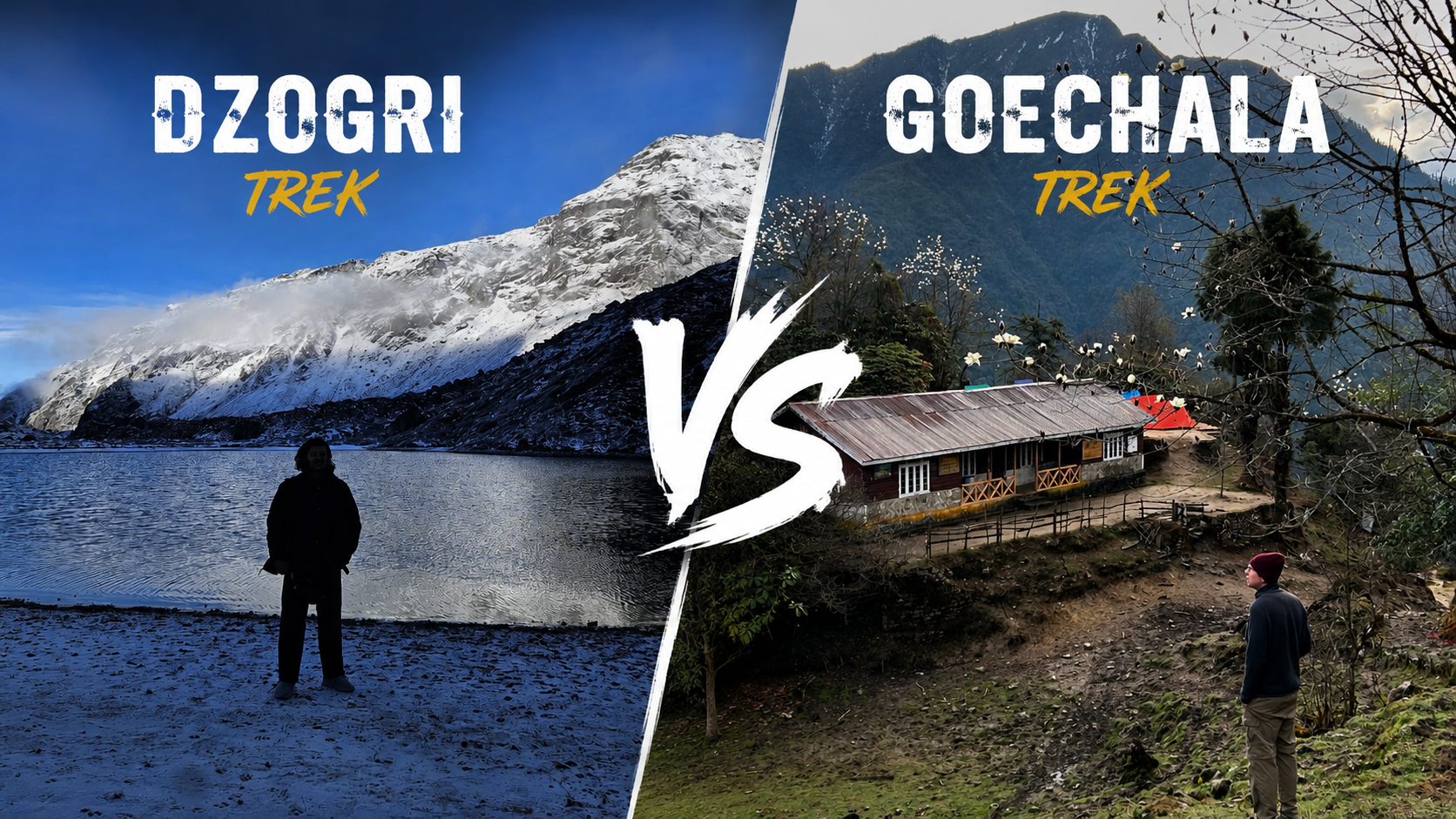
I’ve led hundreds of trekkers into the Singalila and Kanchenjunga ranges. And the question I hear most often at our Yuksom base is: “Kiran dai, which one should I do — Dzongri Trek or Goechala Trek?”
Both treks share the same lush start through rhododendron forests. Both offer jaw-dropping Himalayan views. But after 12 years of guiding, I can tell you this: they are not the same.
One is a short, intense burst of mountain magic. The other is a full-blown expedition that tests your lungs and patience.
Let me break it down honestly — as a guide and as someone who runs a trekking agency in Sikkim. No hype. Just what you need to decide between Dzongri vs Goechala.
At a Glance: Dzongri Trek vs Goechala Trek
These comparison is based on actual ground data from our last 50+ expeditions.
| Comparison Factor | Dzongri Trek | Goechala Trek |
| Duration | 6–7 Days | 10–12 Days |
| Starting Price | ₹14,900 | ₹19,500 |
| Maximum Altitude | 4,200 m | 4,940 m |
| Difficulty | Moderate | Difficult |
| Suitable For | Beginners & Intermediate Trekkers | Experienced Trekkers |
| Trek Distance | Shorter Route | Longer Route |
| Kanchenjunga Views | Excellent Panorama | Closest & Most Dramatic Views |
| Fitness Requirement | Moderate | High |
| Time Commitment | Low | High |
| Overall Recommendation | Best for First-Time Sikkim Trekkers | Best for Serious Himalayan Trekkers |
Short note: Both treks start from the historic village of Yuksom — the coronation place of Sikkim’s first Chogyal. We begin every trip with a prayer at the Kathok Lake.
Read more: What is the best Time to go Goechala trek.
2. Detailed Comparison (Based on My Personal Logs)
a) Trek Difficulty & Fitness Required
Dzongri trek difficulty is often understated. You gain altitude fast — from 1,780 m in Yuksom to 4,200 m at Dzongri Top in just 3 days. I’ve seen fit gym-goers struggle with AMS here.
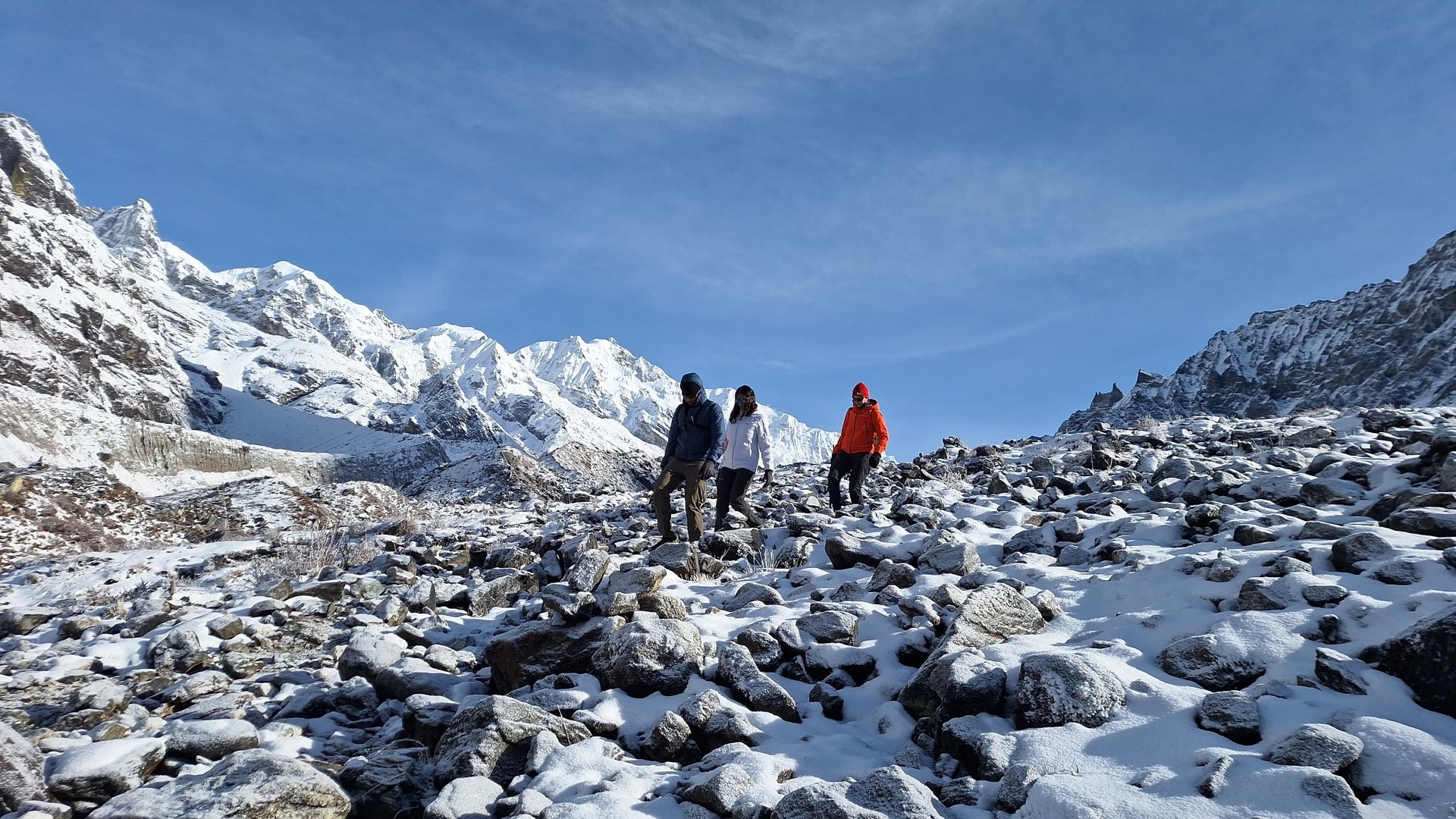
On the other hand, Goechala trek difficulty is spread over more days, but the push to the pass at 4,940 m is brutal. The last 3 km on moraine and snow can take 5–6 hours.
My rule as a guide:
- If you can run 5 km without stopping → Dzongri Trek is fine.
- If you’ve done a 4,000 m trek before → Goechala Trek is achievable.
b) Best Time for Goechala Trek (and Dzongri)
The best time for Goechala trek is also the best time for Dzongri Trek:
- Spring (March to May): Rhododendrons in full bloom. Clear skies. Temperature: 5°C to 15°C during the day, -5°C at night.
- Autumn (September to November): Crystal clear views. Less rain. But colder (down to -8°C at Dzongri Top).
Avoid monsoon (June–August) — leeches and landslides make both treks miserable. Winter (Dec–Feb) is for experts only; snow blocks Goechala Pass.
c) Views – Where Will You Cry (Happily)?
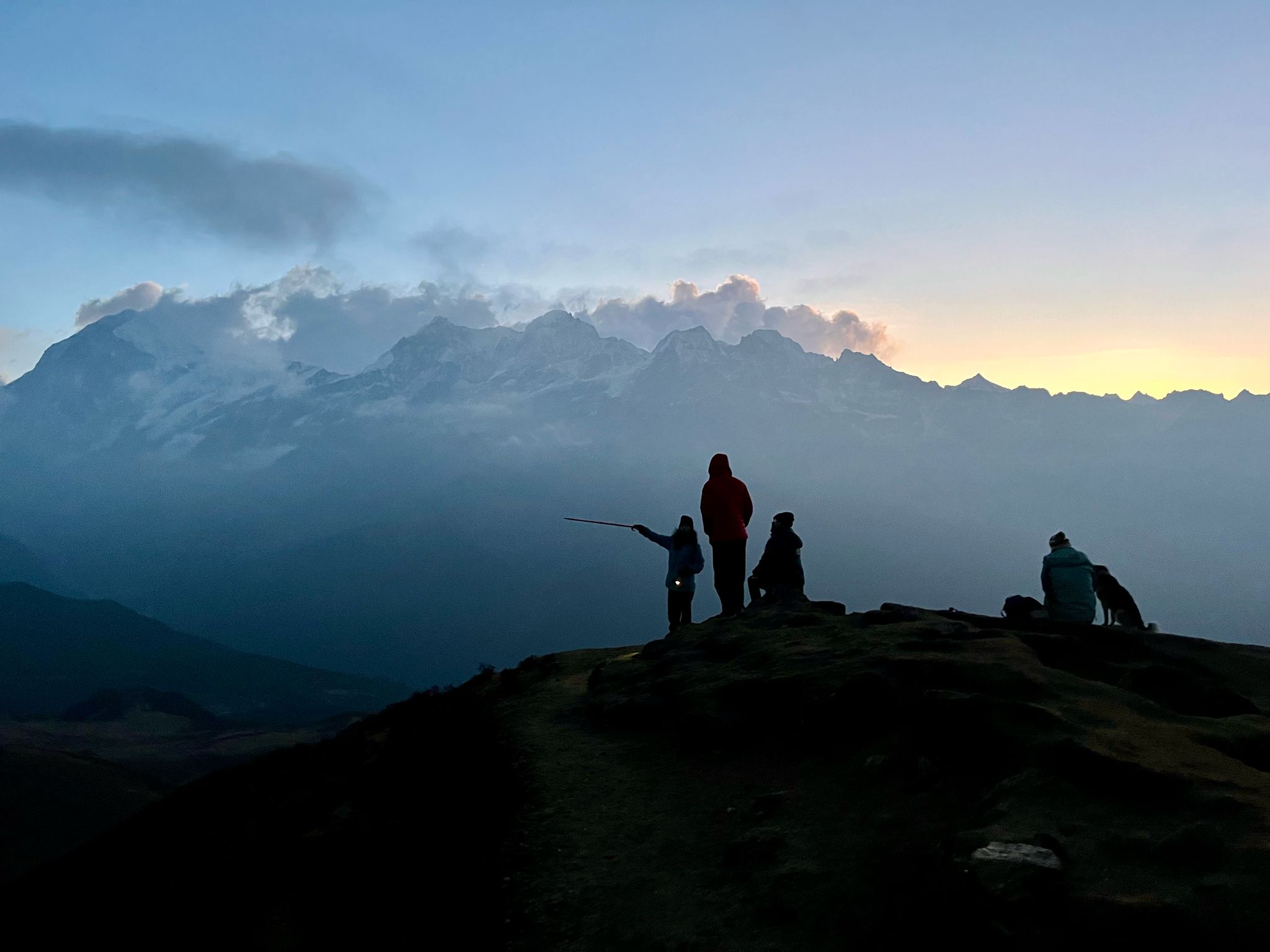
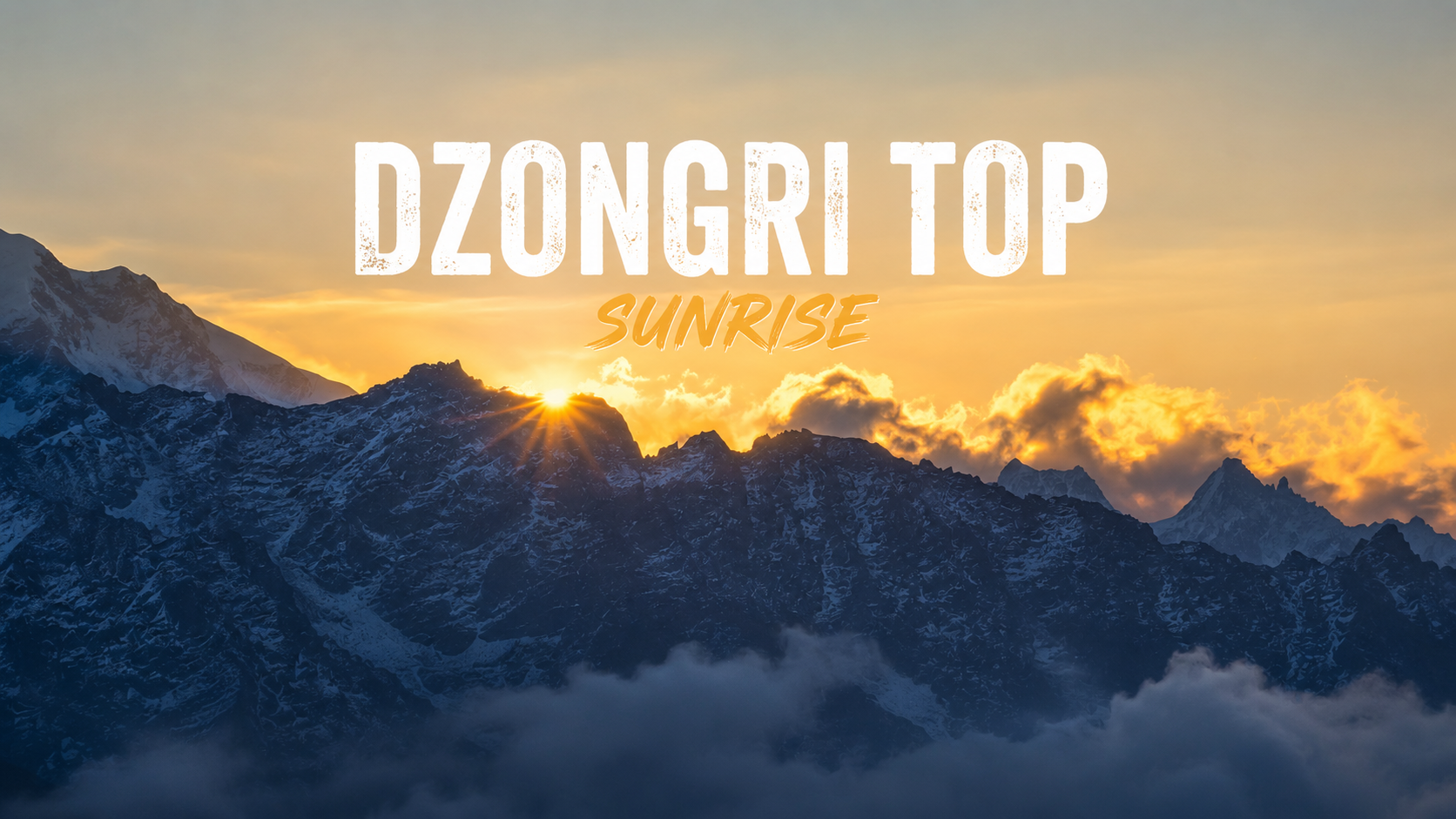
Dzongri Top: 360° panorama of Mt. Kanchenjunga, Mt. Pandim, Mt. Kabru, Mt. Rathong. It’s like being in a rotating IMAX theatre.
Goechala Pass: You touch the base of Kanchenjunga’s southwest face. The vertical ice wall is so close you feel you can throw a stone at it.
I always tell my groups: Dzongri Trek gives you a postcard; Goechala Trek puts you inside the frame.
d) Permits – Don’t Ignore This
The Goechala trek permit process is the trickiest part. You need:
- Inner Line Permit (ILP) for Sikkim – ₹200/person
- Permits from Forest Department – ₹2,500 for foreigners, ₹500 for Indians
- Restricted Area Permit (RAP) for certain nationalities
At Glacier Treks, we handle all permits. You just share your ID and photo. For Dzongri Trek, only an ILP is needed.
Read more: See full cost guidance for Dzogri trek.
3. Day-by-Day Route Comparison
Dzongri Trek (6 days)
Day 1: Yuksom (1,780 m) → Sachen (2,200 m) – 6 km, 4–5 hrs
Day 2: Sachen → Tsokha (3,050 m) – 5 km, 4 hrs
Day 3: Tsokha → Dzongri (3,960 m) – 5 km, 5 hrs
Day 4: Dzongri → Dzongri Top (4,200 m) → back → Bikhbari (3,800 m) – 3 km, 6 hrs with breaks
Day 5: Bikhbari → Tsokha → Yuksom – 12 km, 6 hrs
Day 6: Buffer for bad weather or drive to Pelling
Goechala Trek (12 days typical)
Days 1–3: Same as Dzongri up to Dzongri
Day 4: Dzongri → Thansing (3,900 m) – 5 km, 4 hrs
Day 5: Thansing → Lamuney (4,150 m) – 3 km, 3 hrs (acclimatization)
Day 6: Lamuney → Goechala Pass (4,940 m) → back to Thansing – 12 km, 10–12 hrs (the monster day)
Days 7–11: Descent to Yuksom
Day 12: Buffer
Short note on Goechala trek distance: The 90 km includes multiple up-and-downs. Your fitness tracker will lie because of the altitude. Listen to your body, not your watch.
Read more:
4. Which One Should You Book? (My Honest Advice)
Choose Dzongri Trek if:
- You have only 6–7 days of vacation.
- Your budget is under ₹15,000 all-inclusive.
- You want a “taste” of Himalayan trekking without extreme risk.
- You are trekking solo or with first-timers.
Choose Goechala Trek if:
- You have done at least one 4,000 m trek before (e.g., Hampta Pass, Kedarkantha).
- You are willing to spend 12 days in the wilderness.
- You want to say “I touched the base of Kanchenjunga.”
- You don’t mind paying for extra permits and porter support.
Personal note from my logbook (May 2025):
A 62-year-old retired army officer from Bangalore did the Goechala Trek with us. He cried at the pass. A 24-year-old tech worker quit on day 3 because of a headache. Age doesn’t decide – preparation does.
FAQ – What Trekkers Ask Me Most
Q: Is the Dzongri Trek safe for beginners?
A: Yes, if you are moderately fit and we follow a proper acclimatization schedule. At Glacier Treks, we carry oximeters and first-aid oxygen.
Q: Can I do the Goechala Trek without a guide?
A: No. Sikkim Forest Department mandates a registered guide for Goechala beyond Dzongri.
Q: Which has better mountain views – Dzongri Trek or Goechala Trek?
A: Dzongri Trek gives you a wider panorama. Goechala Trek gives you a closer, more intimidating view.
Q: How early should I reserve my spot for the Dzongri Trek?
A: For Dzongri Trek – 2 weeks. For Goechala Trek – at least 1 month because of permit processing and forest rest house availability.
Q: What is the success rate of reaching Goechala Pass?
A: In our records: 85% in spring, 78% in autumn. Weather is the main factor, not fitness.
Read more: See full guidance about Dzongri trek
Final Words from Kiran
When I first moved from a trekking guide to founding Glacier Treks & Adventure, I made a promise: no sugar-coating. If you want a short, beautiful, and budget-friendly Himalayan experience, Dzongri Trek is your answer. If you want to push limits and stand before Kanchenjunga like a pilgrim, Goechala Trek is the clear winner.
When people ask me about Dzongri vs Goechala, I tell them that both treks will change you. The difference is how much time, fitness, and commitment you can invest. Both treks will change you. But only you know your legs and your heart.
Happy trekking. And remember – the mountain doesn’t care about your Instagram. It cares about your preparation.
Ready to Book Your Dzongri Trek?
The Dzongri Trek is the best high-altitude Sikkim trek you can do in a single week’s leave. The Kanchenjunga sunrise from Dzongri Top is reason enough to come, and the trail through five ecological zones makes the seven days feel like considerably more. Our 2026 season runs from March through May and again from September through December.
Book the Dzongri Trek now: ₹14,900 per person · Call/WhatsApp +91 74072 48200 · Email contact@trekinsikkim.in
Read more: View the Dzongri Trek product page and book online.
Read more: Have ten days? Read the full Goechala Trek guide.
Read more: Willing to go Dzongri? Here is the complete guide.
About the author
Kiran Gurung is the founder of Glacier Treks & Adventure, based in Yuksom, West Sikkim — the trailhead for the Dzongri and Goechala treks. An IMF-certified mountaineer, he has personally led more than 200 expeditions across the Indian Himalaya. Glacier Treks & Adventure is affiliated with the Department of Sikkim Tourism, the IMF, TAAS, YTDC and SAMA, and operates the full Sikkim trekking, Ladakh trekking and expedition portfolio.