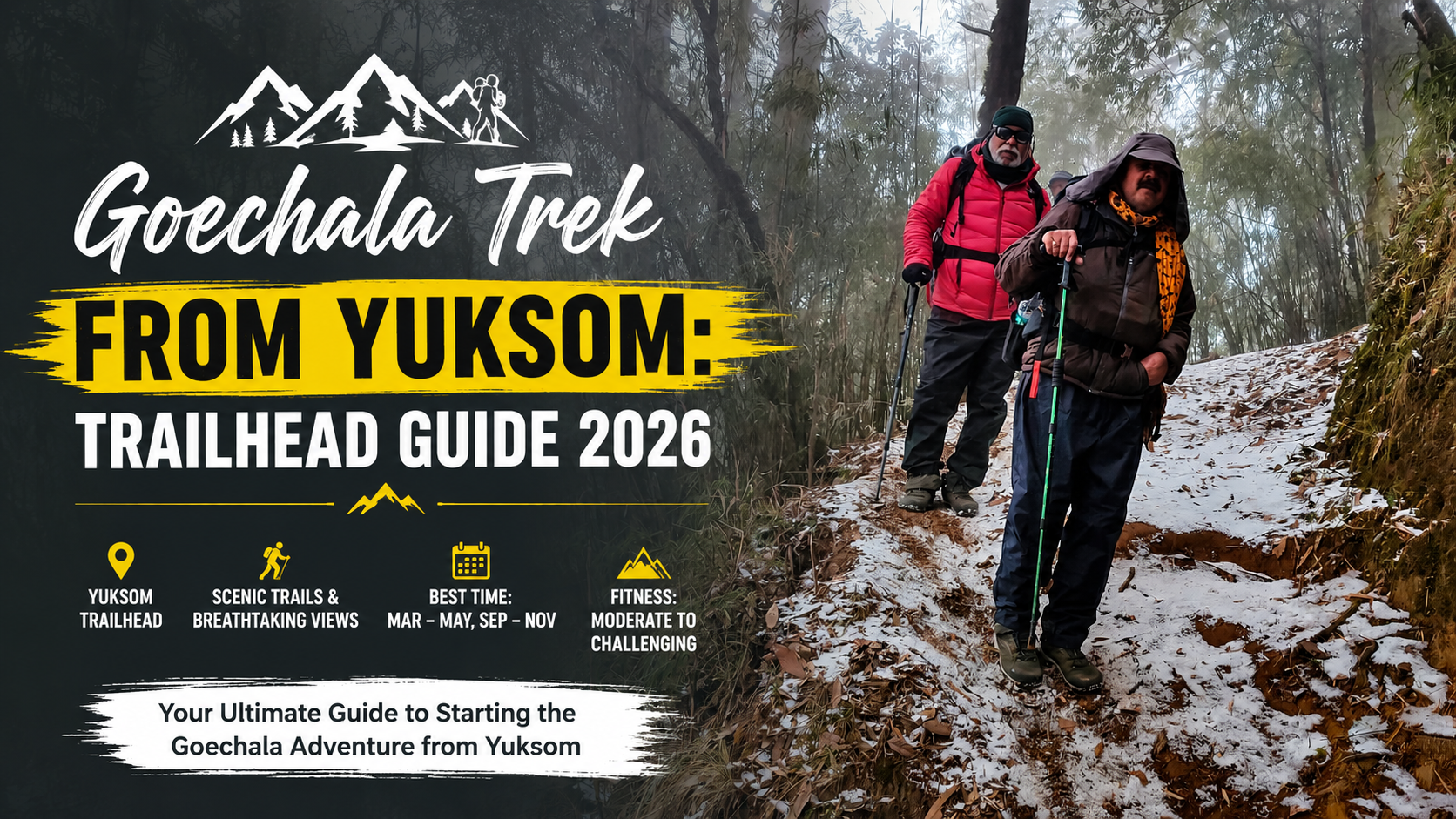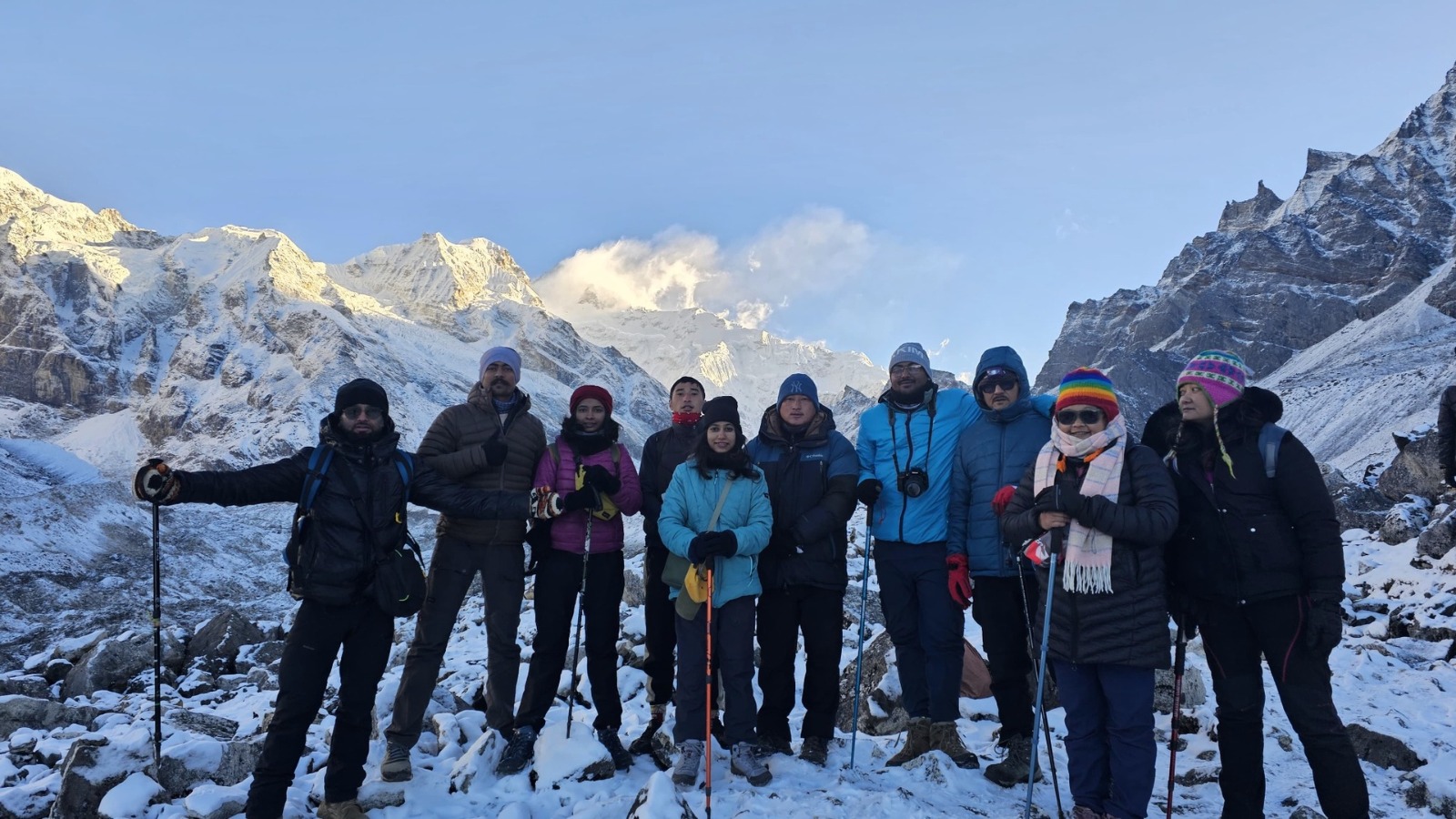
The Goechala Trek difficulty is renowned for being difficult because of its high altitude, long trekking distance, and demanding summit day. The trek covers around 79km over 8 trekking days. It reaches 4,600m at Goechala Viewpoint, where oxygen levels are lower, and temperatures often fall below -5°C. Trekkers walk for a long way, which is 6–9 hours daily, through steep ascents, rocky trails, forests, and alpine terrain. The trek does not require technical climbing skills, but good fitness, stamina, and proper acclimatisation are essential for completing it safely.
“How is the Goechala Trek difficult for beginners?” – This is the question I am asked most often by trekkers who are planning their first high-altitude Himalayan journey. The honest answer is that Goechala is demanding for its scenic beauty, but far from impossible if you underestimate it. Over fifteen years of leading this trek from our base in Yuksom, I have seen beginners successfully reach the viewpoint and experienced trekkers struggle because they ignore the altitude, distance, and weather. The Goechala Trek combines long walking days, steep ascents, freezing temperatures, and low oxygen at 4,600m. With proper acclimatisation, fitness training, and experienced trek support, most trekkers can complete it safely and comfortably.
How Actually the Goechala Trek Is Difficult
The Goechala Trek difficulty level mainly increases from altitude gain, long trekking distances, and changing Himalayan weather conditions. Unlike short weekend treks, Goechala requires consistent endurance over multiple days.
Key Factors That Make Goechala Trek Difficult
1. High Altitude Challenge
The trek reaches approximately 4,600 metres at Goechala Viewpoint. The scenic beauty mesmerises the trekkers, but at this height, oxygen levels become significantly lower, making breathing more difficult during steep climbs.
Many trekkers experience several difficulties, such as:
- Breathlessness
- Fatigue
- Mild headaches
- Reduced stamina
This is why acclimatisation days at Dzongri are mostly important during the trek.
2. Lengthy Walking Distance
The total trekking distance is around 79 kilometres over 8 trekking days. Some days involve 7–9 hours of walking on uneven terrain, rocky paths, forest trails, and steep ascents.
The summit push to Goechala Viewpoint starts before sunrise. This is often the most physically demanding part of the trek.
3. Cold Weather & Harsh Conditions
Temperatures during the trek can drop below 5°C during early mornings and nights. October, November, and early spring are the coldest times, when the weather becomes worse.
Trekkers need to handle this trek:
- Freezing wind
- Snow patches
- Sudden weather changes
- Continuous camping conditions
4. Mental Persistance
The Goechala Trek for beginners can be mentally frustrating. Trekkers should mentally prepare for:
- Limited mobile connectivity
- Basic camping facilities
- Long trekking hours
- Remote Himalayan terrain
Mental preparation is as important as physical fitness.
| Difficulty Factor | What to Expect | Difficulty Level |
| Altitude | Summit: 4,600 m; oxygen levels: Low | High |
| Distance | Around 79 km of trekking over 8 days from Yuksom Base Camp Hotel to Hotel | |
| Weather | Freezing temperatures, wind, and sudden weather changes | Stable |
| Terrain | Rocky trails, steep ascents, forest paths, and long walking hours | Difficult Summit |
| Mental Challenge | Remote campsites, a limited network, and continuous trekking | Difficult |
| Fitness Requirement | Strong stamina and endurance are needed | High |
A note on difficulty: many trekkers underestimate how demanding the Goechala Trek becomes after crossing 4,000m. The long walking hours, steep climbs, cold temperatures, and reduced oxygen can feel exhausting without proper preparation. If this is your first high-altitude trek, focus seriously on fitness and acclimatisation before arriving—it is the single best way to reduce the Goechala Trek difficulty and enjoy the journey safely.
Is Goechala Trek Difficult for Beginners?
One of the most searched questions online is, ‘Is the Goechala Trek difficult for beginners?’
The answer is no doubt, yes — but manageable with proper preparation.
Absolute beginners with no prior fitness routine may struggle on this trek. However, beginners who train with the expert guidance, consistently for 6–8 weeks, can complete the trek successfully.
What don’t you need for this trek?
- Mountaineering skills
- Technical climbing knowledge
- Ice axe or rope training
What do you actually need for this trek?
- Strong stamina
- Cardiovascular fitness
- Leg strength
- Mental resilience
If you have previously completed easier Himalayan treks, you have a high chance of completing the Goechala trek comfortably.
Read more: See the complete price details of the Goechala Trek.
Goechala Trek Difficulty in High Altitude
The biggest challenge of the trek is the combination of altitude and distance.
Important Altitudes on the Trek
| Trek Location | Altitude |
| Yuksom | 1,780 m approx |
| Tshoka | 2,984 m / 9,790 ft |
| Dzongri | 4,020 m / 13,189 ft |
| Thangsing | 3,950 m / 12,959 ft |
| Lamuney | 4,150 m / 13,615 ft |
| Goechala Viewpoint | 4,600 m / 15,100 ft |
The rapid increase in altitude between Yuksom and Dzongri is where most trekkers feel the effects of reduced oxygen.
Here, trekkers need to be equipped throughout the trek:
- This is why hydration,
- Slow walking pace, and
- Proper acclimatisation is essential
Exclusive 8-Week Fitness Plan for Goechala Trek
For a successful trekking experience, you need a proper prior fitness routine to follow. This is the best way to reduce the Goechala Trek difficulty and improve your endurance at high altitude.
| Week | Cardio Goal | Strength Training | Focus Area |
| Weeks 1–2 | Walk 5 km in 50 minutes (4 days/week). | Bodyweight squats, lunges, and planks | Build basic stamina and leg strength |
| Weeks 3–4 | Jog or brisk walk 7 km | Add stair climbing with a backpack. | Improve breathing endurance and climbing ability. |
| Weeks 5–6 | Run 8 km comfortably. | Step-ups and calf raises | Increase trekking endurance and lower-body strength. |
| Weeks 7–8 | Run 10 km or cycle 25 km. | Walk 10 km carrying an 8 kg backpack. | Focus on stamina, recovery, and trek simulation. |
Note that if you cannot comfortably complete long-distance walks before the trek, it is better to postpone rather than risk altitude exhaustion.
Common Challenges Trekkers Face
There are several problems trekkers commonly face during the trek, especially in Sikkim.
The frequent problems are:
High Altitude Sickness
Many trekkers face similar symptoms, including headache, nausea, and dizziness. Proper acclimatisation helps prevent this sickness.
Knee and Joint Pain
Continuous hiking can strain knees. Trekking poles are highly recommended to avoid the pain.
Fatigue
Continuously trekking for multiple days requires strong endurance.
Cold Weather Trembling
Layering properly is essential for staying warm at high campsites, especially for those who are worse off.
Best Time to Do the Goechala Trek
| Season | Months | What You Can Expect | Difficulty Level |
| Spring Season | March to May | Rhododendron forests in full bloom, pleasant temperatures, clear mountain views | Difficult |
| Autumn Season | September to December | Crystal-clear skies, stunning Kanchenjunga sunrise views, and stable trekking conditions | Difficult (colder weather) |
| Monsoon Season | June to August | Heavy rainfall, slippery trails, leeches, and landslide-prone routes | Not Recommended |
Essential Tips to Handle Goechala Trek Difficulty
Here are my personal tips, with my experience, which I gained over the years:
- Train for at least 8 weeks before the trek
- Carry proper layered clothing
- Stay hydrated throughout the trek
- Walk slowly at high altitude
- Avoid smoking and alcohol before trekking
- Use trekking poles for stability
- Sleep properly during acclimatisation days
With proper preparation and expert guidance, even first-time trekkers can complete the Goechala Trek successfully.
Why the Goechala Trek Is Worth All the Difficulty
Despite the challenges, the Goechala Trek offers one of the most spectacular mountain experiences in India. The sunrise over Mt Kanchenjunga from Viewpoint 1 is considered among the finest Himalayan views accessible without technical climbing.
The combination of ancient forests, alpine landscapes, sacred lakes, and towering Himalayan peaks makes this trek unforgettable.
For trekkers seeking a true Himalayan adventure, the effort is absolutely worth it.
Read more: See the complete Goechala Trek guide with a full itinerary.
FAQs About Goechala Trek Difficulty
How difficult is the Goechala Trek?
The trek is rated difficult. It depends on high altitude, long walking distances, and cold Himalayan conditions.
Is the Goechala Trek suitable for beginners?
Yes, beginners can do it with proper fitness preparation with the guidance of an expert. Besides, it needs mental readiness for various difficulties.
What is the highest altitude of the Goechala Trek?
The high altitude of Goechala Viewpoint 1 reaches around 4,600 metres.
How long is the Goechala Trek?
The trek covers approximately 79 kilometres over 8 days.
What fitness level is required for the Goechala Trek?
Trekkers should comfortably walk 10km and maintain strong cardio endurance before the trek.
What is the best time for the Goechala Trek?
March to May and September to December are considered the best trekking seasons.
Book Your Goechala Trek for 2026
Now that you know exactly what the Goechala Trek costs — and what you are paying for — you can book with confidence. Our 2026 season runs from May to December, with batches capped at 12 trekkers and a 30% advance to confirm your seat.
Book now: ₹19,500 per person · Call/WhatsApp +91 74072 48200 · Email kiran.yuksom@gmail.com
Read more: Read the complete Goechala Trek guide (itinerary, best time, difficulty).
Read more: View the Goechala Trek packing list to plan your gear rental.
Read more: Book the Goechala Trek online.
About the Author
Kiran Gurung is the founder of Glacier Treks & Adventure, based in Yuksom, West Sikkim. An IMF-certified mountaineer, he has personally led more than 200 Goechala expeditions over the last fifteen years. Glacier Treks & Adventure is affiliated with the Department of Sikkim Tourism, IMF, TAAS, YTDC, and SAMA.