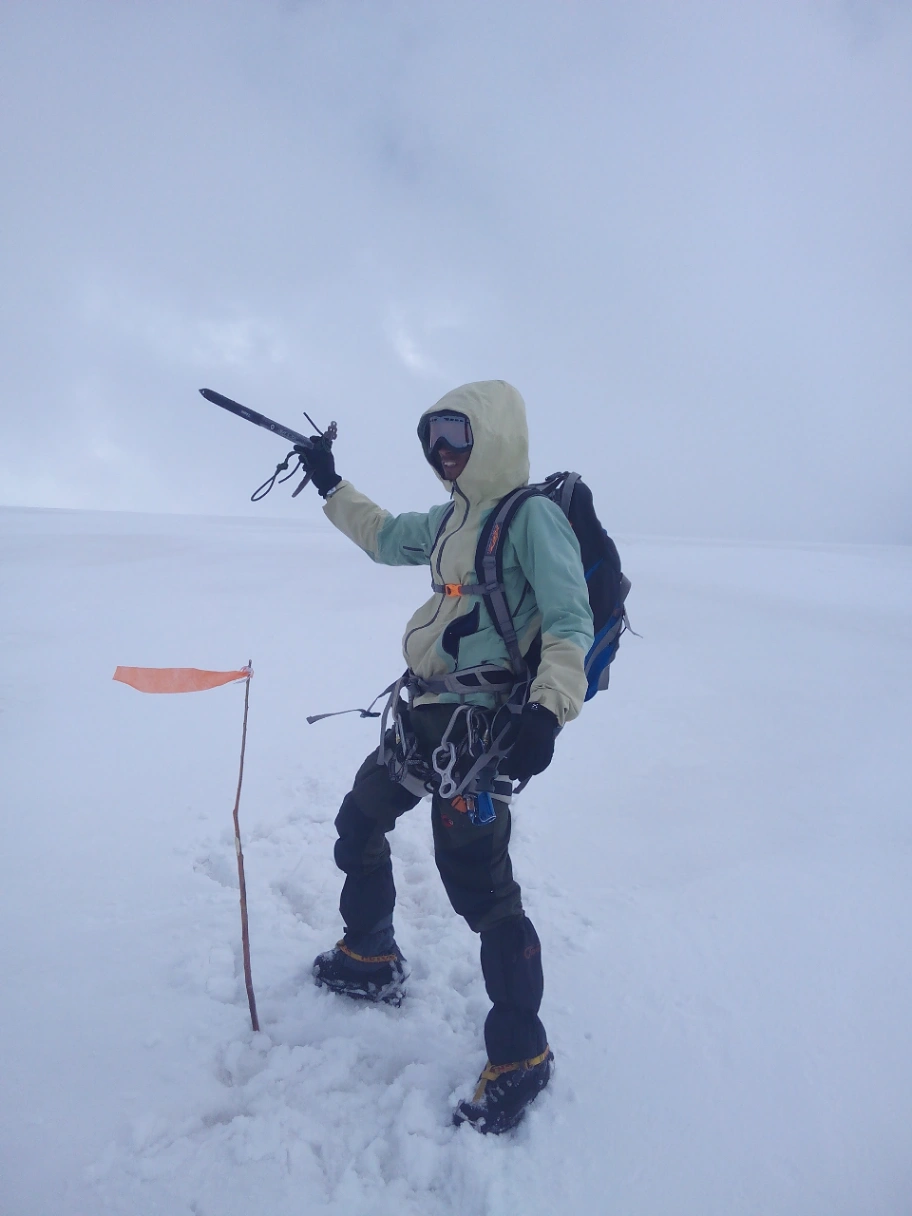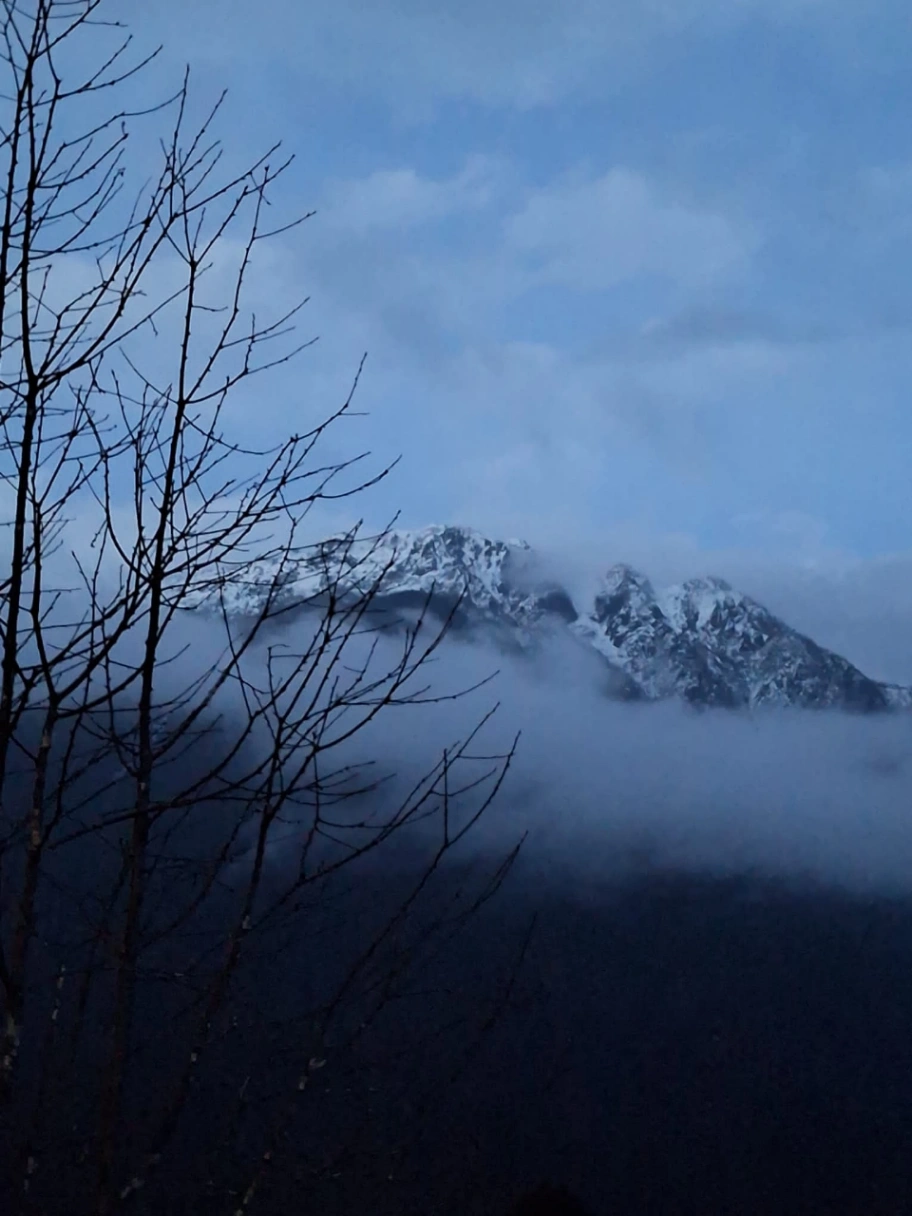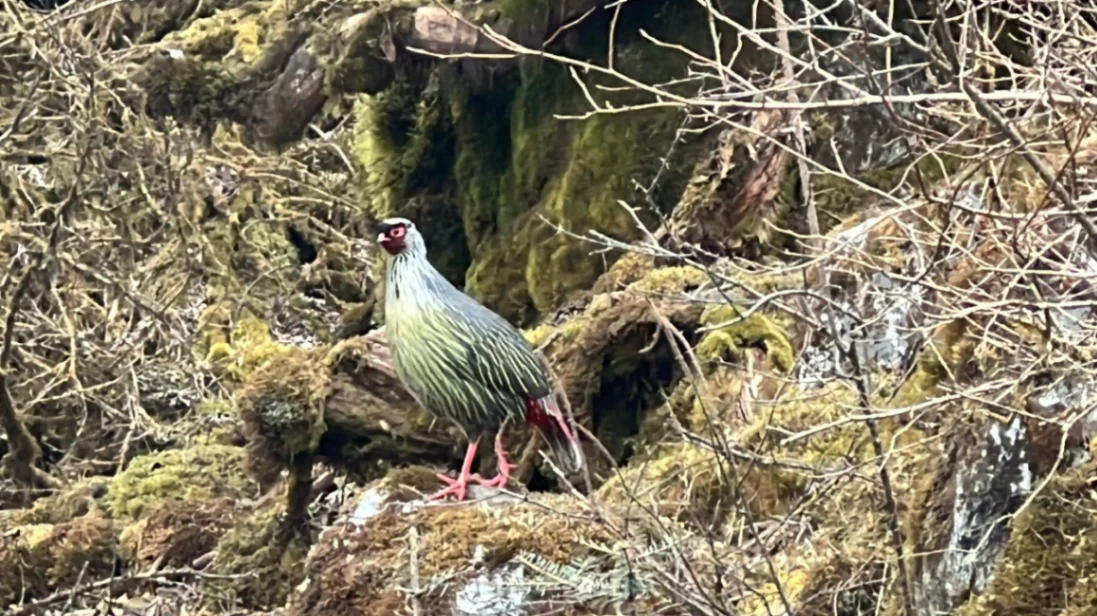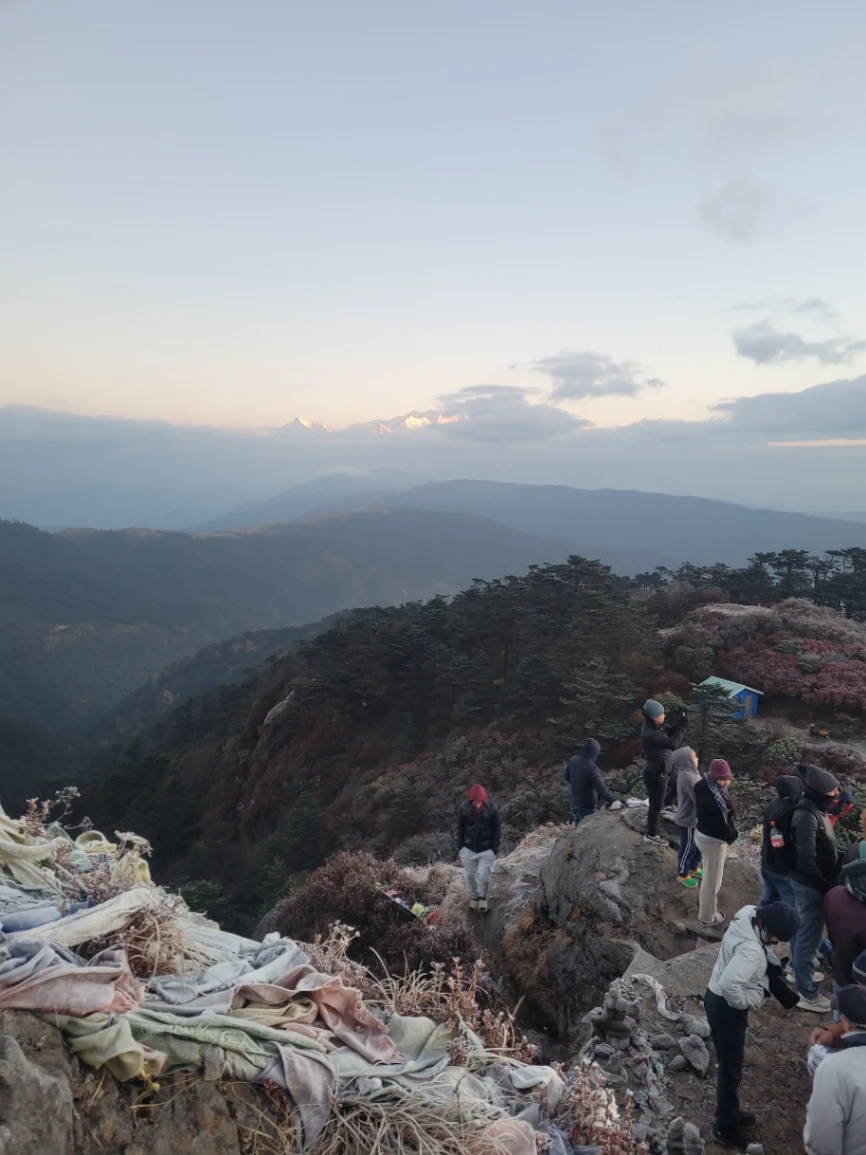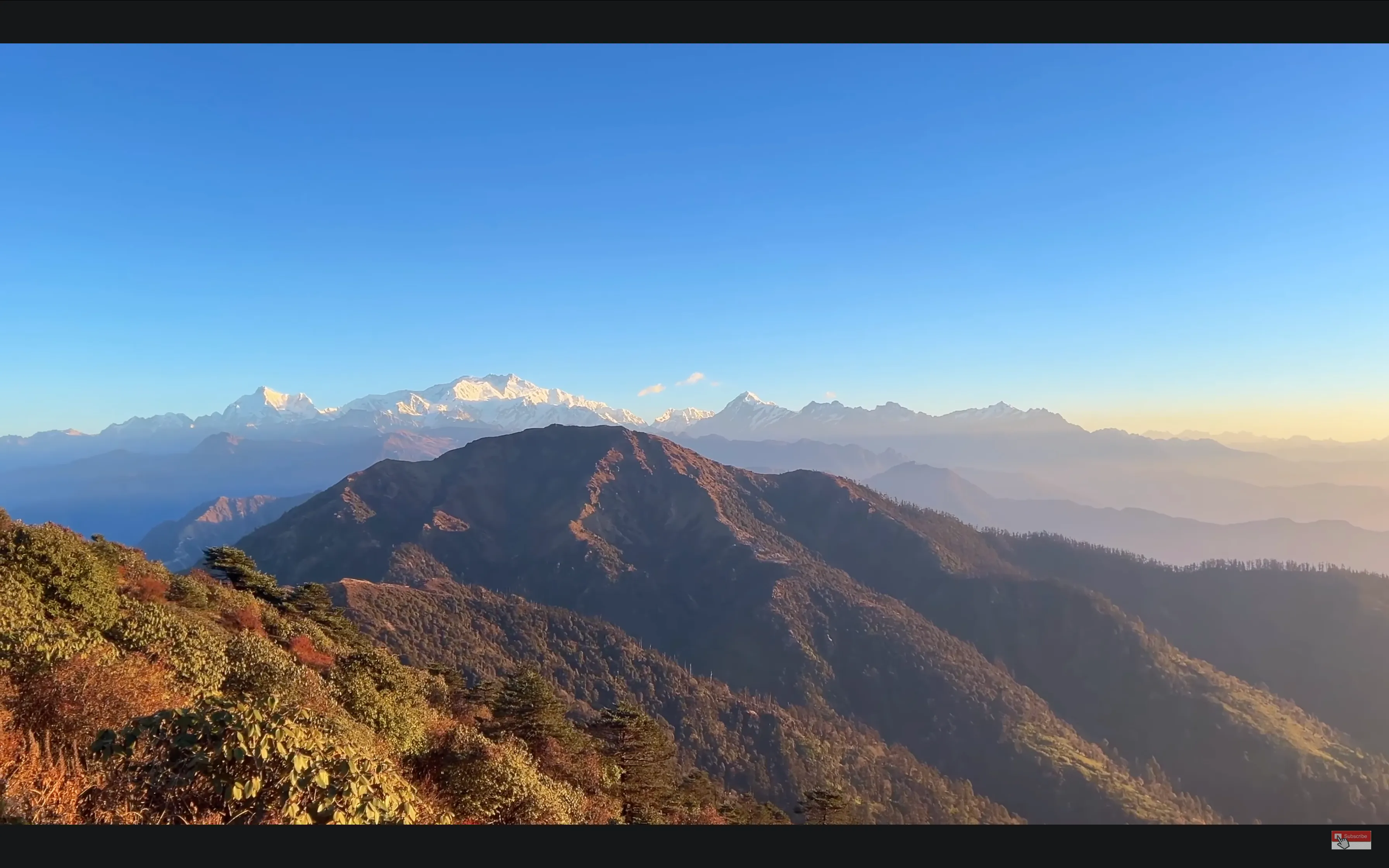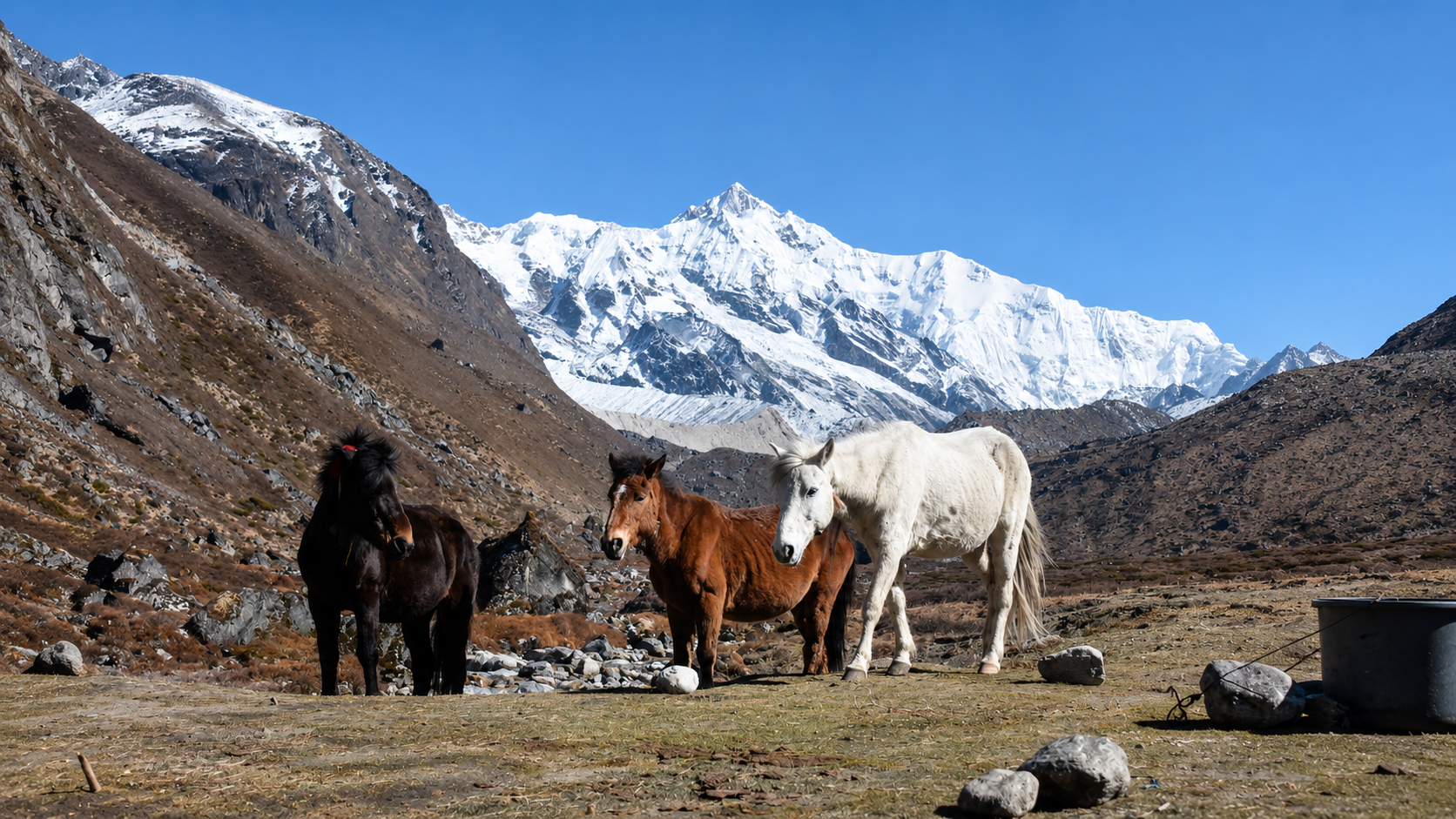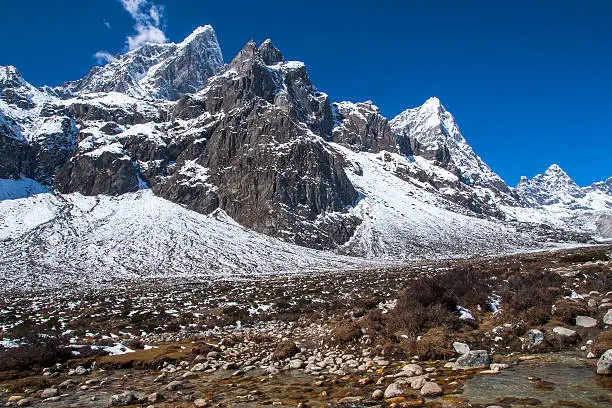
There are very few places in the Indian Himalayas that become completely silent before sunrise.
Samiti Lake Goechala Trek is one of them.
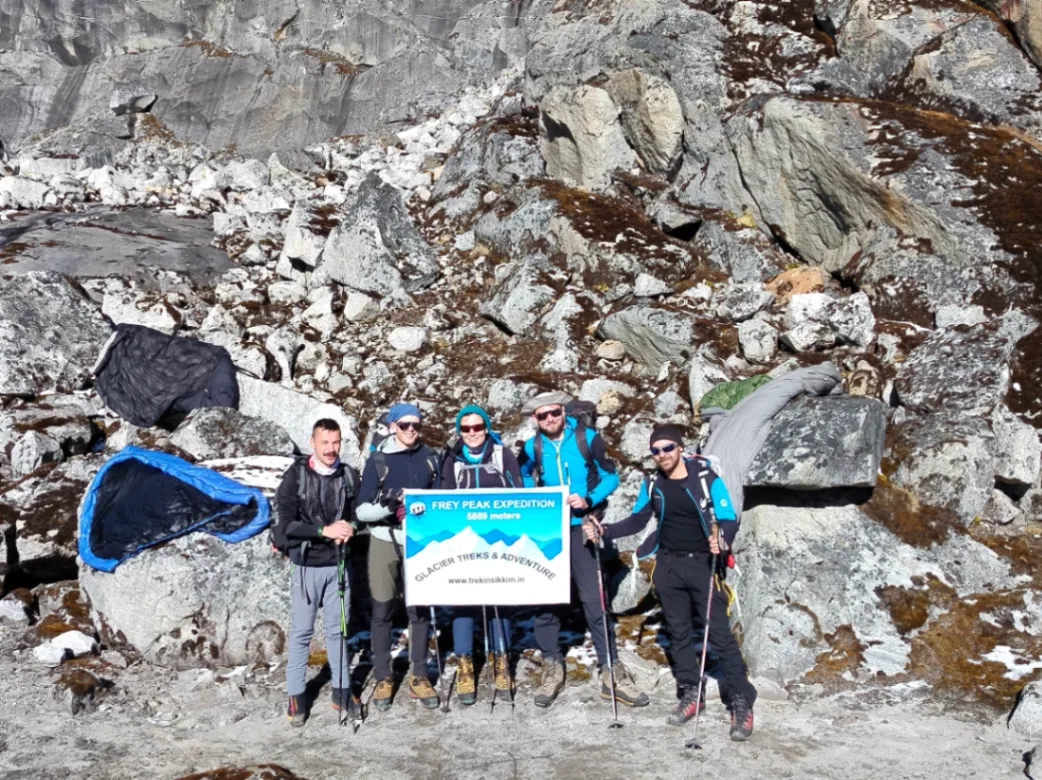
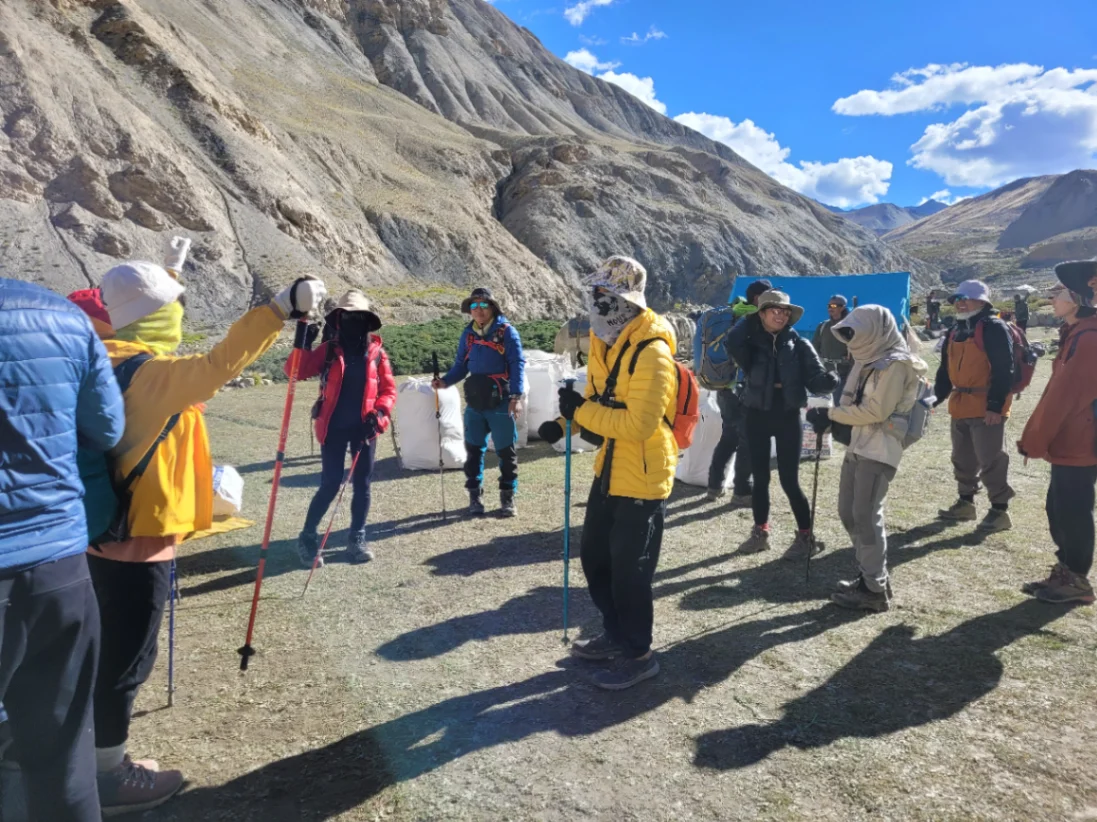
Over the years, I have crossed this section of the Goechala route, and every single time we reach the lake before dawn. The entire trekking group instinctively falls silent, as if spellbound by the beauty of the Smiti Lake. Nobody asks for tea. Nobody checks their phone. Nobody even removes their backpack immediately.
Because the first sight of Samiti Lake feels unreal.
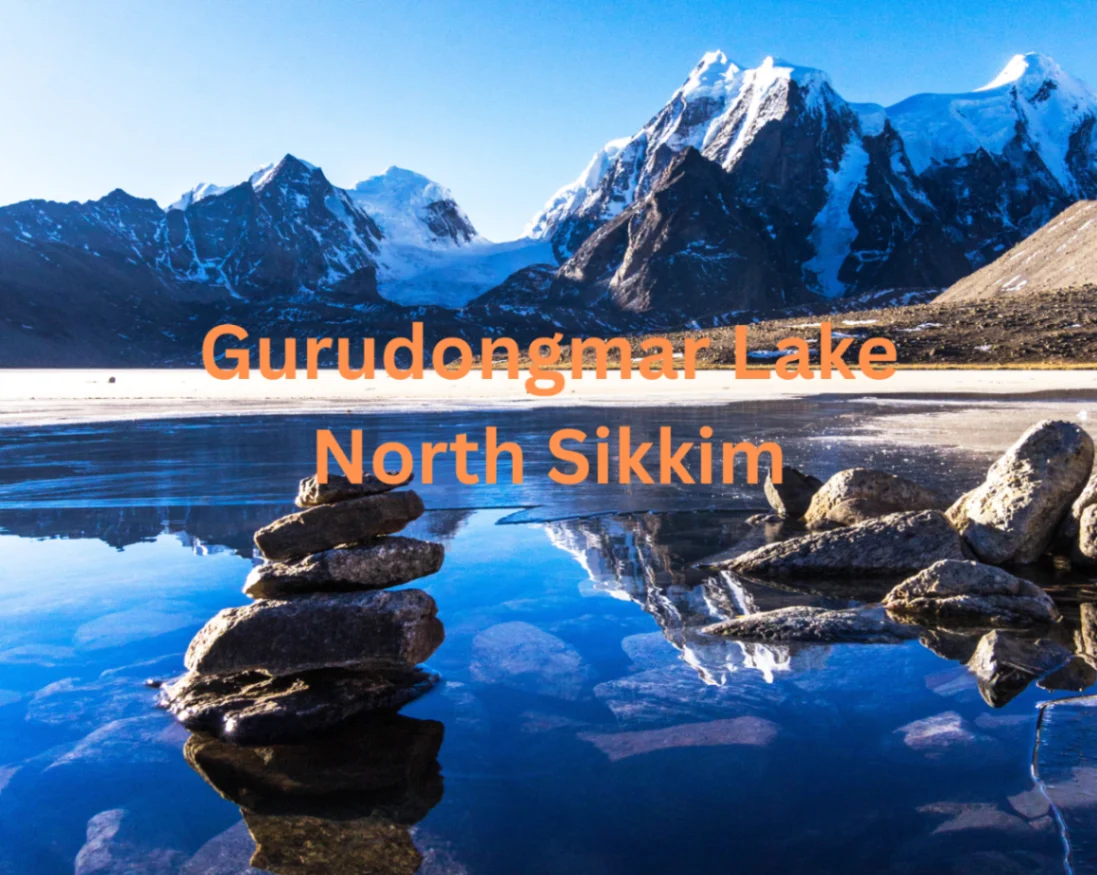
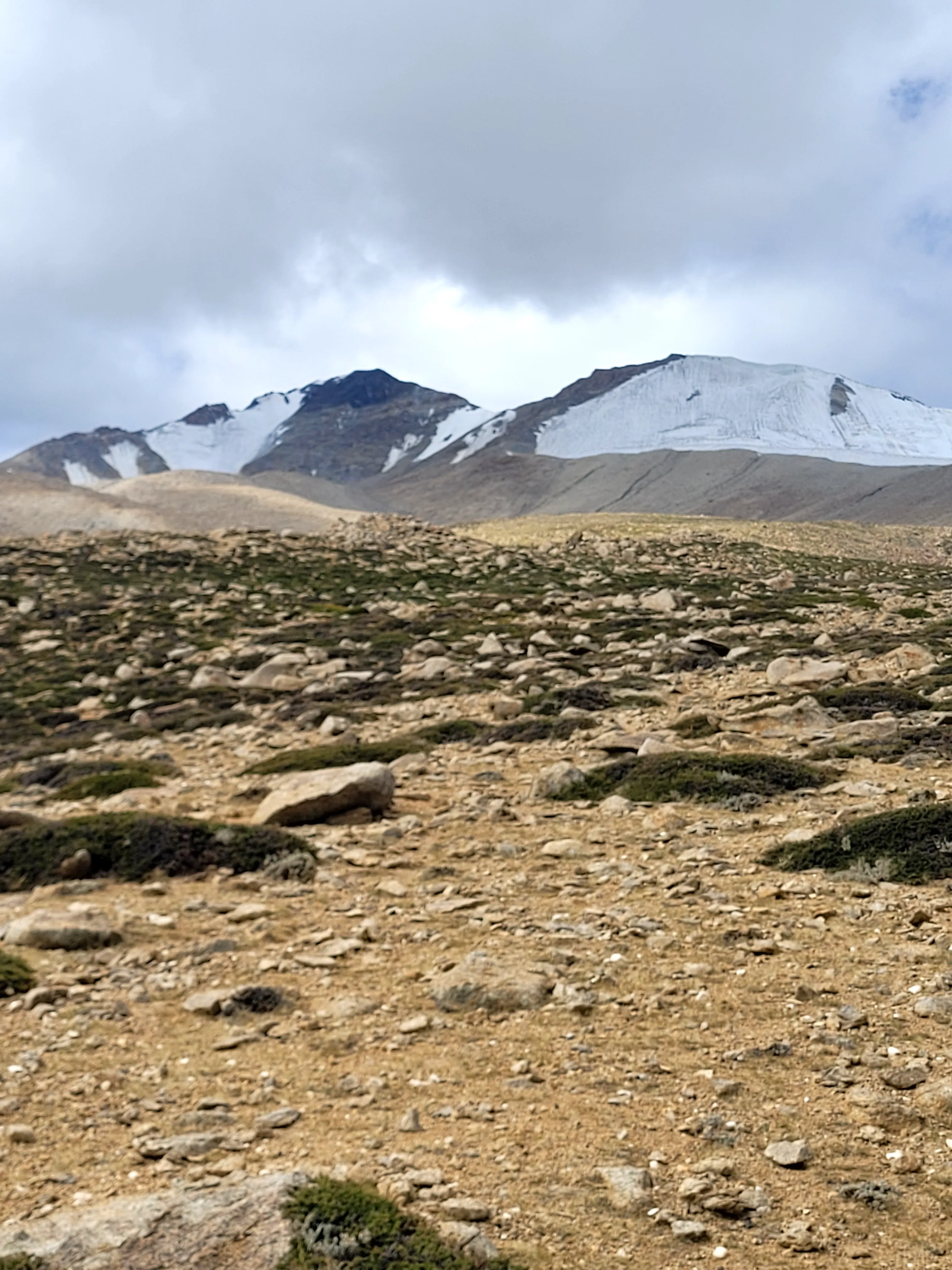
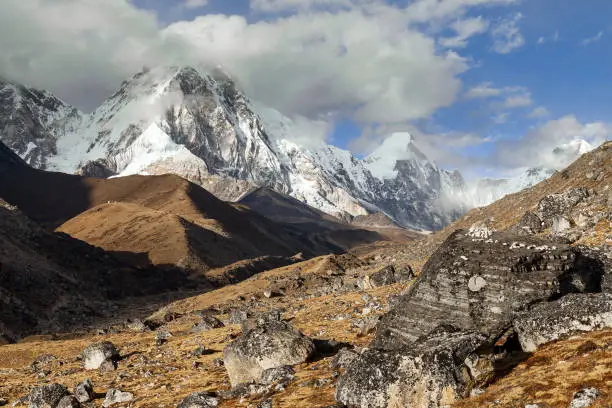
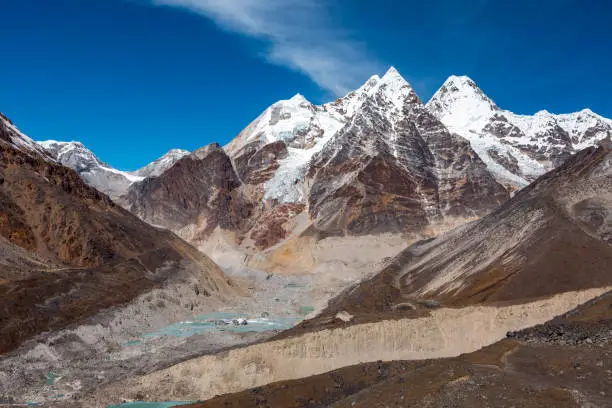
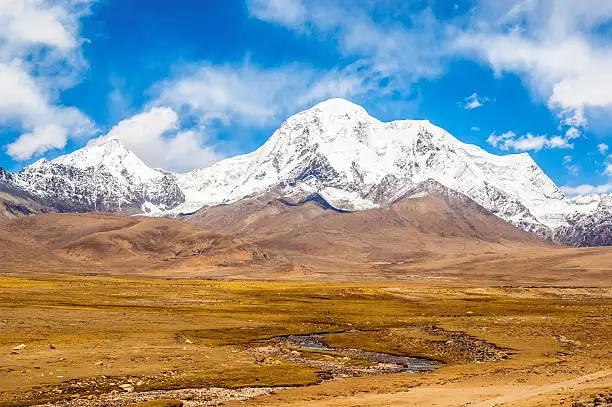
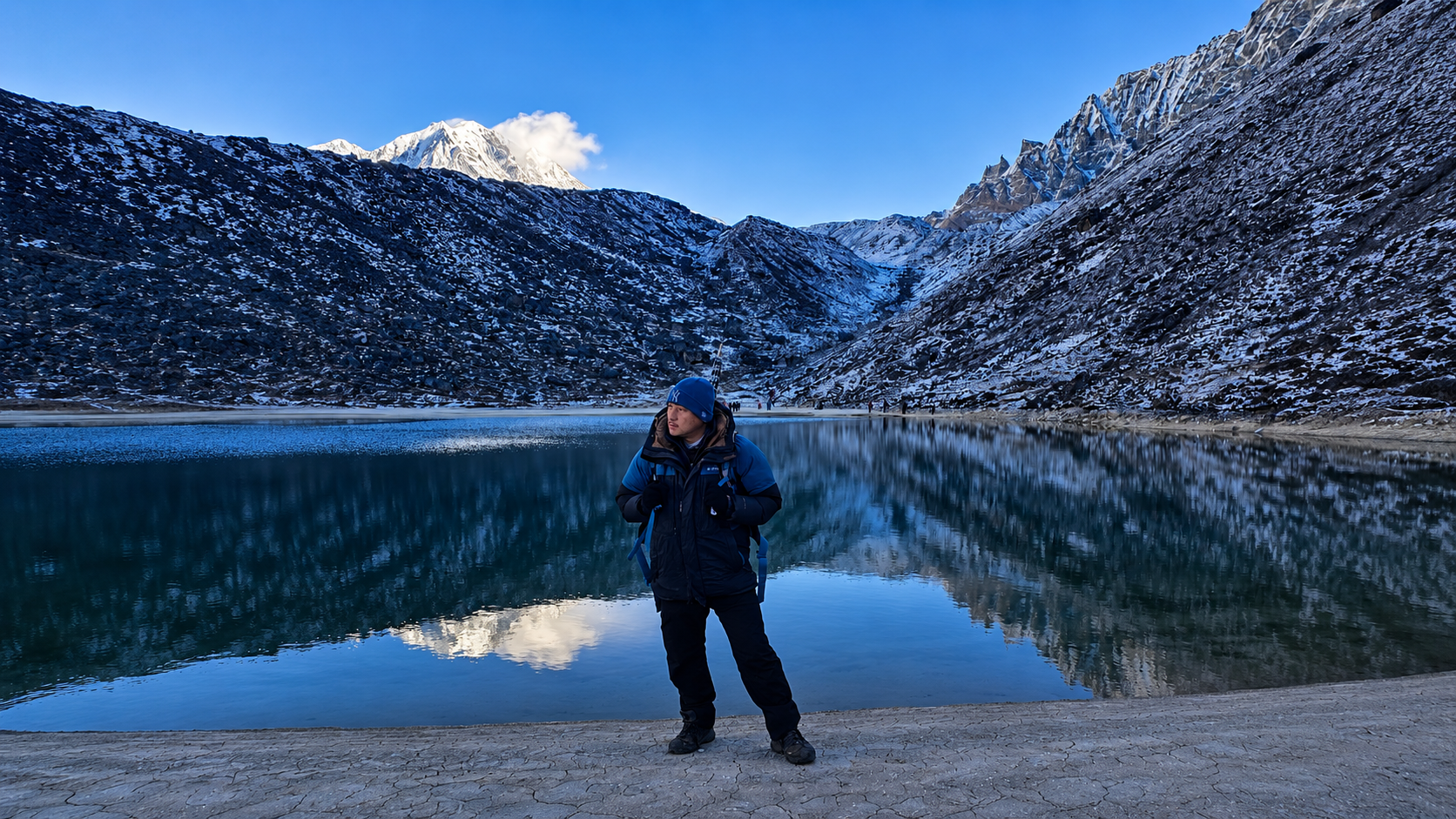
At over 4,200 metres, surrounded by giant snow-covered peaks and cold Himalayan winds. The lake sits quietly beneath Mt Pandim like a mirror set within the mountains. On calm mornings, the reflection becomes so perfect that the mountain almost looks upside down in the water.
This unpredictable view wanders the trekkers most.
For many trekkers, the summit viewpoint of Goechala becomes the headline moment. But personally, I believe the emotional centre of the entire route is Samiti Lake.
And if you are planning the Goechala Trek 2026 in 2025 or 2026, this guide will help you understand exactly why this place becomes unforgettable for almost everyone who reaches it.
Where is Samiti Lake?
Samiti Lake is located inside the Kanchenjunga National Park in West Sikkim. It is on the way to the famous Goechala trekking route.
The lake lies between:
- Thangsing
- Lamuney
- Goechala Viewpoint 1
Smiti Lake is situated at an altitude of approximately 4,200 metres (13,780 ft). It serves as one of the final major landmarks before the early morning summit push toward Goechala.
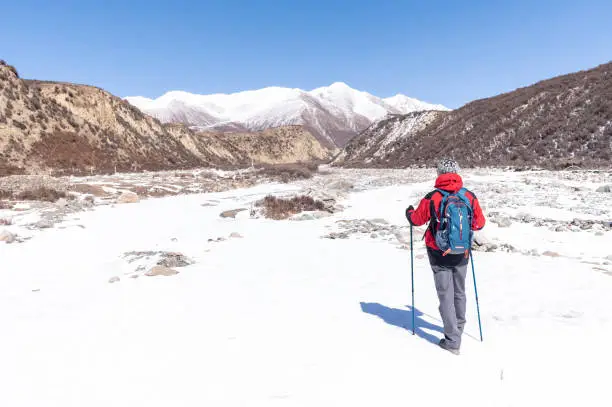
Because of its high altitude and isolated location, the lake remains frozen during the peak winter months.
Why Samiti Lake Feels So Special
Sikkim has many beautiful alpine lakes.
But Samiti Lake is quite different from that.
Part of that comes from the journey itself. By the time trekkers reach this section, they have already crossed:
- Dense rhododendron forests
- Moss-covered trails
- Wooden bridges
- Yak meadows
- Long alpine valleys
I personally feel the transition is dramatic.
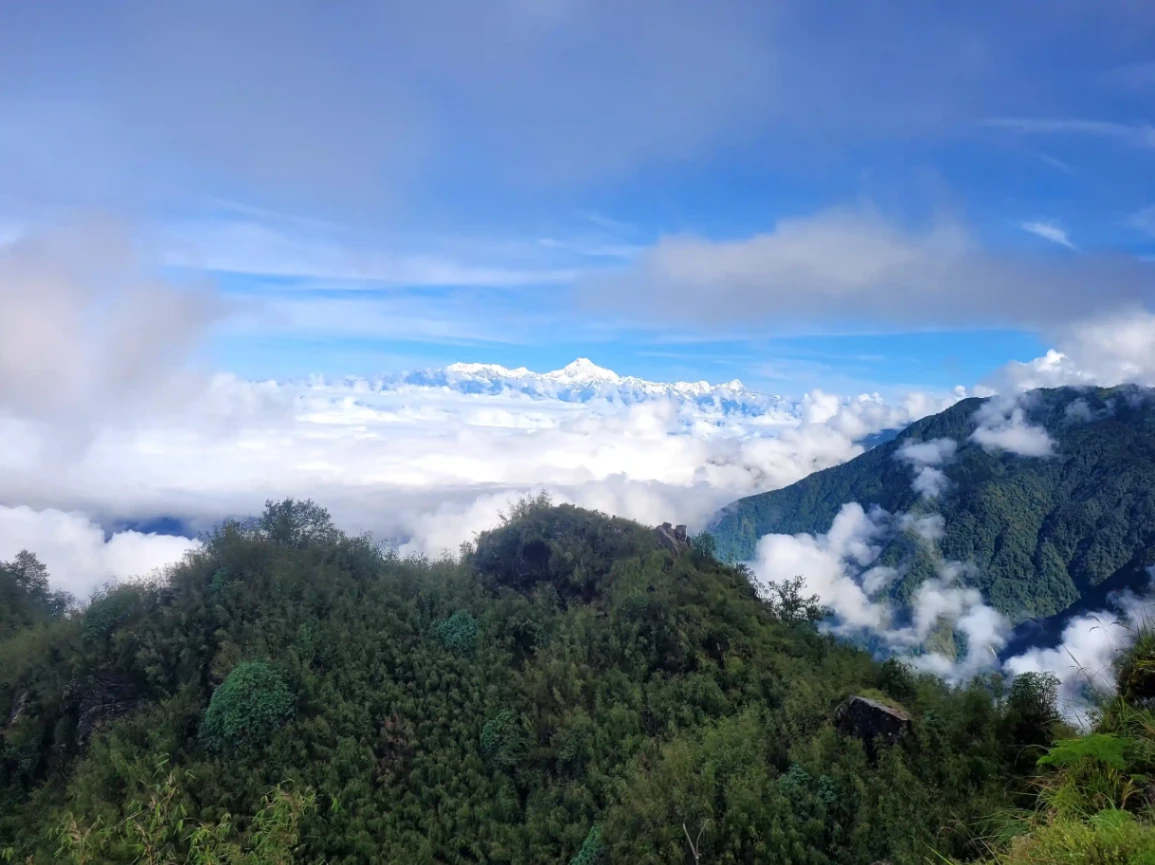
Perhaps one day you are walking through forests filled with mist and birdsong. Then other morning, you are standing beside a silent glacial lake beneath towering Himalayan peaks.
That contrast creates the magic.
Sacred Lake Sikkim – Why Locals Respect Samiti Lake
Samiti Lake is not just visually beautiful.
It is also considered a Sacred Lake in Sikkim by local communities. Buddhist traditions also connected to the region.
Trekkers are expected to:
- Avoid littering
- Respect the silence around the lake
- Do not pollute the water
- Avoid loud music or disruptive behaviour
As guides, we always remind our groups that places like Samiti Lake survive because people have continuously respected them over the years.
And honestly, once you stand there, you naturally feel that you respect yourself.
Samiti Lake Camping Altitude: Is it bearable for beginners?
One of the most common questions I get from trekkers is about the Samiti Lake camping altitude.
Technically, camping directly beside the lake is now restricted in most trekking itineraries. This initiative is to help preserve the ecosystem. Most trekkers stay at nearby Lamuney camp before heading toward the viewpoint.
However, the altitude around the Samiti Lake region remains approximately:
| Location | Altitude |
| Thangsing | 3,930m |
| Lamuney | 4,150m |
| Samiti Lake | 4,200m |
| Goechala Viewpoint 1 | 4,500m |
At this high altitude, there is a noticeable drop in oxygen.
Trekkers may experience:
- Breathlessness
- Headaches
- Cold nights
- Reduced appetite
That is why proper acclimatisation at Dzongri becomes extremely important before moving higher.
Dzongri to Samiti Lake Distance
Another common question during the Goechala Trek 2026 planning stage is:
“What is the Dzongri to Samiti Lake distance?”
The route usually looks like this:
| Section | Approx Distance |
| Dzongri to Thangsing | 9 km |
| Thangsing to Lamuney | 4 km |
| Lamuney to Samiti Lake | 1.5–2 km |
So the total Dzongri to Samiti Lake distance comes to roughly 14–15 km, depending on campsite placement and route conditions.
Most trekking groups break this into stages because of altitude gain and long walking hours.
Mt Pandim Reflection Lake – The Most Photographed Scene on the Trek
If you search online for Goechala photographs, there is a good chance you will see one image repeatedly:
Mt Pandim reflected perfectly in blue water.
That image comes from Samiti Lake.
The mountain rises directly above the lake and creates one of the most famous Himalayan reflections in India. During early morning, especially in autumn, the water often becomes completely still.
And that is when the magic happens.
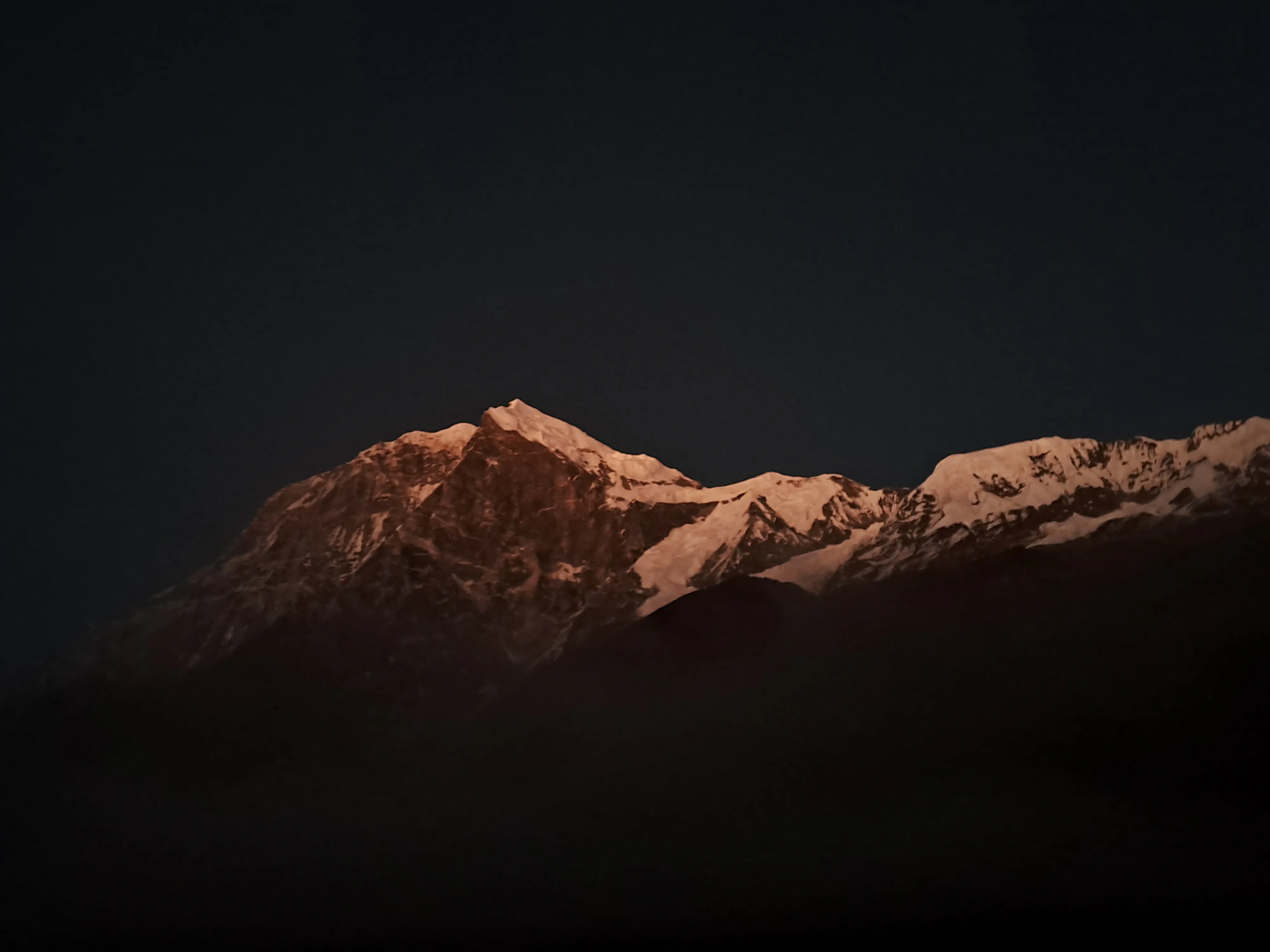
The first golden sunlight touches Mt Pandim while the reflection glows across the lake surface. It lasts only a few minutes, but those minutes stay in memory for years.
That is why many trekkers now call Samiti Lake the “Mt Pandim reflection lake.”
Best Time to Visit Samiti Lake Goechala Trek
| Season | Months | What You’ll Experience | Best For |
| Spring | March to May | Rhododendron forests in full bloom, lingering snow patches, pleasant daytime temperatures, and greener landscapes | Nature lovers, first-time trekkers, and forest photographers |
| Autumn | September to November | Crystal-clear mountain views, stable weather, Sharp sunrise reflections on Samiti Lake, cold alpine mornings | Mountain photography, clear Kanchenjunga views, experienced trekkers |
Personally, autumn remains my favourite season for the Samiti Lake Goechala Trek. The calm morning conditions create unbelievably sharp reflections of Mt Pandim on the lake surface.
My Personal Experience at Samiti Lake
I still remember one October morning after a difficult night of wind near Lamuney camp.
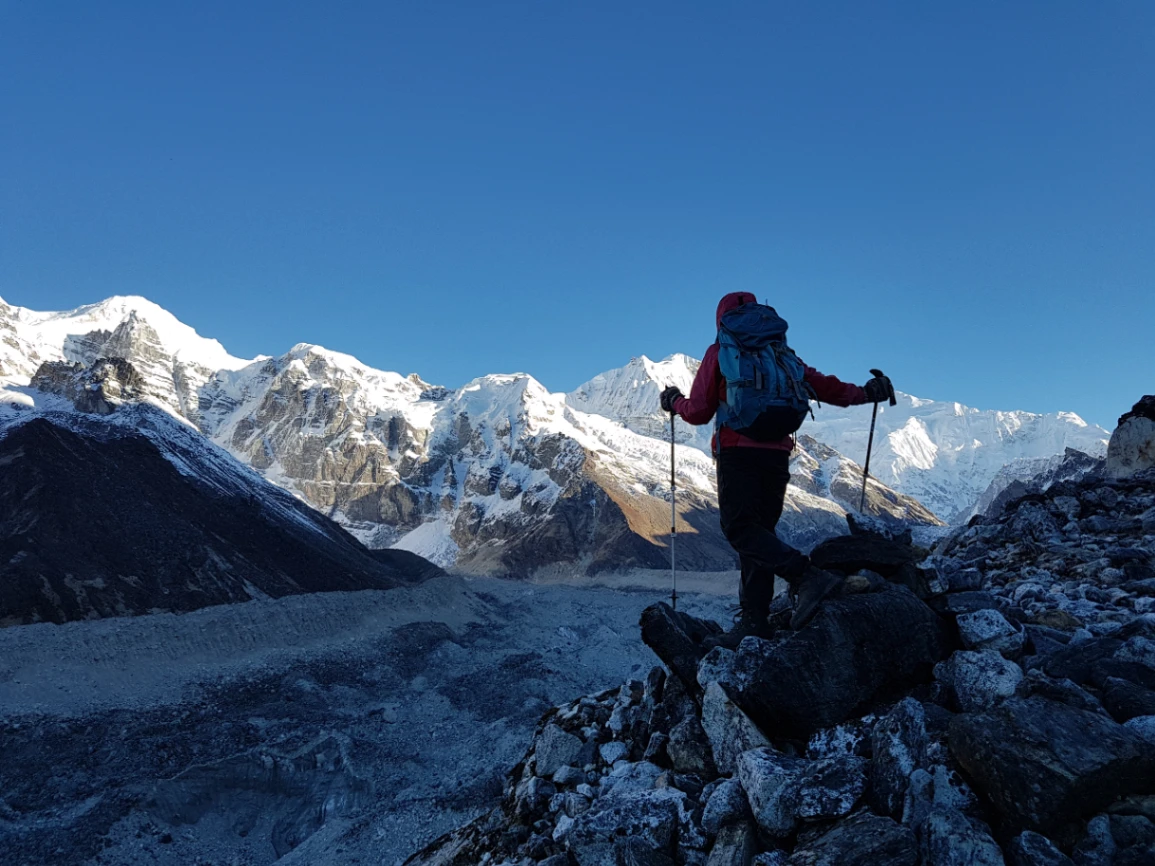
We started walking before sunrise with headlamps. Most trekkers were tired and silent. As we reached Samiti Lake, the clouds suddenly opened for a few minutes.
Mt Pandim appeared completely clear.
Nobody spoke a word.
One of the trekkers quietly removed her gloves just to touch the freezing water for a second. Another person sat on a rock and simply stared at the reflection without taking photos.
That is the magic Samiti Lake does to people.
It calms everything down.
And in the Himalayas, this is a rare gift to achieve these moments.
Final Verdict
The distance between the Samiti Lake Goechala Trek to another checkpoint is really far on the trail to Goechala.
It is one of the most peaceful trekking journey which remains unforgettable for every person in the Indian Himalayas.
Whether you come for:
- The sacred atmosphere
- The high-altitude adventure
- The Mt Pandim reflection lake photography
- Or simply the silence of the mountains
Samiti Lake stays in your heart long after the trek ends.
And honestly, that is probably why so many trekkers consider that they can spiritually connect with the Goechala trekking journey.
Read more: See the complete Goechala Trek guide with full itinerary
FAQs – Samiti Lake Goechala Trek
1. Why is Samiti Lake Goechala Trek is famous?
Samiti Lake is famous for its crystal-clear alpine scenery, peaceful atmosphere, and stunning Mt Pandim reflection lake views during sunrise on the Goechala Trek.
2. Is Samiti Lake considered a sacred lake in Sikkim?
Yes, Samiti Lake is considered a Sacred Lake in Sikkim by local communities and Buddhist traditions, which is why trekkers are encouraged to maintain silence and avoid polluting the area.
3. What is the Samiti Lake camping altitude during the Goechala Trek 2025?
The Samiti Lake Goechala Trek altitude is around 4,200 metres above sea level, although most trekkers stay at nearby Lamuney camp before the summit push.
4. What is the Dzongri to Samiti Lake distance on the Goechala Trek?
The Dzongri to Samiti Lake distance is approximately 14–15 kilometres through Thangsing and Lamuney along the standard Goechala Trek route.
Book Your Goechala Trek for 2026
Now that you know exactly what the Goechala Trek costs — and what you are paying for — you can book with confidence. Our 2026 season runs from May to December, with batches capped at 12 trekkers and a 30% advance to confirm your seat.
Book now: ₹19,500 per person · Call/WhatsApp +91 74072 48200 · Email kiran.yuksom@gmail.com
Read more: Read the complete Goechala Trek guide (itinerary, best time, difficulty)
Read more: Best time for Goechala Trek
Read more: Book the Goechala Trek online
About the author
Kiran Gurung is the founder of Glacier Treks & Adventure, based in Yuksom, West Sikkim. An IMF-certified mountaineer, he has personally led more than 200 Goechala expeditions over fifteen years. Glacier Treks & Adventure is affiliated with the Department of Sikkim Tourism, the IMF, TAAS, YTDC and SAMA.