By Kiran Gurung · Founder, Glacier Treks & Adventure · IMF-certified mountaineer
Published: 15 September 2026 · Last updated: 15 September 2026
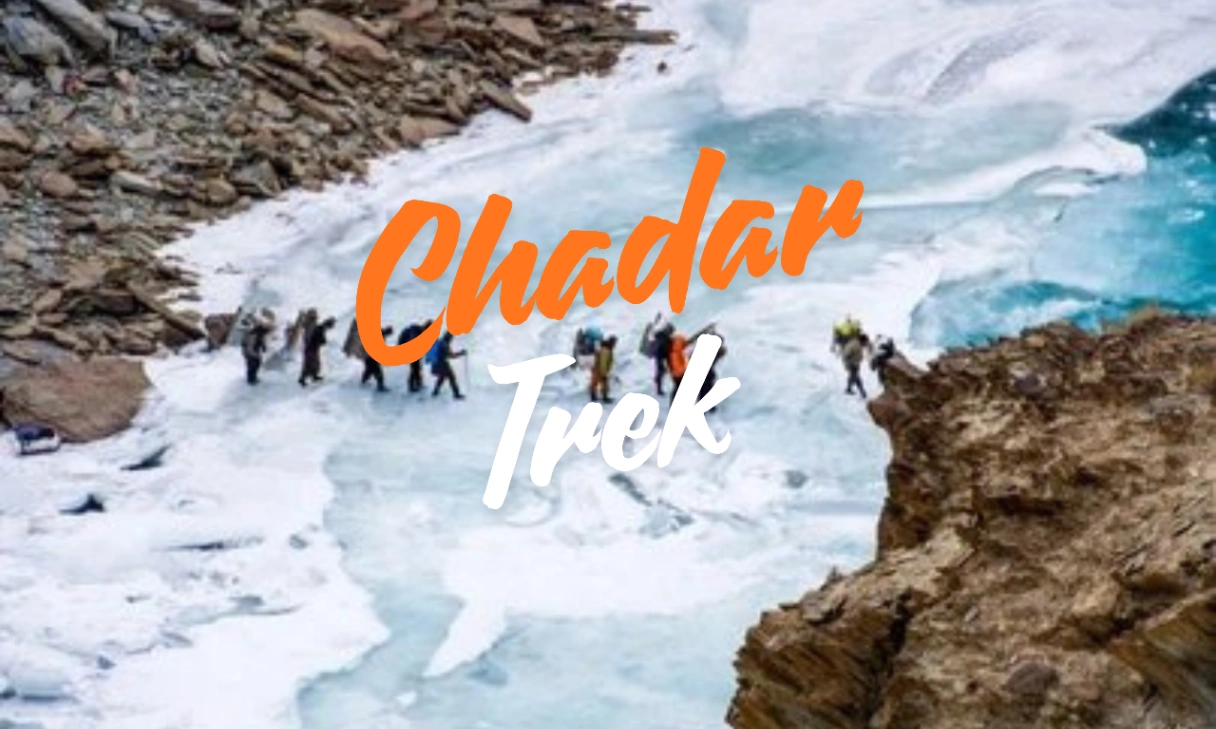
The Chadar Trek is a 9-day winter trek in Ladakh that walks along the frozen surface of the Zanskar River, between sheer canyon walls that often rise more than 600 metres on either side. It runs only in January and February when the river surface freezes thick enough to walk on. The trek covers approximately 50 kilometres each way to the Nerak frozen waterfall and back, with night temperatures dropping to -25°C and occasionally -30°C at Nerak. It is regulated by the All Ladakh Tour Operators Association (ALTOA), requires a mandatory ALS medical fitness certificate from SNM Hospital in Leh, and is restricted to trekkers aged 20 to 50. Cost: ₹50,000 per Indian trekker (₹55,000 list price) or $800 for international trekkers.
There is no other trek like the Chadar in India, and very few like it anywhere in the world. You walk for nine days on a sheet of ice — the word chadar in Ladakhi literally means a ‘sheet’ or ‘blanket’ — covering the frozen surface of the Zanskar River trek between vertical limestone walls that the sun does not reach for most of the day. Night temperatures at the trek’s highest campsite, Nerak, regularly drop to -25°C and have been recorded as low as -32°C. The ice underfoot shifts, cracks and re-forms continuously through the day. Some sections you walk on as smoothly as a pavement; other sections force you to scramble across boulders along the river edge because the ice has broken open overnight.
The Chadar Trek is also, more than any other Himalayan route in India, a rules-heavy trek. Since 2018, it has been regulated by the All Ladakh Tour Operators Association (ALTOA), which controls departure dates, group sizes, medical certification requirements, age limits and operator permissions. You cannot just turn up in Leh in January and start the trek — every component of the trip is structured around ALTOA approval. This guide is built around those rules, because the rules are what most trekkers researching the Chadar do not yet understand.
We have operated the Chadar Trek every winter season since 2018. I have been on the ice myself in five different years. This article covers everything — the day-by-day itinerary, the real Chadar trek 2027 cost, the mandatory SNM Hospital medical certificate, the gear specific to walking on ice at -25°C, the safety protocols we run, and the booking timeline (the 2027 season opens in January, but bookings need to be locked in by October-November 2026 because ALTOA caps group numbers).
Read more: If this is your first Ladakh trek, also read the full Trekking in Ladakh guide
1. Chadar Trek Quick Facts
| Attribute | Detail |
|---|---|
| Region | Ladakh, Zanskar valley |
| Trek surface | Frozen surface of the Zanskar River |
| Season | Mid-January to mid-February only |
| Duration | 8 nights / 9 days end-to-end from Leh |
| Trek distance | Approximately 50 km each way to Nerak |
| Maximum altitude | 4,500m (Leh and high campsites) |
| Average trek altitude | 3,400m – 3,900m on the ice itself |
| Lowest night temperature | -25°C to -30°C at Nerak |
| Difficulty | Difficult (extreme winter conditions) |
| Age restriction | 20 to 50 years (strict ALTOA rule, no exceptions) |
| Cost (Indian) | ₹50,000 per person (₹55,000 list price) |
| Cost (Foreign) | $800 per person |
| Regulator | All Ladakh Tour Operators Association (ALTOA) |
| Medical certificate | MANDATORY ALS certificate from SNM Hospital, Leh |
| Mobile network | BSNL only at Leh; none on trek |
| Accommodation | Hotels in Leh; tented camps and cave shelters on trek |
| Endpoint | Nerak village + Nerak frozen waterfall, return same route |
2. What Is the Chadar Trek and What Makes It Unlike Anything Else
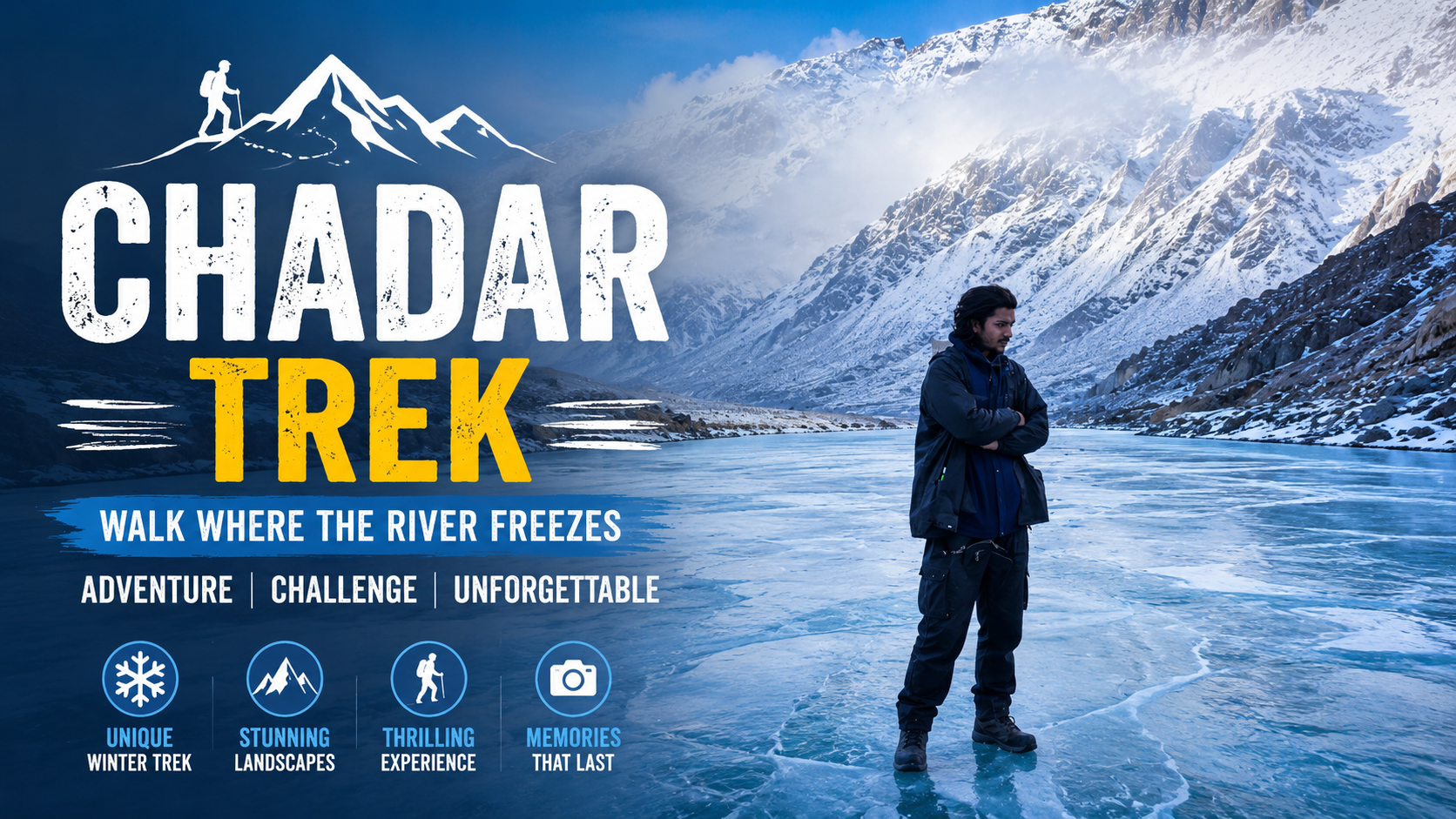
The Zanskar River trek runs through one of the deepest canyons in the Indian Himalaya — a gorge cut by glacial meltwater between vertical limestone cliffs in the Zanskar River trek range of Ladakh. For most of the year, the river is impassable on foot. But for roughly six weeks in deep winter, the river surface freezes to a depth of one to three feet — thick enough to walk on, thin enough to crack open in places where the current runs fastest. The frozen surface, called chadar in Ladakhi, opens up a corridor through the canyon that has been used by Zanskari villagers since at least the 17th century to reach Leh for trade and supplies.
Three things make the Chadar Trek genuinely unlike any other trek I have led:
- You walk on water — literally. The surface beneath you is ice over running water. In some sections, you can hear the river flowing under your feet. In others, you can see the dark current through a clear pane of ice. There is no comparable surface to walk on anywhere else in India.
- It is a winter trek in the truest sense. Day temperatures rarely go above -5°C even in direct sunlight. Night temperatures at Nerak campsite regularly hit -25°C. Wet clothes do not dry. Wet boots become a serious safety problem. Cold-injury management is built into the daily routine, not an emergency response.
- It is the only major regulated trek in India. Since 2018, ALTOA Chadar trek has enforced fixed group sizes (max 12 per batch), mandatory medical certification, age limits (20-50), and specific operator approvals. The regulation is strict because the trek genuinely is dangerous when run by under-prepared operators. The 2018 Bhutan accident — where four trekkers died in falling temperatures — was the immediate trigger for ALTOA’s current framework.
The Nerak frozen waterfall at the trek’s turnaround point is its visual centrepiece. Approximately 50 feet tall, the waterfall freezes into a vertical cascade of clear-blue ice that reflects light from inside its structure. Most trekkers’ Chadar photographs are taken at Nerak.
3. Chadar Trek Itinerary — Day by Day
The standard Chadar Trek itinerary is 9 days from Leh, with the first three days dedicated to mandatory acclimatization and medical clearance, five days on the ice (Day 4 to Day 8), and Day 9 for departure. The structure is non-negotiable — ALTOA does not approve compressed itineraries.
Days 1–3: Arrival in Leh and mandatory acclimatisation
Day 1 is the arrival day. Fly into Leh by morning flight. Transfer to a centrally-heated hotel. Do absolutely nothing for the rest of the day except drink water and sleep. The reduced oxygen at 3,500m combined with winter cold puts more stress on the body than summer acclimatisation.
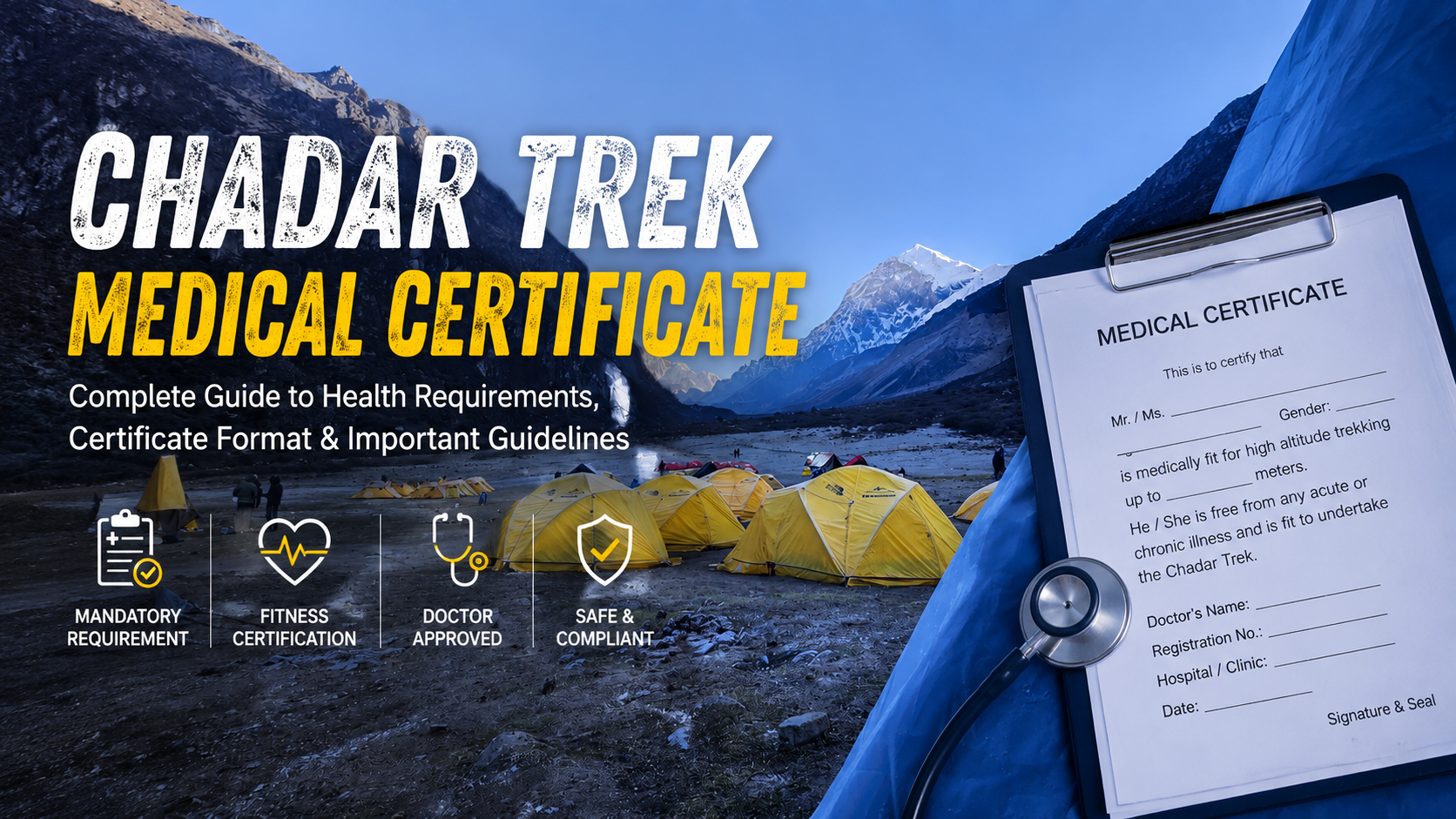
Day 2 is the medical day. We escort you to SNM Hospital (Sonam Norbu Memorial Hospital) in Leh for the mandatory ALS (Acclimatisation Level Self-test) medical examination — this includes blood pressure, ECG, blood oxygen saturation, basic blood reports, and a brief consultation with a doctor familiar with the Chadar requirements. The certificate must be obtained from SNM specifically; no other hospital’s certificate is accepted. If you fail the medical, you cannot proceed with the trek — and you cannot appeal the decision. Afternoon: gentle walk around Leh market, early dinner, sleep.
Day 3 is the gear day. Final equipment check at our Leh office, last-minute shopping for gumboots (essential — they will be provided if you have not brought your own), thermal innerwear, hand warmers and any other layer adjustments. ALTOA permit collection. Detailed safety briefing. The rest of the day is rest.
If you fail the SNM medical on Day 2, our policy is full refund of the trek package minus the ALTOA processing fee (approximately ₹3,000) and the hotel nights consumed. This is rare — we screen for the major disqualifications (uncontrolled hypertension, recent cardiac events, severe asthma, pregnancy, certain medications) at the booking stage. But the rule exists for a reason: the SNM medical is not a formality.
Day 4: Leh to Shingra Koma drive + first ice trek to Tsomo Paldar
Drive: 70 km, 3–4 hours. Trek: 3 km, 1–2 hours. Camp: Tsomo Paldar (or Gyalpo).
We leave Leh by 8 AM and drive west along the Indus, then south up the Zanskar gorge to Shingra Koma — the road-end where the ice trek begins. The drive offers your first view of the Zanskar frozen river trek from above, which is genuinely the most striking moment of the trip for most trekkers.
At Shingra Koma, you change into your gumboots, layer up, and take your first steps onto the ice. The first afternoon’s trek is deliberately short — only 3 kilometres — to let the legs and lungs adjust to walking with the ‘penguin shuffle’ that the ice requires. First night under canvas at Tsomo Paldar or Gyalpo on the frozen river bank.
Day 5: Tsomo Paldar to Tibb Cave
Trek: 14 km, 6–7 hours. Camp: Tibb Cave.
The longest distance day. The gorge narrows progressively, meaning less direct sunlight reaches the ice, lower temperatures, and a darker, more cathedral-like quality to the canyon walls. You pass several frozen waterfalls — smaller cousins of the Nerak waterfall — and navigate sections where the ice has shifted overnight. The destination, Tibb Cave, is a massive natural shelter under a canyon overhang, large enough to fit the entire group plus the kitchen team. Camping inside the cave is warmer than tented camping on the open ice because the cave traps body heat and blocks the wind.
Day 6: Tibb Cave to Nerak Waterfall — the highlight day
Trek: 12 km, 6–7 hours. Camp: Nerak (near the frozen waterfall).
The day you came for. The trail continues upstream, the canyon widens slightly toward Nerak, and the first signs of civilisation appear — a wooden footbridge connecting Nerak village (high on the canyon wall) to the river trail. The Nerak frozen waterfall is reached in the early afternoon — a 50-foot vertical cascade of clear blue ice, often with icicles forming new ice formations even as you watch. Camp is set up near the base of the waterfall. Nerak night temperatures are the coldest of the trek — regularly -25°C, occasionally lower. Sleeping bags rated to -20°C minimum are essential and we provide an additional inner liner.
Day 7: Nerak back to Tibb Cave
Trek: 12 km, 6–7 hours.
Return leg. Do not assume the trail is identical to Day 6 — the ice you walked on two days ago may have melted, shifted, or cracked open overnight. Our local Zanskari guides re-survey the route each morning, and you may find yourself crossing on different sections, sometimes climbing along the river edge over scree where the ice has broken through. This unpredictability is part of what makes the Chadar a different trek every time you do it.
Day 8: Tibb Cave to Shingra Koma + drive back to Leh
Trek: 14 km, 6 hours. Drive: 70 km, 3–4 hours.
The final long march on ice. By now, your penguin walk is second nature, and the cold feels routine. We reach the road head at Shingra Koma by mid-afternoon, where our vehicles drive you back to the warmth of a heated hotel in Leh. Hot showers, hot meals, and the celebration dinner are all on Day 8 evening.
Day 9: Departure from Leh
Morning flight out of Leh to Delhi or onward. Our team handles airport transfer. We strongly recommend evening flights from Delhi rather than same-day morning connections from Leh — winter Leh flights cancel for fog or snow more often than summer flights, and you do not want to be stuck with a same-day Delhi connection.
4. Chadar Trek Cost in 2027 (Full Breakdown)
Our 2027 Chadar Trek package is priced at ₹50,000 per person for Indian trekkers (discounted from a list price of ₹55,000) and $800 per person for international trekkers. The Chadar is by far the most expensive trek in our portfolio relative to its duration, and the reason is operational: winter logistics in Ladakh are roughly twice as expensive as summer logistics. Equipment costs more, food is harder to source, the support team gets winter premium pay, and the helicopter evacuation arrangements have stricter cost structures.
| Cost head | Indian trekkers (INR) | Foreign trekkers (USD) |
|---|---|---|
| Standard package (Leh to Leh, 9 days) | ₹50,000 | $800 |
| List price (before discount) | ₹55,000 | $880 |
| ALTOA fee + permit + Wildlife Protection fee | Included | Included (higher rate) |
| SNM Hospital medical certificate | ₹600–800 (pay direct) | ₹1,200 (pay direct) |
| Delhi → Leh return flight | Not included (~₹14,000-20,000 winter rates) | Not included |
| Pre-trek heated hotel in Leh (Days 1-3) | Included (twin-share, 3-star) | Included |
| Post-trek heated hotel in Leh (Day 8) | Included | Included |
| Gumboots rental | Included | Included |
| Down jacket rental (rated to -20°C) | ₹1,500 (full trip) | $25 |
| Heavy sleeping bag rental (-20°C) | ₹2,500 (full trip) | $40 |
| Travel & medical insurance (mandatory) | Trekker’s own (~₹2,000 winter rate) | Trekker’s own |
| Tips for support team (suggested, higher for winter) | ₹1,500-2,500 | $25-40 |
What is included in the standard package: all meals from Day 1 dinner to Day 8 dinner; twin-share heated hotel accommodation in Leh on Days 1-3 and 8; tented or cave-shelter accommodation on Days 4-7; IMF-certified trek leader; local Zanskari guides; cook and support team; gumboots; pulse oximeter monitoring twice daily; portable oxygen carried; medical kit; ALTOA permits and registration; SNM Hospital escort for the medical examination; emergency evacuation arrangements.
What is not included: Delhi-Leh return flights, personal trekking gear (most rentable in Leh), personal medical insurance, GST of 5%, SNM Hospital medical fee, tips, lunch in Leh on Day 9, anything not specifically listed.
A realistic all-in budget for an Indian trekker including flights, GST, rentals and tips is ₹72,000-85,000. For foreign trekkers, $1,100-1,300 all-in. The Chadar is materially more expensive than the Markha Valley Trek for fundamental winter-logistics reasons. Operators who advertise Chadar at ₹25,000-35,000 are either cutting safety standards, skipping the SNM acclimatization process, or hiding costs in the exclusions. Be cautious.
Read more: Full Chadar Trek cost breakdown including hidden costs
5. ALTOA Rules and the Mandatory Medical Certificate — What You Must Know Before Booking
The All Ladakh Tour Operators Association (ALTOA) is the umbrella body that regulates the Chadar Trek. The framework was tightened after a series of accidents between 2014 and 2018, and the current rule set is the strictest of any trek in India. Understanding the rules before you book saves you from heartbreak — and possibly from danger.
The five non-negotiable ALTOA rules
- Age 20 to 50, no exceptions. Trekkers under 20 or over 50 are not approved, regardless of fitness level. This is a hard limit, not a guideline. Approval cannot be appealed.
- Mandatory SNM Hospital medical certificate. The Sonam Norbu Memorial Hospital in Leh issues a specific ALS (Acclimatisation Level Self-test) medical certificate. No other hospital’s certificate is accepted. The medical is done on Day 2 of the trip — you cannot get it in advance from elsewhere.
- Maximum 12 trekkers per batch. Group sizes above 12 are not approved. This also means peak-season slots fill up early — book by October-November for the following January-February.
- Authorised local guide per group. Every group must include a registered local Zanskari guide alongside the trek leader. We send both with every batch.
- Specific operator approval. Only ALTOA-registered operators can organise the Chadar. We are an ALTOA-registered operator. Before booking with any operator, verify their ALTOA registration directly — fake operators have appeared periodically.
What the SNM medical examination involves
The Day 2 SNM Hospital examination takes about 2-3 hours, including waiting time. The tests include:
- Blood pressure (must be controlled — uncontrolled hypertension is an automatic disqualification)
- ECG (cardiac issues are an automatic disqualification)
- Pulse oximetry (blood oxygen saturation — checked at 3,500m altitude)
- Blood test — basic CBC and sugar profile
- Brief consultation with a doctor familiar with Chadar requirements
- Pregnancy is an automatic disqualification (the cold and altitude are not safe)
Pre-booking medical conditions that disqualify you
Disclose these honestly at the booking stage — we will not take your booking if you have any of the following, because the SNM Hospital will fail you anyway, and your trip will be wasted:
- Uncontrolled hypertension or recent cardiac history
- Asthma requiring regular bronchodilator use
- Diabetes that is not well-controlled
- Recent surgery (within 3 months)
- Pregnancy (any stage)
- Severe psychiatric conditions on heavy medication
- Recent altitude sickness episode at lower altitudes
Read more: Detailed Chadar Trek medical certificate guide
6. Chadar Trek Difficulty — How Hard It Actually Is
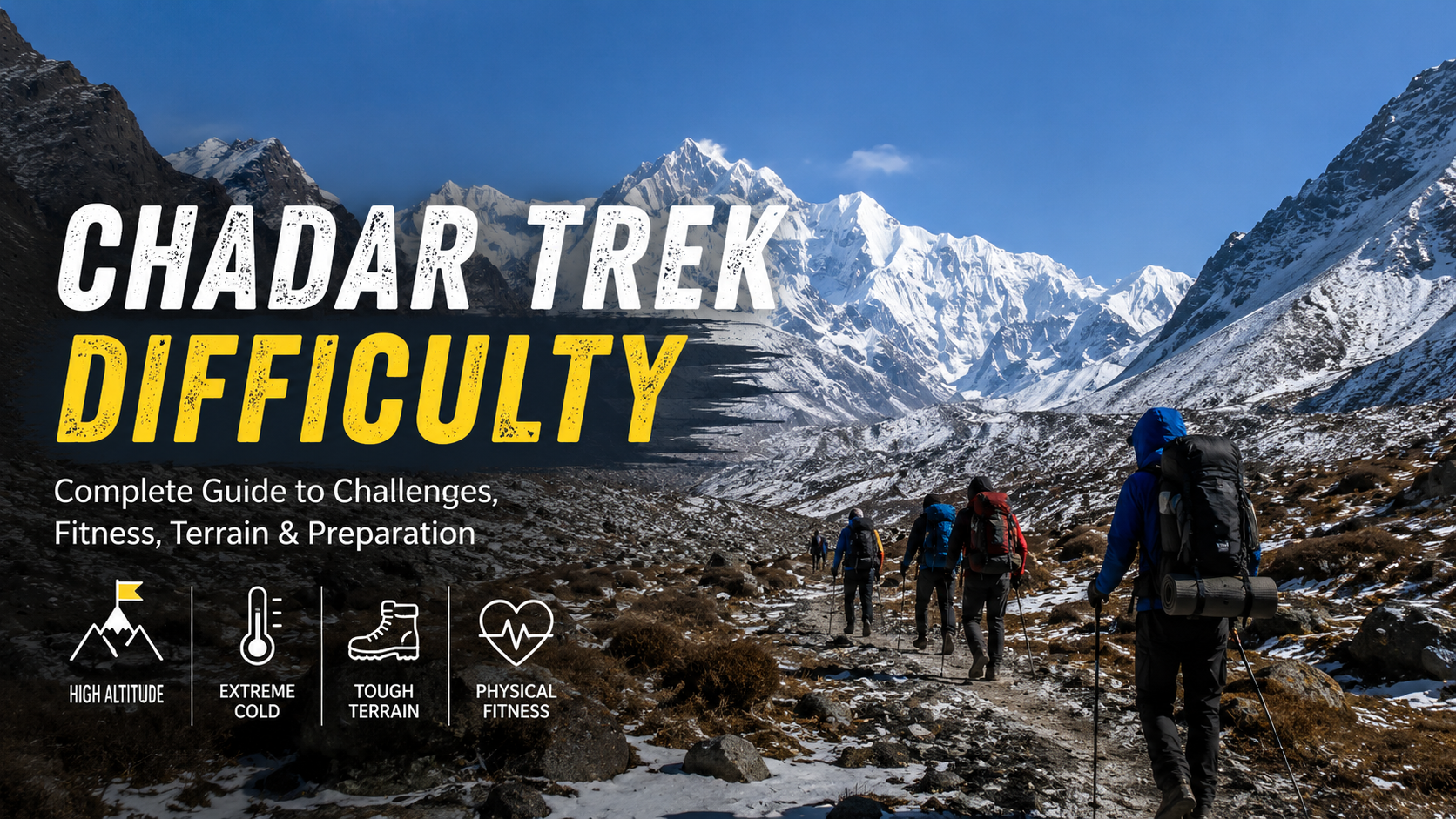
The Chadar Trek is rated Difficult on the Indian Himalayan winter trekking scale. It is harder than the Markha Valley Trek, easier than the Nun-Kun expedition, and comparable in difficulty to the Goechala Trek, but in a very different way. Where Goechala is hard because of altitude and distance, the Chadar is hard because of cold, the unpredictable ice surface, and the unrelenting nature of winter outdoor exposure.
What makes the Chadar hard
- Cold that does not let up. Day temperatures rarely exceed -5°C. Nights drop to -25°C or lower. You spend 8 days in this. There is no warm building to escape to until Day 8 evening.
- Walking technique that takes adjustment. The ‘penguin walk’ — short steps, weight directly over each foot, flat-soled placement — is what keeps you upright on ice. Most trekkers take a full day to internalise it. Slips and falls are normal in the first 24 hours; they should taper off after that.
- Unpredictable ice surface. Ice that was solid this morning may have cracked open by tomorrow. Trail-finding is dynamic, not pre-marked. You walk where your guide walks.
- Long days on a hard surface. 12-14 km on ice in winter is more physically demanding than 12-14 km on summer dirt. The body works harder to stay warm.
- No comfortable bathroom for 5 nights. Dry-pit toilet tents at camp; cold air; cold water; cold everything. This is operationally manageable but mentally fatiguing.
What does NOT make the Chadar hard
- Altitude — the trek altitude is 3,400-3,900m, well below the AMS-danger zone. Leh acclimatisation is more about cold tolerance than altitude tolerance.
- Technical climbing — no ropes, ice axes or crampons needed. You walk.
- Daily distance per se — 12-14 km is manageable; it is the conditions, not the distance, that exhaust you.
Read more: Chadar Trek difficulty rating and what -25°C actually feels like
7. Packing List for the Chadar Trek (Winter-Specific)
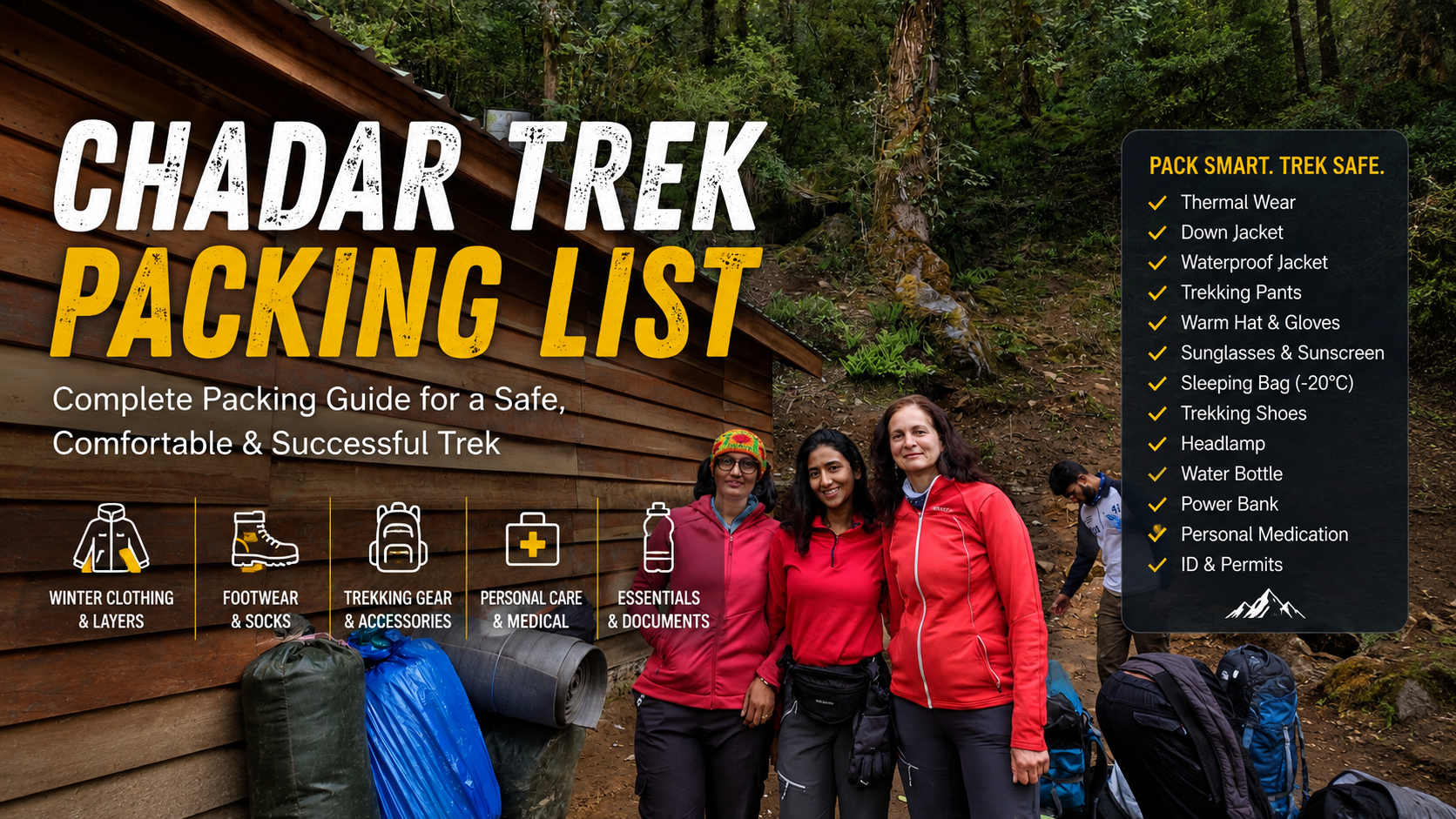
The Chadar packing list is different from a summer Ladakh trek list in fundamental ways. You are packing for prolonged sub-zero exposure, frequent wet-foot risk, and the need for redundant insulation. Anything that fails on the Chadar — a leaking jacket, a sleeping bag rated to only -10°C, the wrong gloves — is a real safety issue, not a discomfort.
Footwear (the single most important category)
- Gumboots: rubber-soled, knee-high, waterproof. Provided by us or rentable in Leh. These are the only boots that work on the Chadar — trekking shoes get wet and freeze.
- Thick woollen socks: 4 pairs minimum. Plus 2 pairs of synthetic liner socks to wear underneath.
- Spare warm boots for camp evenings (your gumboots will be wet — you need something dry to wear in the tent).
- Hand warmers and toe warmers (chemical packets) — bring 20-30 of them; they make the cold tolerable on Day 6’s Nerak campsite.
Clothing — heavy layering
- Thermal base layer: 2 sets (top + bottom) — merino wool is best
- Fleece jacket: 1 heavy
- Down jacket: rated to -20°C minimum (rentable in Leh)
- Outer shell jacket: windproof and waterproof
- Outer shell trousers: windproof
- Trekking pants: 2 pairs of insulated winter trekking pants (NOT summer dri-fit)
- Full-sleeve thermal T-shirts: 3
- Innerwear: 5-6 pairs
Head, hands and face
- Heavy woollen cap + balaclava (you will sleep wearing both)
- Sunglasses: UV-400 category 4 (ice glare is intense)
- Goggles (optional but useful if the wind picks up)
- Inner gloves: fleece (2 pairs in case one gets wet)
- Outer gloves: heavy waterproof mountaineering gloves (rentable in Leh)
- Buff or neck gaiter to cover face below eyes
Sleeping system
- Sleeping bag: rated to -20°C minimum — we provide / rentable in Leh
- Inner liner/silk liner — adds 5°C of warmth, recommended
- Hot water bottle for the sleeping bag (we provide hot water at camp)
Health & cold-injury prevention
- SPF 50+ sunscreen (ice glare causes sunburn even at -10°C)
- Heavy lip balm with SPF
- Hand cream (cold, dry air cracks skin fast)
- Personal prescription medicines
- ORS sachets and electrolyte tablets
- Diamox (acetazolamide) on doctor advice
- Personal medical kit
Read more: Complete Chadar Trek packing list with brand recommendations
8. Chadar Trek Dates 2027 — When to Go and When to Book
The Chadar Trek operates only between approximately 15 January and 25 February each year. Outside this window, the ice is either not yet frozen thick enough (early January) or has begun to melt (late February). ALTOA approves specific batch dates within this window.
Standard 2027 batch dates we are running
| Batch window | Approximate dates | Status | Best for |
|---|---|---|---|
| Batch 1 — Mid January | 16 Jan – 24 Jan 2027 | Booking opens Oct 2026 | Solid early ice, lowest crowds |
| Batch 2 — Late January | 25 Jan – 2 Feb 2027 | Booking opens Oct 2026 | Peak ice thickness |
| Batch 3 — Early February | 3 Feb – 11 Feb 2027 | Booking opens Oct 2026 | Most reliable ice + clear skies |
| Batch 4 — Mid February | 12 Feb – 20 Feb 2027 | Booking opens Oct 2026 | Last reliable batch |
ALTOA caps each batch at 12 trekkers. Across the four batches we operate, that is 48 spots for the entire 2027 season. Slots fill up faster than people expect — by mid-December, the late-January batch is usually fully booked. Book by October-November for the best choice of dates.
Within the season, which batch is best
Honestly, the difference between batches is smaller than people think. Late-January batches typically have the most solid ice and the coldest nights. Early-February batches have the clearest skies and slightly milder days. Mid-February batches risk the ice beginning to soften in unusually warm years — this is rare but possible. If you have date flexibility, I recommend Batches 2 or 3 (late January or early February). If you want the absolute coldest, most dramatic Chadar experience, Batch 1 (mid-January).
Read more: Detailed analysis of Chadar Trek dates and ice conditions across batches
9. Safety, AMS in Winter, and Cold Injury Prevention
The Chadar Trek has two-layered safety concerns that other treks combine into one: altitude AMS (the same Leh acclimatisation protocol as any other Ladakh trek) and cold injury (frostbite, hypothermia, exposure-related accidents). Both require active management.
Altitude — the Leh acclimatisation protocol
Identical to other Ladakh treks. 48-hour mandatory Leh rest, water intake of 4 litres per day, no alcohol, no exertion. The cold makes hydration harder because you do not feel thirsty in winter, but the dry winter air dehydrates you more than summer dry air. Drink water on schedule, not on thirst.
Cold injury — frostbite and hypothermia
These are the safety risks unique to the Chadar. Our protocol is built around prevention rather than reaction:
- Layering discipline. Always wear 4 layers minimum on the body — base, mid, insulation, shell. Never expose bare skin for more than 30 seconds at -20°C.
- Wet-gear management. If your gloves get wet, change them within 5 minutes. Wet wool freezes; wet skin frostbites. The kitchen team carries spare gloves and socks for the group.
- Hot food and drink every 2 hours on trek. Internal warmth is the most effective cold defence. We schedule a hot drink stop every two hours on every trek day.
- Daily extremity checks. Trek leader checks fingers, toes, ears and nose tip for early frostnip signs at every camp arrival.
- Pulse oximetry. Twice daily readings from Day 4 onwards. SpO2 under 80% is a turnaround signal.
Our evacuation protocol
In a medical emergency, the evacuation route goes back along the ice to Shingra Koma, then by road to Leh. Helicopter rescue from the Zanskar gorge is not possible — the canyon walls are too narrow for safe rotor clearance. This is why prevention matters so much; evacuation is slow and weather-dependent. We carry portable oxygen and a satellite communicator on every batch. Our nearest pre-arranged medical facility is at SNM Hospital in Leh.
10. Accommodation and Food on the Chadar Trek
Accommodation
- Days 1-3 in Leh: Twin-share 3-star heated hotel with running hot water, central heating, decent restaurant. Essential for acclimatisation quality.
- Days 4, 5, 7: Twin-share insulated tents on the frozen river banks. Sleeping bags rated to -20°C, inner liners, and ground mats over the snow. Camp set up and broken down by the support team — you do not pitch your own tent.
- Day 6 at Tibb Cave: Cave shelter — warmer than tented camping because the cave traps heat and blocks wind. Trekkers sleep in their bags on ground mats inside the cave.
- Day 8 back in Leh: Same hotel as Days 1-3. The hot shower on the evening of Day 8 is one of the most-anticipated moments of the trip.
Food
Hot, calorie-dense, simple. The kitchen team carries provisions and gas stoves on Day 4 from Leh and prepares all meals at camp. A typical day’s menu:
- 6:30 AM — Bed tea with biscuits, served inside the tent (you do not get out).
- 8:00 AM — Breakfast: porridge, eggs, toast, hot Bournvita or coffee, butter, jam.
- 12:30 PM — Packed lunch on the trail: boiled potatoes, sandwich, hard-boiled egg, chocolate, juice — eaten quickly in the cold.
- 4:00 PM — Hot drink stop with pakoras or biscuits when camp is reached.
- 7:30 PM — Dinner: soup, rice, dal, sabzi, roti, paneer or egg curry on alternate days, dessert (kheer or custard) on Days 5 and 6.
Vegetarian, vegan and Jain food are available with prior intimation. Meat is not served on the trek — winter cold storage is too risky.
11. Permits and How to Reach Leh in Winter
Permits for the Chadar Trek are handled differently from summer Ladakh treks because ALTOA controls the whole framework — operators apply, ALTOA approves, and you do not handle paperwork directly. What you do handle is getting to Leh in winter, which is harder than getting there in summer.
Permits — what we handle
- ALTOA Chadar Trek permit (operator-applied)
- Inner Line Permit (Indians) or Protected Area Permit (foreigners)
- Wildlife Protection Fee at the Zanskar entry point
- Mandatory authorised local Zanskari guide
Reaching Leh in January-February
The Manali-Leh and Srinagar-Leh highways are CLOSED in winter. Both passes are buried under snow from mid-November to mid-May. The only way to reach Leh in winter is by flight.
| Route | Time | Notes |
|---|---|---|
| Flight Delhi → Leh | 1.5 hours | Most reliable. Direct daily flights from Delhi. |
| Flight Mumbai → Leh (via Delhi) | 4-5 hours | One stop. Book combined ticket. |
| Flight Srinagar → Leh | 45 minutes | Short but most weather-cancellation-prone in winter. |
Winter Leh flights are cancelled for fog or snow significantly more often than summer flights — roughly 1 in 6 January flights are cancelled or delayed by more than 4 hours. Book the earliest morning flight available (better weather window), and buffer your arrival by one full day if you possibly can. Do not book a same-day onward connection from Leh to Delhi on Day 9 — fly Delhi on Day 9 evening or Day 10 morning instead.
12. Why Trek the Chadar with Glacier Treks & Adventure
The Chadar Trek is the trek where operator choice matters most. The combination of extreme cold, dynamic ice surface, strict ALTOA framework, and limited evacuation options means that a poorly-run Chadar batch is genuinely dangerous, not just uncomfortable. We have operated the Chadar every winter season since 2018, and our team has guided more than 200 trekkers across that period without a significant safety incident.
What this means in practice:
- Eight consecutive winter seasons of Chadar operations
- ALTOA-registered operator (verifiable directly with the ALTOA office)
- Permanent Zanskari field team — local guides who have walked the chadar since childhood
- Group size strictly capped at 12 per batch per ALTOA rule (we do not push this)
- Mandatory SNM Hospital medical certificate process built into our Day 2 itinerary
- Pulse oximetry and extremity checks twice daily from Day 4 onwards
- Portable oxygen on every batch
- Satellite communicator carried for emergency comms
- Heated hotel accommodation in Leh on Days 1-3 and Day 8 (some budget operators skip the Day 8 hotel)
- Full refund policy if you fail the SNM medical (minus permit fee + hotels used)
13. Frequently Asked Questions
Is the Chadar Trek safe?
The Chadar Trek is safe when run by an ALTOA-registered operator with proper safety protocols, mandatory acclimatisation, medical screening, group-size limits, and trained Zanskari guides. It is genuinely unsafe when operators cut these. The 2018 fatalities that triggered the current ALTOA framework were all on under-prepared or understaffed batches. We have not had a significant safety incident in eight years of operations, but the underlying risk profile of the trek is high. Take it seriously.
Can beginners do the Chadar Trek?
Technically, yes — the Chadar requires no prior trekking experience because the trail is flat and there are no technical sections. Practically, I do not recommend it as a first trek. Your first encounter with -25°C should not be on Night 6 at Nerak. Do at least one moderate Himalayan summer trek (Sandakphu, Dzongri or a similar one) before committing to the Chadar so you know how your body handles cold and altitude.
What is the maximum altitude of the Chadar Trek?
The ice trek itself stays between 3,400 and 3,900 metres. The maximum altitude on the trip is 3,500 metres at Leh. The 4,500m figure occasionally cited refers to nearby peaks; trekkers do not reach 4,500m on the standard Chadar route. The altitude concern on Chadar is winter cold at altitude, not the altitude alone.
What is the Chadar Trek medical certificate requirement?
ALTOA requires every Chadar trekker to obtain an ALS (Acclimatisation Level Self-test) medical certificate from SNM Hospital in Leh. The test happens on Day 2 of the trip and includes blood pressure, ECG, blood oxygen saturation, basic blood tests, and a doctor consultation. Certificates from other hospitals — even Apollo Delhi — are NOT accepted. You cannot do the medical in advance; it must be the Day 2 SNM appointment.
How cold does it actually get on the Chadar Trek?
Day temperatures on the ice trek range from -2°C in direct sunlight to -10°C in shaded canyon sections. Night temperatures at Nerak campsite (Day 6) are routinely -25°C and have been recorded as low as -32°C in cold years. The cold is consistent — not a windchill spike, but a constant exposure for 5 nights. Proper gear handles it; inadequate gear is dangerous.
What is the Chadar Trek age limit?
Strictly 20 to 50 years per ALTOA rule. There is no appeal process and no exceptions for elite athletes, experienced mountaineers or known fitness levels. This is a hard rule. If you are outside this age range and want a similar winter Himalayan experience, consider the Sham Valley Trek in winter (much easier) or the Kedarkantha Trek in Uttarakhand.
Can I do the Chadar Trek solo?
No. ALTOA does not approve solo Chadar permits. Every trekker must be part of an organised, operator-led group of a minimum size of 4 and a maximum of 12. Foreign trekkers additionally need a PAP, which also requires group travel.
What is the cost of the Chadar Trek for foreign trekkers?
Our 2027 package cost for international trekkers is $800 per person. This includes ALTOA permits, all meals on trek, heated hotel accommodation in Leh on Days 1-3 and Day 8, tented and cave accommodation on Days 4-7, an IMF-certified trek leader, local Zanskari guides, gumboots, and emergency support. Delhi-Leh flights, personal gear (most rentable in Leh), GST and tips are separate.
When should I book the Chadar Trek?
Book by October-November of the previous year. The Chadar trek 2027 season opens for booking in October 2026. ALTOA’s strict 12-per-batch cap means popular January-February dates fill up faster than people expect. By mid-December, most operators’ peak-season batches are fully booked.
How is the mobile network on the Chadar Trek?
BSNL postpaid works at Leh and intermittently at Shingra Koma. Once you are on the ice from Day 4 onwards, there is no mobile signal of any provider until you return to Shingra Koma on Day 8. Tell your family before Day 4 that you will be unreachable for 5 days. We carry a satellite communicator for emergencies.
Ready to Book Your Chadar Trek 2027?
The Chadar Trek is one of those experiences that is genuinely once-in-a-lifetime — partly because of how rare frozen-river walking is anywhere, and partly because climate change is shortening the chadar window every decade. The river that froze for 8 weeks in 1980 freezes for roughly 5 weeks now, and the trend is one-way. If the Chadar is on your list, the time to do it is sooner rather than later. Our 2027 batches open for booking in October 2026.
Book the Chadar Trek now: Call/WhatsApp +91 7407248200 · Email contact@trekinsikkim.in
Read more: View the Chadar Trek product page and book online
Read more: Read the complete Ladakh trekking guide for broader context
Read more: Consider the summer alternative — Markha Valley Trek
Read more: Browse all our Ladakh treks and expeditions
About the author
Kiran Gurung is the founder of Glacier Treks & Adventure and an IMF-certified mountaineer with fifteen years of operating experience across the Indian Himalaya. Glacier Treks & Adventure is an ALTOA-registered Chadar Trek operator and has run the Chadar Trek every winter season since 2018, with a permanent Zanskari field team and a strict commitment to ALTOA safety standards. The company is based in Yuksom, West Sikkim, and is affiliated with the IMF, the Sikkim Department of Tourism, TAAS, YTDC, SAMA and ALTOA.