By Kiran Gurung · Founder, Glacier Treks & Adventure · IMF-certified mountaineer
Published: 5 August 2026 · Last updated: 5 August 2026
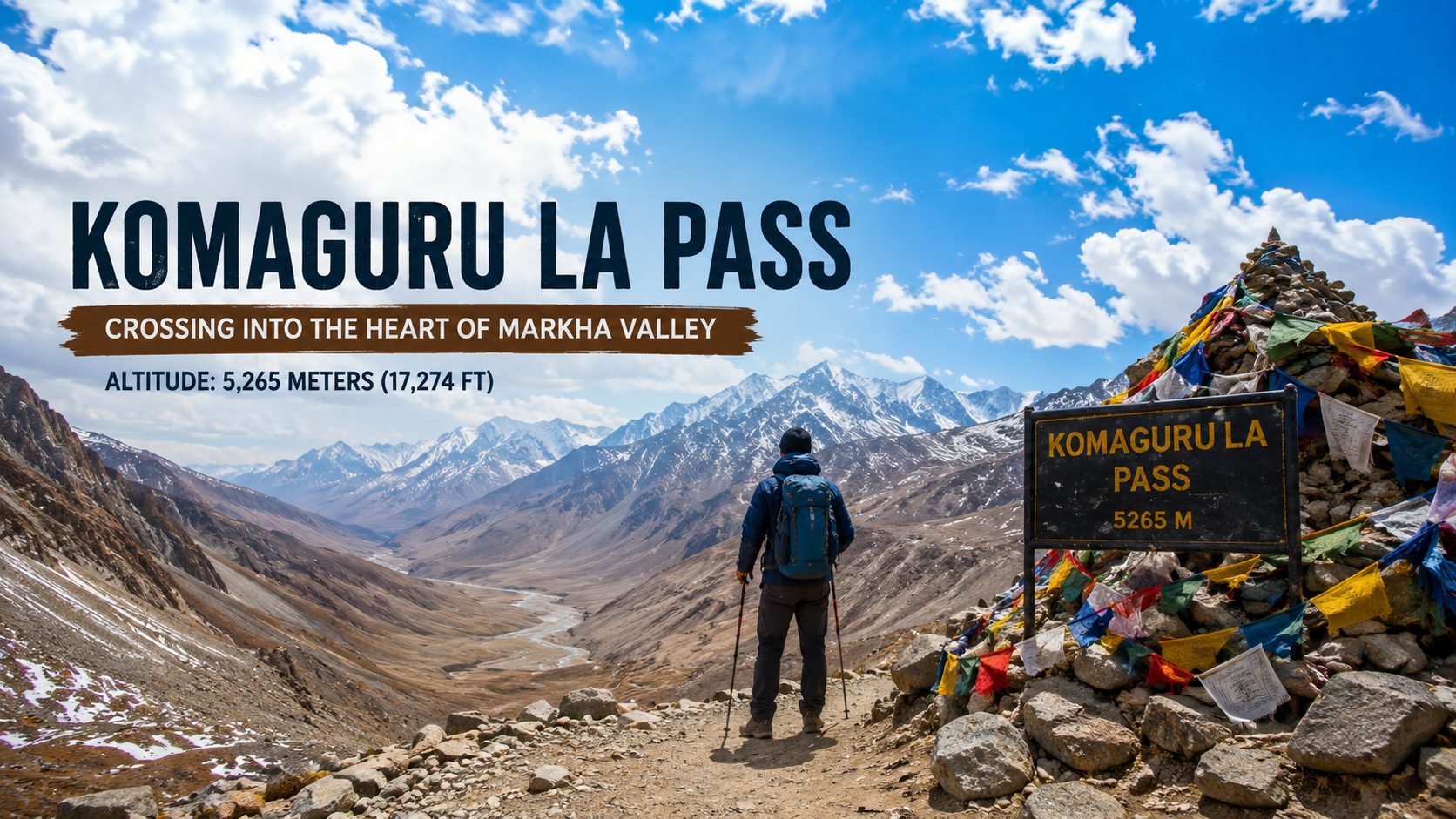
The Markha Valley Trek is a 10-day, 75-kilometre Himalayan trek in Ladakh that traverses the Hemis National Park, crosses two high passes — Ganda La (4,800m) and Kongmaru La (5,260m) — and is unique among major Indian Himalayan treks for being a homestay trek, not a camping one. You sleep in stone-walled Ladakhi family houses in the villages of Skiu, Markha, Hankar and Nimaling instead of tents. The trek begins in Leh (3,500m), follows the Markha River through Hemis National Park, ends at Shang Sumdo, and offers continuous views of Kang Yatse peak (6,400m). Cost: ₹40,000 per person (group rates lower) or approximately $900 for international trekkers. Best time: June to September. Difficulty: Moderate.
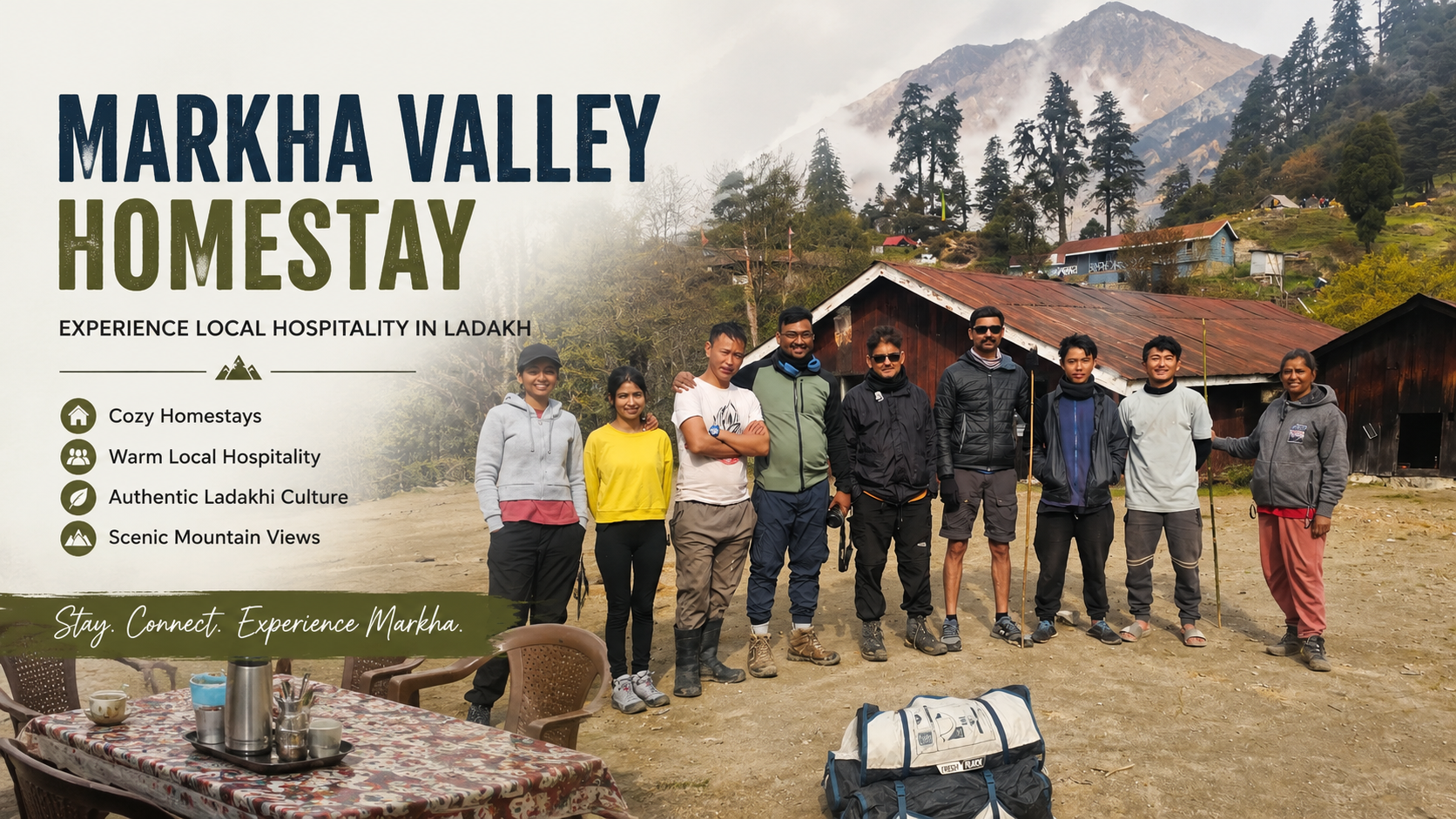
There is a single misconception about the Markha Valley Trek that I have to correct before anything else, because almost every guide online gets it wrong: this is not a camping trek. It is one of the only major Himalayan treks in India where you sleep in actual houses every night of the route — stone-walled Ladakhi family homestays in the villages of Skiu, Markha, Hankar and Thachungtse, with tea served in copper pots and dinner cooked over a yak-dung stove. The locals call it the Tea House Trek for this reason. The campsite at Nimaling on Day 5 is the only night under canvas, and even that has fixed-set-up tents.
Why this matters: the homestay experience completely changes what the Markha Valley Trek is. Other Ladakh treks (Chadar, Tso Moriri, Nubra) are walking-through-wilderness experiences. Markha is a walking into villages experience. You eat with families. You see how Ladakhi households live at 3,700 metres in a cold desert. You hear the morning prayers from the Hemis monastery drift up the valley. The trail is beautiful — Kang Yatse fills the eastern sky from Day 4 onwards — but the cultural depth is what most trekkers remember a year later.
I have been running the Markha Valley Trek for fifteen years alongside our Sikkim portfolio, and it remains the trek I most often recommend to first-time Ladakh trekkers. This guide covers everything — the 10-day itinerary, the real 2026 cost, what the homestays are actually like, the river crossings that catch unprepared trekkers off guard, and the operational truth about the Kongmaru La summit day.
Read more: If this is your first Ladakh trek, also read the full Trekking in Ladakh guide
1. Markha Valley Trek Quick Facts
| Attribute | Detail |
|---|---|
| Region | Hemis National Park, Ladakh |
| Start point | Spituk or Chilling (drive from Leh) |
| End point | Shang Sumdo (drive back to Leh) |
| Highest point | Kongmaru La pass — 5,260m (approximately 17,260 ft) |
| Second pass | Ganda La — 4,800m |
| Duration | 10 days (including 2-day Leh acclimatization) |
| Trek distance | Approximately 75 kilometres |
| Difficulty | Moderate |
| Best time | June to September (peak: late July to mid-September) |
| Suitable age | 14 to 60 years |
| Cost (Indian) | ₹40,000 per person (group rates lower) |
| Cost (Foreign) | Approximately $900 per person |
| Permits needed | Inner Line Permit (Indians) / Protected Area Permit (foreigners), Hemis National Park entry, Wildlife Protection fee |
| Mountain views | Kang Yatse (6,400m), Stok Range, Zanskar Range |
| Accommodation | Homestays in villages + 1 night camping at Nimaling |
| Mobile network | None from Day 3 onwards; BSNL works at Leh only |
2. Where Is Markha Valley and What Makes It Different From Other Ladakh Treks
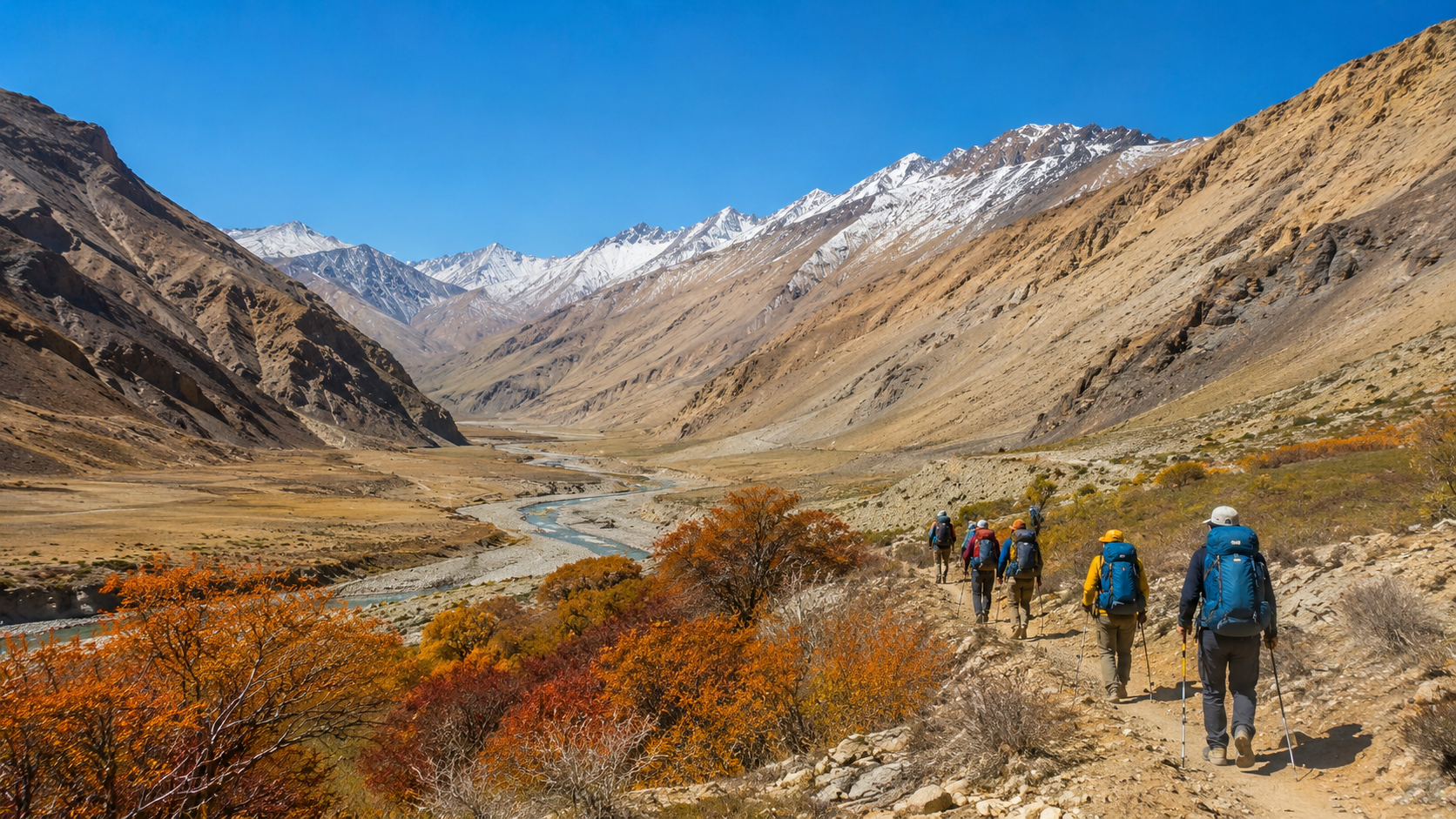
The Markha Valley runs roughly parallel to the Indus River, separated from it by the Stok Range to the north. The trek enters the valley from the western end — by road from Leh to Chilling, then on foot through a series of seven small villages — and exits over the Kongmaru La pass at the eastern end into the Shang Sumdo valley. The entire route lies inside the Hemis National Park, India’s largest national park by area, which is also the most reliable place in the world to spot snow leopards (in winter, not during the trekking season).
Three things make the Markha Valley Trek genuinely different from every other major Ladakh trek:
- It is a homestay trek, not a camping trek. Seven of the nine nights are in Ladakhi family homestays in stone houses. This is true of almost no other Indian Himalayan trek above 3,500 metres. The cultural immersion is the defining feature.
- Kang Yatse is your constant companion. From Day 4 onwards, the 6,400-metre summit of Kang Yatse fills the eastern horizon — and on Day 6 from Nimaling, you camp at its base. Other Ladakh treks give you mountain glimpses; Markha gives you a single dominant peak in continuous view for half the trek.
- It is a true cultural trek with eleventh-century context. Hemis Monastery (founded in the 11th century, expanded to its current form in 1672) sits at the entrance to the trek. Umlung Gompa, Hankar Gompa and the ruins of the old Markha Palace are all on the trail. The route follows an old Tibet-Ladakh trade corridor that has been walked for at least eight centuries.
3. Markha Valley Trek Itinerary — Day by Day
The standard Markha Valley Trek itinerary is 10 days end-to-end from Leh, with two days at the start for mandatory acclimatisation and seven days of trekking. Distances and altitudes below match what we record on our actual batches.
Day 1 — Arrival in Leh (3,500m)
You arrive at Leh by morning flight from Delhi, Mumbai or Srinagar. Our team meets you at Kushok Bakula Rimpochee Airport and transfers you to your hotel in central Leh. The single most important thing you can do on Day 1 is nothing — rest, drink three litres of water, eat lightly, sleep early. Do not sightsee, do not climb stairs unnecessarily, do not drink alcohol. The 48-hour Leh acclimatization rule that I write about in our Ladakh pillar guide starts now.
Read more: Why the 48-hour Leh acclimatisation rule matters
Day 2 — Leh acclimatisation with light sightseeing
A planned acclimatisation day. We organise a half-day of low-intensity sightseeing — Shanti Stupa, Leh Palace, and either Thiksey Monastery or the Sangam (where the Zanskar and Indus rivers meet), depending on the group’s energy. Lunch back at the hotel. Afternoon rest, with an optional short walk in the late afternoon. The objective on Day 2 is to feel the altitude (most trekkers report mild headaches, breathlessness on stairs, and broken sleep) and then start to recover from it.
Day 3 — Drive Leh to Chilling, trek to Skiu (3,400m)
Distance: ~70km drive + 9km trek. Trek time: 4–5 hours.
Morning drive from Leh to Chilling, the road-end village at the western entrance to Hemis National Park trek. The drive takes about 2 hours and follows the dramatic Zanskar River gorge. From Chilling, we begin walking down to the river, cross a suspension bridge, and follow the Markha River east to Skiu. The trail is gentle, and the altitude actually drops slightly — Skiu sits at 3,400m, 100 metres lower than Leh. Skiu is your first homestay night: a single street of stone houses, a small monastery, and a sense of arrival that the road journey did not yet provide.
Day 4 — Skiu to Markha village (3,700m)
Distance: 18km. Trek time: 6–7 hours.
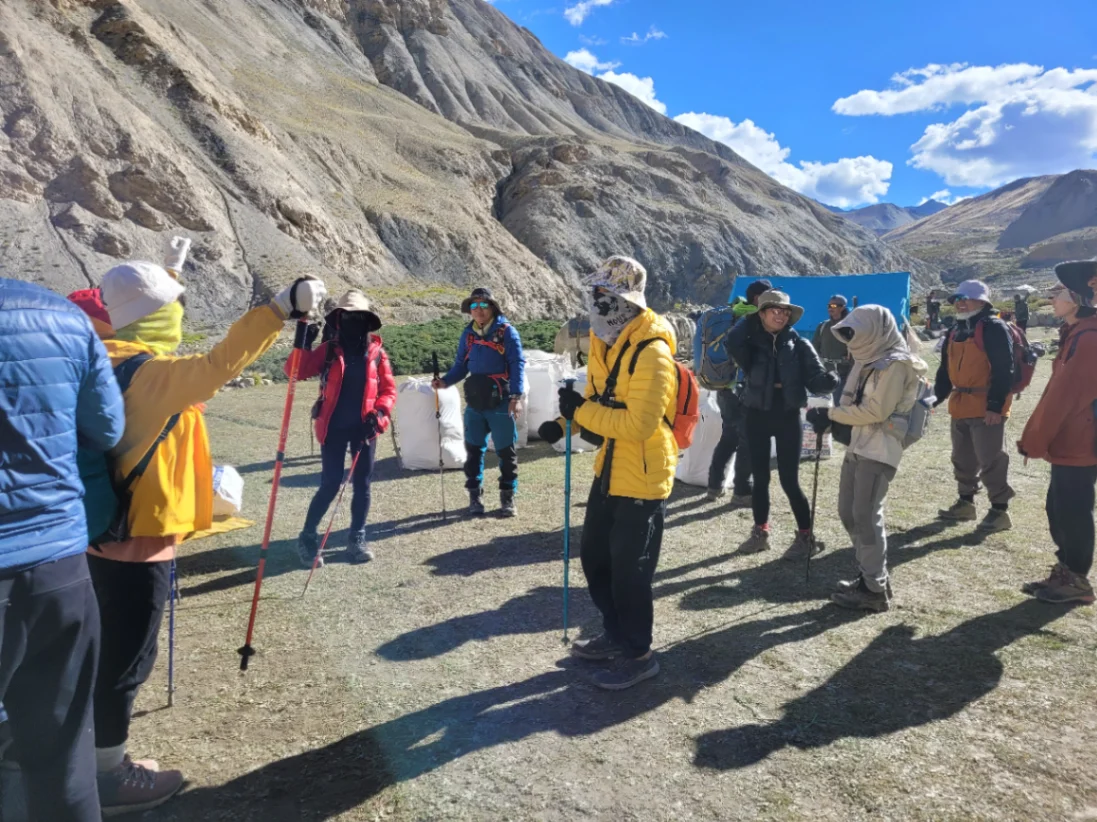
The longest distance day of the trek. The trail follows the Markha River up the valley through fields of barley, willow groves, and stone-walled village edges. There are three river crossings on this day — usually shallow in July-August, sometimes thigh-deep in June after snowmelt. Bring quick-dry shoes or sandals for the crossings; do not attempt them in your trekking boots. Lunch at Sara village. The afternoon stretch into Markha village passes ancient mani walls and chortens. Markha is the largest village on the route, with about 25 houses and the only village with a small school. Homestay overnight.
Day 5 — Markha to Thachungtse (4,150m) via Hankar
Distance: 14km. Trek time: 6–7 hours.
The first day where altitude becomes noticeable. The trail climbs through Hankar village (3,950m), past the ruins of the old Markha Palace and the working Hankar Gompa, and continues up the open upper valley to Thachungtse — a small summer settlement of 4 houses at 4,150 metres. Kang Yatse becomes fully visible on this day, dominating the eastern view. Homestay or basic guesthouse overnight.
Day 6 — Thachungtse to Nimaling (4,800m)
Distance: 7km. Trek time: 4–5 hours.
A short but altitude-significant day. The trail climbs steadily out of the upper Markha valley and opens onto the Nimaling plateau — a high-altitude grassland used as summer pasture by Ladakhi shepherds and yak herders. Nimaling sits at 4,800 metres directly below Kang Yatse and is the only night under canvas on the entire trek. The campsite has fixed-set-up tents with bedding. The afternoon should be spent resting and hydrating — Day 7 is the summit pass day and the legs and lungs need to be ready.
Nimaling is also the base camp for the Kang Yatse II climbing peak (6,200m). Trekkers occasionally extend the Markha route by 2-3 days to summit Kang Yatse II from Nimaling — we operate this combined Markha + Kang Yatse expedition for trekkers with mountaineering experience. If interested, mention it at the booking stage so we can plan the acclimatization profile accordingly.
Day 7 — Nimaling to Shang Sumdo via Kongmaru La pass (5,260m)
Distance: 13km. Trek time: 7–8 hours. Maximum altitude: 5,260m.
The summit day. Wake up at 5:30 AM. We leave camp by 6:30 AM for the steep climb to Kongmaru La pass — a 460-metre ascent over rocky moraine with no shelter. The pass crossing takes about 3 hours from camp and offers the trek’s most expansive views: the Zanskar range to the south, the Indus valley below to the north, and Kang Yatse looming behind us. The descent from Kongmaru La to Shang Sumdo is long and knee-testing — 1,400 metres of altitude loss over 9 kilometres, mostly on loose stone. We reach Shang Sumdo by mid-afternoon, where our vehicle waits to drive us back to Leh. Hotel night in Leh.
Day 8 — Leh rest day (optional but recommended)
Most operators end the trek at Day 7 and put trekkers on Day 8 flights home. We strongly recommend keeping Day 8 in Leh as a rest day — your body has just descended 1,400 metres in a single morning, and the smart thing is to give it 24 hours at moderate altitude before flying out. Use the day for the Hemis Monastery visit (an hour from Leh) and a hot shower.
Day 9 — Departure from Leh
Morning flight from Leh to Delhi or onward destination. Our team handles airport transfer.
Read more: Detailed Markha Valley Trek itinerary with altitude profile graphic
4. Markha Valley Trek Cost in 2026 (Full Breakdown)
Our 2026 Markha trek cost starts at ₹40,000 per person for Indian trekkers (with group rates lower for batches of 6 or more) and approximately $900 for international trekkers. The pricing is higher than equivalent treks in Sikkim or Himachal because Ladakh’s operating costs are genuinely higher — every provision is trucked in from outside, permits cost more, and the season is short.
| Cost head | Indian trekkers (INR) | Foreign trekkers (USD) |
|---|---|---|
| Standard package (Leh to Leh) | ₹40,000 | $900 |
| Group rate (6+ trekkers, per head) | From ₹42,000 | From $650 |
| Hemis National Park entry fee | Included | Higher rate at check post |
| Inner Line Permit / Protected Area Permit | Included | Included |
| Wildlife Protection Fee | Included | Included (higher rate) |
| Delhi → Leh return flight | Not included (~₹12,000-18,000) | Not included |
| Pre-trek Leh hotel (Days 1-2) | Included (twin-share, 3-star) | Included |
| Post-trek Leh hotel (Day 7-8) | Included | Included |
| Gear rental (sleeping bag, down jacket) | ₹2,500 (full set) | $40 (full set) |
| Single homestay supplement | ₹5,000 (entire trek) | $80 (entire trek) |
| Travel & medical insurance (mandatory) | Trekker’s own (~₹1,200) | Trekker’s own |
| Tips for the support team (suggested) | ₹800-1,200 | $15-20 |
What is included in the standard package: all meals from Day 1 dinner to Day 8 breakfast; twin-share homestay accommodation in Skiu, Markha and Thachungtse; tented twin-share accommodation at Nimaling; twin-share 3-star hotel accommodation in Leh on Days 1-2 and 7-8; an IMF-certified trek leader; local Ladakhi-speaking guide; cook and support staff; horses or mules for kitchen and camping equipment; all Hemis NP entry fees and forest permits; basic medical kit with portable oxygen; pulse oximeter monitoring; airport transfers within Ladakh.
What is not included: Delhi/Mumbai-Leh return flights, personal trekking gear (rentable from us in Leh), personal medical insurance, GST of 5%, tips, lunch in Leh on Day 8, anything not specifically listed.
A realistic all-in budget for an Indian trekker including flights, GST, tips and gear is ₹70,000-80,000. For foreign trekkers, $1,000-1,200 all-in including international flight contribution. Always ask for an itemised quote before booking — that is the only way to compare operators meaningfully.
Read more: Full Markha Valley Trek cost breakdown
5. The Homestay Experience — What Most Guides Get Wrong
I want to spend time on this section because the Markha Valley homestay component is what makes the Markha Valley Trek what it is — and it is described badly by most guides. Here is the operational truth.
What a Ladakhi homestay actually looks like
A traditional Ladakhi house is stone-walled, with a flat mud roof, low wooden door frames, and rooms organised around a central kitchen with a stove burning yak dung. The visitor room is on the first floor, typically reached by a wooden ladder. Floors are covered with thick Tibetan-style carpets. The bed is a low wooden platform with two heavy quilts that smell faintly of butter tea and woodsmoke. There are no Western beds, no en-suite bathrooms, no Wi-Fi, and no electricity overnight (some homestays have solar lights until 9 PM, then nothing).
How the meals work
Dinner is cooked by the family in their kitchen and served to you in the visitor room or sometimes at the family’s own kitchen table if there is space. The standard menu: rice, dal, a vegetable curry, and tingmo (steamed Tibetan bread). Sometimes skyu (a hand-rolled Ladakhi pasta in vegetable broth — try it, it is a memorable dish) or thukpa noodle soup. Breakfast is bread, jam, eggs if available, and the famous Ladakhi butter tea (which I personally find an acquired taste — bring your own coffee sachets if you prefer).
What the bathroom situation is, honestly
Bathrooms in Ladakhi Markha valley homestay are dry-pit composting toilets, usually in a small outbuilding behind the main house. They are clean but basic — a stone-floored room with a deep pit and a bucket of soil for covering. There are no flush toilets and no hot showers on the trek. Most homestays will provide a bucket of warm water for sponge bathing if asked, but expect to be without a real shower for 6 nights. Bring a quick-dry travel towel and sanitiser wipes.
Why this matters
I am being specific because trekkers who arrive expecting hotel-style facilities find this difficult, and trekkers who arrive expecting it find it genuinely lovely. The homestay system is what keeps the Markha Valley economically alive — every household earns roughly ₹1,200-1,800 per trekker per night, and the income supports between 6 and 12 family households across each season. If you go, go because you want this experience, not despite it.
Read more: Detailed Markha Valley homestay experience guide
6. Best Time to Do the Markha Valley Trek
The Markha trek best time operates from mid-June to early October. Outside this window, the access roads are closed, the homestays are shuttered, and the high passes are under snow. Within the window, the conditions vary significantly month to month.
| Month | Weather | Trail status | Crowds | Recommended for |
|---|---|---|---|---|
| Mid-June | Mild days, cold nights | River crossings risky from snowmelt | Light | Experienced trekkers comfortable with deep crossings |
| July | Warm, occasional, brief rain | All sections open | Moderate | First-time Markha trekkers |
| August | Warm, settled, dry | Peak conditions | High | Anyone — peak season |
| September | Cool, very clear, golden barley | All sections open | Very high | Photographers, second-visit trekkers — BEST month overall |
| Early October | Cold mornings, very clear | Higher passes close late month | Light | Cold-tolerant strong trekkers |
| Oct-May | Severe cold, snow | All sections closed | — | Do NOT trek |
If I had to recommend a single window, the first three weeks of September are unbeatable. The barley fields in Markha and Hankar are golden, the air is at its clearest of the year, the river crossings are at their easiest (the snowmelt is finished), the nights are cold but tolerable, and the crowds have thinned after August. We have run twenty-plus September Markha batches across the last decade and the weather has been settled on every single one.
Read more: Month-by-month Markha Valley Trek conditions
7. Markha Valley Trek Difficulty and Fitness Preparation
The Ladakh Markha trek difficulty is rated Moderate on the Indian Himalayan trekking scale. It is harder than Sandakphu and Dzongri but easier than Goechala or any 6,000-metre climbing peak. The main challenges are altitude (5,260m at Kongmaru La), the cumulative effect of seven trekking days, and the river crossings.
What makes Markha demanding
- Kongmaru La pass at 5,260m on Day 7 — high enough that anyone can develop altitude symptoms
- Multiple river crossings between Skiu and Markha village (Day 4)
- Approximately 75km of walking on a trail over seven days
- Two consecutive nights above 4,000m (Thachungtse and Nimaling)
- Pre-dawn cold on Kongmaru La summit day (often below -5°C)
Recommended 8-week fitness routine
| Week | Cardio | Strength | Endurance benchmark |
|---|---|---|---|
| 1–2 | Walk 5km in 50 min, 4 days/week | Bodyweight squats, planks (15 min, 3 days/week) | — |
| 3–4 | Jog/walk 7km in 70 min, 4 days/week | Add 5kg pack to walks | 5km hill walk in <55 min |
| 5–6 | Run 8km in 60 min, 4 days/week | Loaded squats (8kg), step-ups | 10km hill walk in <2 hr |
| 7–8 | Run 10km in 75 min OR cycle 25km | Maintain strength routine | 12km with 8kg pack in <2.5 hr |
If you cannot complete the Week 7-8 endurance benchmark two weeks before the trek, please postpone. Markha is forgiving on most days but Kongmaru La summit morning will find any gap in your preparation.
8. Packing List for the Markha Valley Trek
The Markha packing list is different from a Sikkim trek list in three important ways: you need river-crossing footwear, you need much heavier sun protection (Ladakh light at 4,000m is brutal), and you can pack lighter on rain gear (Ladakh is a cold desert, not a wet mountain).
Clothing
- Thermal base layer: 1 top + 1 bottom (merino best for cold-dry conditions)
- Mid layer: 1 fleece + 1 down jacket (-10°C rated; rentable in Leh)
- Outer shell: 1 windproof jacket (waterproofness matters less in Ladakh than wind resistance)
- Trekking pants: 2 pairs quick-dry, zip-off convertible, useful
- Full-sleeve dri-fit T-shirts: 3 (UV protection above 4,000m)
- Socks: 4 pairs (2 thick woollen + 2 trekking)
Footwear (the Markha-specific section)
- Trekking shoes: ankle-high, waterproof, broken in
- River-crossing footwear: sport sandals OR old shoes you don’t mind getting wet. There are 3-5 river crossings on Day 4 (Skiu to Markha) that are typically calf to thigh deep. Do not attempt them in your trekking boots — wet boots for the next 4 days is misery.
- Camp shoes / slippers for evenings in homestays
Accessories
- Woollen cap, wide-brim sun cap, balaclava for Kongmaru La summit morning
- Sunglasses: UV-400 category 4 (Ladakh light is significantly more intense than Sikkim — standard sunglasses are not enough)
- Gloves: 1 fleece inner + 1 windproof outer
- Trekking poles: 1 pair (very useful for river crossings)
- Headlamp with extra batteries
Health & altitude-specific
- SPF 50+ sunscreen — you can burn in 20 minutes at 4,500m
- Lip balm with SPF
- Diamox (acetazolamide) on doctor advice
- Personal prescription medicines
- ORS sachets and electrolyte tablets
- Quick-dry travel towel (essential since no showers for 6 nights)
- Sanitiser wipes (the bathroom situation requires this)
9. Permits and How to Reach Leh
Permits required for the Markha Valley Trek
The Markha Valley lies inside Hemis National Park and requires three permits. We handle all of them for you, but it helps to know what is being arranged.
- Inner Line Permit (ILP) for Indian trekkers OR Protected Area Permit (PAP) for foreign trekkers. PAP requires a minimum group of two.
- Hemis National Park entry fee (approximately ₹400-600 for Indians, significantly higher for foreigners)
- Wildlife Protection Fee for entering the national park
- Mandatory authorised local guide (no solo trekking inside Hemis NP) — we always send an authorised guide with every batch
How to reach Leh
Three options into Leh — by flight, by Srinagar-Leh highway, or by Manali-Leh highway. Each has implications for acclimatisation (see Section 7 of our main Ladakh trekking guide for full detail). For Markha specifically, we recommend flying into Leh because the homestay-based structure means you don’t have the camping-week buffer that a longer Ladakh expedition has.
| Mode | Time | Notes |
|---|---|---|
| Flight Delhi → Leh | 1.5 hours | Direct daily flights. Most practical option. |
| Flight Mumbai → Leh | 3 hours (1 stop) | Via Delhi typically; book combined ticket |
| Flight Srinagar → Leh | 45 minutes | Short, scenic; weather-cancellation prone |
| Srinagar–Leh highway | 2 days by road | Best gradual acclimatization profile |
| Manali–Leh highway | 2 days by road | Crosses 5,300m Tanglang La — can trigger AMS |
Read more: Flight vs Manali Road vs Srinagar Road — detailed Leh access comparison
10. River Crossings — What to Expect and How to Prepare
The Markha River crossings are the operational detail that most guides understate. Between Skiu and Markha village (Day 4), the trail crosses the river multiple times — typically 3 to 5 crossings depending on the year’s water level and where bridges have been washed out or repaired. The crossings are not technical (no ropes, no swimming, no gear required), but they are wet, cold and slippery.
What the crossings are actually like
- Water depth: calf to mid-thigh deep in July-August; deeper and faster in June after snowmelt; lower and easier in September.
- Water temperature: snowmelt-fed, painfully cold — typically 4-8°C. Crossing time is 30 seconds to 2 minutes, depending on the width.
- Bottom surface: rounded stones, occasionally slippery — trekking poles are very useful for stability.
- Width: ranges from 5 metres at the narrowest to 15-20 metres at the widest crossing on Day 4.
How to prepare and cross safely
- Bring dedicated river-crossing footwear (sport sandals or old sneakers). Plastic sandals work; flip-flops do not — they will be swept off.
- Cross with trekking poles in both hands for stability.
- Cross diagonally downstream — fighting the current sideways is harder than working with it.
- Cross with another trekker if possible — group crossings are stabler.
- Roll trousers above the water line; do not cross in long trousers that will then be wet for the rest of the day.
- Have a small towel and dry socks ready in your day pack for after the crossing — change immediately to prevent foot issues.
In years with heavy snowmelt or unusual rainfall, we sometimes use the alternative route via Zingchen-Rumbak-Ganda La instead of the Spituk-Skiu route, which avoids the deep crossings. The trek leader makes this call based on water levels on the day of departure. If you have very strong concerns about river crossings, mention this at the booking stage so we can prioritise the Zingchen route option.
11. Why Trek the Markha Valley with Glacier Treks & Adventure
We are not Ladakh-based — our home is Yuksom in West Sikkim. But Ladakh has been a part of our portfolio since 2017, and our Markha Valley Trek operations are run by a permanent Ladakhi field team that we have worked with for nearly a decade. The leader is one of our senior trek leaders, the local guides and homestay coordinators are residents of Skiu and Markha villages, and the operational standards are identical to those we run in Sikkim.
What this means in practice:
- Eight years of continuous Markha Valley operations
- Permanent Ladakhi field team — guides and homestay coordinators from Skiu, Markha and Hankar villages
- Founder-led safety standards — IMF-certified leadership, mandatory 48-hour Leh acclimatization, contingency days built into every itinerary
- Full Ladakh portfolio — Markha, Chadar, Mentok Kangri, Nun, Nun-Kun — allowing combined trek-and-expedition itineraries
- Affiliated with IMF, Sikkim Tourism, TAAS, YTDC and SAMA
- Twin-share homestays organised through long-term village partnerships, not last-minute aggregators
12. Frequently Asked Questions
Is the Markha Valley Trek suitable for beginners?
Yes, with proper preparation. Markha is widely considered one of the most beginner-accessible high-altitude Ladakh treks — the homestay structure, gradual altitude profile, and only one pass day (Kongmaru La) make it more forgiving than a tented camping trek. That said, ‘beginner-accessible’ means a fit beginner who has trained for 8 weeks beforehand, completed the 48-hour Leh acclimatisation, and has done at least one shorter prior trek.
What is the highest point of the Markha Valley Trek?
Kongmaru La pass at 5,260 metres (approximately 17,260 ft) on Day 7. Some sources cite 5,400m for the same pass, which is the older estimate — modern GPS readings put it at 5,260m. Ganda La pass at 4,800m is the second-highest point but is only crossed if you take the alternative Zingchen route.
Is the Markha Valley Trek a homestay trek or a camping trek?
Homestay. Seven of the nine nights are in Ladakhi family homestays in villages along the route. Only Nimaling (Day 6) is a camping night. This is what makes Markha culturally unique among Indian Himalayan treks.
How many river crossings are there on the Markha Valley Trek?
Three to five river crossings on Day 4 (Skiu to Markha village), depending on the year and the trail conditions. Water is calf to mid-thigh deep in peak season. Cold but not technical. River crossings are easier in September than in June or July.
What is the cost of the Markha Valley Trek for foreign trekkers?
Our standard package for international trekkers is approximately $900 per person, including all permits, homestays, Leh hotels, meals on trek, an IMF-certified trek leader and local Ladakhi guides. The Delhi-Leh flight, personal gear and travel insurance are separate. Foreign trekkers require a Protected Area Permit, which we arrange.
How is the food on the Markha Valley Trek?
On the trek itself, meals are cooked by the homestay families in their kitchens — typical Ladakhi food including rice, dal, vegetable curry, tingmo bread, occasional skyu pasta and butter tea. Vegetarian and vegan options are easily accommodated. Jain food is harder in Ladakh because of the cold desert food culture — please mention specific dietary requirements at booking. At Nimaling (the one camping night), our kitchen team cooks fresh meals.
Can I do the Markha Valley Trek solo?
No. Hemis National Park rules require a registered local guide for every trekking party. Solo unguided trekking is not permitted, and the permit system will not issue you a solo entry. We always send an authorised local guide with each batch, so this is automatically handled within our package.
How is the mobile network on the Markha Valley Trek?
No signal from Day 3 onwards. BSNL works intermittently at Leh; Jio works in Leh town. Inside Hemis National Park, there is no functional mobile network on any major carrier. We carry a satellite communicator for emergencies. Tell your family before you leave Leh that you will be unreachable for 7-8 days.
Can I see snow leopards on the Markha Valley Trek?
Highly unlikely during the trekking season. Snow leopards in the Hemis range are mostly visible in winter (January-March) when they descend to lower elevations following blue sheep. The summer trekking season (June-September) sees almost no snow leopard sightings. You will likely see blue sheep, marmots, golden eagles, and possibly Himalayan wolves — but plan no expectations for snow leopards.
How does the Markha Valley Trek compare to the Goechala Trek?
They are very different experiences. Goechala is a 10-day camping trek in wet Himalayan forest culminating in a Kanchenjunga viewpoint at 4,500m. Markha is a 10-day homestay trek in cold-desert Ladakh culminating in a 5,260m pass crossing. If you have done one, the other is the natural complement — most of our repeat international trekkers do Goechala one year and Markha the next.
Ready to Book Your Markha Valley Trek?
Markha is the trek that introduces most people to Ladakh — and for good reason. The combination of homestay culture, dramatic landscape, manageable difficulty and the Kongmaru La summit makes it one of the most memorable Indian Himalayan treks. Our 2026 Ladakh season runs from mid-June through early October, with batches roughly every two weeks during peak season.
Book the Markha Valley Trek now: Call/WhatsApp +91 7407248200 · Email contact@trekinsikkim.in
Read more: View the Markha Valley Trek product page and book online
Read more: Browse all our Ladakh treks and expeditions
Read more: Read the complete Ladakh trekking guide
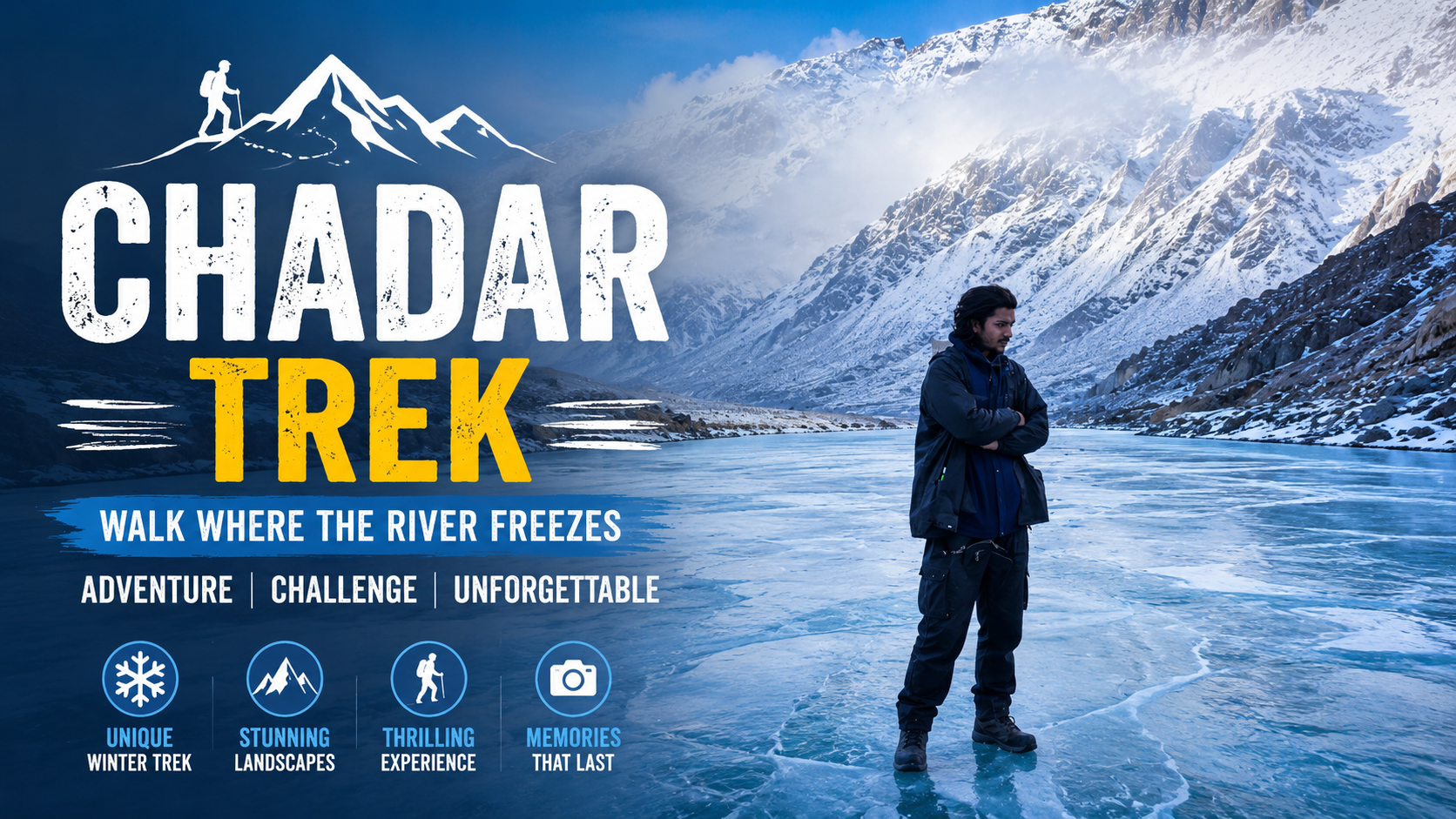
Read more: Consider the winter alternative — the Chadar Trek
About the author
Kiran Gurung is the founder of Glacier Treks & Adventure, an IMF-certified mountaineer and a working trek leader with fifteen years of operating experience across the Indian Himalaya. He has led Markha Valley Trek expeditions across multiple seasons and operates a permanent Ladakhi field team with long-term partnerships in the Skiu, Markha and Hankar village homestays. Glacier Treks & Adventure is based in Yuksom, West Sikkim, and is affiliated with the IMF, the Sikkim Department of Tourism, TAAS, YTDC and SAMA. The company operates the full Indian Himalaya trekking and expedition portfolio.