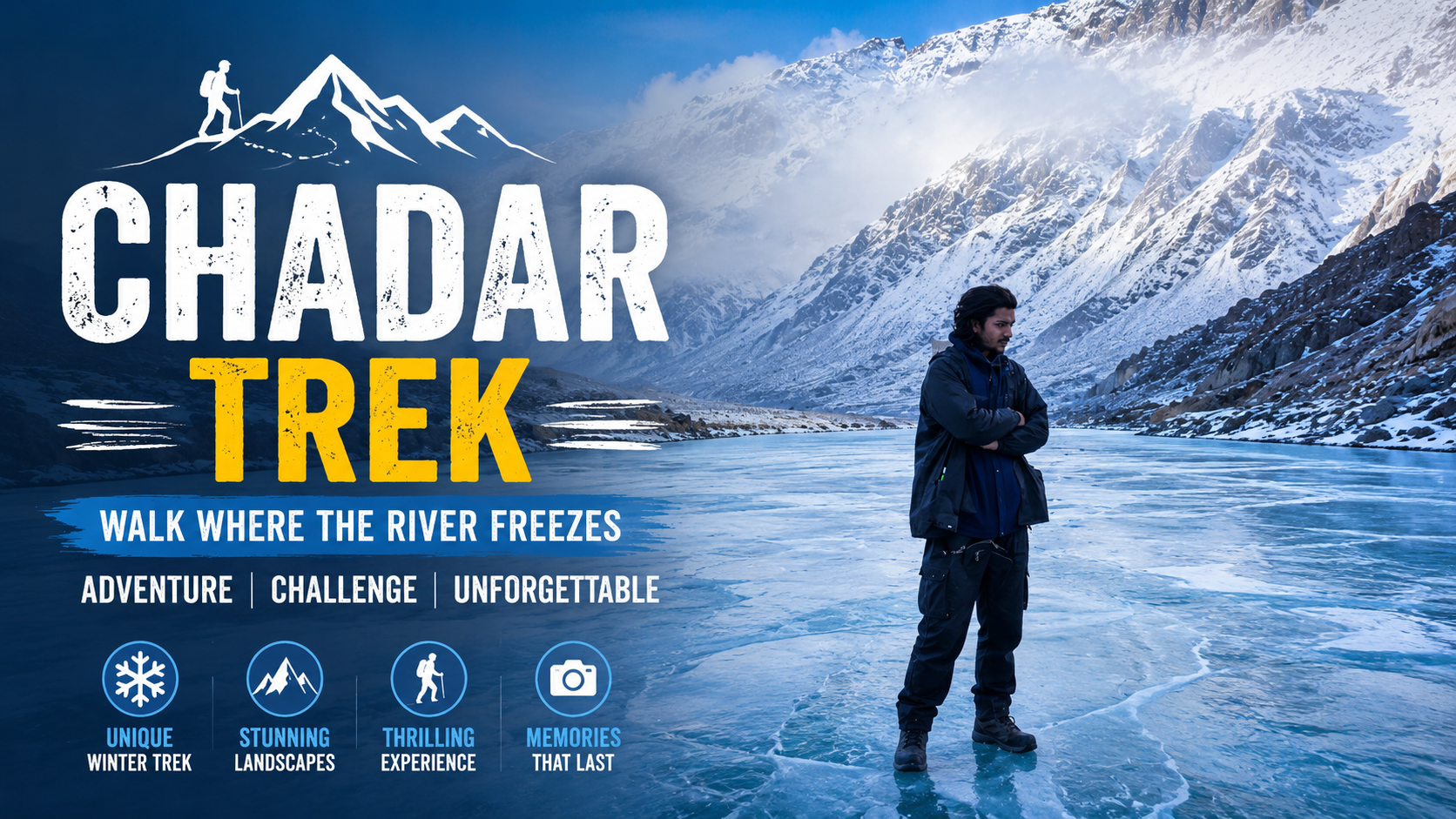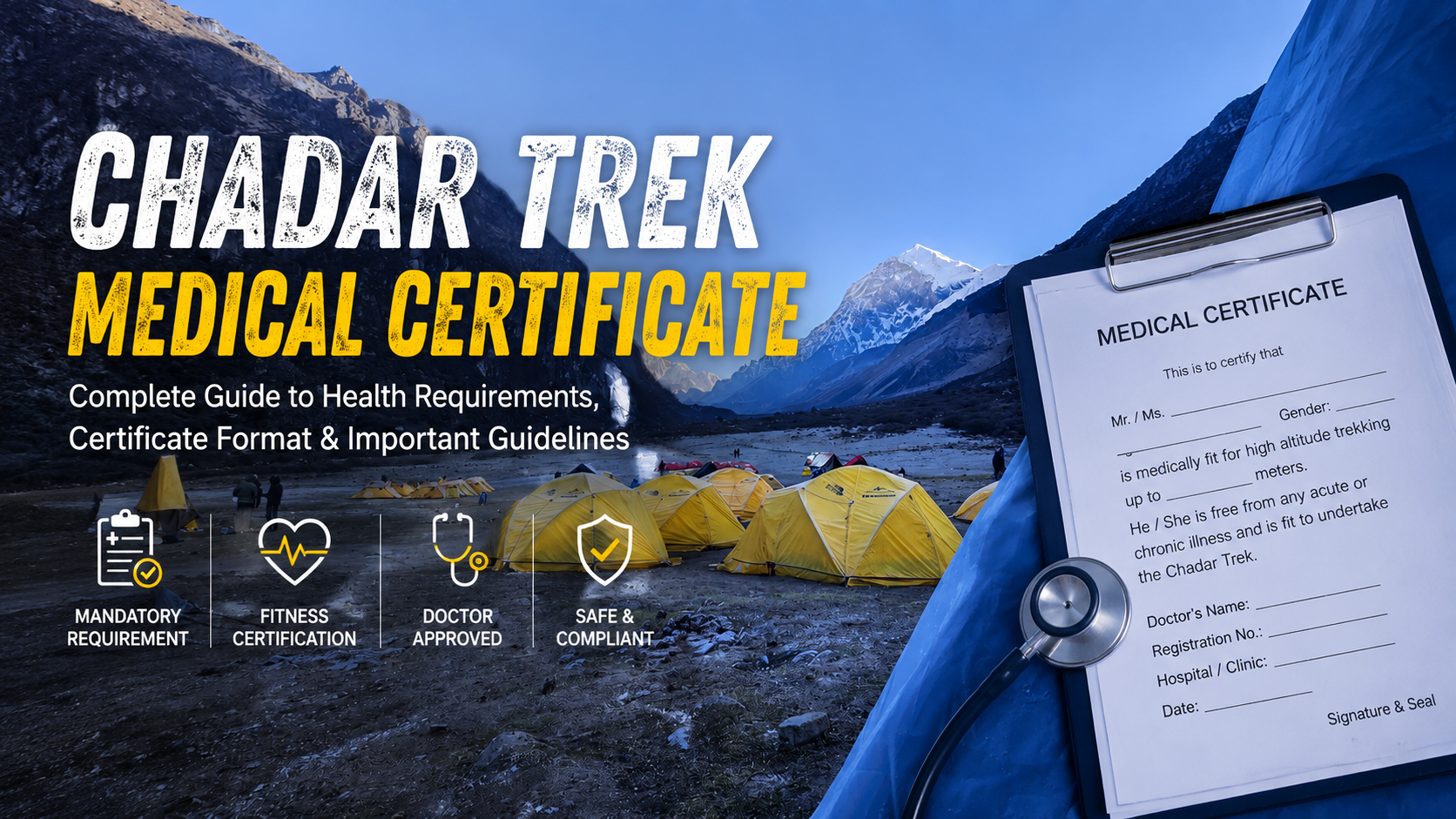
The Chadar Trek is the most thrilling winter expedition in Ladakh. Walking over the frozen Zanskar River at temperatures that plunge down to 25°C is a dream for many adventure seekers. However, because of the inhospitable terrain and extreme cold, the local administration enforces strict safety protocols.
To step onto the ice, every trekker must secure a formal chadar trek medical certificate. Without this official clearance, you will not be allowed to proceed. This guide breaks down the essential chadar trek medical fitness requirements, the clearance process, and everything you need to know to pass your assessment.
Understanding the Chadar Trek Medical Fitness Requirements
The extreme sub-zero environment and high altitude SpO2 place immense stress on your respiratory and cardiovascular systems. Because of these challenges, the All Ladakh Tour Operators Association (ALTOA) and the Leh District Administration require all participants to clear a local medical checkup.
To satisfy the chadar trek medical fitness requirements, your body must show optimal performance under high-altitude conditions. The medical team looks closely at key vital statistics, and anyone with uncontrolled chronic illnesses—such as severe asthma, advanced diabetes, or cardiovascular issues—will be filtered out for safety.
Quick Reference: Vitals and Requirements for Medical Clearance
| Health Parameter | Minimum Requirement / Target Range | Purpose for Chadar Trek Safety |
| Blood Oxygen Level ($SpO_2$) | Usually 85% or higher (after acclimatization) | Ensures your lungs are absorbing enough oxygen in thin mountain air. |
| Blood Pressure (BP) | Stable baseline (typically below 140/90 mmHg) | Prevents acute cardiovascular stress caused by cold and altitude. |
| Mandatory Acclimatization | 3 Nights ($72\text{ hours}$) resting in Leh | Naturally lowers your resting heart rate and normalizes oxygen saturation. |
| Authorized Checkup Spot | Official government medical camp in Leh for Chadar trek | Validates your fitness locally; hometown certificates are not accepted. |
| Issuing Authority | Formally stamped ALTOA medical certificate for Chadar trek | Required to clear wildlife permits, local insurance, and administrative NOCs. |
Step-by-Step Chadar Trek Medical Checkup Guidelines
Navigating the administrative clearance in Leh requires adhering to specific chadar trek medical checkup guidelines:
- Mandatory Acclimatization: You must spend your first 3 nights resting in Leh upon arrival. Doctors will not conduct your medical checkup until you have given your body sufficient time to adjust to the altitude.
- The Single-Window System: The clearance process is managed through a single-window system at the Tourist Information Centre (TIC) or a designated government medical camp in Leh for Chadar trek operations.
- Documents Needed: You must bring your flight boarding pass (proving your arrival date), original government ID proof, and passport-sized photographs to the medical camp.
Read more: Learn about Chadar Trek permits, safety rules, and local administration guidelines
The Role of the ALTOA Medical Certificate for Chadar Trek
The ALTOA medical certificate for Chadar trek clearance is a specific document issued directly by authorized government doctors in Leh, often routed through the Sonam Norbu Memorial (SNM) Hospital or the official TIC camp in.
Important Note: You cannot use a medical certificate from your hometown doctor to skip this step. The local administration only accepts clearances stamped by their authorized medical team after your mandatory acclimatization period.
During the checkup, doctors focus heavily on two primary metrics: blood pressure and oxygen saturation SpO₂ levels. If you clear these vitals, you will receive your certificate, allowing you to pay for your mandatory wildlife permits, adventure insurance, and ALTOA NOC.
How to Pass Medical Test for Chadar Trek
If you are wondering how to pass medical test for Chadar trek setups on your first try, your preparation should start months before you fly to Ladakh.
- Build Cardiovascular Endurance: Engage in consistent running, cycling, or swimming for 2 to 3 months before the trek. Building stamina ensures your lungs can efficiently process oxygen in thin air.
- Stay Hydrated: Drink plenty of fluids upon arriving in Leh. Dehydration accelerates the onset of Acute Mountain Sickness (AMS) and can artificially spike your blood pressure.
- Rest Completely During Acclimatization: Avoid rushing out for heavy sightseeing or high passes on Day 1 and Day 2. Proper rest helps lower your resting heart rate and normalizes your SpO2 levels.
- The Second Attempt Option: If your blood pressure is slightly high or your oxygen is low on the first check, doctors frequently prescribe temporary medication and ask you to return the following morning. Taking your acclimatization rest seriously gives you the best chance of passing on the second day.
Preparing your body well ahead of time ensures you clear the chadar trek medical certificate hurdle smoothly, leaving you free to experience the incredible frozen beauty of the Zanskar River safely.
Are you currently planning your fitness routine for the Chadar Trek, or do you have any specific pre-existing health concerns you’re trying to prepare for?
Read more: Discover why Chadar Trek Ladakh is considered one of India’s most extreme winter treks
Frequently Asked Questions (FAQ)
Q1: Can I bring a chadar trek medical certificate from my local hometown doctor?
A: No. While a hometown checkup is great for personal planning, the Leh administration strictly requires you to obtain the official ALTOA medical certificate for Chadar trek directly from the authorized government medical camp in Leh for Chadar trek after completing your 3-day acclimatization.
Q2: What happens if I fail the initial medical test on Day 3?
A: If your SpO₂ is too low or blood pressure is too high, doctors usually won’t reject you immediately. They will advise you to rest for an extra 24 hours, prescribe temporary altitude medication if needed, and give you a second chance to pass the checkup the following morning.
Q3: What are the primary medical checkup guidelines doctors look at during the exam?
A: The main purpose of the Chadar trek medical checkup is to assess whether a trekker is physically fit for extreme high-altitude winter conditions. During the screening process, doctors carefully examine important vitals such as resting blood pressure, pulse rate, and blood oxygen saturation (SpO₂) levels. These tests help determine if your body can safely adapt to the freezing temperatures, low oxygen environment, and demanding conditions experienced on the Chadar Trek, where temperatures can fall below -25°C.
Book the Chadar Trek now: Call/WhatsApp +91 7407248200 · Email contact@trekinsikkim.in
Read more: View the Chadar Trek product page and book online
Read more: Check the latest Chadar Trek cost breakdown, inclusions, permits, and transportation details
Read more: View the complete Chadar Trek packing list with winter gear, clothing layers, and essentials
Read more: Explore acclimatisation tips and altitude sickness prevention for Ladakh winter treks
Read more: Browse all our Ladakh treks and expeditions
About the author
Kiran Gurung is the founder of Glacier Treks & Adventure and an IMF-certified mountaineer with fifteen years of operating experience across the Indian Himalaya. Glacier Treks & Adventure is an ALTOA-registered Chadar Trek operator and has run the Chadar Trek every winter season since 2018, with a permanent Zanskari field team and a strict commitment to ALTOA safety standards. The company is based in Yuksom, West Sikkim, and is affiliated with the IMF, the Sikkim Department of Tourism, TAAS, YTDC, SAMA and ALTOA.