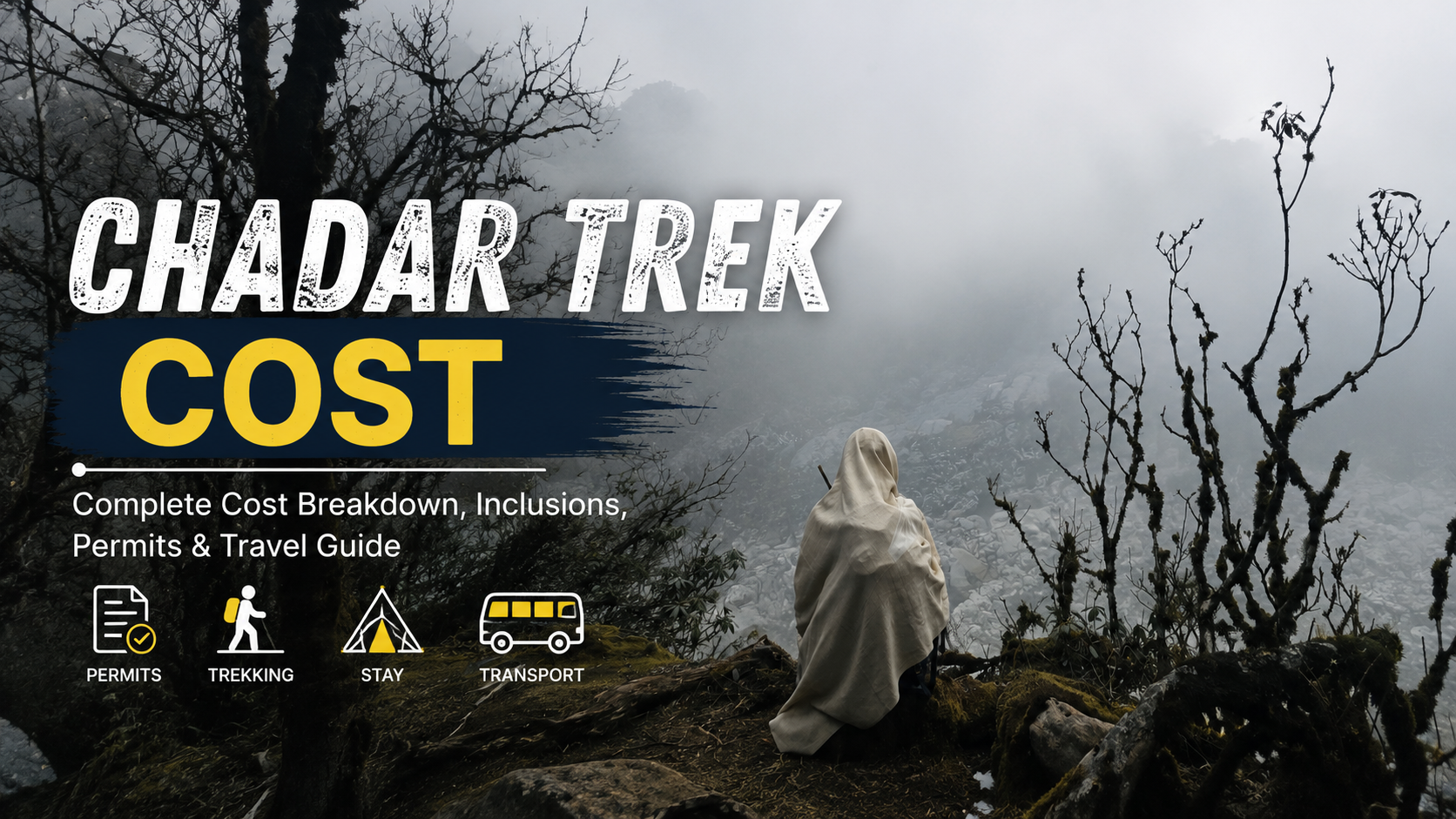
Khani sunu! I am Kiran Gurung, founder of Glacier Treks & Adventure and an IMF-certified mountaineer. For over fifteen years, my team and I have guided adventurous souls across the high-altitude landscapes of the Indian Himalayas—from our home base in Yuksom, Sikkim, all the way to the raw, rugged canyons of Ladakh.
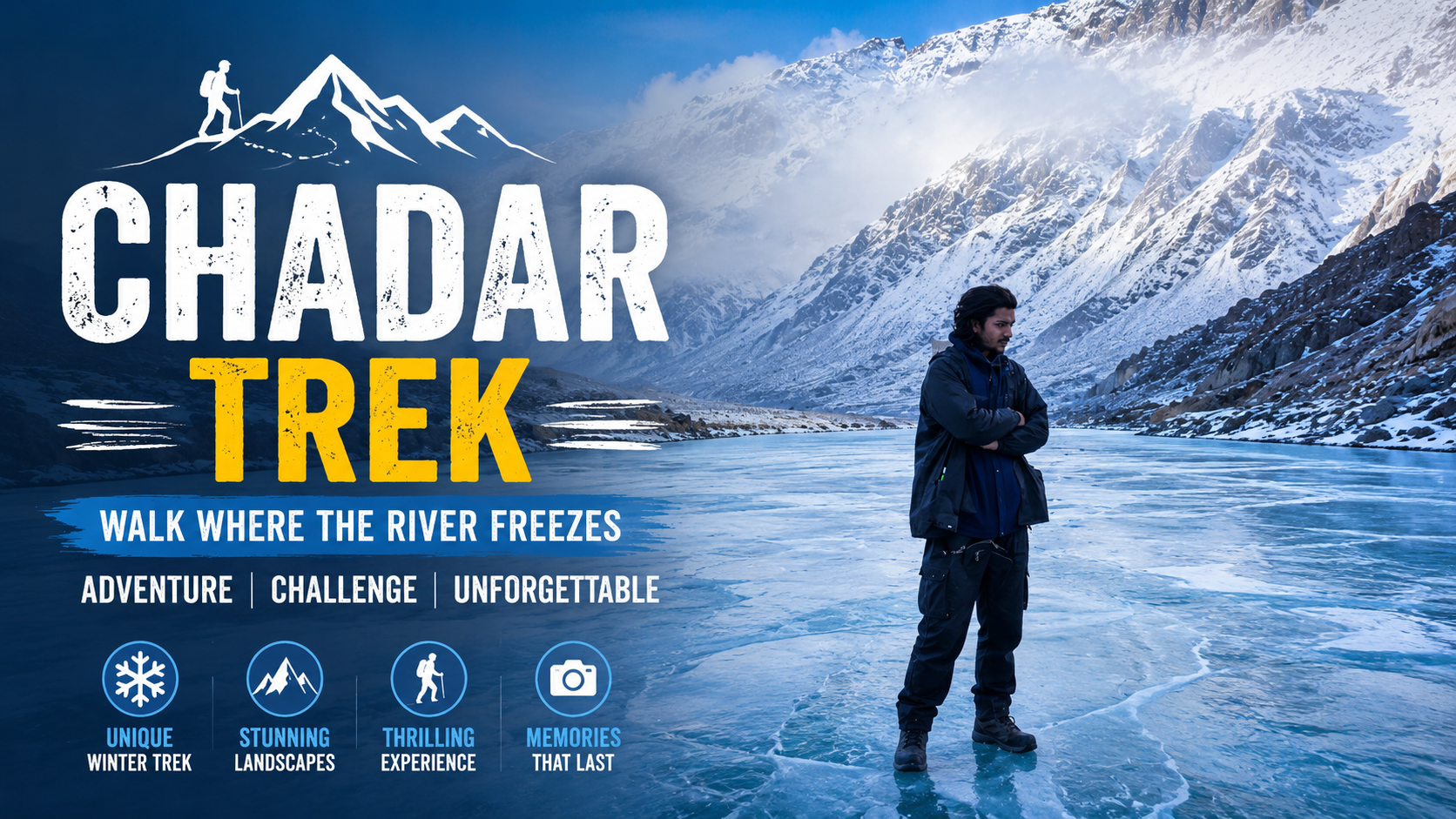
Every winter, as January rolls in, the conversation around the mountain stoves shifts from the green valleys of Sikkim to a frozen canyon in the Trans-Himalayas. Many trekkers ask me what the actual chadar trek. Besides, why does it feel more costly than another summer trek?
It’s an honest question. When you look at the typical Chadar trek package price, it sits comfortably higher than iconic summer trails like the Markha Valley or Goechala. If you are planning to step onto the ice, let me give you a transparent, ground-level breakdown of the expenses, hidden fees, and logistical realities that define this legendary journey.
The Base Line: Average Chadar Trek Package Price
When looking at a standard 8-night/9-day itinerary starting and ending in Leh, the base Chadar trek package price generally ranges between ₹50,000 to ₹60,000 per person with 8 nights and 9 days package, depending on room configurations (double vs. triple sharing) and operator scale. This baseline typically covers your stays in Leh, shared transportation to the road head at Shingra Koma, three hot meals a day on the trail, kitchen staff, moving equipment, and expert local guides.
However, the package sticker price is never the absolute final number. To truly map out your total chadar trek cost, you need to understand the mandatory regulations and operational layers that build the total budget.
The Hidden Matrix: Permits, Medicals, and Daily Charges
Unlike summer trails, where you can simply pay a minor forest entry fee, the Ladakh frozen river trek cost is strictly regulated by the All Ladakh Tour Operators Association (ALTOA) and local authorities to ensure safety in extreme conditions.
Here is what you will spend outside the standard tour package:
1. Chadar Trek Permit Fees and Medical Cost
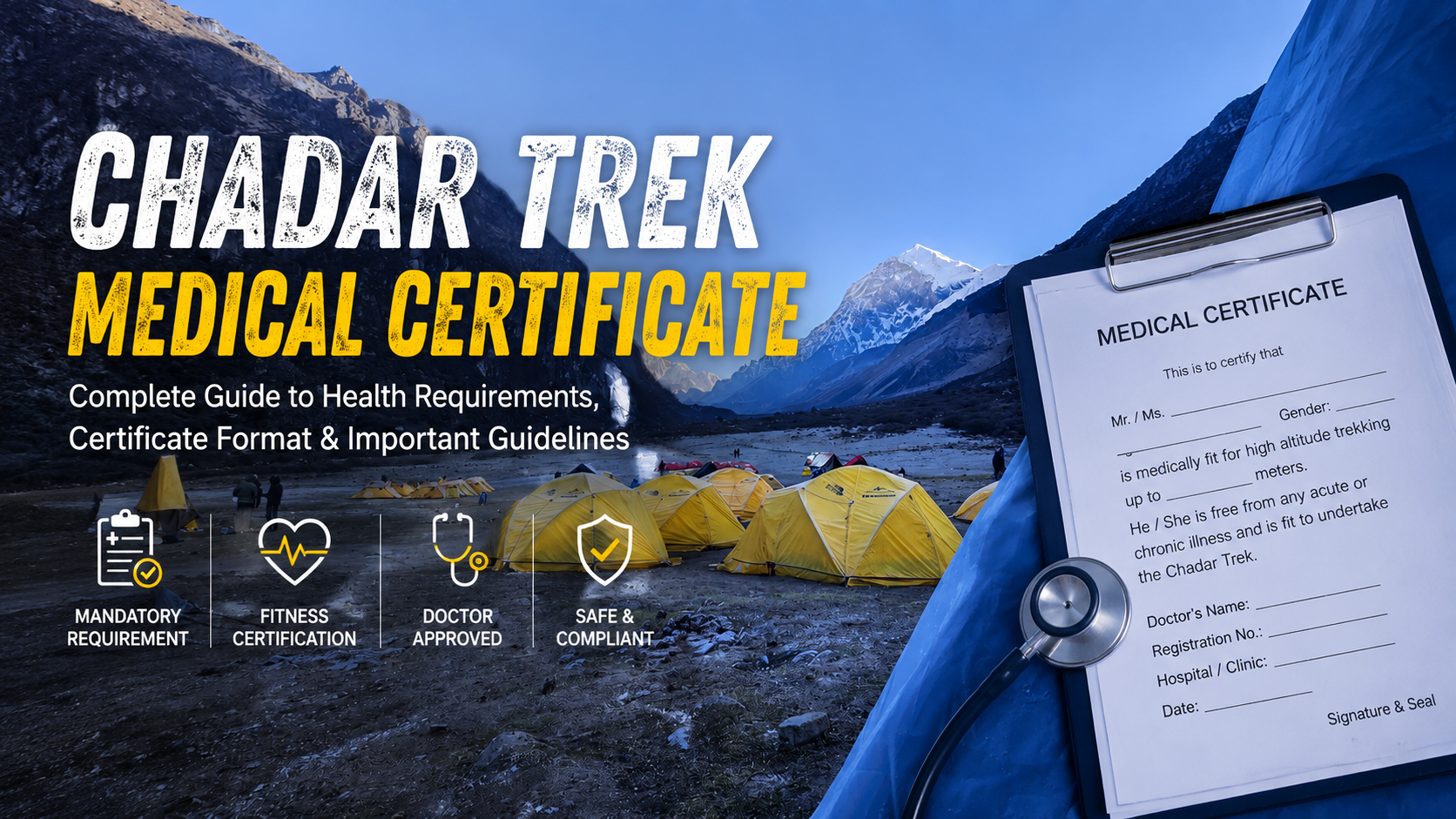
The Leh administration enforces a mandatory three-day acclimatization period followed by a strict medical clearance check at the Sonam Norboo Memorial (SNM) Hospital in Leh. You cannot set foot on the ice without an Advanced Life Support (ALS) fitness certificate, monitoring your blood pressure, ECG, and blood oxygen levels.
- Mandatory Trekking Permits & Local Approvals: Approx ₹5,000 – ₹6,500.
- Mandatory Adventure Insurance & Rescue Fund: ₹2,000 – ₹2,500.
- Medical Checkup Fee: ₹500 – ₹1,000.
- Total Regulatory Expense: This Chadar trek permit fees and medical costs come out to around ₹8,000 to ₹10,000 per trekker and must be paid on actuals to the government.
2. Chadar Trek Porter Charges per Day
On the ice, you walk 10 to 15 kilometers a day against biting dry winds. While your main luggage is pulled on traditional wooden sledges by local Zanskari porters, offloading your personal daypack can make or break your endurance.
- Porter Fees: If you choose to offload your personal backpack, expect to pay a Chadar trek porter charges per day fee of ₹1,000 to ₹1,200. For a 5-day walking itinerary, this adds about ₹5,000 – ₹6,000 to your out-of-pocket expenses.
Comprehensive Budget Breakdown (2026 Estimates)
To help you visualize the complete financial picture, here is a detailed breakdown of the total budget for Chadar trek from Delhi or other major Indian metros. This reflects the real costs you will incur on the ground in 2026:
| Expense Category | Estimated Cost (INR) | Operational Scope / Notes |
| Base Tour Package | ₹20,000 – ₹35,000 | 9 Days (Leh to Leh), central-heated stays, meals, tents, and guides. |
| Mandatory Permits & Medical | ₹8,000 – ₹10,000 | Government fees covering the Chadar trek permit fees and medical cost. |
| Return Flights (Delhi to Leh) | ₹14,000 – ₹22,000 | Part of the overall budget for Chadar trek from Delhi. Winter flights fluctuate heavily. |
| Extreme Winter Gear Rental | ₹4,000 – ₹6,000 | -20°C down jackets, high-altitude sleeping bags, and local gumboots. |
| Backpack Offloading (Optional) | ₹5,000 – ₹6,000 | Calculated based on standard Chadar trek porter charges per day for 5 days. |
| Buffer Days / Personal Expenses | ₹5,000 – ₹7,000 | Contingency funds for flight delays, local meals in Leh, and tips. |
| TOTAL ESTIMATED BUDGET | ₹50,000 – ₹86,000 | Comprehensive end-to-end trip cost per person. |
Read more: Discover why Chadar Trek Ladakh is considered one of India’s most extreme winter treks
Why Is Chadar Pricier Than Summer Treks?
As an operator, I often see people comparing the total chadar trek cost to summer classics. It is unfair to measure them on the same scale. The Zanskar canyon in January is an extreme environment, and the costs reflect the sheer human effort required to keep you safe.
- The Sledge Economy: In summer, we use horses and mules to carry kitchen gear, tents, and ration boxes. In winter, animals cannot walk on slippery, fragile sheets of ice. Every single egg, gas cylinder, and canvas tent must be pulled by hand on wooden sledges by Zanskari crew members. This requires double the manpower, which naturally bumps up the Chadar trek package price.
- The Premium on Warmth: A summer trek requires basic insulation. The Ladakh frozen river trek cost includes specialized gear to withstand night temperatures dropping to -25°C or -30°C at the Nerak campsite. High-grade, double-layered alpine tents, specialized sub-zero sleeping bags, and high-pressure kerosene stoves are expensive to procure, maintain, and transport.
- Strict Regulatory Caps: To preserve the fragile winter ecosystem and avoid overcrowding accidents, ALTOA restricts batch sizes to a maximum of 12 trekkers per group. Lower volume per batch means fixed operational overheads (like guides, cooks, and emergency oxygen supplies) are distributed among fewer people, raising the individual price point.
Here is a highly optimized, contextually aligned FAQ section to add to your blog post. It seamlessly integrates the five difficulty-focused secondary keywords while maintaining the expert, local voice of your guide persona, Kiran Gurung.
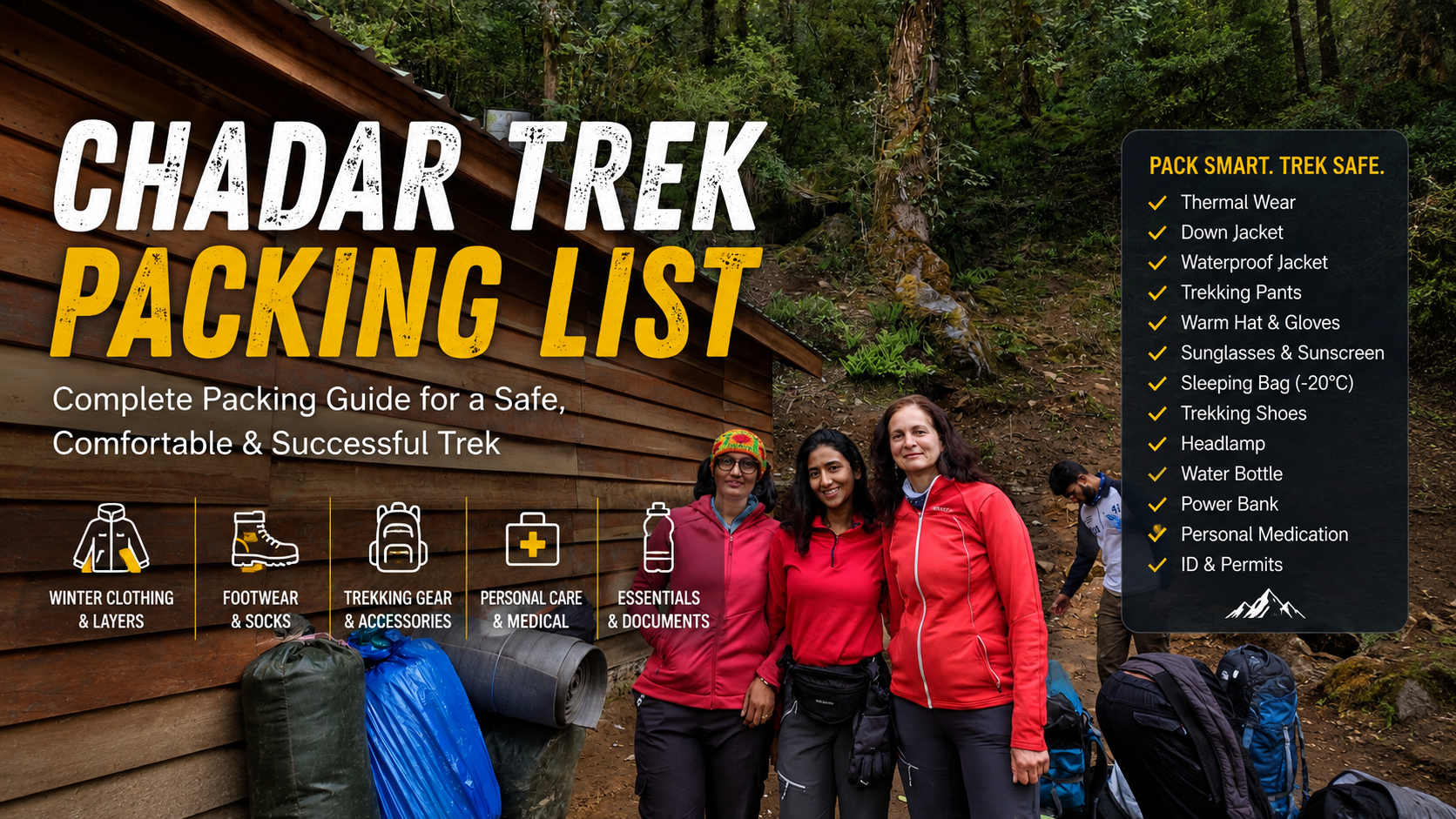
Read more: View the complete Chadar Trek packing list with winter gear, clothing layers, and essentials
Frequently Asked Questions: Chadar Trek Difficulty & Preparation
Q1. Is the Chadar trek for beginners?
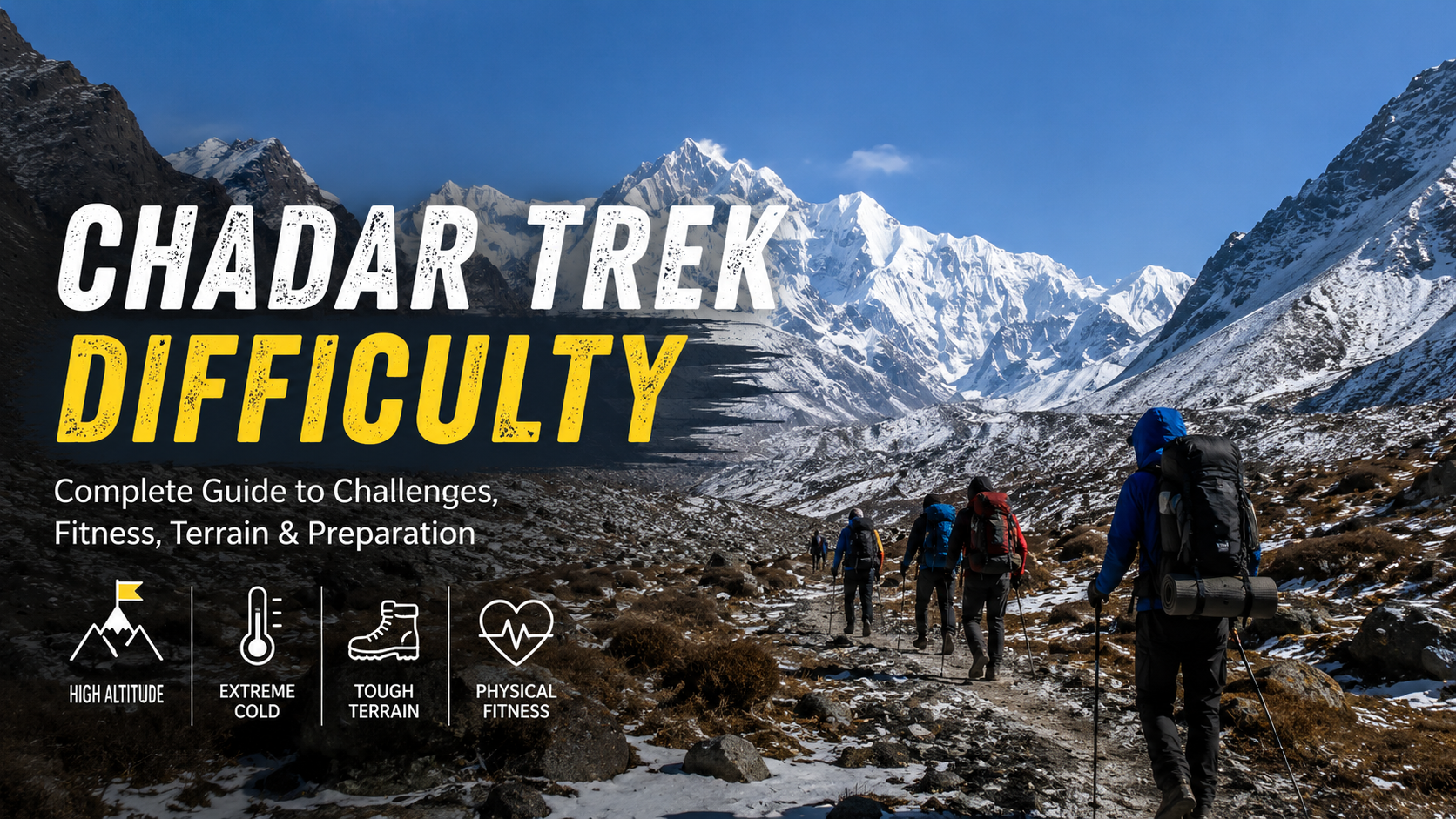
Kiran: Honestly, I do not recommend it as a first-time high-altitude experience. While the terrain itself is relatively flat because you are walking on a riverbed, the environmental challenges are extreme. If you have done standard summer treks like Goechala or Markha Valley, you can handle the terrain. Still, absolute beginners must go through rigorous preparation to sustain the sub-zero reality of Zanskar.
Q2. What is the average Chadar trek temperature at night?
Kiran: This is where the real endurance challenge of the Chadar Trek begins. During the daytime, the temperature usually ranges between -5°C and -10°C when the sun is visible. But the Chadar trek temperature at night becomes far more extreme, often dropping to -25°C to -35°C, especially near deep canyon sections and remote campsites like Nerak. Because of the severe Chadar trek temperature at night, ordinary winter clothing is simply not enough. Trekkers need expedition-grade winter gear, proper four-layer insulation, heavy down jackets, and extreme cold-weather sleeping bags to stay safe and sleep comfortably inside the tents.
Q3. How dangerous is the frozen river trek realistically?
Kiran: The Chadar (ice sheet) is a dynamic, living entity. It changes every single hour. A path that was rock-solid in the morning can crack or turn into slush by afternoon. When asking how dangerous is the frozen river trek, the primary risks are slipping on transparent black ice, getting frostnip, or accidentally stepping on thin ice and getting your boots wet. This is why you must strictly follow the footsteps of your Zanskari guide, who can “read” the ice by the sound it makes under a trekking pole.
Q4. What are the official acclimatization rules for Chadar trek?
Kiran: Because you land directly in Leh at an altitude of over $11,000\text{ feet}$ in the dead of winter, the shock to your respiratory system is real. The acclimatization rules for Chadar trek are legally mandated by the Leh administration (ALTOA): you must spend a minimum of three full days resting in Leh before you are even permitted to take your medical exam. Skipping this or rushing straight to the trail will almost certainly result in high-altitude sickness.
Q5. What kind of Chadar trek fitness preparation and training do I need?
Kiran: You should start your Chadar trek fitness preparation and training at least 6–8 weeks before your flight. Focus heavily on cardiovascular endurance and core stability. I tell my trekkers to aim for a continuous 5 km run in under 30 minutes, combined with deep squats and planks. Walking on slippery ice forces your core and leg stabilizers to work twice as hard, so balance and stamina are your best assets on the ice.
Read more: Discover why Chadar Trek Ladakh is considered one of India’s most extreme winter treks [Internal link → /article/chadar-trek-ladakh-experience]
Ready to Book Your Chadar Trek 2027?
The Chadar Trek is one of those experiences that is genuinely once-in-a-lifetime — partly because of how rare frozen-river walking is anywhere, and partly because climate change is shortening the chadar window every decade. The river that froze for 8 weeks in 1980 freezes for roughly 5 weeks now, and the trend is one-way. If the Chadar is on your list, the time to do it is sooner rather than later. Our 2027 batches open for booking in October 2026.
Book the Chadar Trek now: Call/WhatsApp +91 7407248200 · Email contact@trekinsikkim.in
Read more: View the Chadar Trek product page and book online
Read more: Browse essential trekking gear recommendations for extreme winter expeditions in Ladakh
Read more: Check confirmed Chadar Trek dates for 2026 departures, batch schedules, and booking updates
Read more: Explore acclimatisation tips and altitude sickness prevention for Ladakh winter treks
Read more: Browse all our Ladakh treks and expeditions
About the author
Kiran Gurung is the founder of Glacier Treks & Adventure and an IMF-certified mountaineer with fifteen years of operating experience across the Indian Himalaya. Glacier Treks & Adventure is an ALTOA-registered Chadar Trek operator and has run the Chadar Trek every winter season since 2018, with a permanent Zanskari field team and a strict commitment to ALTOA safety standards. The company is based in Yuksom, West Sikkim, and is affiliated with the IMF, the Sikkim Department of Tourism, TAAS, YTDC, SAMA and ALTOA.