Planning a trek in Ladakh involves more than choosing the right shoes, arranging permits and preparing your body for high altitude. There is another practical question that many trekkers hesitate to ask: what happens when you need a toilet, want to wash yourself or manage personal hygiene during several days on the trail?
Understanding Markha Valley trek toilet facilities before departure can make your experience much more comfortable, especially if this is your first multi-day Himalayan trek.
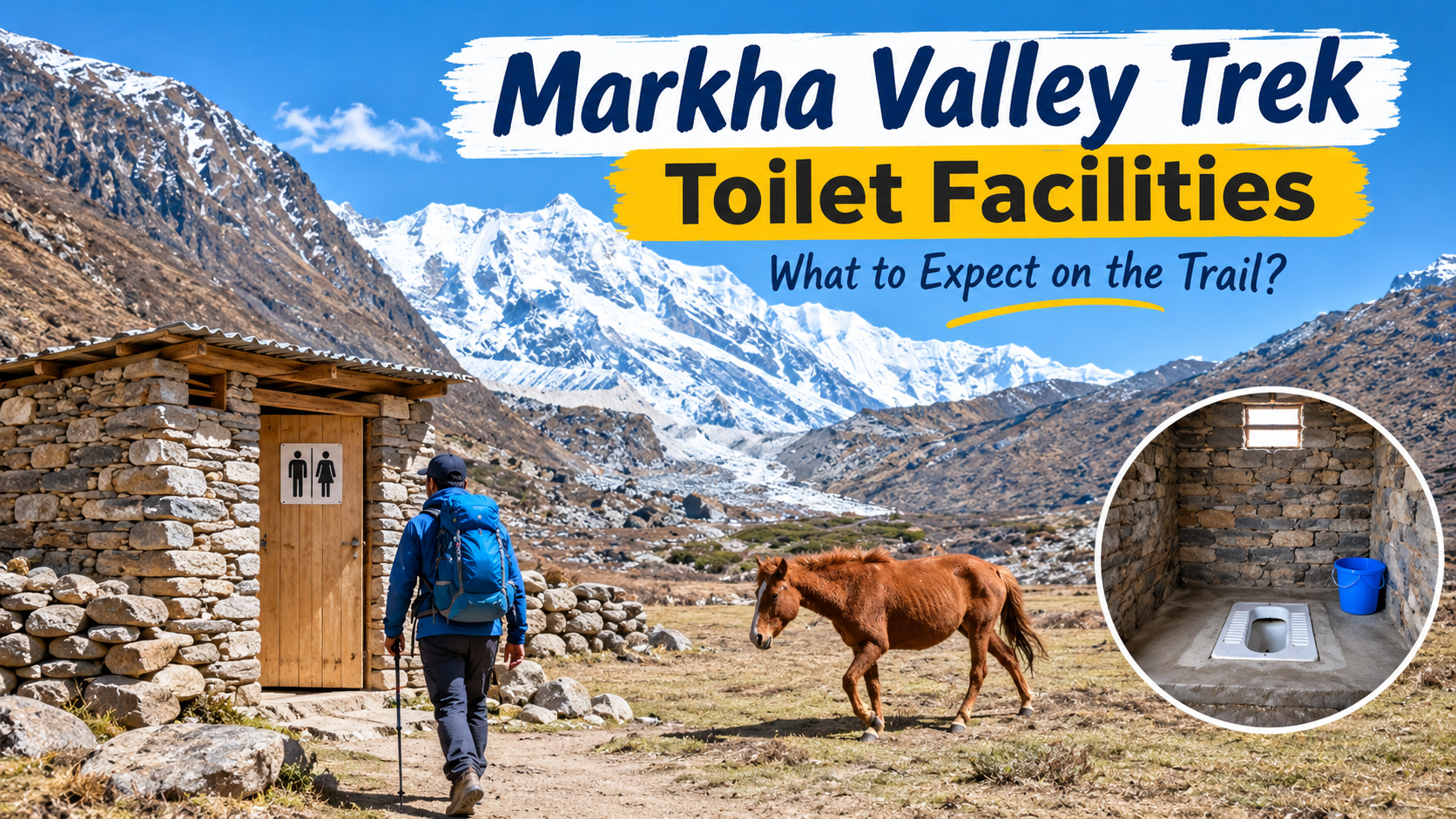
The Markha Valley route passes through traditional Ladakhi villages, remote settlements and high-altitude camping areas. Facilities are basic and vary according to the overnight location. You should not expect hotel-style bathrooms, running showers or Western-style flushing toilets throughout the journey.
For women, first-time trekkers and anyone concerned about maintaining personal hygiene, a little preparation makes a significant difference.
In this guide, Glacier Treks & Adventure explains what to expect from toilets and washing arrangements, how to manage hygiene during walking hours, what women should carry and how to prepare for the different facilities along the route.
1. What Toilet Facilities Can You Expect on the Markha Valley Trek?
The Markha Valley Trek is a remote Himalayan trekking experience rather than a conventional holiday with hotel facilities.
Toilets generally fall into three categories:
- Basic village toilets.
- Dry-pit or composting toilets.
- Temporary toilet arrangements at high-altitude camps.
The facilities depend on the location, season, availability of local accommodation and the arrangements made for your particular departure.
A typical toilet may have a simple structure, limited water availability and shared access. Some facilities use a pit system rather than a conventional flushing arrangement.
It is important to understand that not every overnight stop has identical facilities.
Village toilets and homestay facilities
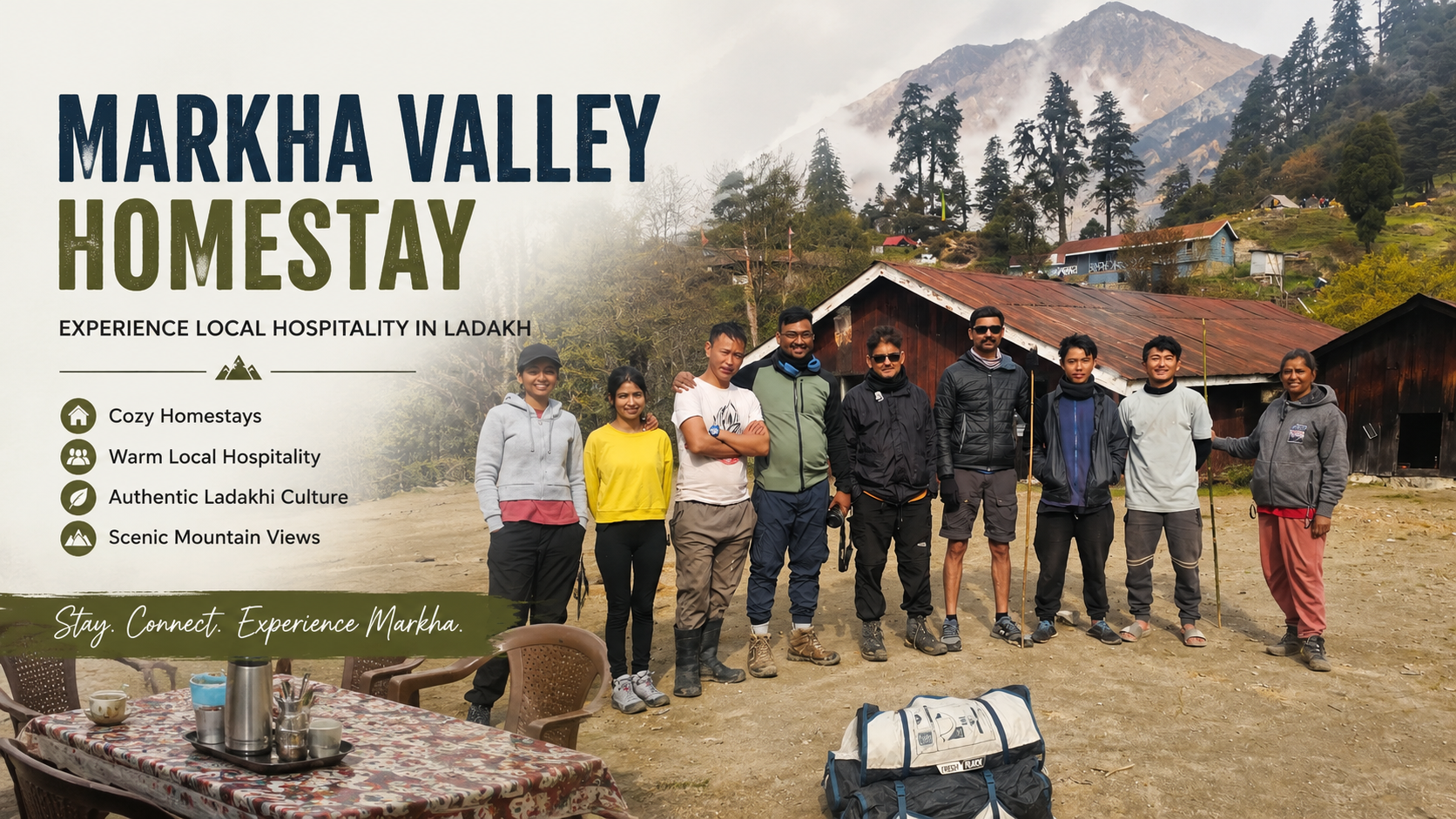
Villages such as Skiu, Markha and Hankar have traditional family homes and seasonal accommodation facilities.
When staying in a homestay, you may use a basic toilet outside the main living area. These are generally shared facilities rather than private attached bathrooms.
You should prepare for:
- Basic dry-pit or composting toilet arrangements.
- Limited water for washing.
- Shared bathroom access.
- Simple facilities without modern plumbing.
- Little or no provision for hot showers.
Always ask your trek coordinator about the accommodation and toilet arrangements for your actual departure.
Toilet arrangements at high-altitude camps
The arrangements become more basic when the route moves away from permanent settlements.
Nimaling is a high-altitude seasonal camping area where accommodation generally involves tents rather than traditional village homes.
Depending on the operating arrangements, temporary toilet facilities may be established at campsites. Some supported camping departures use dedicated toilet tents and pit or trench arrangements.
However, trekkers should not assume that every campsite has an identical toilet setup or that a private toilet tent is guaranteed.
Before departure, ask your operator whether the particular itinerary includes dedicated toilet tents, shared facilities or another arrangement.
2. How Are Toilet Facilities Different Between Villages and Camps?
Understanding the difference between village accommodation and camping arrangements helps you prepare properly.
| Facility | Village homestay | High-altitude camp |
|---|---|---|
| Toilet type | Basic village toilet, often dry-pit | Temporary facility, depending on camp setup |
| Privacy | Shared facilities | Depends on toilet tent arrangements |
| Running water | Limited or unavailable | Usually very limited |
| Handwashing | May require carried water | Carry your own supplies |
| Shower | Generally unavailable | Generally unavailable |
| Hot water | Sometimes available by request | Not guaranteed |
The main difference is that village accommodation uses existing local facilities, while high-altitude camps depend on temporary arrangements.
For a more detailed understanding of the overnight experience, read our guide to Markha Valley Homestays.
3. What Are the Washing Facilities Like During the Trek?
One of the biggest adjustments on the Markha Valley Trek is managing personal cleanliness without regular showers.
Water is a limited resource in this high-altitude cold desert environment. You may find an opportunity to request a bucket of warm water at some village homestays, sometimes for an additional charge.
However, this should not be treated as a guaranteed daily service.
There are several practical ways to maintain hygiene.
Sponge bathing instead of taking a shower
A sponge bath is one of the easiest ways to stay comfortable when showers are unavailable.
You can use a small amount of warm water and a clean cloth to wash your face, neck, underarms and other areas.
Keep the following in mind:
- Use a quick-dry towel.
- Carry a small washing cloth.
- Use biodegradable soap sparingly.
- Avoid washing directly in streams or rivers.
- Change into clean, dry clothing after washing.
Keeping yourself clean during cold weather
At higher elevations, temperatures can drop considerably, particularly in the evening and early morning.
Avoid getting your entire body wet when the weather is cold. Instead, wash smaller areas at a time and change into warm clothing immediately.
A fresh base layer and clean socks can make a considerable difference to your comfort.
Can you wash your clothes?
Do not plan on doing regular laundry during the trek.
Water availability, drying conditions and low temperatures make washing clothes inconvenient. Clothes may also remain damp for a long time.
Carry sufficient trekking clothes and use quick-drying fabrics so that you can manage without washing everything daily.
Read More: Markha Valley Trek Camp Night Facitities
4. Markha Valley Trek Facilities for Women: What Should Female Trekkers Know?
Women can complete the Markha Valley Trek, but personal hygiene and privacy deserve additional planning.
The route passes through remote villages and high-altitude camping areas, where bathroom arrangements are different from those in hotels.
Female trekkers should discuss their requirements with the operator before confirming their booking.
Toilet privacy and changing clothes
Most village toilets are shared rather than attached to private rooms.
At campsites, privacy depends on the temporary toilet arrangements provided by the operating team.
Consider carrying:
- A lightweight changing poncho.
- A comfortable pair of trekking trousers.
- A separate set of innerwear.
- A small waterproof pouch.
- A headlamp for nighttime toilet visits.
A changing poncho can be particularly useful when you need additional privacy while changing clothes.
Menstrual hygiene during the trek
Having your menstrual period during a multi-day trek does not automatically mean you cannot participate.
However, preparation is essential because sanitary supplies and disposal facilities may be limited.
Carry enough menstrual products for the entire trek, plus additional supplies in case your journey takes longer than expected.
Useful items include:
- Sanitary pads or tampons, depending on your preference.
- Menstrual cup, if you already use one comfortably.
- Unscented intimate hygiene supplies.
- Sealable disposal bags.
- Extra underwear.
- Hand sanitiser.
- Small waterproof storage pouches.
Do not dispose of sanitary pads, tampons or wipes in toilets, pits, streams or along the trekking trail unless the operator has specifically provided an appropriate disposal system.
Carry used products in sealed bags and follow the waste-management instructions given by your trek leader.
Is a menstrual cup suitable for the Markha Valley Trek?
A menstrual cup can be convenient for some experienced users because it reduces the number of disposable products required.
However, cleaning it in remote conditions requires careful hand hygiene and access to suitable water.
If you have never used a menstrual cup before, avoid making your first attempt during a remote trek.
Choose the menstrual product you are already comfortable using and plan how you will maintain hygiene throughout the journey.
Should women ask for female trek staff?
If having a female trek staff member would make you more comfortable, discuss this during booking.
You can also request clarification about:
- Availability of female guides or support staff.
- Shared or separate toilet arrangements.
- Privacy at overnight camps.
- How personal hygiene waste will be managed.
- Where washing water will be available.
Female staff availability should be confirmed for the actual departure rather than assumed.
5. What Should You Carry for Toilet and Personal Hygiene?
Packing the correct hygiene equipment can prevent unnecessary discomfort.
You do not need a large bathroom kit. A compact waterproof pouch containing essential supplies is usually sufficient.
Essential toilet and washing kit
| Item | Why you need it |
|---|---|
| Toilet paper | Basic toilet arrangements may not provide it |
| Hand sanitiser | Useful when running water is unavailable |
| Quick-dry towel | Helps with sponge bathing |
| Biodegradable soap | For limited personal washing |
| Toothbrush and toothpaste | Daily oral hygiene |
| Wet wipes | Useful when water is limited; pack them out |
| Small waste bags | Carry used hygiene materials |
| Spare underwear | Maintain personal cleanliness |
| Menstrual products | Essential for women who menstruate |
| Waterproof pouch | Keeps hygiene supplies dry |
| Headlamp | Helps with nighttime toilet visits |
My recommended hygiene packing tips
1. Keep toilet supplies separate.
Use a small waterproof pouch so that your toilet paper, sanitiser and waste bags are easy to access.
2. Carry additional disposal bags.
There may not be suitable waste bins at remote campsites. Never leave sanitary products, plastic packaging or wipes behind.
3. Avoid carrying unnecessary liquids.
Small refillable bottles are more practical than full-size toiletries.
4. Choose quick-drying products.
A quick-dry towel and moisture-wicking clothing are more useful than heavy cotton materials.
5. Keep your hands clean.
Use soap and water when available. Hand sanitiser is useful when proper handwashing facilities are unavailable, provided your hands are not visibly dirty.
6. How Do You Manage Toilet Needs During Long Walking Days?
Another concern for trekkers is finding a toilet while walking between villages.
Unlike a conventional road trip, the Markha Valley trail does not have public toilets at regular intervals.
Some village settlements or seasonal facilities may offer basic toilet access, but there is no guarantee that a toilet will be available whenever you need one.
Here are some practical recommendations.
Use available facilities before starting the day’s walk
Make use of the facilities at your overnight accommodation before leaving.
Inform your trek leader if you need an additional stop during the walking day.
Never use streams as toilets or washing areas
The Markha River and its smaller water sources are important to the local communities, wildlife and surrounding environment.
Avoid contaminating water sources with human waste, soap or hygiene products.
Follow responsible waste disposal practices
If no toilet is available, follow your guide’s instructions and the local protected-area rules for human waste management.
Use designated facilities wherever possible. Where an approved backcountry system is necessary, waste should be managed according to the applicable local regulations.
Never leave toilet paper, sanitary products or wet wipes behind.
7. How Does Glacier Treks & Adventure Take Responsibility for Trekker Hygiene?
A responsible trekking experience is not only about arranging accommodation and meals. It also involves preparing trekkers for the realities of the route.
At Glacier Treks & Adventure, we believe that clear information before departure is important, especially for first-time trekkers and women travelling in remote mountain regions.
Our approach includes the following responsibilities.
1. Explaining actual facilities before departure
We encourage trekkers to understand the difference between village accommodation and high-altitude camping.
Our team provides practical information about the expected accommodation, toilet facilities and washing arrangements.
We do not want trekkers to arrive expecting hotel-style bathrooms in remote mountain settlements.
2. Coordinating with local accommodation providers
The Markha Valley route depends on local village accommodation and seasonal camping arrangements.
Our team coordinates with the relevant accommodation providers and local staff according to the selected itinerary.
3. Providing pre-trek hygiene guidance
Trekkers should know what personal hygiene equipment to carry before reaching Leh.
We help participants prepare their packing lists, including toilet paper, quick-dry towels, hand sanitiser, menstrual products and waste bags.
4. Encouraging responsible waste management
We encourage trekkers to follow Leave No Trace principles.
All participants should carry their personal waste back to designated disposal facilities and avoid polluting local water sources or damaging the natural environment.
5. Listening to individual requirements
If you have particular privacy or hygiene requirements, inform our team before booking.
This allows us to discuss realistic arrangements and check what can be accommodated on the selected departure.
We do not promise facilities that cannot be verified on the ground.
Our aim is simple: help you enjoy trekking in Ladakh with realistic expectations, proper preparation and responsible mountain practices.
8. Markha Valley Trek Package Details with Glacier Treks & Adventure
The Markha Valley Trek is one of the most rewarding cultural trekking experiences in Ladakh.
It takes you through traditional villages, dramatic mountain landscapes, river valleys and high-altitude pastures.
The journey also offers an opportunity to experience local Ladakhi hospitality and understand how communities live in this remote Himalayan environment.
Our listed Markha Valley Trek package currently provides the following details:
| Package information | Details |
|---|---|
| Destination | Ladakh, India |
| Trek duration | 9 Nights / 10 Days |
| Trekking distance | Approximately 90 km |
| Highest altitude | Approximately 5,400 metres |
| Best season | June to October |
| Difficulty | Moderate to Difficult |
| Indian trekker price | ₹40,000 (listed price) |
| International trekker price | $900 (listed price) |
Prices, dates, inclusions and accommodation arrangements should be reconfirmed with our team before booking. Toilet and washing facilities depend on the final operating itinerary.
What does the trekking arrangement include?
The published package information describes arrangements covering:
- Experienced trekking guides and support staff.
- Village and tented accommodation according to the itinerary.
- Meals during the trekking programme.
- Required route-related permits and fees as applicable.
- Transportation arrangements.
- Camping equipment for applicable camping nights.
Please request the latest inclusion and exclusion list before confirming your booking.
Explore the Markha Valley Trek Package to check the itinerary and discuss your preferred departure.
9. Frequently Asked Questions About Markha Valley Trek Toilet Facilities
Q1. Are there proper toilet facilities on the Markha Valley Trek?
Toilet facilities are basic and vary between villages and campsites. Trekkers may encounter dry-pit or composting toilets, shared village facilities and temporary campsite arrangements. Do not expect Western-style flushing toilets throughout the route.
Q2. Are Western-style toilets available on the Markha Valley Trek?
You should not depend on Western-style flushing toilets. Most remote accommodation and camping locations have simpler toilet arrangements.
Q3. Can I take a shower during the Markha Valley Trek?
Regular showers are generally unavailable. Some village homestays may provide a bucket of warm water on request, sometimes for an additional charge. Availability is not guaranteed.
Q4. Are there separate toilet facilities for women?
Separate facilities should not be assumed at every overnight stop. Toilet arrangements depend on the village accommodation or campsite. Women should discuss privacy requirements with the operator before departure.
Q5. Is the Markha Valley Trek suitable for female solo travellers?
Women can participate in organised Markha Valley trekking groups. However, they should discuss accommodation sharing, toilet privacy, female staff availability and personal hygiene arrangements with the operator before booking.
Q6. What should women carry during the Markha Valley Trek?
Women should carry sufficient menstrual products, disposal bags, spare underwear, hand sanitiser, a quick-dry towel and a waterproof personal hygiene pouch.
Q7. Can I wash my clothes during the Markha Valley Trek?
Regular laundry facilities are not guaranteed. Carry enough quick-drying trekking clothes and avoid depending on daily washing arrangements.
Q8. Are toilet tents available at Nimaling?
Nimaling is a seasonal high-altitude camping area. Toilet arrangements depend on the campsite and operating team. Ask your operator whether a dedicated toilet tent is included in your particular departure.
Q9. Should I carry toilet paper and wet wipes?
Yes. Carry toilet paper and a few suitable wipes for personal hygiene. Pack all used paper and wipes in sealed waste bags and dispose of them through the designated waste-management arrangements.
Q10. How can I book the Markha Valley Trek with Glacier Treks & Adventure?
Visit our Markha Valley Trek package page or contact our team directly by phone or WhatsApp. We can help you understand the itinerary, accommodation arrangements, toilet facilities and preparation requirements before booking.
10. Plan Your Markha Valley Trek with Realistic Expectations
The Markha Valley Trek is not a hotel-based holiday. It is a journey through remote Ladakhi villages, high-altitude landscapes and traditional mountain communities.
Toilet facilities, bathing arrangements and personal privacy will be different from what you experience in cities.
But with the right preparation, suitable hygiene supplies and clear information from your trekking operator, these challenges can be managed.
Whether you are travelling alone, trekking with friends or joining your first high-altitude adventure, understanding the facilities beforehand helps you feel more confident.
At Glacier Treks & Adventure, we encourage every participant to ask questions before departure rather than discover important details halfway through the trail.
Ready to explore Ladakh?
Visit our Markha Valley Trek package page or contact our team to discuss your trekking plans.
Contact Us
Phone / WhatsApp: +91 7407248200
Email: contact@trekinsikkim.in
Address: Yuksom Bazar Main Road, Near Hotel Yangri Gang, West Sikkim, Pin No. 737113, India.
Website: https://trekinsikkim.in/
Read More: Markha Valley Trek: Complete Trekking Guide