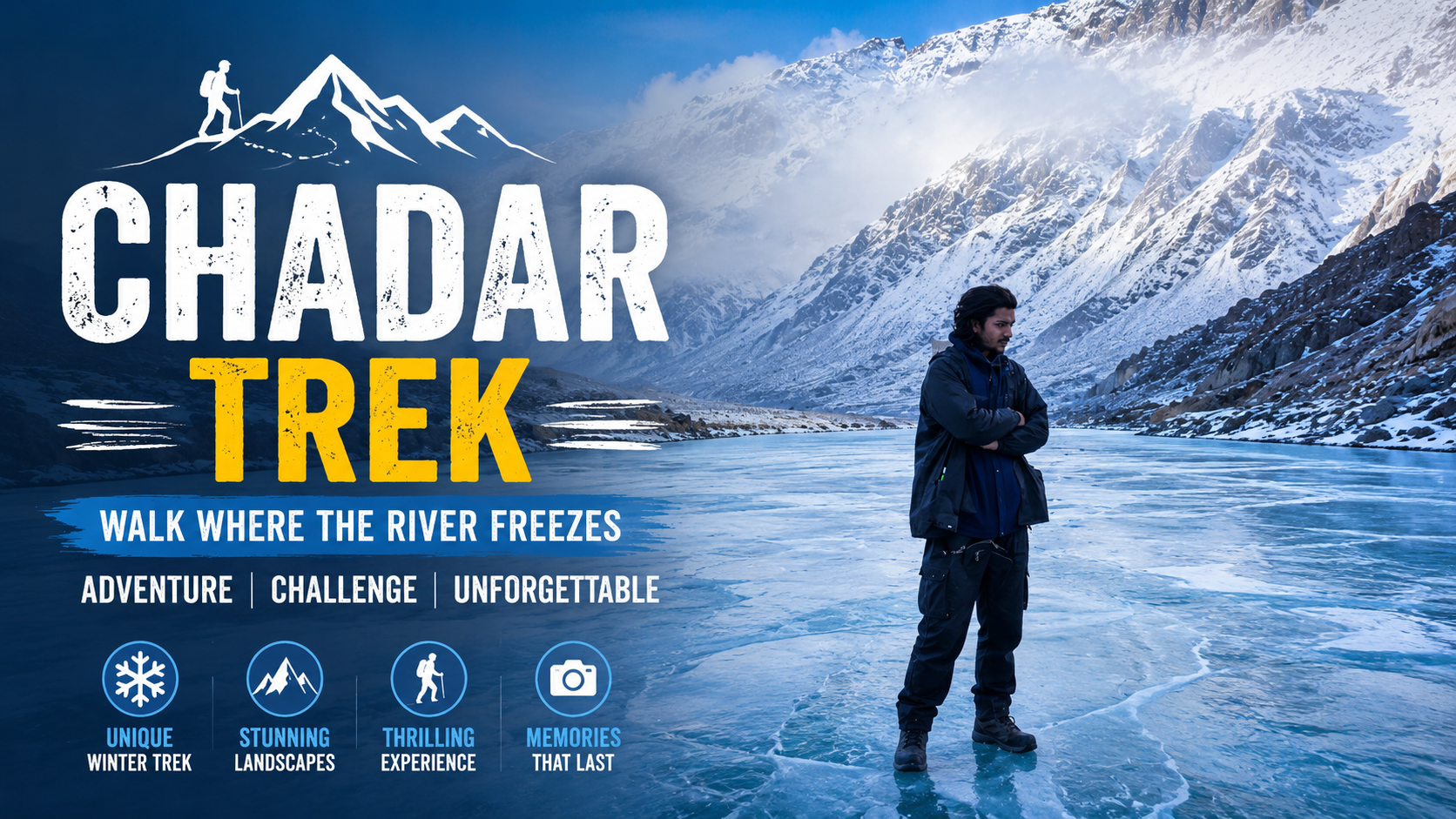
Have you ever wondered what it feels like to walk on a living, breathing sheet of glass, knowing that just a few inches beneath your boots lies a roaring, freezing Himalayan river?
For most outdoor enthusiasts, winter trekking means navigating snow-covered ridges or passing through pine forests heavy with frost. But deep in the stark, wind-carved canyons of Ladakh, there is an expedition that completely redefines the boundaries of human endurance.
As a local guide and the founder of Trek In Sikkim, I have spent my entire life leading expeditions through some of the most unforgiving terrains in the Himalayas. People often ask me how the lush, vertical ridges of our Eastern Himalayan trails compare to the stark northern landscapes. While our trails demand massive cardiovascular stamina to conquer steep alpine climbs, the legendary frozen river expedition of the north demands something entirely different: absolute mental fortitude, technical body balance, and raw resilience against the elements.
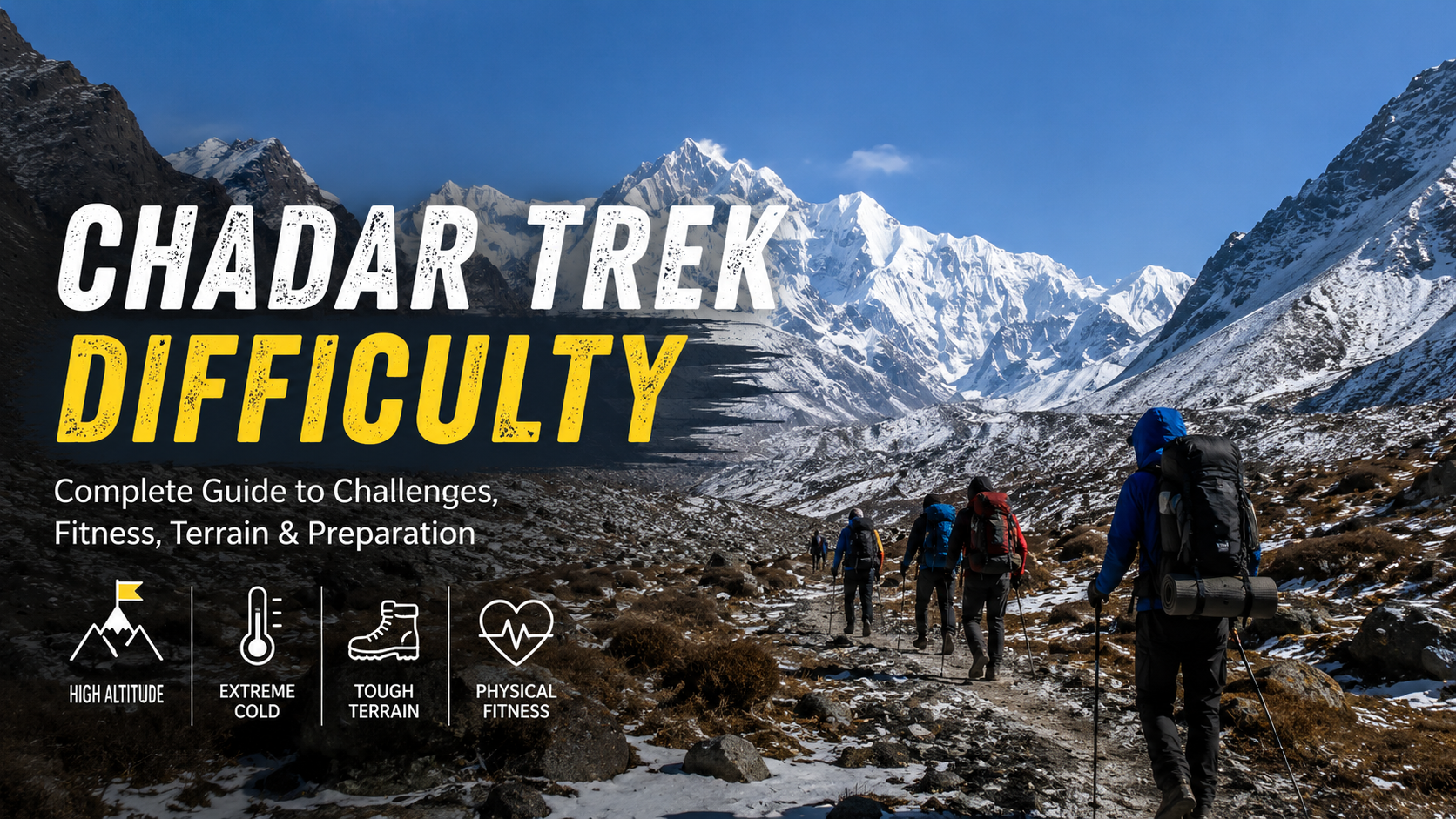
If you are a professional looking to truly test your limits, or an adventurer eyeing this bucket-list expedition, understanding the true Chadar trek difficulty is the difference between an unforgettable triumph and a dangerous medical evacuation. Let’s look past the glossy social media photos and break down the cold, hard realities of this frozen trail.
How Dangerous Is the Frozen River Trek? The Cold Reality
When evaluating any high-altitude route, trekkers usually look at the steepness of the climbs and gradient profiles. On the Zanskar gorge, however, the trail is almost entirely flat. So, how dangerous is the frozen river trek if you aren’t climbing vertical walls of rock or ice?
The danger does not come from gravity; it comes from the dynamic, volatile nature of the Zanskar River itself. The “Chadar”—which translates to a blanket of ice—is never permanent. It changes by the hour. The frozen river can change quickly. A safe ice path in the morning may turn into flowing icy water by afternoon due to changing conditions underneath the ice.
To survive, you must learn the art of the “penguin walk”—shuffling your weight carefully, keeping your knees slightly bent, and centering your gravity across slick, mirror-like surfaces. Even with the best technique, the hazards are real and require constant alertness:
- The “Cold Plunge”: Slipping through a fragile sheet of ice into knee-deep or waist-deep water flowing at sub-zero temperatures. If your clothes get wet, hypothermia can set in within minutes.
- Falling Ice and Rockfalls: Navigating deep, narrow canyons where massive icicles, hanging like frozen daggers from the cliffs hundreds of feet above, can break off without warning as the afternoon sun warms the stone.
- Shifting Sheets & Detours: Getting temporarily stranded on an isolated ice sheet if the trail ahead collapses into open water. This forces the team to scramble up steep, loose boulders along the canyon walls to bypass the river entirely.
Read more: Check the latest Chadar Trek cost breakdown, inclusions, permits, and transportation detail
Surviving the Extreme: Chadar Trek Temperature at Night
If the unpredictable ice formations don’t test your resolve, the bone-chilling environment certainly will. Ladakh during the winter is a hyper-arid, high-altitude cold desert. Once the sun drops behind the towering canyon walls, the environment shifts from unforgiving to downright hostile.
The Chadar trek temperature at night regularly plummets to a staggering -20°C to -30°C.
Winter Temperature & Environment Matrix
To give you an honest look at the atmospheric reality, here is what you will face during a typical January or February departure:
| Time of Day | Average Temperature Range | Environmental Conditions & Impact on Gear |
| Daytime (Under direct sunlight) | -5°C to -10°C | Crisp, biting winds. Ice sheets expand and crack loudly underfoot due to thermal shifts. |
| Evening (Immediately after sunset) | -15°C to -20°C | Rapid drop in temperature. Exposed skin freezes quickly. Cooking gas begins to liquefy. |
| Night / Early Morning | -25°C to -30°C | Water bottles freeze solid inside tents within minutes. Electronics experience instant battery drain. |
This level of cold is not just uncomfortable; it is a physical obstacle. At -25°C, even basic tasks like tying your boot laces, adjusting your headlamp, or zip-closing a sleeping bag become painful, exhausting chores as your fingers lose peripheral circulation and dexterity.
To survive these nights, you cannot rely on standard camping gear. You need high-altitude expedition tents, heavy-duty down jackets rated for sub-zero extremes, and dual-layer technical sleeping bags. It is an environment where laziness is penalized instantly. Maintaining proper personal hygiene, changing out of damp socks immediately, and keeping your inner layers perfectly dry are absolute requirements for preventing hypothermia and frostbite.
Is Chadar Trek for Beginners? An Honest Assessment
With its surging popularity across social media platforms, this trail has caught the attention of many casual hikers and weekend backpackers. Let’s address the most common question directly: Is Chadar trek for beginners?
The short, honest answer from a professional guiding perspective is no.
This expedition should never be chosen as your very first high-altitude or winter trail. While an individual with exceptional physical health can technically complete it under the strict supervision of an experienced guiding team, the lack of prior mountain experience significantly increases the systemic risks.
If you have never experienced sub-zero camping, if you don’t know how your body responds to extreme cold, or if you have never slept in a tent during a freezing winter storm, the Chadar can quickly become an overwhelming, miserable experience. It is highly recommended that you first cut your teeth on moderate high-altitude winter trails to understand the fundamentals of winter survival before attempting to step onto the frozen Zanskar.
The Baseline of Survival: Acclimatization Rules for Chadar Trek
No matter how physically strong you are or how many miles you run on the plains, the high-altitude air cares nothing for your fitness levels if you ignore the laws of human biology. Because you fly directly from sea level into Leh, which sits at an altitude of roughly 11,500 feet (3,500 meters), your body experiences an immediate atmospheric shock.
Strict acclimatization rules for Chadar trek are legally mandated by the local administration and the Wildlife Department. Violating them can end your trek before you ever see the river:
- The 48-Hour Mandatory Leh Rest: Upon landing at the Leh airport, you are legally required to spend the first two full days completely resting inside your hotel. No long walks, no sightseeing drives, and absolutely no strenuous physical activity. This allows your blood cell count to begin adjusting to the thin air.
- Hydration and Warmth Countermeasures: The mountain air in winter is incredibly dry, meaning you lose moisture simply by breathing. You must consciously drink 4 to 5 liters of warm water daily to help your blood carry oxygen efficiently, even if you do not feel thirsty.
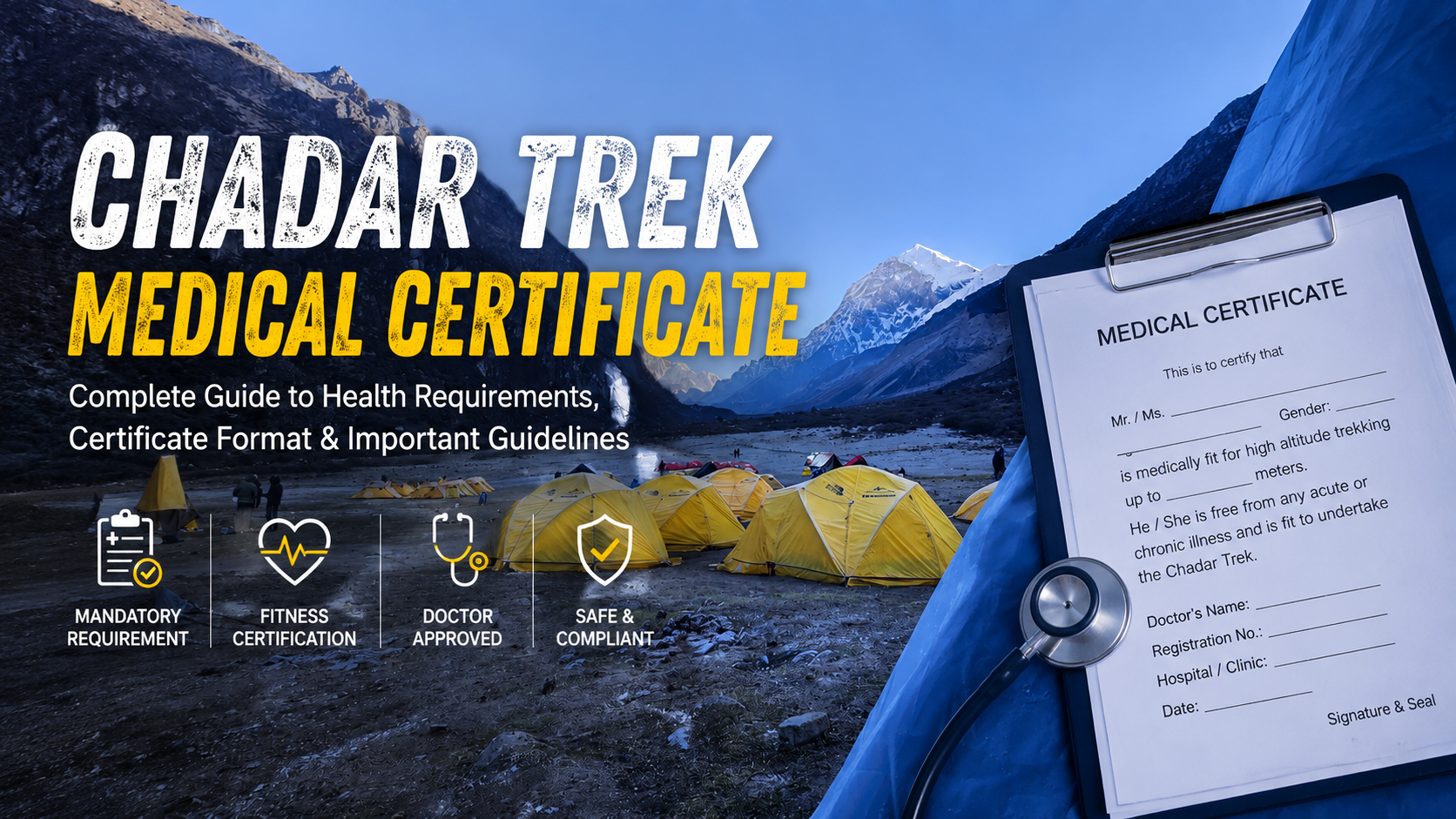
- The Government Medical Checkup: Before you are granted an entry permit for the trek, you must visit the designated government medical camp in Leh. Your oxygen saturation (SpO2) and blood pressure will be closely monitored. If your oxygen saturation falls below the strict safety threshold, or if your blood pressure is unstable, you will be deemed medically unfit and barred from the trail.
Read more: Learn how to prepare physically and mentally for the frozen river expedition
Preparing the Body: Chadar Trek Fitness Preparation and Training
To safely face the grueling demands of the frozen river, your physical conditioning must be top-tier. You aren’t just walking; you are balancing on ice while carrying a daypack, fighting the physical resistance of heavy winter layers, and breathing thin air. Your Chadar trek fitness preparation and training regimen should begin at least 2 to 3 months before your departure date. Your routine should prioritize three main pillars:
1. Targeted Cardiovascular Endurance
You need to build a strong aerobic engine that can function efficiently on limited oxygen. Focus on running 5 to 7 kilometers within 30 to 35 minutes, three times a week. Intersperse this with long, steady cycling sessions or swimming to expand your lung capacity and improve your VO2 max.
2. Leg and Core Stability
Walking on slippery ice requires immense core stabilization and lower-body strength to prevent constant slips and falls. Dedicate your gym or home workouts to deep squats, lunges, planks, and single-leg balance exercises. Strong glutes and abdominal muscles will help you maintain your balance when the ice shifts underfoot. That’s why most people think aout the Chadar trek difficulty rate.
3. Weighted Stair Climbs
Put on a loaded backpack weighing 5 to 7 kilograms and spend 20 to 30 minutes walking up and down stairs. This builds the specific muscular endurance your lower back, calves, and glutes need to push through long, continuous days on the rocky, frozen riverbed.
Chadar Trek Frequently Asked Questions (FAQ)
To help you seamlessly prepare for India’s ultimate winter expedition, we have compiled direct answers to the most common queries surrounding the Chadar trek difficulty, safety protocols, and physical preparation.
Is Chadar trek for beginners?
No, the Chadar Trek is absolutely not recommended for absolute beginners. While the route is geographically flat with minimal elevation gains, the psychological and physical stress caused by extreme sub-zero camping, navigating fragile ice sheets, and handling unpredictable wilderness hazards requires prior high-altitude winter trekking experience. We recommend completing at least two high-altitude winter treks (such as Kedarkantha, Kuari Pass, or Dayara Bugyal) before attempting the Zanskar frozen river trail.
How dangerous is the frozen river trek?
The frozen river trek is classified as a high-risk, difficult expedition. The primary hazard stems from the dynamic nature of the ice blanket (“Chadar”), which constantly forms, cracks, and melts due to underground river currents. Trekkers face risks of falling through thin ice into freezing sub-zero water, navigating rockfalls or falling ice within the narrow canyons, and scaling vertical, loose boulders if the ice shelf collapses. Success depends entirely on listening to local guides, mastering the “penguin walk,” and strictly adhering to safety protocols.
What is the Chadar trek temperature at night?
The Chadar trek temperature at night regularly plummets into extreme sub-zero levels, typically ranging from -20°C to -30°C during peak trekking months (January and February). In severe weather conditions or at specific interior camps like Nerak, temperatures can drop as low as -35°C. This intense cold instantly drains electronics, freezes regular water bottles solid within minutes, and demands specialized dual-layer expedition sleeping bags and professional heavy down gear.
Ready to Book Your Chadar Trek 2027?
The Chadar Trek is one of those experiences that is genuinely once-in-a-lifetime — partly because of how rare frozen-river walking is anywhere, and partly because climate change is shortening the chadar window every decade. The river that froze for 8 weeks in 1980 freezes for roughly 5 weeks now, and the trend is one-way. If Chadar is on your list, the time to do it is sooner rather than later. Our 2027 batches open for booking in October 2026.
Book the Chadar Trek now: Call/WhatsApp +91 7407248200 · Email contact@trekinsikkim.in
Read more: View the Chadar Trek product page and book online
Read more: Check the latest Chadar Trek cost breakdown, inclusions, permits, and transportation details
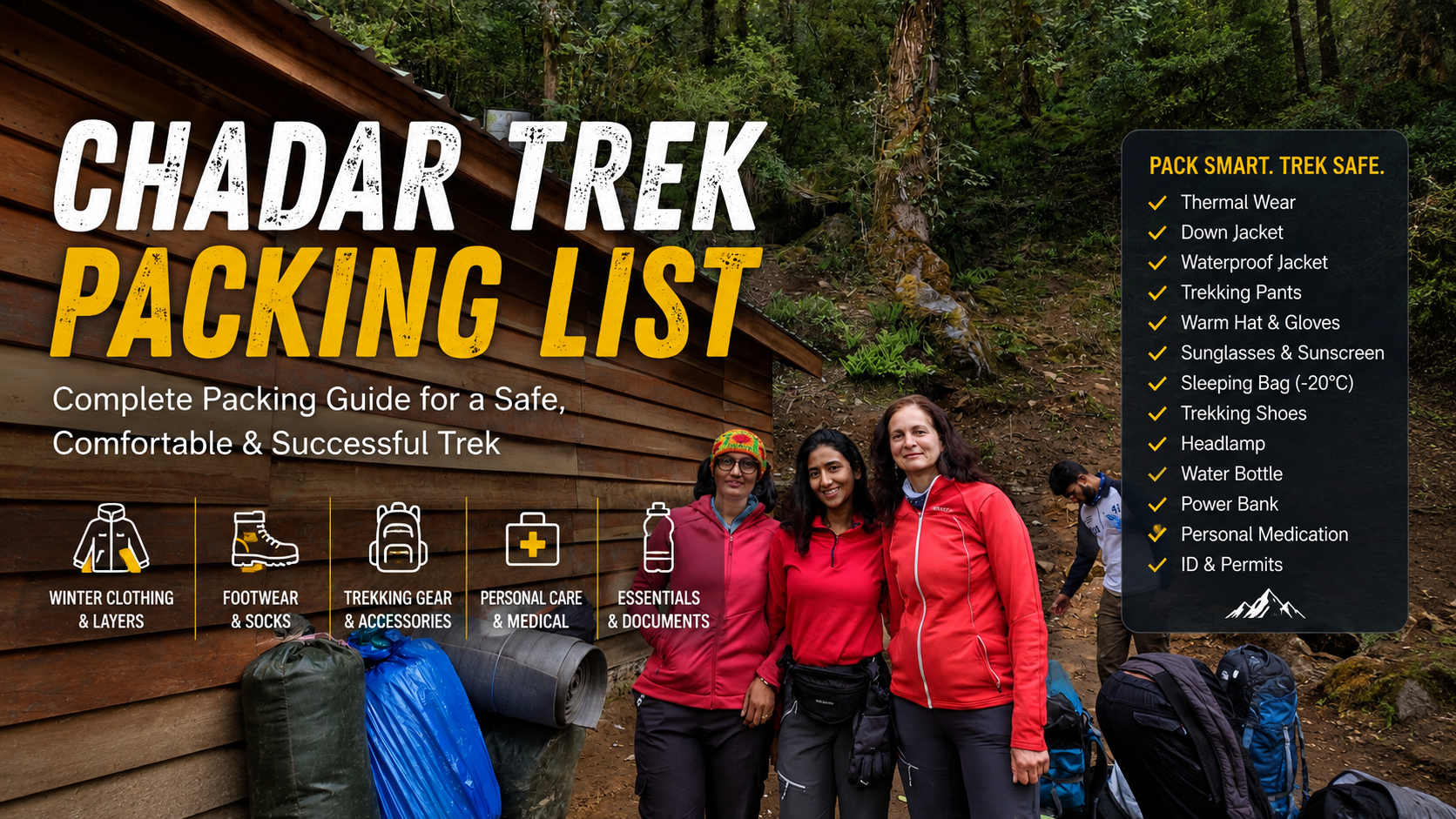
Read more: View the complete Chadar Trek packing list with winter gear, clothing layers, and essentials
Read more: Discover why Chadar Trek Ladakh is considered one of India’s most extreme winter treks
Read more: Browse all our Ladakh treks and expeditions
About the author
Kiran Gurung is the founder of Glacier Treks & Adventure and an IMF-certified mountaineer with fifteen years of operating experience across the Indian Himalaya. Glacier Treks & Adventure is an ALTOA-registered Chadar Trek operator and has run the Chadar Trek every winter season since 2018, with a permanent Zanskari field team and a strict commitment to ALTOA safety standards. The company is based in Yuksom, West Sikkim, and is affiliated with the IMF, the Sikkim Department of Tourism, TAAS, YTDC, SAMA and ALTOA.