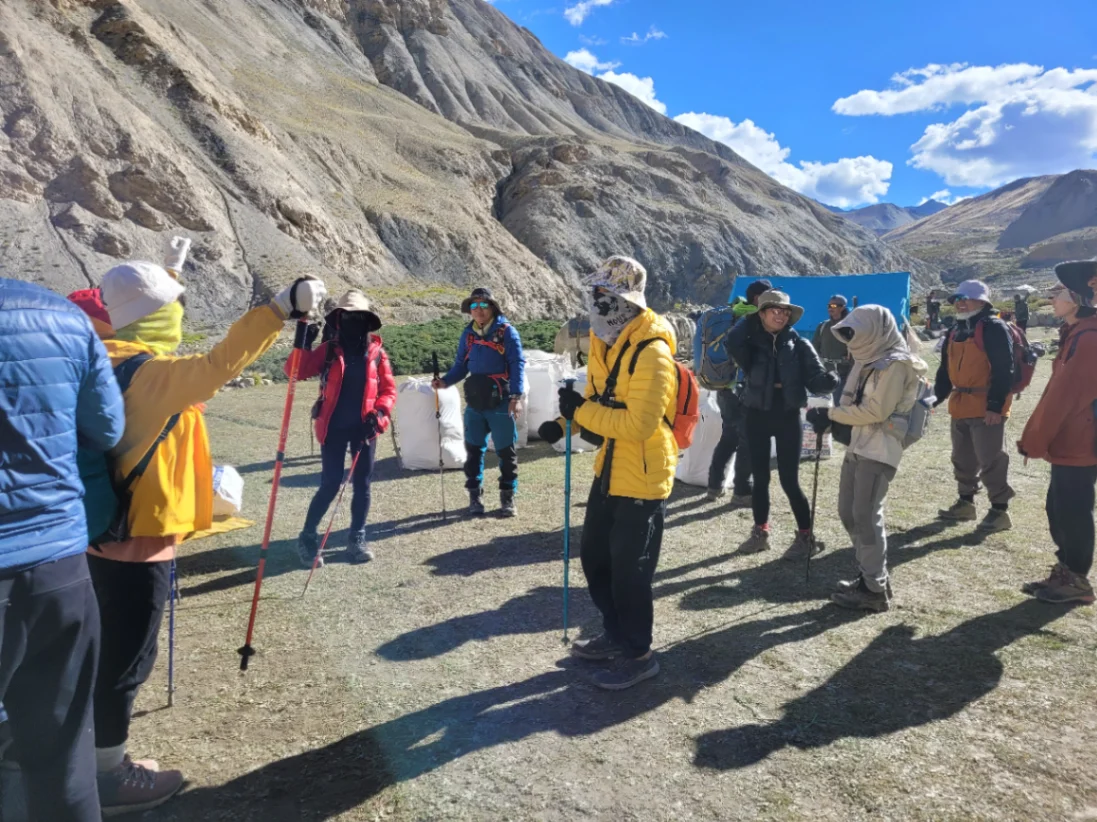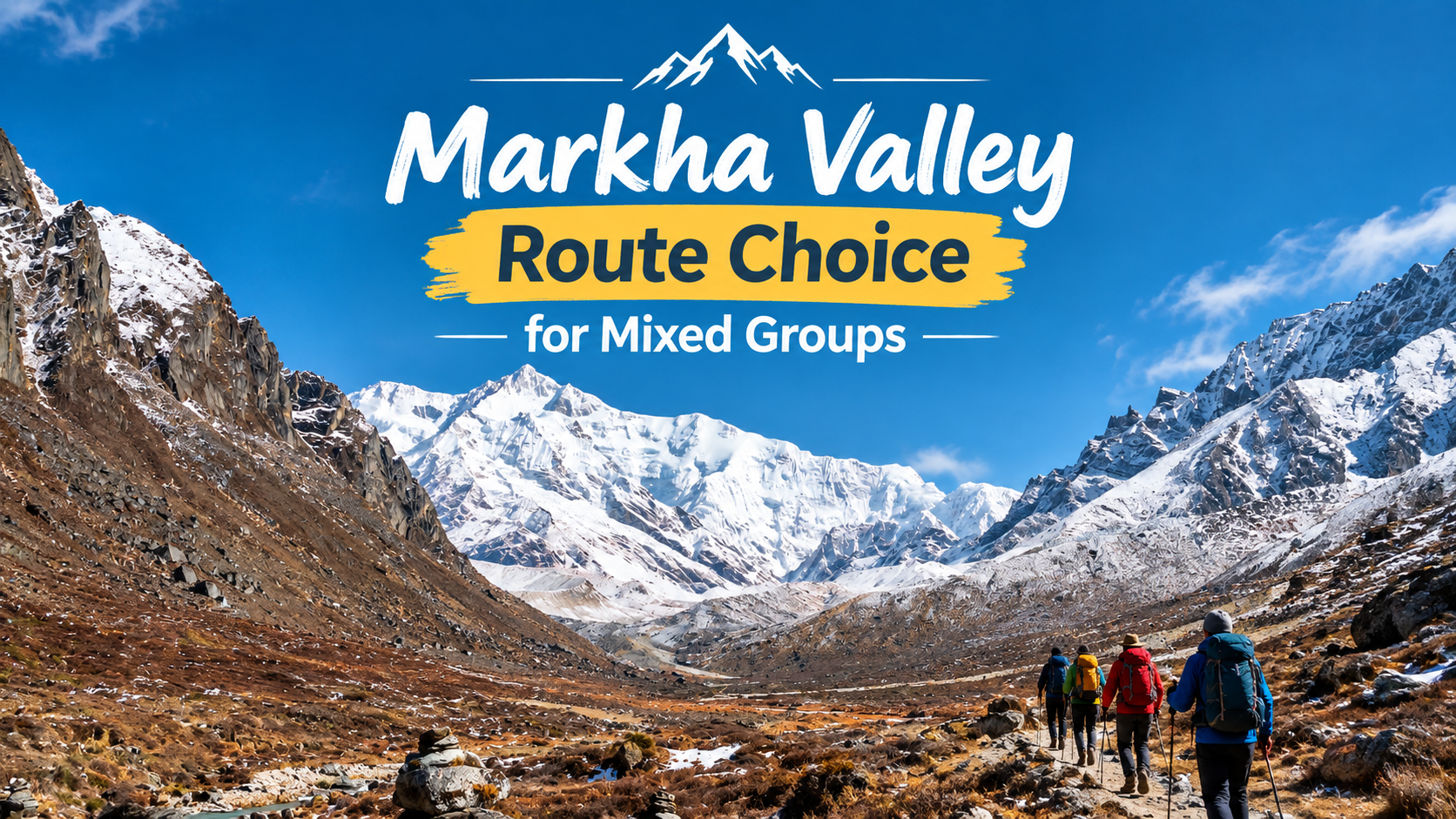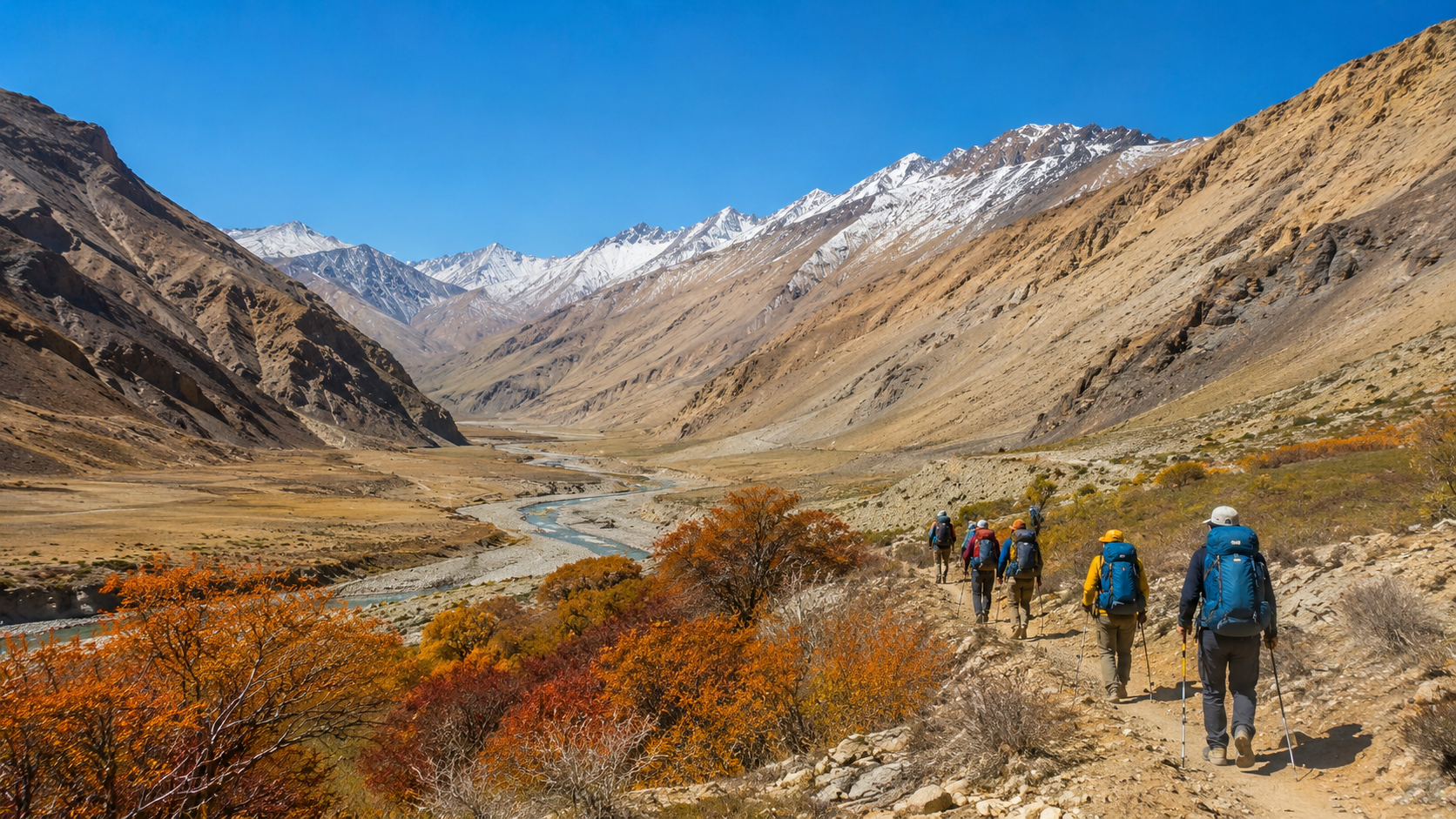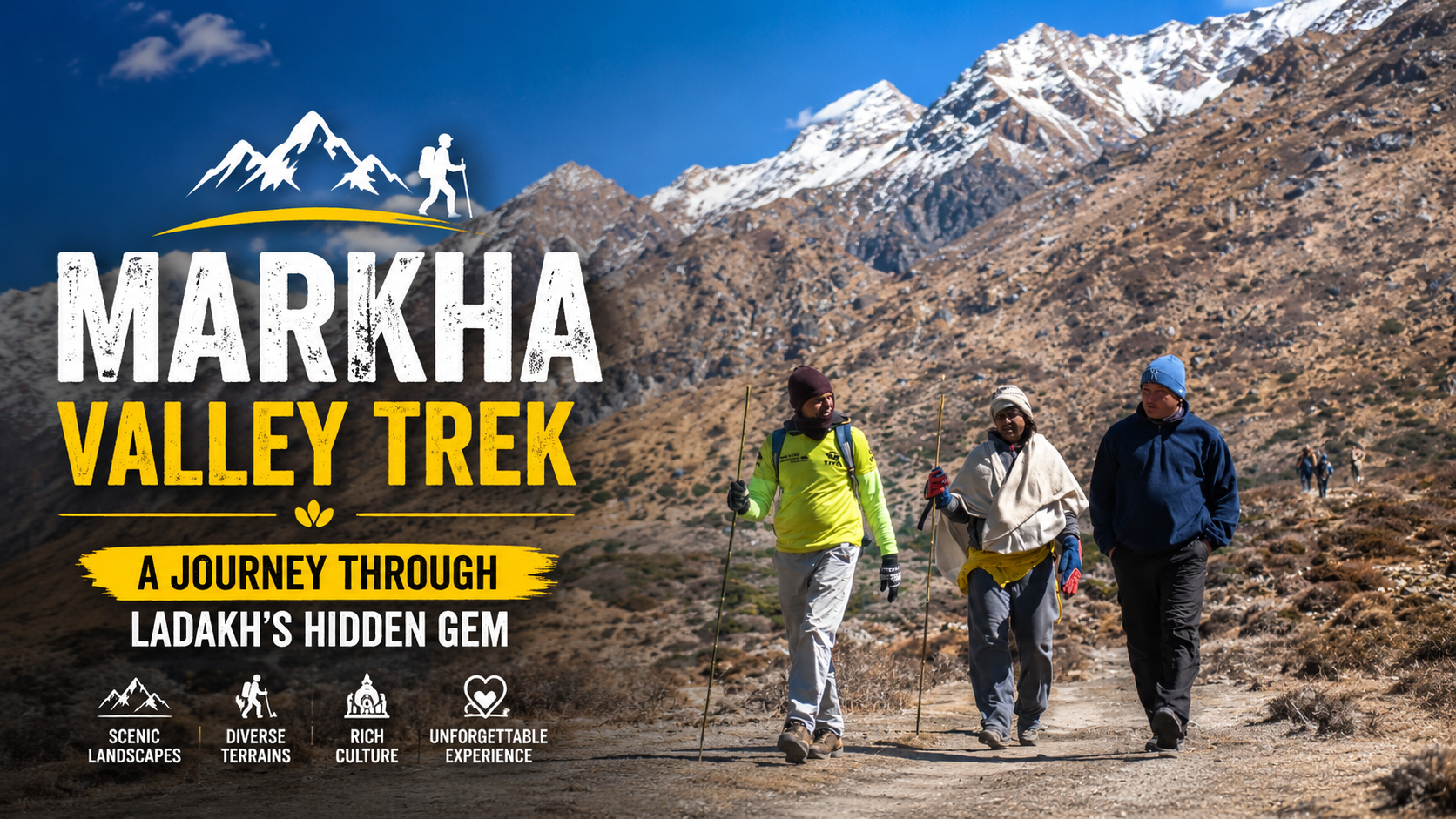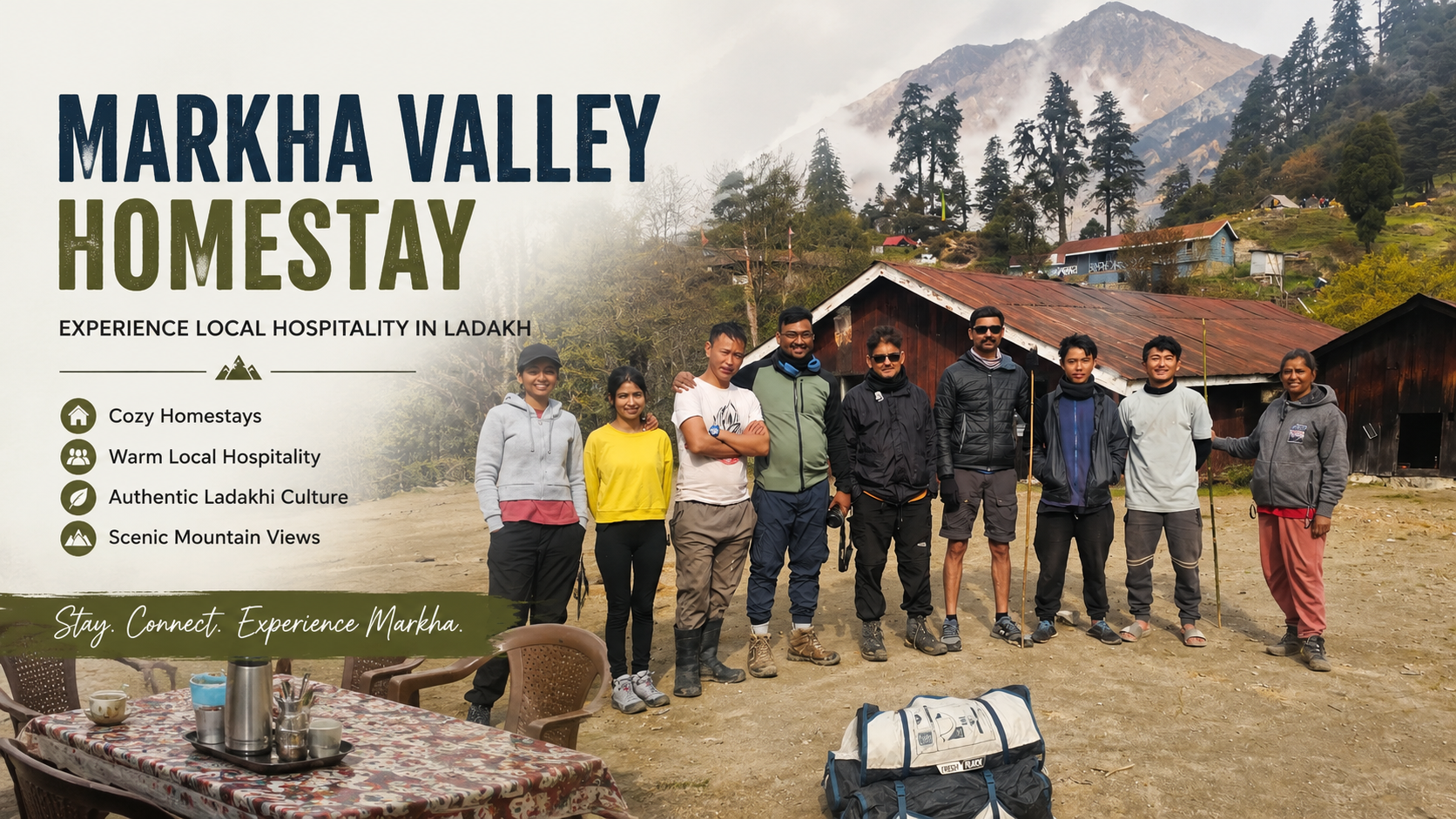
The Markha Valley trek is unlike any other Himalayan trek in India. You walk 75 kilometres through Hemis National Park, cross two high passes, and wake up every morning to the sight of Kang Yatse towering over the valley. But that is not what makes it special. What makes it special is this: you sleep in actual houses every night — stone-walled Ladakhi family homes in villages like Skiu, Markha, Hankar, and Thachungtse. Tea is served in copper pots. Dinner is cooked over a yak-dung stove. And the people whose homes you stay in become part of the trek itself.
I have been running the Markha Valley trek for fifteen years alongside our Sikkim portfolio, and it remains the trek I most often recommend to first-time Ladakh trekkers. The landscape is beautiful — Kang Yatse fills the eastern sky from Day 4 onwards — but the cultural depth is what most trekkers remember a year later.
Let me walk you through what the Markha Valley homestay experience actually looks like, because most guides online get it wrong.
At-a-Glance: What to Expect at a Markha Valley Homestay
Use this table as your reality check before you pack your bags. Everything listed below is the actual ground reality in villages like Skiu, Markha, and Thachungtse—not what travel brochures promise.
| Aspect | What You’ll Get | Trekker’s Tip |
| Room & Structure | Traditional stone house with mud roof, central kitchen, and simple guest room. | Expect low doorways, wooden ladders, and carpeted floors—no Western furniture. |
| Bedding & Amenities | Platform bed, warm Ladakhi quilts, solar lights until around 9 PM, no Wi-Fi. | Bring a sleeping bag liner and a headlamp. |
| Dinner | Fresh vegetarian meals such as rice, dal, vegetables, tingmo, skyu, or thukpa. | Inform your host about dietary needs in advance. |
| Breakfast & Drinks | Bread, jam, eggs (when available), and traditional butter tea. | Pack instant coffee if you prefer it. |
| Toilet | Basic dry composting toilet outside the house. | Carry toilet paper and pack out used wipes. |
| Shower & Hygiene | Bucket of warm water available on request; no running showers. | Bring a quick-dry towel, biodegradable soap, and hand sanitiser. |
The Bottom Line: If you arrive expecting a hotel, this table will look like a list of hardships. If you arrive expecting an authentic Ladakhi family experience, this table is simply a list of what makes the Markha Valley homestay trek genuinely unforgettable. Pack accordingly, and you will have a brilliant time.
What a Ladakhi Homestay Actually Looks Like
A traditional Ladakhi house is stone-walled, with a flat mud roof and low wooden door frames. Rooms are organised around a central kitchen with a stove burning yak dung — the only source of heat and the heart of every home. The visitor room is on the first floor, typically reached by a wooden ladder. Thick Tibetan-style carpets cover the floor, which looks elegant. The bed is a low wooden platform with two heavy quilts that smell faintly of butter tea and woodsmoke.
There are no Western beds, no en-suite bathrooms, no Wi-Fi, and no electricity overnight. You should mentally prepare for the electricity difficulties, even though many homestays have solar lights. Until 9 PM, you can be beneficial, then nothing.
This is not a hotel. Do not expect one.
And honestly? That is the whole point. The Markha Valley homestay system is what keeps these villages economically alive. Every household earns roughly ₹1,200–1,800 per trekker per night, and the income supports between 6 and 12 family households across each season. If you go, go because you want this experience, not despite it.
How the Meals Work
Dinners are family-cooked and served either in your visitor room or at the family’s own kitchen table. The standard plate is rice, dal, vegetable curry, and tingmo (steamed bread). Local specialities like skyu (hand-rolled Ladakhi pasta) or thukpa noodle soup often appear—try them, they are memorable. Breakfast is bread, jam, and eggs if available. Butter tea is traditional but salty; pack your own coffee if that is not your taste.
The food is simple, vegetarian, and made with whatever this cold desert provides—nothing fancy, just real. Veg and vegan diets are easily accommodated, but Jain food is difficult here due to local ingredient limitations. Always mention dietary restrictions at booking.
The Bathroom Situation — Honestly
Bathrooms in Markha Valley homestays are dry-pit composting toilets, usually in a small outbuilding behind the main house. They are clean but basic — a stone-floored room with a deep pit and a bucket of soil for covering.
There are no flush toilets. No hot showers on the trek. Most homestays will provide a bucket of warm water for sponge bathing if you ask. But expect to be without a real shower for six nights.
Carry a quick-dry travel towel and sanitiser wipes, which are mandatory. If you are dreaming of hotel-style facilities in the village, then let me specify that this could be difficult for you. But if you want to experience the tradition of local people with local food and culture, then you will find it genuinely lovely.
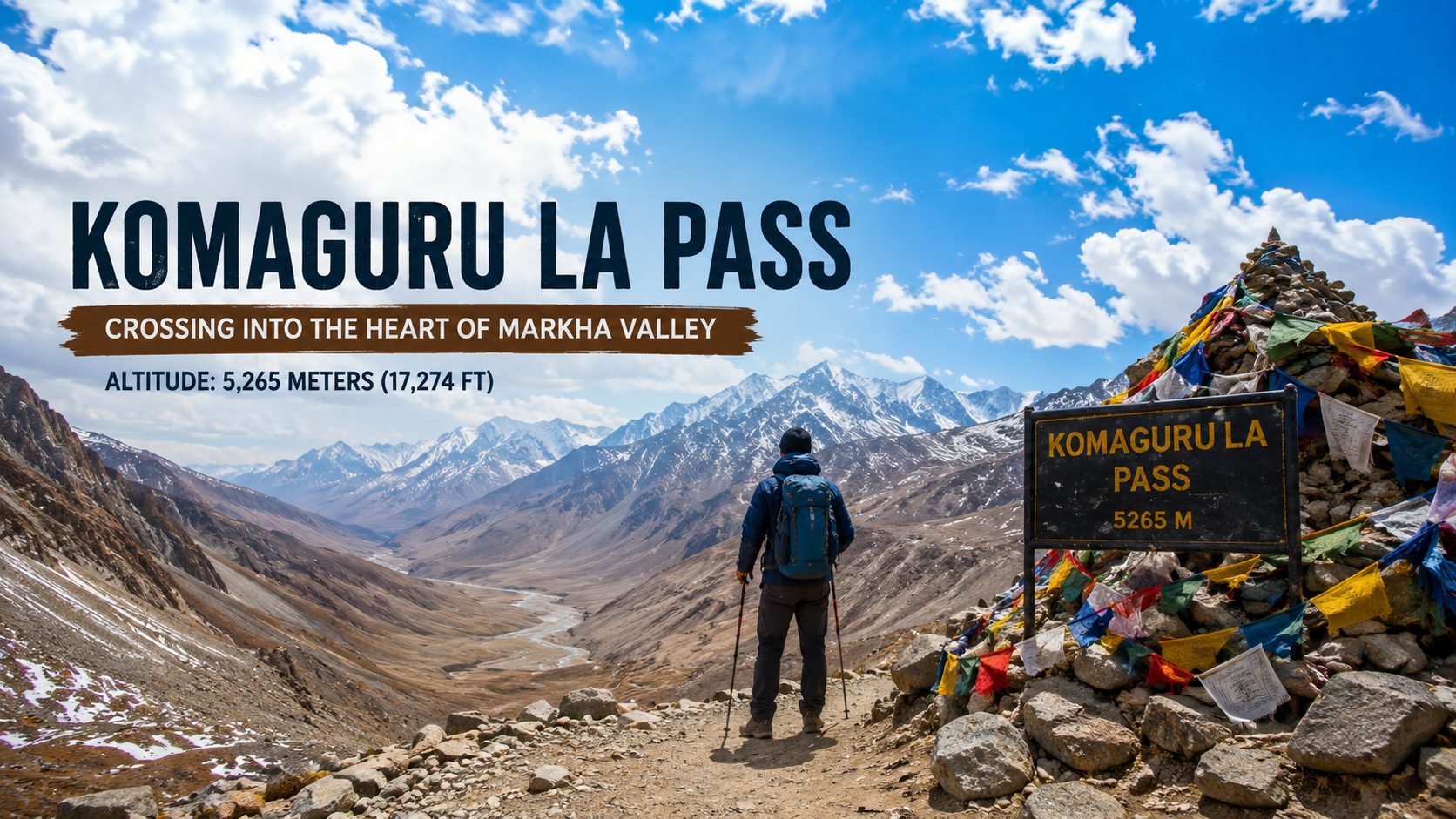
Read more: Learn everything about crossing Kongmaru La Pass on the Markha Valley Trek
Payment and Etiquette — What You Need to Know
The Markha Valley homestay cost is built into the overall trek package. Our 2026 package starts at ₹40,000 per person for Indian trekkers, with group rates lower for batches of six or more, and approximately $900 for international trekkers. This includes all meals from Day 1 dinner to Day 8 breakfast, twin-share homestay accommodation in Skiu, Markha, and Thachungtse, and all permits.
If you want a single homestay room, there is a supplement of ₹5,000 for the entire trek.
Etiquette matters. These are family homes, not commercial guesthouses. A few simple rules:
- Remove your shoes before entering the house.
- Ask before taking photos of family members or inside the home.
- Respect the kitchen — it is the sacred space of the house.
- Pack out what you pack in. The village has no waste management system, so you should prepare for it.
- Tips are appreciated. We suggest ₹800–1,200 for the support team.
Most importantly, treat the homestay as what it is: an invitation into someone’s life, not a transaction.
Overnight Villages on the Markha Valley Trek
| Day | Village / Site | Altitude | Highlights |
| Day 3 | Skiu | 3,400 m | First homestay; traditional village where the trek begins. |
| Day 4 | Markha Village | 3,700 m | The largest village on the route has a small school. |
| Day 5 | Thachungtse | 4,150 m | Tiny summer settlement with stunning views of Kang Yatse. |
| Day 6 | Nimaling | 4,800 m | Fixed-tent campsite below Kang Yatse; no homestay. |
Quick Note: Days 1–2 are acclimatisation and drive days in Leh. The homestays run from Day 3 through Day 5, and Day 6 is your single night under canvas.
Read more: Learn everything about crossing Kongmaru La Pass on the Markha Valley Trek
Why This Trek Is Different From Every Other Ladakh Trek
Three things make the Markha Valley genuinely different from every other major Ladakh trek:
First, it is a homestay trek, not a camping trek. Seven of the nine nights are in Ladakhi family homes. This is true of almost no other Indian Himalayan trek above 3,500 metres. The cultural immersion is the defining feature.
Second, Kang Yatse is your constant companion. From Day 4 onwards, the 6,400-metre summit fills the eastern horizon. On Day 6 from Nimaling, you camp at its base. Other Ladakh treks give you mountain glimpses. Markha gives you a single dominant peak in continuous view for half the trek.
Third, it is a true cultural trek with eleventh-century context. Hemis Monastery — founded in the 11th century — sits at the entrance to the Ladakh trek. Umlung Gompa, Hankar Gompa, and the ruins of the old Markha Palace are all on the trail. The route follows an old Tibet-Ladakh trade corridor that has been walked for at least eight centuries.
Best Time for Your Markha Valley Homestay Trek
The best time for Markha Valley trek is mid-June to early October. Outside this window, the access roads are closed, the homestays are shuttered, and the high passes are under snow.
If I had to recommend a single window, the first three weeks of September are unbeatable. The barley fields in Markha and Hankar are golden, the air is at its clearest of the year, the river crossings are at their easiest (the snowmelt is finished), the nights are cold but tolerable, and the crowds have thinned after August.
We have run twenty-plus September Markha batches across the last decade, and the weather has been settled on every single one.
What Most Trekkers Get Wrong
There is a single misconception about the Markha Valley homestay trek that I have to correct before anything else, because almost every guide online gets it wrong: this is not a camping trek.
It is one of the only major Himalayan treks in India where you sleep in actual houses every night of the route. The locals call it the Tea House Trek. The campsite at Nimaling on Day 6 is the only night under canvas.
Why this matters: the homestay experience completely changes what the Markha Valley trek is. Other Ladakh treks are walking-through-wilderness experiences. Markha is a walking-into-villages experience. You eat with families. You see how Ladakhi households live at 3,700 metres in a cold desert. You hear the morning prayers from Hemis Monastery drift up the valley.
That is the Markha Valley homestay experience. And that is what you will remember long after you have forgotten the altitude, the river crossings, and the ache in your knees from the Kongmaru La descent.
Read more: Find the best season for the Markha Trek with month-wise weather and trail conditions
Frequently Asked Questions (FAQs)
1. Do I need to carry a sleeping bag for the Markha Valley homestay trek?
The homestays provide heavy Ladakhi quilts that are warm enough for the nights. However, I always recommend carrying a light sleeping bag liner for hygiene. More importantly, bring a 3-season sleeping bag specifically for the single camping night at Nimaling (4,800m) — it gets close to freezing even in September. Without it, you will have a very long, uncomfortable night.
2. Is there mobile network or charging available in the homestays?
No. Once you cross the Zanskar River and enter Skiu, there is zero mobile network until you cross Kongmaru La and reach Chogdo on the final day. Charging points do not exist in homestays — they run on small solar panels that barely power a few lights until 9 PM. Bring a high-capacity power bank (20,000 mAh) for your camera and phone. You can charge it fully in Leh before the trek starts.
3. Can I drink the water provided at the homestays?
The families use stream water directly from the Markha River. I strongly advise against drinking it untreated. Always carry chlorine tablets, a UV pen, or a portable water filter. Boiled water is sometimes offered for tea, but for plain drinking water, treat it yourself. We provide boiled and filtered water for our group trekkers at every homestay stop.
4. Is the Markha Valley homestay trek safe for solo trekkers, especially women?
Absolutely. Ladakhi families are warm, hospitable, and deeply respectful. We regularly run solo trekkers (both men and women) in our group batches, and they have always reported feeling completely safe. However, do not attempt this trek entirely independently without a registered guide — the Hemis National Park permits require a licensed escort for safety and documentation.
5. Can I book the homestays myself without a trekking agency?
Technically, you could walk into a village and ask for a room. But I strongly advise against it. Homestays are not listed on booking platforms. During the best time for Markha Valley trek (especially September), beds fill up weeks in advance with pre-booked groups. Permits are mandatory and only issued through registered agencies. Booking through us guarantees confirmed beds, legal permits, medical backup, and a guide who knows the river crossing conditions daily.
6. How do I handle altitude sickness on this Leh Ladakh trekking route?
The Markha Valley trek itinerary is designed well for acclimatization — you sleep at Skiu (3,400m), then Markha (3,700m), then Thachungtse (4,150m) before the high camp at Nimaling (4,800m). This gradual ascent gives your body time to adjust. Our guides conduct daily health checks. The golden rules: drink 3 to 4 litres of water per day, walk at a steady pace without rushing, and inform your guide immediately if you experience a persistent headache or nausea. Diamox is available on request, but hydration and pacing are your best tools.
Ready to Book Your Markha Valley Trek?
Markha is the trek that introduces most people to Ladakh — and for good reason. The combination of homestay culture, dramatic landscape, manageable difficulty and the Kongmaru La summit makes it one of the most memorable Indian Himalayan treks. Our 2026 Ladakh season runs from mid-June through early October, with batches roughly every two weeks during peak season.
Book the Markha Valley Trek now: Call/WhatsApp +91 7407248200 · Email contact@trekinsikkim.in
Read more: View the Markha Valley Trek product page and book online
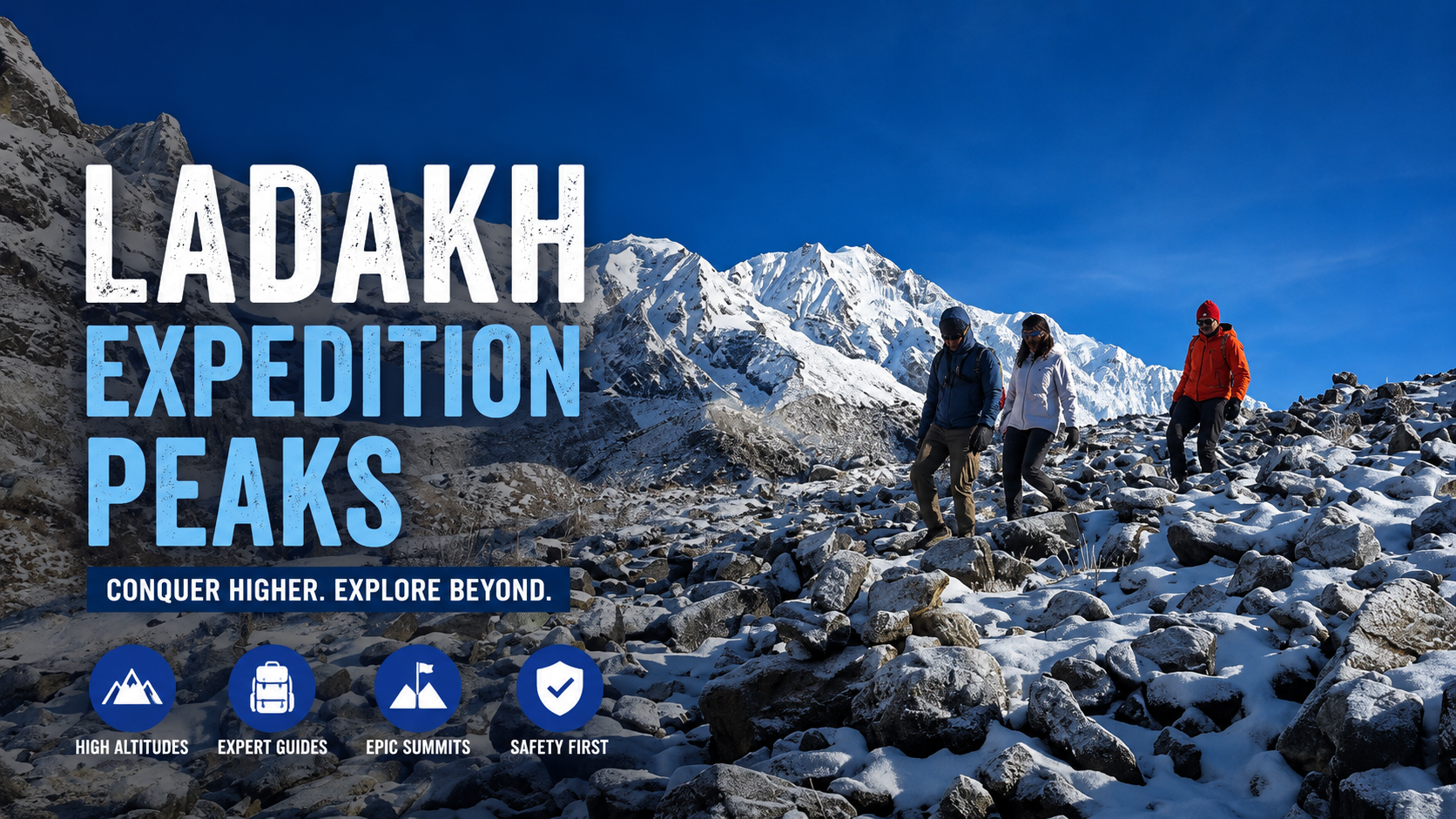
Read more: Browse all our Ladakh treks and expeditions
Read more: Read the complete Ladakh trekking guide (12 best treks, permits, acclimatisation)
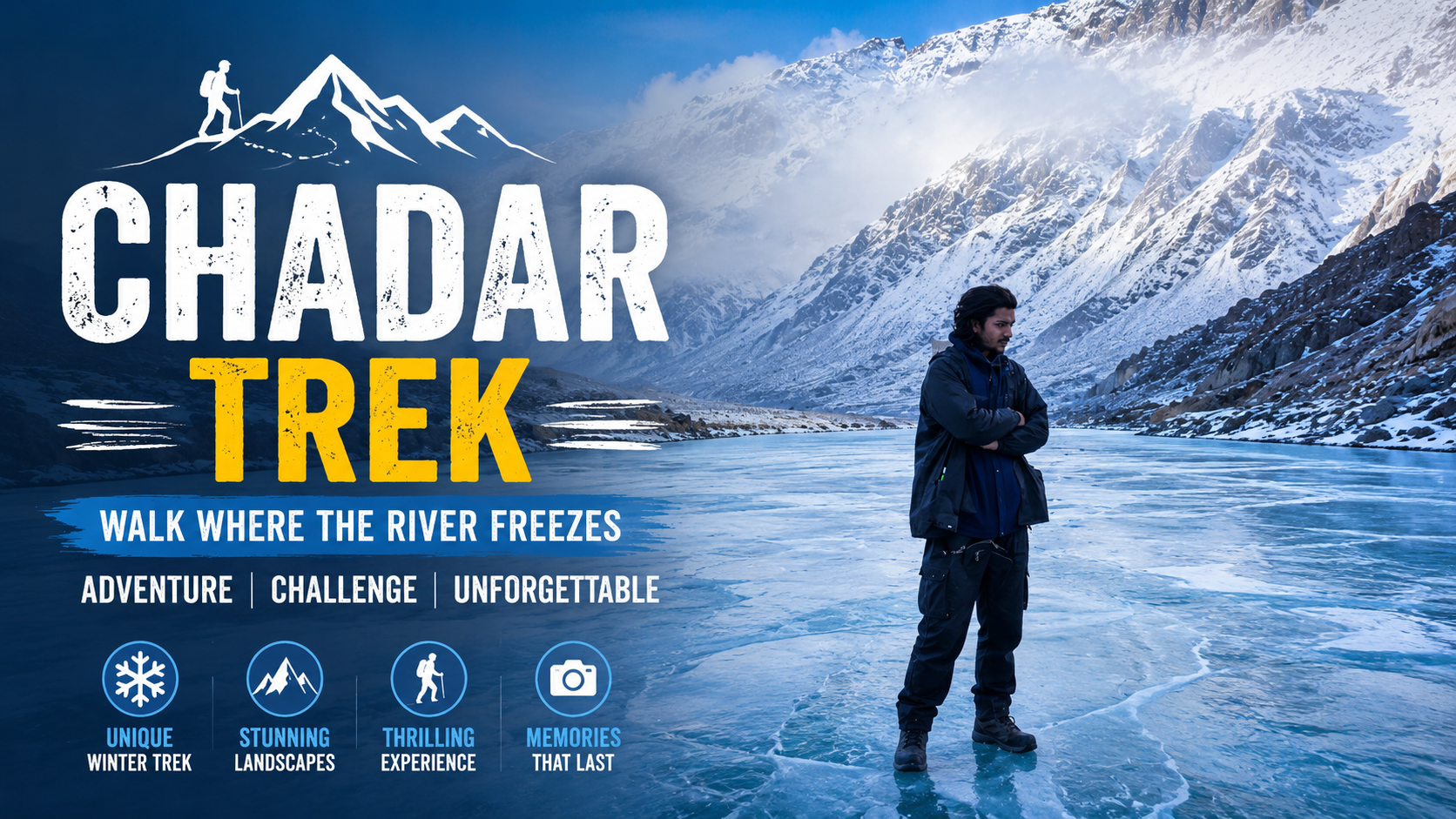
Read More: Consider the winter alternative — the Chadar Trek
About the author
Kiran Gurung is the founder of Glacier Treks & Adventure, an IMF-certified mountaineer and a working trek leader with fifteen years of operating experience across the Indian Himalaya. He has led Markha Valley Trek expeditions across multiple seasons and operates a permanent Ladakhi field team with long-term partnerships in the Skiu, Markha and Hankar village homestays. Glacier Treks & Adventure is based in Yuksom, West Sikkim, and is affiliated with the IMF, the Sikkim Department of Tourism, TAAS, YTDC and SAMA. The company operates the full Indian Himalaya trekking and expedition portfolio.