By Kiran Gurung · Founder, Glacier Treks & Adventure · IMF-certified mountaineer
Published: 20 July 2026 · Last updated: 20 July 2026
Trekking in Ladakh means walking through the high-altitude cold desert of the Indian Trans-Himalaya, with most trails ranging from 3,500 metres to 5,400 metres. The standard trekking season runs from June to early October for summer routes, and January to February for the winter Chadar Trek on the frozen Zanskar River. The twelve best Ladakh treks for 2026 include the Markha Valley, Chadar, Sham Valley, Nubra Valley, Lamayuru-Alchi, Tso Moriri, Stok-Matho, Kang Yatse and Mentok Kangri climbing peaks, the Padum-Darcha across Shingo La, the Hemis-Spiti link, and the serious Nun-Kun expedition (7,135 m). Every trekking in Ladakh requires a minimum 48-hour acclimatization in Leh before walking, and most require Inner Line or Protected Area permits.
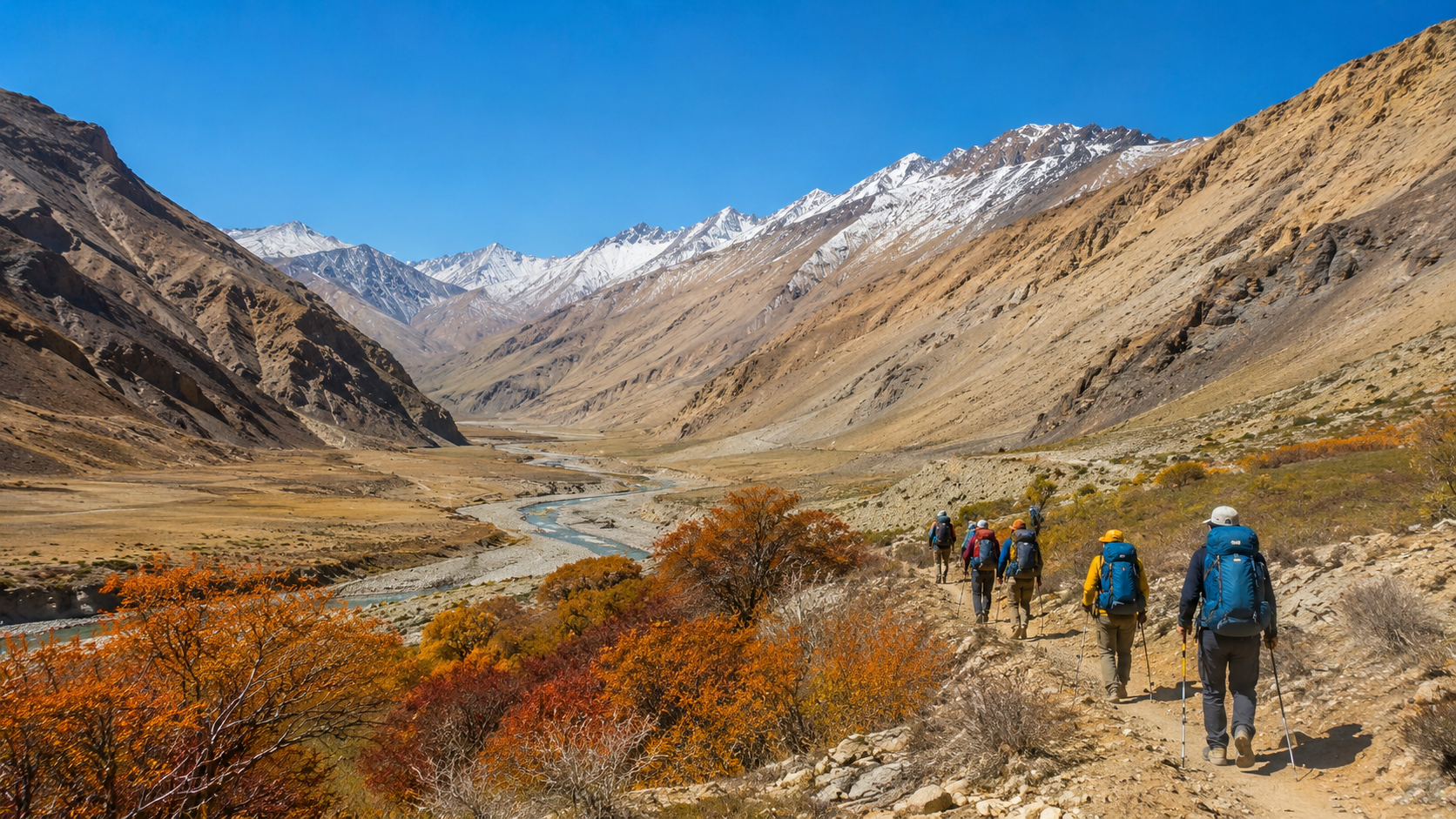
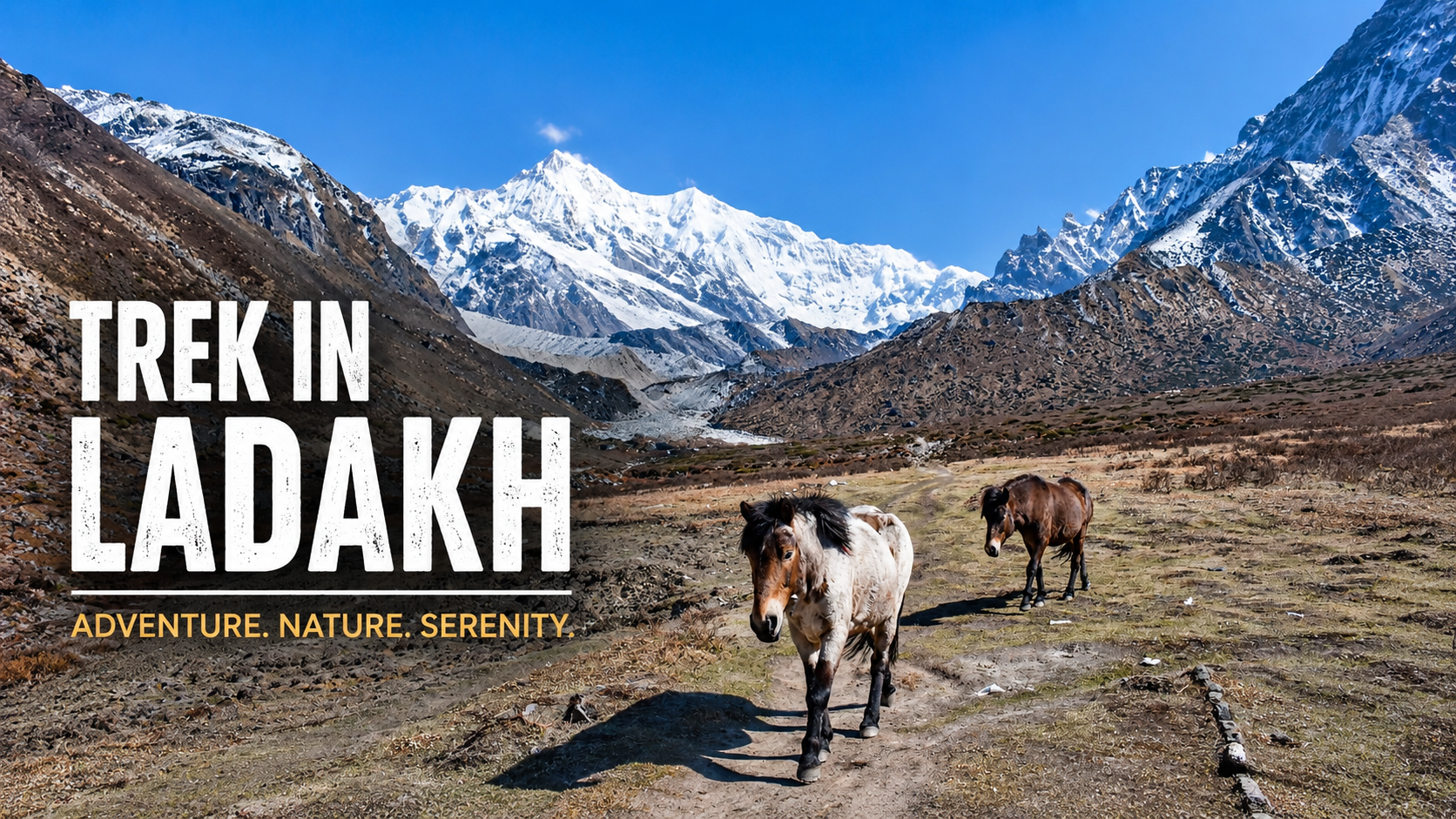
Ladakh is the only place in India where you trek through a high-altitude cold desert. The trails do not look like the green, monsoon-fed Himalaya of Sikkim or Uttarakhand — they look like another planet. Rust-coloured cliffs, mineral-streaked moraine, glacial meltwater rivers running across barren valley floors, and Buddhist gompas hanging off rock faces that should not hold anything. Every trekker who has walked both will tell you the same thing: Ladakh is a different category of experience.
I have been operating Ladakh treks alongside our Sikkim portfolio for fifteen years, and Ladakh continues to be the region where I see trekkers make the most expensive preventable mistakes — usually around acclimatization or permits. This guide is built to fix that. You will find the 12 best Ladakh treks ranked honestly, a clear decision framework for which one suits you, deep practical content on Leh acclimatization, permits, costs and the season calendar, and the operational truth that most aggregator pages quietly skip.
1. Why Trek in Ladakh — What Makes It Different
Trekking in Ladakh is unlike any other part of the Indian Himalaya, and understanding the differences is the first step in choosing the right trek. Three things separate it sharply from Sikkim, Himachal or Uttarakhand:
• It is a cold desert, not a wet mountain range. Ladakh sits in the rain shadow of the Himalaya — the monsoon barely reaches it. Annual rainfall in Leh is under 100mm. That means dust, not mud; bright sun, not cloud; clear nights, not weather windows. The trekking infrastructure is shaped around this.
• Altitude is the default, not the exception. Leh itself sits at 3,500 metres — higher than the highest point of most Indian treks. The trail rarely drops below 3,500m, and routinely crosses passes above 5,000m. AMS prevention is the central problem of Ladakh trekking, not a footnote.
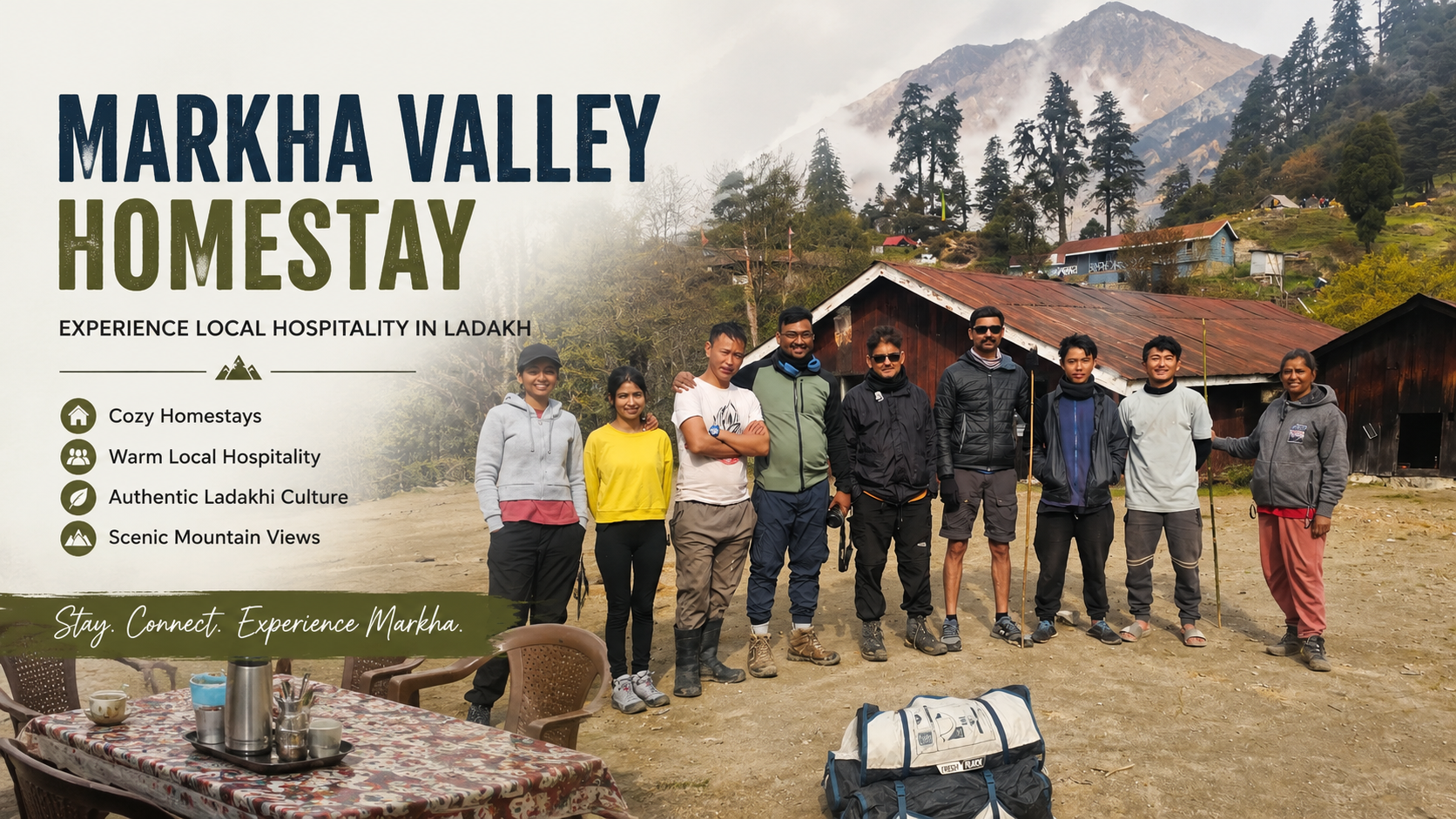
• Culture is woven into the trail. Ladakhi Buddhist villages, working monasteries from the 11th century, homestays in stone houses with painted Tibetan wood — much of the Markha Valley and Lamayuru route is genuinely a cultural trek as much as a mountain one. This is rare in the Indian Himalaya.
2. The 12 Best Treks in Ladakh for 2026
Below is the honest ranking of the 12 most rewarding Ladakh treks operating in 2026. The list spans easy cultural walks to a 7,135-metre expedition. I have walked or led every one of these myself, except for two, where I send a partner team.
| # | Trek | Duration | Max altitude | Difficulty | Best for | Season |
| 1 | Markha Valley Trek | 6–10 days | 5,400m | Moderate | First serious Ladakh trek | Jun–Oct |
| 2 | Chadar Trek (frozen Zanskar) | 8–9 days | 4,000m | Difficult (winter) | Winter trek lovers | Jan–Feb |
| 3 | Sham Valley Trek | 3–4 days | 3,750m | Easy | Beginners, families | Jun–Oct |
| 4 | Nubra Valley Trek | 5–8 days | 5,400m | Moderate | Off-beat Ladakh | Jul–Sep |
| 5 | Lamayuru to Alchi Trek | 5–6 days | 4,800m | Easy–Moderate | Cultural trekkers | Jun–Oct |
| 6 | Tso Moriri to Tso Kar Trek | 7–9 days | 5,300m | Moderate | Remote lake lovers | Jul–Sep |
| 7 | Stok to Matho via Stok La | 4–5 days | 4,900m | Moderate | Short, near Leh | Jul–Sep |
| 8 | Mentok Kangri climbing peak | 7–8 days | 6,250m | Difficult | First 6,000m peak attempt | Jul–Sep |
| 9 | Kang Yatse II climbing peak | 11–12 days | 6,200m | Difficult | Markha + summit combo | Jul–Sep |
| 10 | Padum to Darcha (Shingo La) | 8–9 days | 5,090m | Difficult | Zanskar enthusiasts | Jul–Sep |
| 11 | Hemis to Spiti link trek | 7–8 days | 5,200m | Difficult | Experienced trekkers | Jul–Sep |
| 12 | Nun-Kun expedition | 23–25 days | 7,135m | Technical expedition | Mountaineers (IMF clearance needed) | Jul–Aug |
A note on Stok Kangri: until 2019, Stok Kangri (6,153m) was the most popular climbing peak in Ladakh. It has been closed to commercial trekking since 2020 by a decision of the Stok village council, citing ecological damage and wildlife disturbance. The closure is ongoing in 2026. Any operator still selling Stok Kangri is selling a trek that cannot legally happen. We do not run it.
Read more: Ladakh expedition peaks — Nun, Nun-Kun, Mentok Kangri
1. Markha Valley Trek — the iconic Ladakh trek
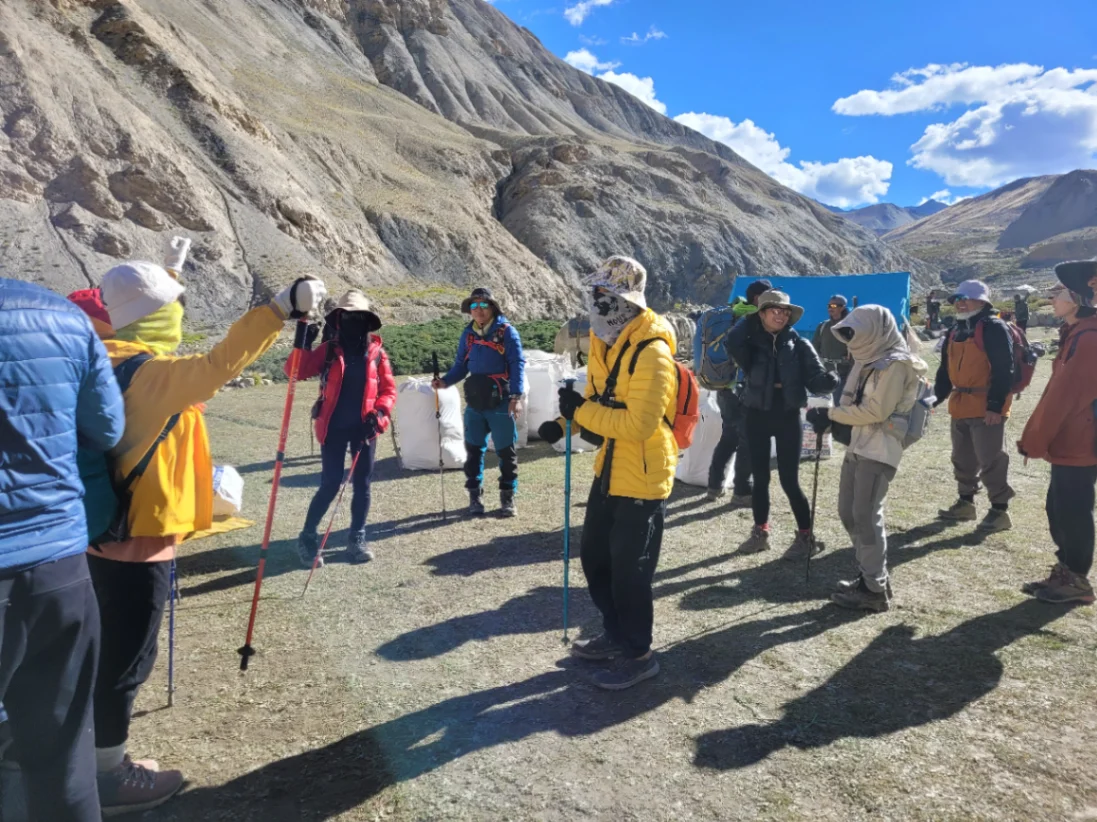
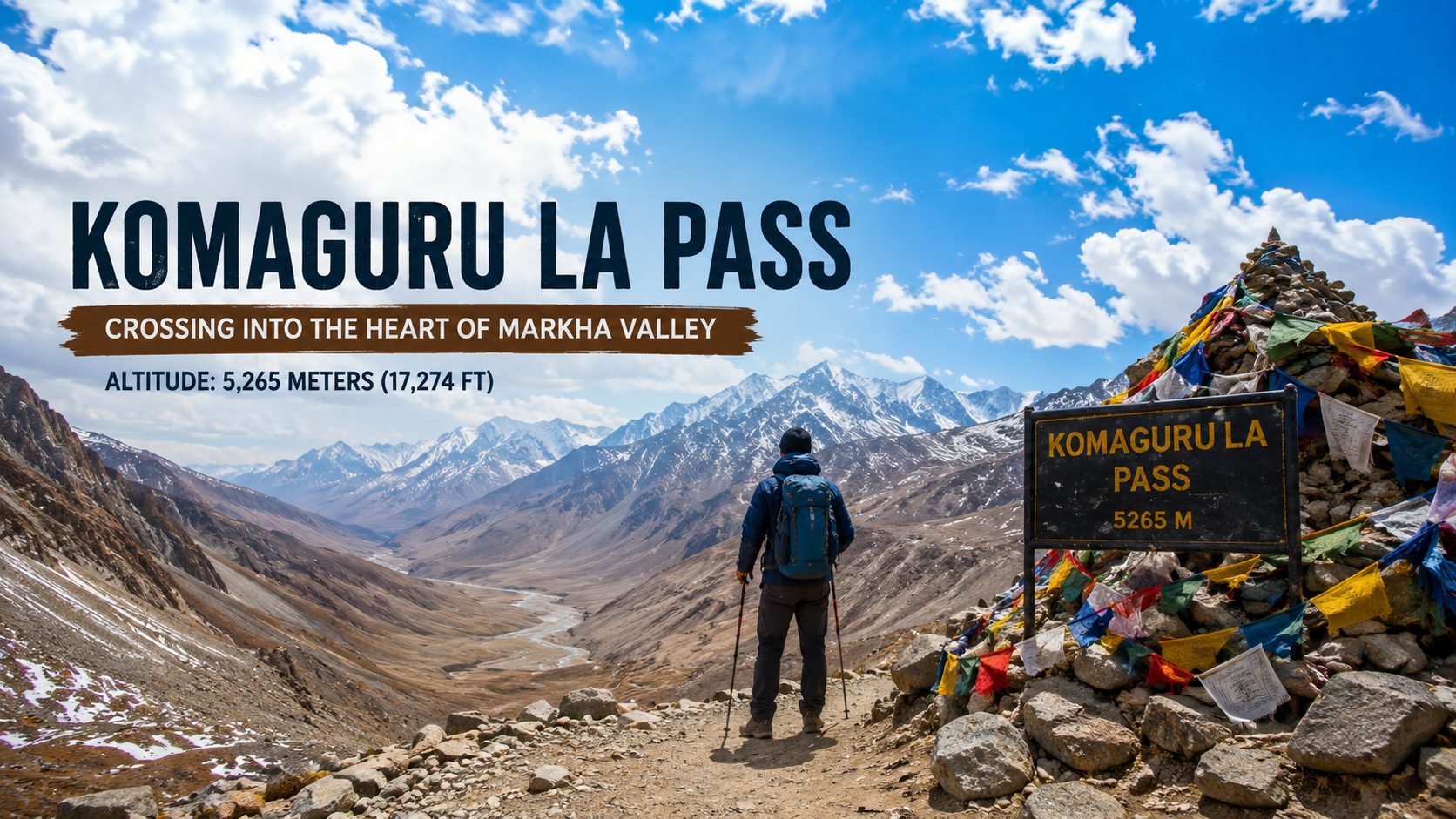
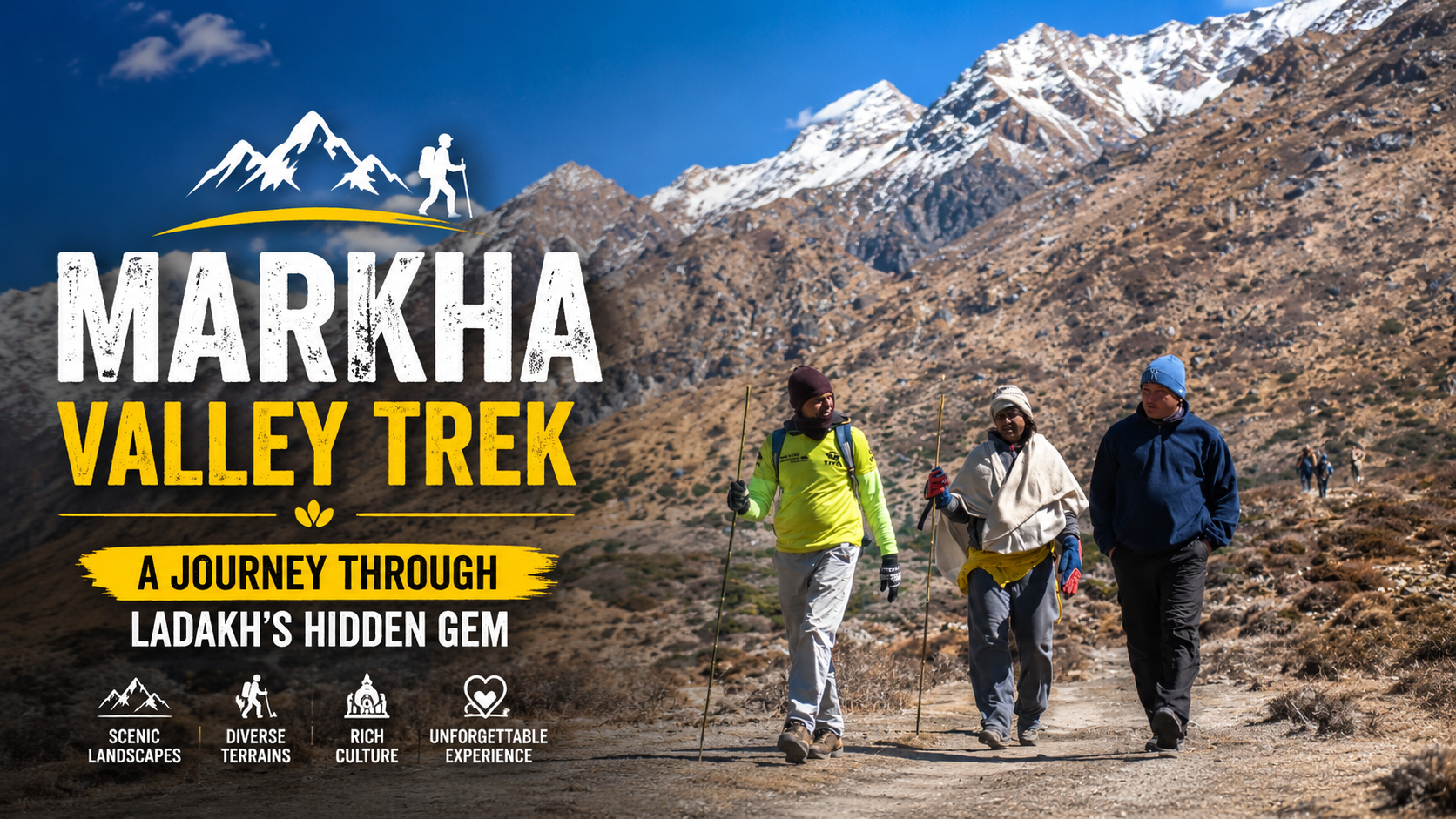
If you do one trekking in Ladakh, do this one. The Markha Valley Trek is 6 to 10 days through the Hemis National Park, crossing the Ganda La (4,970m) and the Kongmaru La (5,400m), with overnight stays in stone-house homestays in Ladakhi villages. It is the only major Ladakh treks where you can sleep in villages every night rather than a tent. The closing day’s pass crossing with Kang Yatse rising directly above is one of the great mountain moments of the Indian Himalaya.
Read more: Read the complete Markha Valley Trek guide
2. Chadar Trek — walking on the frozen Zanskar river
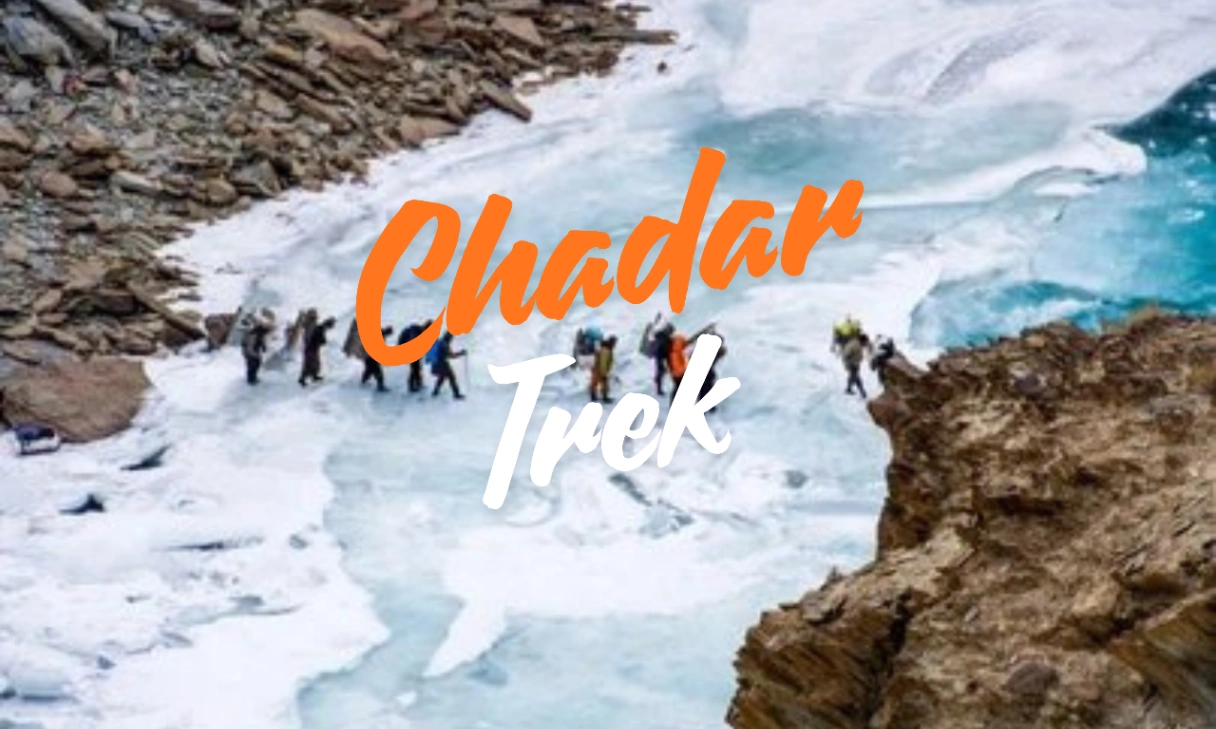
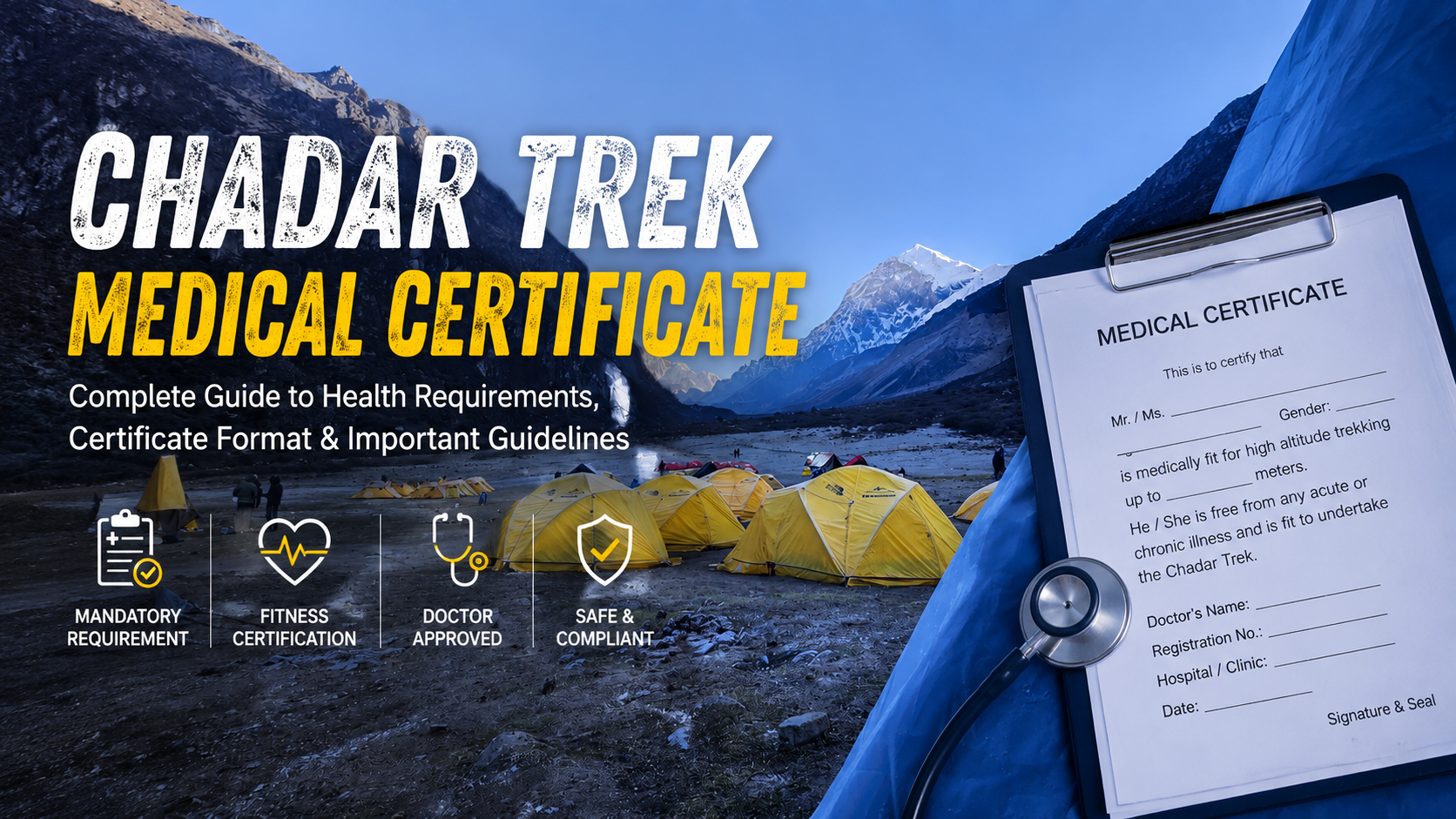
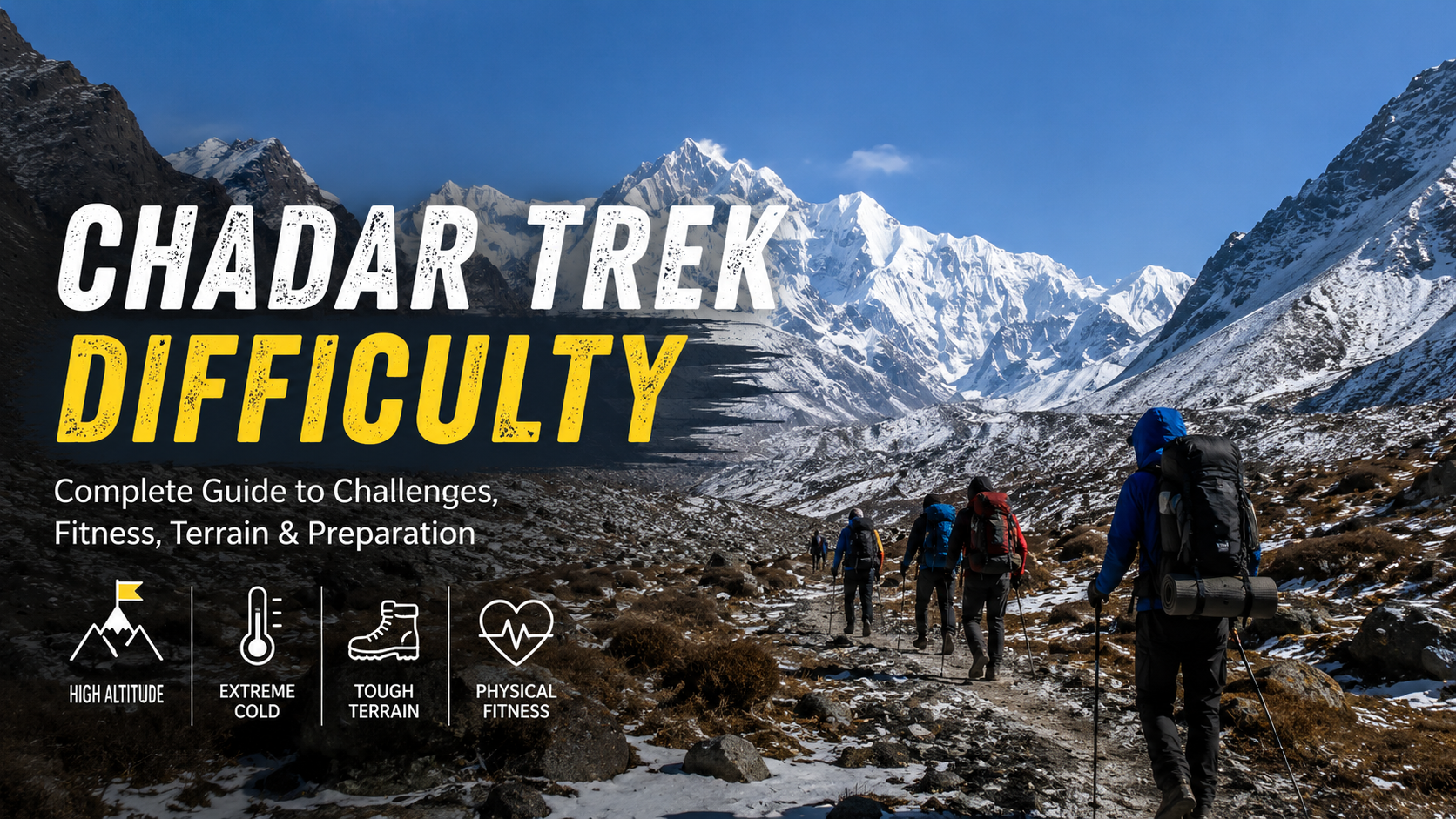
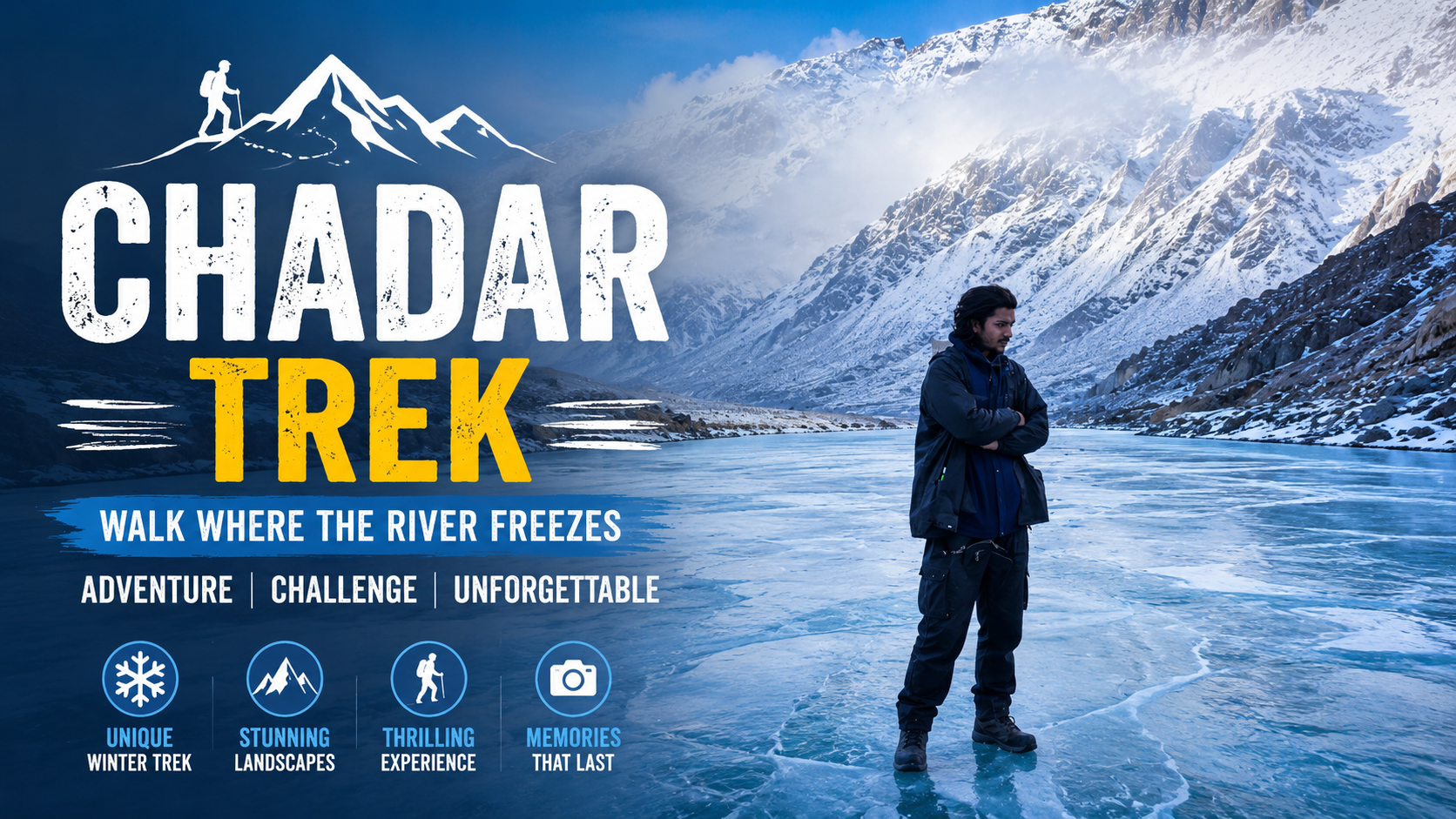
The Chadar Trek is the only trek of its kind in the world — a 9-day winter walk on the frozen surface of the Zanskar river, gorge-walled on both sides, with night temperatures dropping to -25°C. It runs only in January and February when the ice is thick enough. It is strictly regulated by ALTOA, requires a mandatory ALS medical certificate, and is a serious cold-weather undertaking. It is also one of the most photographed and most life-changing treks in India.
Read more: What is the best season to trek in Ladakh.
3. Sham Valley Trek — the easy cultural starter
The Sham Valley Trek is a 3–4 day cultural walk through the lower Indus valley villages of Likir, Yangthang, Hemis-Shukpachan and Tingmosgang. The trail crosses two small passes (Phobe La and Tsermangchen La) but never goes above 3,800m. It is widely considered the best treks in ladakh for first-timers, families with older children, and anyone who wants to experience Ladakhi village life without a high-altitude commitment.
4. Nubra Valley Trek
The Nubra Valley Trek connects the Hundar / Diskit valley with the Indus valley over the Lasermo La (5,400m). It is significantly less crowded than Markha and passes through the genuinely remote villages of the Nubra catchment. The trek requires a separate Inner Line Permit for Nubra and is restricted in some sections — we handle the paperwork.
5. Lamayuru to Alchi Trek
The Lamayuru to Alchi Trek is a 5–6 day cultural traverse linking two of the most important Buddhist monastery sites in Ladakh — Lamayuru (11th century) and Alchi (also 11th century, famous for its murals). The route crosses the Prinkti La (3,750m) and the Konze La (4,800m). It is moderate, scenic and culturally the richest trek in the region.
6. Tso Moriri to Tso Kar Lakes Trek
A remote 7–9 day high-altitude trek between the two big Ladakh lakes — Tso Moriri (4,522m) and Tso Kar (4,530m) — across the Changthang plateau. The terrain is genuinely barren, the nights are cold even in July, and the wildlife (kiang, Tibetan gazelle, occasional snow leopard tracks) is the reason most trekkers come. Permits are restricted; we arrange them.
7. Stok to Matho via Stok La
A short 4–5 day trek that crosses from the Stok village (just south of Leh) over the Stok La (4,900m) to the Matho monastery. It is one of the most convenient Ladakh treks since the trailhead is half an hour from Leh, and it is increasingly chosen by trekkers who used to do Stok Kangri.
8. Mentok Kangri climbing peak (6,250m)
Since Stok Kangri’s closure, Mentok Kangri has become the leading entry-level 6,000-metre climbing peak in Ladakh. It sits above Tso Moriri lake and is reached by a 7–8 day expedition that combines the trek-in with two days at the summit camp. We operate it as a guided IMF expedition for trekkers ready to take their first step into mountaineering.
9. Kang Yatse II (6,200m)
Kang Yatse II is the easier of the two Kang Yatse summits and is often combined with the Markha Valley Trek — you finish Markha at Nimaling and then push for the summit over two days. Total trip length is 11–12 days. It is a serious undertaking but technically straightforward; we run it on an IMF expedition permit.
10. Padum to Darcha across Shingo La
The Padum-Darcha Trek crosses from Zanskar into Lahaul over the Shingo La (5,090m). It is an 8–9 day route through some of the most remote terrain in India, with no roads, no villages above Phugtal monastery, and a real sense of crossing from one cultural region into another. Difficult, beautiful, and increasingly affected by Zanskar’s seasonal road access.
11. Hemis to Spiti link trek
The Hemis-Spiti link is the long-form Ladakh-to-Spiti walking traverse — 7 to 8 days, multiple passes above 5,000m, crossing from Ladakh’s Buddhist heartland into the Spiti valley of Himachal Pradesh. It is technical, remote and weather-dependent. We sent a senior leader for this one.
12. Nun-Kun Expedition (7,135m)
The Nun-Kun is a serious mountaineering expedition, not a trek. Nun stands at 7,135 metres and Kun at 7,077 metres in the Suru Valley of Kargil district. The expedition runs 23–25 days, requires IMF permission, technical glacier and ice training, and previous high-altitude experience. We have led Nun-Kun successfully on six occasions across the last decade.
Read more: Browse our 4 days Ladakh Tour package to easier your trek.
3. How to Choose Your Ladakh Trek — A Decision Framework
The biggest mistake I see trekkers make is not the trek itself — it is choosing the wrong one. Use this framework before booking:
| If your priority is… | Choose this trek |
| First Ladakh trek, want cultural experience | Sham Valley Trek (3–4 days, easy) |
| First serious high-altitude trek | Markha Valley Trek (6–10 days, moderate) |
| Winter trekking, unique experience | Chadar Trek (Jan–Feb only) |
| Off-beat, lower crowd levels | Nubra Valley Trek or Tso Moriri Trek |
| Cultural depth, monasteries, photography | Lamayuru to Alchi Trek |
| First 6,000m climbing peak | Mentok Kangri (7–8 days) |
| Markha + summit combo | Kang Yatse II (11–12 days) |
| Wilderness, remoteness, Zanskar | Padum to Darcha across Shingo La |
| 7,000m mountaineering objective | Nun-Kun Expedition (IMF clearance required) |
4. Best Time to Trek in Ladakh (Month by Month)
Ladakh has a sharp two-season trekking window: summer (June to October) for almost all routes, and deep winter (January to February) for the Chadar Trek only. November to mid-December and March to May are not viable trekking windows — passes are closed, road access to Leh is restricted, and lodge facilities shut down.
| Month | Weather | Trail status | Crowds | Recommended for |
| Jan | Severe cold (-25°C) | Chadar Trek only | Moderate | Chadar Trek |
| Feb | Severe cold (-20°C) | Chadar Trek only | Moderate | Chadar Trek (best ice condition) |
| Mar–May | Cold, passes closed | Trekking not viable | — | Do NOT trek |
| June | Mild days, river crossings risky | Lower routes open | Light | Sham Valley, Markha (caution on rivers) |
| July | Warm, occasional rain | All routes open | Peak | Markha, Nubra, all main treks |
| August | Warm, settled | All routes open | Peak | Anything — high season |
| September | Cooling, golden barley | All routes open | Very high | Best month overall — clear, dry, beautiful |
| October | Cold mornings, very clear | Higher passes closing late month | Light | Sham Valley, Markha, photographers |
| Nov–Dec | Severe cold, snow | All routes closed | — | Do NOT trek |
If I had to pick a single window, the first three weeks of September are unbeatable. The monsoon (which barely reaches Ladakh anyway) has fully cleared, the barley fields in Markha and Sham are golden, the nights are cold but tolerable, and the crowds have thinned after August. We have run thirty-plus September Ladakh batches across the last decade with stable weather on every single one. So before going to Ladakh trek, know about the best ladakh trekking season
Read more: See details about what are the Ladakh trekking Permits and costs.
5. Acclimatisation — The 48-Hour Rule That Saves Lives
If you remember nothing else from this guide, remember this: do not start any trek in Ladakh within 48 hours of arriving in Leh. This is the single most important rule of Ladakh trekking, and it is the rule most often broken — usually by trekkers on tight schedules who fly in on Day 1 and start walking on Day 2.
Leh sits at 3,500 metres. The moment you step off a flight from Delhi (sea level), your body has roughly six hours before the altitude begins to affect it noticeably. Within 24 hours, around 30% of new arrivals show mild symptoms — headache, broken sleep, and slight breathlessness on stairs. Within 48 hours, the body has produced enough additional red blood cells and modified its breathing pattern to compensate, and the symptoms fade.
What the 48-hour rule looks like in practice
• Day 1 in Leh: Arrive, check into your hotel, drink 3–4 litres of water, eat a light meal, sleep. Do nothing else. No sightseeing, no shopping, no walking around. Rest is the only activity.
• Day 2 in Leh: A short morning walk in Leh town, lunch, an afternoon nap, and an early dinner. Visit a low-altitude monastery (Shanti Stupa, Leh Palace) only if you feel well. Continue drinking 4 litres of water.
• Day 3 onwards: Trekking begins. Some operators add a third ‘active acclimatisation’ day with a small hike to Shanti Stupa or to a higher monastery — this is excellent practice and we build it into most of our itineraries.
Avoid these three mistakes in your first 48 hours: (1) alcohol — it is dehydrating and worsens AMS symptoms; (2) heavy meals — they pull blood into digestion when your body needs it for oxygen distribution; (3) hot showers — they cause peripheral vasodilation and can drop your blood pressure suddenly. Stick to lukewarm water, light meals and tea.
Read more: Complete Ladakh acclimatization guide and AMS prevention protocol
6. Permits for Trekking in Ladakh
Ladakh trekking permits changed significantly after the union territory was carved out in 2019. The current 2026 permit landscape involves three documents, and what you need depends on (a) your nationality and (b) the specific area your trek enters.
For Indian trekkers
• Inner Line Permit (ILP). Required for protected areas including Nubra Valley, Pangong Lake, Tso Moriri, Hanle and the Changthang plateau. Issued by the Leh DC office, valid for up to 21 days. Application is online or through us.
• Wildlife Protection Fee. Approximately ₹400–600 per person for treks crossing Hemis National Park (Markha Valley) and the Changthang Wildlife Sanctuary (Tso Moriri).
For foreign trekkers
• Protected Area Permit (PAP). Required for Nubra, Pangong, Tso Moriri, Hanle and the Dah-Hanu region. Valid for 7 days, extendable to 14. Foreign nationals must apply through a registered travel agent — we handle this; you cannot apply individually.
• Group requirement. PAP requires a group of at least two. Solo foreign trekkers cannot get PAP-restricted areas covered — they must travel with at least one other person.
• Wildlife Protection Fee at significantly higher rates. Foreign trekkers pay 3–5 times the Indian rate at the check posts.
For all trekkers
• Photo ID — original plus 3 photocopies (Aadhaar / passport)
• Six passport-size photographs
• Mandatory medical fitness certificate for the Chadar Trek (ALS test, BP, ECG)
• Authorised local guide is mandatory inside Hemis NP and the Changthang plateau
Read more: Complete 2026 Ladakh trekking permits guide for Indians and foreigners
7. How to Reach Leh
There are three ways into Leh: by flight, by the Srinagar-Leh highway, and by the Manali-Leh highway. Each has different implications of Ladakh trekking package for acclimatisation, cost and timing.
| Route | Time | Cost (approx) | Acclimatization profile |
| Flight Delhi/Mumbai → Leh | 1.5–2 hours | ₹6,000–18,000 | Worst — gain 3,500m in 90 minutes. 48-hour Leh rest is non-negotiable. |
| Srinagar–Leh highway (by road) | 2 days (overnight Kargil) | ₹3,000–6,000 shared | Good — gradual altitude gain, body adjusts en route |
| Manali–Leh highway (by road) | 2 days (overnight Keylong/Sarchu) | ₹3,500–7,000 shared | Mixed — crosses 5,300m Tanglang La on Day 2, can trigger AMS |
If you can spare the days, fly into Srinagar and take the road. The Srinagar-Leh highway gives you the best gradual acclimatisation profile of any route into Ladakh, and the drive itself through Kargil and the Suru Valley is one of the great mountain journeys in India. If you fly direct to Leh, build that mandatory 48-hour rest into your plan and do not negotiate with yourself on it.
8. Cost of Trekking in Ladakh
Ladakh treks are typically priced higher than Sikkim or Uttarakhand treks of the same duration. This is not operator margin — it is the logistics. Everything except basic provisions has to be transported into Ladakh from outside; permits cost more; staff wages reflect a shorter operating season; and homestays/camp logistics in remote valleys carry real overhead. Here is the overall Ladakh trekking package, sharing with you.
| Trek | Duration | Indian cost | Foreign cost |
| Sham Valley Trek | 3–4 days | ₹14,000–18,000 | $280–360 |
| Markha Valley Trek | 6–10 days | ₹22,000–32,000 | $450–650 |
| Chadar Trek | 8–9 days | ₹28,000–38,000 | $550–750 |
| Nubra Valley Trek | 5–8 days | ₹22,000–30,000 | $450–600 |
| Lamayuru to Alchi | 5–6 days | ₹18,000–24,000 | $360–480 |
| Tso Moriri Lakes Trek | 7–9 days | ₹26,000–34,000 | $520–680 |
| Mentok Kangri (climbing peak) | 7–8 days | ₹35,000–45,000 | $700–900 |
| Kang Yatse II | 11–12 days | ₹55,000–70,000 | $1,100–1,400 |
| Nun-Kun Expedition | 23–25 days | ₹2.5L–3.5L | $4,500–6,500 |
What is typically included in our Ladakh packages: all permits, accommodation (homestays where applicable, tented camp elsewhere), all meals on the trek, IMF-certified leader, support staff, mules or horses for kitchen equipment, basic medical kit with portable oxygen. Not included: Delhi-Leh flight, Leh hotel before and after, personal gear, GST, tips, personal medical insurance.
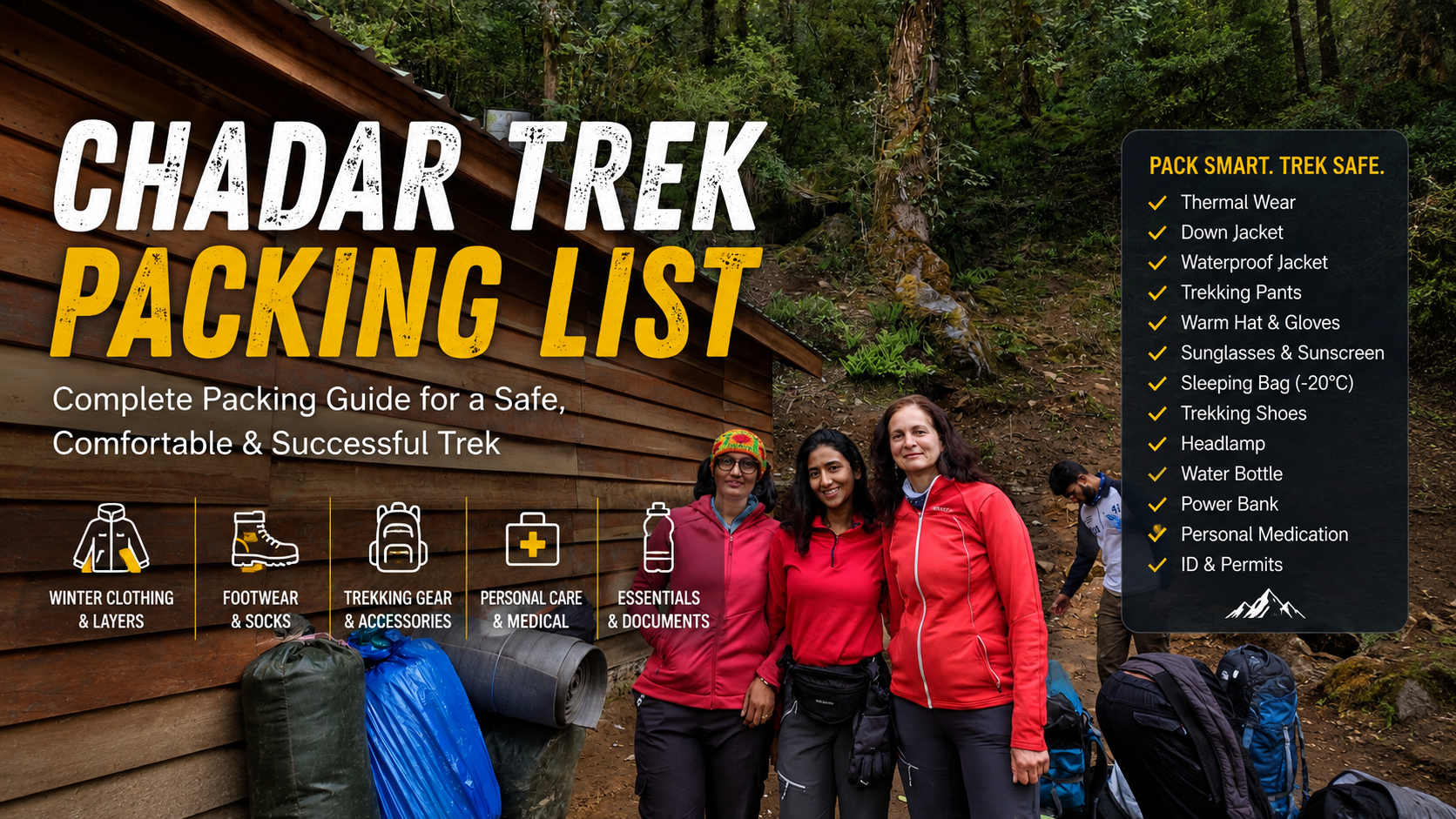
9. Packing List for the Ladakh Cold Desert
Ladakh packing is unlike Sikkim packing. You are packing for cold, dry, high-UV and high-wind conditions, not for monsoon humidity. The temperature range in a single 24-hour cycle in July at 5,000m can span 35°C — from intense midday sun to -5°C pre-dawn cold.
Clothing
• Thermal base layer: 1 top + 1 bottom (merino is best for the cold dry conditions)
• Mid layer: 1 fleece + 1 heavy down jacket (rated to -10°C; rentable in Leh)
• Outer shell: windproof jacket + windproof trouser (waterproofness matters less in Ladakh than wind resistance)
• Trekking pants: 2 pairs quick-dry; convertible (zip-off) pants are particularly useful in Ladakh’s temperature swings
• Full-sleeve dri-fit T-shirts: 3 (UV protection matters at 4,000m+)
• Socks: 4 pairs (2 thick woollen + 2 trekking)
Footwear and accessories
• Trekking shoes: ankle-high, waterproof, broken in
• River-crossing footwear for Markha (sandals or old shoes you can wet)
• Woollen cap, wide-brim sun cap, balaclava
• Sunglasses: UV-400 category 4 — Ladakh light is brutal; standard sunglasses are not enough
• Gloves: 1 fleece inner + 1 windproof outer (chadar trekkers need much heavier)
• Trekking poles: 1 pair
• Headlamp + spare batteries
Health & altitude-specific
• SPF 50+ sunscreen — at 4,500m you can burn in 20 minutes
• Lip balm with SPF — dry air cracks lips fast
• Pulse oximeter (optional but useful)
• Diamox (acetazolamide) on doctor advice
• Personal prescription medicines
• ORS sachets and electrolyte tablets
Read more: Complete Ladakh trek packing list with brand recommendations
10. Safety, AMS and Evacuation
Ladakh has the highest base altitude of any trekking region in India. Even Leh itself is higher than the summit of most Indian peaks people climb as ‘high-altitude’ treks. AMS prevention and rapid recognition are not optional — they are the central operational concern of every Ladakh treks.
Recognise AMS at three stages
• Mild AMS: headache, mild nausea, loss of appetite, broken sleep, slight breathlessness on exertion. Roughly 40% of new arrivals to Leh experience this. Not dangerous if managed — drink water, rest, do not gain more altitude until symptoms resolve.
• Moderate AMS: persistent headache that does not respond to paracetamol, vomiting, fatigue beyond normal, and dizziness. Stop signal. Descend at least 500m and reassess.
• Severe AMS (HACE / HAPE): confusion, loss of coordination, pink frothy sputum, breathlessness at rest that does not improve. Medical emergency. Descend immediately, administer oxygen, and evacuate.
Our safety protocol on every Ladakh trek
• IMF-certified trek leader on every batch
• Portable oxygen cylinder carried at all times above 4,000m
• Pulse oximeter readings taken twice daily from Day 3 onwards
• Diamox (acetazolamide) available for trekkers on a doctor’s advice
• Mandatory 48-hour Leh acclimatisation before every trek
• Contingency day at the first high camp, included in every itinerary
• Helicopter evacuation arrangement with Leh emergency services for severe cases
Read more: Know about best Ladakh Trekking peaks you can climb.
11. Why Trek the Ladakh with Glacier Treks & Adventure
Our Sikkim base in Yuksom is where we are best known, but Ladakh has been an integral part of our portfolio since the company was founded in 2010. We have run Markha, Chadar, Sham Valley, Nubra and the major climbing peaks every year for fifteen years, alongside three full Nun-Kun expeditions. Our model in Ladakh is the same as in Sikkim — we work with experienced local Ladakhi guides, certified mountaineers, and our IMF-certified leadership team.
What this means for you in plain numbers:
• 15 years of continuous Ladakh operations
• IMF-certified founder (Kiran Gurung) who has personally led Markha, Chadar, Mentok Kangri and Nun-Kun
• Permanent Ladakhi field team — guides, cooks and porters who are from the Markha, Nubra and Sham valleys
• Affiliated with IMF, Sikkim Tourism, TAAS and SAMA
• Mandatory 48-hour acclimatisation built into every package, never compressed for cost
• Full expedition capacity — we operate climbing peaks ourselves rather than subcontracting
Read more: The step by step process for reaching Lea: The complete guidance for you.
12. Frequently Asked Questions
Is trekking in Ladakh suitable for beginners?
Yes, for the right trek. The Sham Valley Trek and the Lamayuru to Alchi Trek are genuinely beginner-friendly Ladakh routes — moderate altitude, well-established trails, and homestay accommodation. The Markha Valley Trek is beginner-friendly with good fitness preparation. The Chadar Trek, climbing peaks like Mentok Kangri or Kang Yatse, and the Nun-Kun expedition are not beginner treks under any framing.
What is the maximum altitude you reach trekking in Ladakh?
Standard trekking routes range from 3,500m (Leh) to 5,400m (Kongmaru La on the Markha Valley Trek). Climbing peaks reach 6,000m–6,250m (Mentok Kangri, Kang Yatse II). The Nun-Kun expedition reaches 7,135m. Anything above 5,400m is genuinely high-altitude territory and requires excellent acclimatisation and fitness.
Do I need previous trekking experience for Ladakh?
Not for the easy routes (Sham Valley, Lamayuru). For the Markha Valley Trek, previous trekking experience helps, but is not mandatory if your fitness is good. For climbing peaks and the Nun-Kun expedition, prior high-altitude experience is genuinely required — we screen for it before accepting bookings.
What about the Chadar Trek — is it open in 2026?
Yes. The Chadar Trek operates every January and February when the Zanskar River’s surface freezes thick enough for safe walking. ALTOA (the All Ladakh Tour Operators Association) regulates the trek strictly — group sizes, dates, medical certification — and we follow their rules without exception.
Can I do Stok Kangri in 2026?
No. Stok Kangri has been closed to commercial trekking since 2020 by the Stok village council, citing ecological damage. The closure remains in effect for 2026. Any website or operator still selling Stok Kangri is selling a trek that legally cannot happen. The closest alternatives are Mentok Kangri (6,250m) and Kang Yatse II (6,200m), both of which we operate.
What is the cost of trekking in Ladakh?
Ladakh trek costs range from ₹14,000 for the 3-day Sham Valley Trek to ₹3.5 lakh for the Nun-Kun expedition. The Markha Valley Trek, by far the most popular Ladakh trek, costs ₹22,000–32,000 for Indian trekkers, depending on duration. Foreign trekkers pay $450–650 for the same trek. See the cost table in Section 8 for the full breakdown.
How long should I stay in Leh before starting my trek?
Minimum 48 hours. This is non-negotiable. The body needs that time to begin producing additional red blood cells and modifying breathing patterns. Operators who promise a ‘start the trek next day’ itinerary are gambling with your health — and you would be surprised how many do.
Is solo trekking allowed in Ladakh?
For most major routes — no. The Markha Valley Trek inside Hemis National Park requires a registered guide. The Chadar Trek requires ALTOA registration, which is not issued to solo trekkers. The Sham Valley Trek is the main exception — it is technically possible solo, though we still recommend a guide. Foreign trekkers face additional PAP requirements that effectively rule out solo travel into the high-altitude restricted zones.
What about food on a Ladakh trek?
On homestay-based treks like Markha and Sham Valley, you eat Ladakhi household food — rice, dal, vegetables, the famous skyu (a hand-rolled pasta soup), thukpa, butter tea (which is an acquired taste). On camping-based treks like Nubra or Tso Moriri, our kitchen team carries provisions and cooks fresh meals at every camp. Vegetarian, vegan and Jain food is always available with prior intimation.
Is there a mobile network on the Ladakh treks?
Patchy. BSNL postpaid is the only network that works at all in much of Ladakh outside Leh — prepaid SIMs from other states do not activate. Even the BSNL signal drops out for most of the Markha Valley Trek, the Nubra trekking sections, the Tso Moriri area and most of the Zanskar routes. Plan to be unreachable for 5–10 days, depending on the trek.
Ready to Plan Your Trekking in Ladakh?
Ladakh delivers a category of trekking experience that exists nowhere else in India — high-altitude cold desert, Buddhist culture woven through the trail, and a sense of remoteness that the Himalayan classics increasingly lack. Our 2026 Ladakh season runs from June through October for summer treks, and again in January and February for the Chadar Trek.
Plan your Ladakh trek now: Call/WhatsApp +91 74072 48200 · Email contact@trekinsikkim.in
Read more: Browse all our Ladakh trek packages with prices and 2026 dates
Read more: See details about what are the Ladakh trekking Permits and costs.
Read more: What is the best season to trek in Ladakh.
Read more: Ladakh expedition peaks — Nun, Nun-Kun, Mentok Kangri
About the author
Kiran Gurung is the founder of Glacier Treks & Adventure, an IMF-certified mountaineer, and a working trek leader with fifteen years of operating experience across the Indian Himalaya. He has personally led the Markha Valley Trek, Chadar Trek, Mentok Kangri climbing peak and the Nun-Kun expedition on multiple occasions. Glacier Treks & Adventure operates the full Ladakh trekking and expedition portfolio — Markha, Chadar, Sham Valley, Nubra, Tso Moriri, Mentok Kangri, Kang Yatse, Nun and Nun-Kun — alongside the company’s Sikkim trekking operations from its base in Yuksom. The company is affiliated with the IMF, the Sikkim Department of Tourism, TAAS, YTDC and SAMA.