If you are planning to trek in Ladakh, permits are the first thing you need to sort. For those who dream of traversing the rugged Markha Valley, camping by the shimmering Pangong Tso, or crossing the challenging passes of the Sham Valley trek, understanding the Ladakh trekking permits system is the critical first step. Many trekkers find the regulations confusing, but this guide will walk you through every requirement clearly so you can focus on the adventure.
Types of Ladakh Trekking Permits You Need
Permit requirements in Ladakh changed significantly after the union territory was carved out in 2019. The current 2026 permit landscape involves three documents, and what you need depends on (a) your nationality and (b) the specific area your trek enters.
For a smooth trekking experience, here are the three key permits that regulate travel in this border region:
1. Inner Line Permit (ILP): Required for Indian Trekkers
Required for Indian trekkers entering protected areas including Nubra Valley, Pangong Lake, Tso Moriri, Hanle, and the Changthang plateau. Issued by the Leh DC office, valid for up to 21 days. Application is online or through a registered travel agent.
This is the official Inner Line Permit (ILP) for Nubra Valley and other restricted regions.
2. Protected Area Permit (PAP): Required for Foreign Trekkers
Required for foreign trekkers visiting the same restricted zones (Nubra, Pangong, Tso Moriri, Hanle, and the Dah-Hanu region). Valid for 7 days, extendable to 14. Foreign nationals must apply through a registered travel agent – you cannot apply individually.
The Protected Area Permit (PAP) Ladakh is mandatory for foreign nationals entering protected trekking regions.
3. Wildlife Protection Fee
Applicable to both Indian and foreign trekkers. Approximately ₹400–600 per person for Indian trekkers on treks crossing Hemis National Park (Markha Valley) and the Changthang Wildlife Sanctuary (Tso Moriri). Foreign trekkers pay significantly higher rates – 3 to 5 times the Indian rate – collected at the check posts.
This fee is often referred to alongside the Ladakh environment fee applicable in protected trekking regions.
Read more: Browse all Ladakh Trek Expeditions including Nun Kun, Mentok Kangri, Nun Peak expedition.
Who Needs Which Permit? 2026 Quick Overview
The table below outlines exactly who requires which permit for trekking in Ladakh:
| Permit Type | Required For | Validity / Cost | Key 2026 Update |
| Inner Line Permit (ILP) for Nubra Valley | Indian citizens entering restricted areas | Up to 21 days | Online application available; also through registered agents |
| Protected Area Permit (PAP) Ladakh | Foreign nationals (all non-Indian passport holders) | 7 days extendable to 14 | Must apply through a registered travel agent – individual application not allowed |
| Wildlife Protection Fee | All trekkers (Indian & foreign) inside Hemis NP / Changthang | Indian: ₹400–600/person; Foreign: 3–5x Indian rate | Collected at check posts |
Additional Requirements for All Trekkers
Beyond permits, every trekker must carry the following documents and items:
- Photo ID – original plus 3 photocopies (Aadhaar card for Indians / passport for foreigners)
- Six passport-size photographs
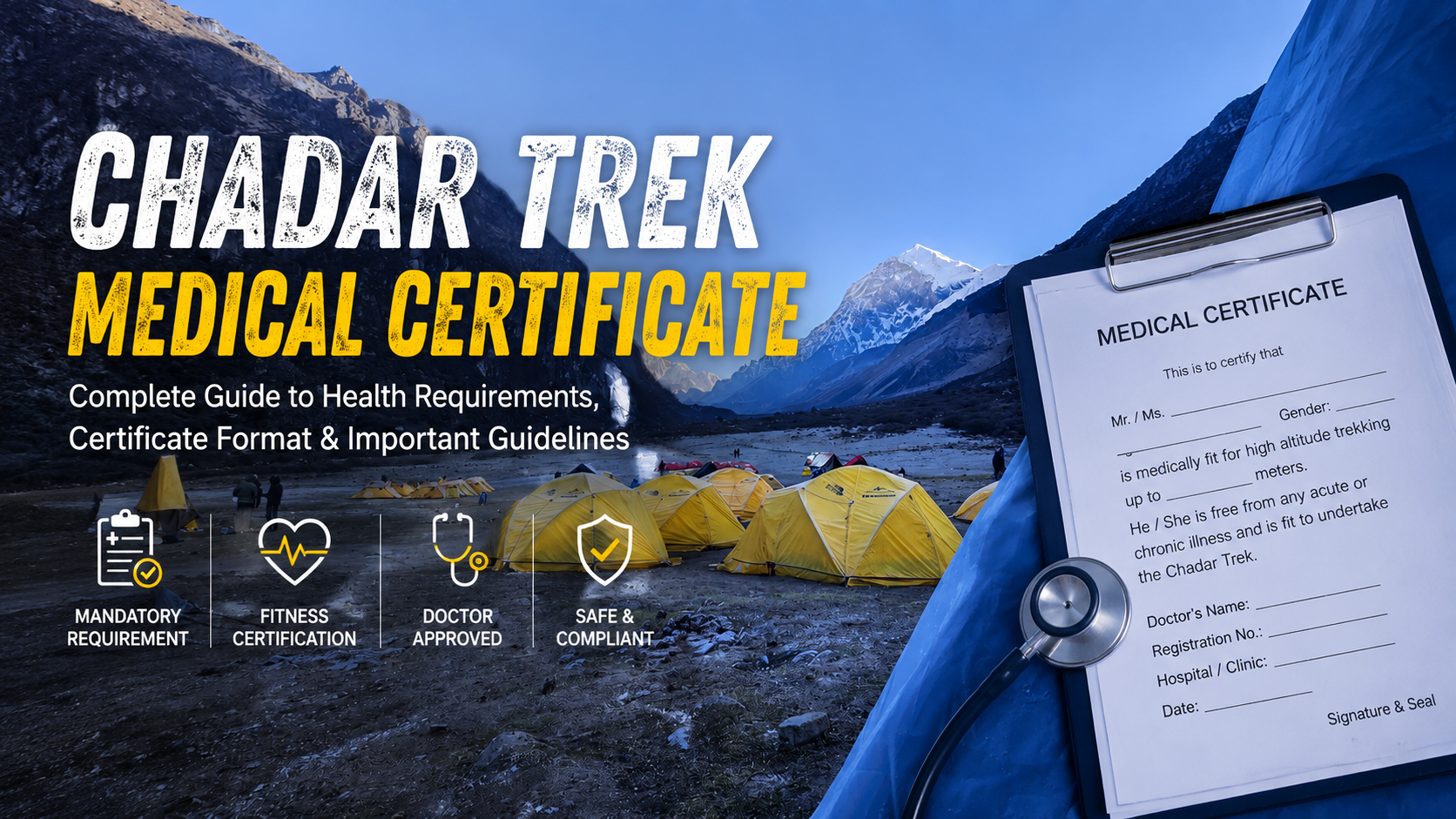
- Mandatory medical fitness certificate for the Chadar Trek (including ALS test, BP, ECG)
- An authorised local guide is mandatory inside Hemis National Park and the Changthang plateau
Ladakh Trekking Permits Cost Breakdown for 2026
The total cost depends on your nationality and the trekking area. Here is the exact fee structure based on authentic 2026 requirements:
For Indian Citizens:
- Inner Line Permit (ILP) for Nubra Valley and other restricted zones – nominal processing fee (varies)
- Wildlife Protection Fee: approximately ₹400–600 per person for treks in Hemis NP or Changthang Wildlife Sanctuary
Total approximate: ₹500–800 per person, depending on the trek.
For Foreign Nationals (PAP):
- Protected Area Permit (PAP) Ladakh: must be arranged through a registered travel agent (agent fees vary)
- Wildlife Protection Fee: 3 to 5 times the Indian rate, paid at check posts
Total approximate: significantly higher than Indian citizens; exact amount depends on duration and agent charges.
Important cost note: The wildlife fee is not a daily charge. It is a one-time fee for entering specific protected areas like Hemis National Park or the Changthang Wildlife Sanctuary.
Restricted Zones: Where You Need Ladakh Trekking Permits
Many trekkers search for Ladakh trekking zones permit required before planning their itinerary.
Permits are not required for trekking within Leh city or on the main Manali–Leh highway. However, the following restricted zones require Ladakh trekking permits:
- Nubra Valley – Includes the famous Hunder sand dunes and Diskit Monastery
- Pangong Tso – The iconic blue lake shared with China
- Tso Moriri – A pristine high-altitude lake in the Changthang region
- Hanle – India’s first Dark Sky Reserve
- Dah-Hanu region – Restricted area for foreign nationals
- Changthang plateau – Requires ILP (Indians) or PAP (foreigners)
For any trek that enters these regions, proper Ladakh trekking permits are mandatory and will be checked at multiple military checkpoints.
Read more: Know about how to reach Lea: Complete Guide
How to Apply for Ladakh Permits (Online or Through an Agent)
For Indian Trekkers:
Ladakh permit online application: Register on the official LAHDC Leh permit portal (lahdclehpermit.in) 48–72 hours before your arrival.
Offline: Visit the Leh DC office in person.
Through an agent: You can also apply through a registered travel agent, who will handle the paperwork.
For Foreign Trekkers:
You cannot apply individually for a PAP.
You must use a registered travel agent for your Protected Area Permit (PAP) Ladakh.
The agent will submit your passport, visa, and trek itinerary to the authorities.
For All Trekkers:
Carry:
- Original photo ID + 3 photocopies (Aadhaar / passport)
- Six passport-size photographs
- For the Chadar Trek, also carry a medical fitness certificate (ALS test, BP, ECG)
Read more: Complete Ladakh trek packing list with brand recommendations
Special Rules for Group Trekking and Guides
Group requirement for PAP: A Protected Area Permit (PAP) Ladakh requires a group of at least two foreign trekkers. Solo foreign trekkers cannot get PAP-restricted areas covered – they must travel with at least one other person.
Mandatory local guide: Inside Hemis National Park and the Changthang plateau, an authorised local guide is compulsory for all trekkers, regardless of nationality.
Ladakh Trekking Permits: Checkpoints to Know
When you are trekking, you may not encounter traditional road checkpoints. However, for trek routes that require vehicle support or cross mountain passes, your permit will be verified at:
- South Pullu – Checkpoint before Khardung La pass
- Upshi – Major checkpoint on the Manali–Leh highway route
- Karoo – Checkpoint for Pangong and Tso Moriri routes
- Leh Airport – On-arrival verification for ILP / PAP
- Trailhead checkpoints – Many trek starting points have army outposts that verify permits before allowing entry
Wildlife Protection Fees are collected at the respective check posts when you enter Hemis National Park or Changthang Wildlife Sanctuary.
Penalties for Trekking Without Permits
Trekking in restricted zones without valid Ladakh trekking permits can result in:
- Immediate denial of entry and turning back at checkpoints
- Fines and legal notices from local authorities
- Blacklisting from future visits to protected areas
- Deportation for foreign nationals found in restricted zones without a PAP
The enforcement at military checkpoints is stricter than ever due to increased border sensitivities.
Common Mistakes When Applying for Ladakh Permits
Mistake 1: Applying too late. The Ladakh permit online application process can take several hours to a full working day. Plan 48–72 hours.
Mistake 2: Not carrying enough photocopies. You need original ID plus 3 photocopies.
Mistake 3: Forgetting the six passport-size photographs – these are not optional.
Mistake 4: Foreign trekkers trying to apply for the Protected Area Permit (PAP) Ladakh individually. You must go through a registered travel agent.
Mistake 5: Solo foreign trekkers arriving without a trekking partner. PAP requires a group of at least two.
Mistake 6: Not hiring an authorised local guide inside Hemis NP or Changthang plateau – this is mandatory, not a suggestion.
Read more: Ladakh expedition peaks — Nun, Nun-Kun, Mentok Kangri
Read more: Complete Ladakh acclimatization guide and AMS prevention protocol
Frequently Asked Questions
Do Indian citizens need an Inner Line Permit (ILP) for Nubra Valley in 2026?
Yes. ILP is required for protected areas including Nubra Valley, Pangong Lake, Tso Moriri, Hanle, and the Changthang plateau. It is valid for up to 21 days and can be applied for online or through a registered agent.
Can foreign nationals trek solo in Ladakh?
No. Protected Area Permit (PAP) Ladakh requires a group of at least two foreign trekkers. Solo foreign trekkers cannot get PAP-restricted areas covered – they must travel with at least one other person.
What is the Wildlife Protection Fee and how much is it?
It is a fee for entering Hemis National Park (Markha Valley) or Changthang Wildlife Sanctuary (Tso Moriri). For Indian trekkers: approximately ₹400–600 per person. Foreign trekkers pay 3 to 5 times the Indian rate, collected at the check posts.
Do I need a guide for trekking in Ladakh?
An authorised local guide is mandatory inside Hemis National Park and the Changthang plateau for all trekkers.
What documents must I carry for the Chadar Trek?
A mandatory medical fitness certificate including ALS test, BP, and ECG – in addition to your photo ID, photocopies, passport-size photographs, and permits.
Can I get a PAP on arrival at Leh Airport as a foreigner?
No. You must apply through a registered travel agent before or upon arrival – individual applications are not accepted. Your agent will handle the process.
Final Permit Checklist Before Your Trek
For Indian trekkers: Valid Inner Line Permit (ILP) for Nubra Valley and other restricted zones
For foreign trekkers: Protected Area Permit (PAP) Ladakh arranged through a registered agent
Ladakh environment fee and Wildlife Protection Fee paid (receipt from check post if applicable)
Original photo ID + 3 photocopies (Aadhaar / passport)
Six passport-size photographs
For Chadar Trek: Medical fitness certificate (ALS test, BP, ECG)
Authorised local guide booked for Hemis NP or Changthang plateau
Solo foreign trekkers: Partner arranged – PAP requires a group of at least two
This guide is part of our complete Ladakh trek series. For detailed information on trek routes, packing lists, altitude acclimatisation, and seasonal planning, refer to the main pillar post: Trekking in Ladakh 2026: Complete Guide.
Ready to Plan Your Ladakh Trek?
Ladakh delivers a category of trekking experience that exists nowhere else in India — high-altitude cold desert, Buddhist culture woven through the trail, and a sense of remoteness that the Himalayan classics increasingly lack. Our 2026 Ladakh season runs from June through October for summer treks, and again in January and February for the Chadar Trek.
Plan your Ladakh trek now: Call/WhatsApp +91 74072 48200 · Email contact@trekinsikkim.in
Read more: Browse all our Ladakh trek packages with prices and 2026 dates
Read more: Know about best Ladakh Trekking peaks you can climb.
Read more: Complete Ladakh trek packing list with brand recommendations
Read more: What is the best season to trek in Ladakh.
About the author
Kiran Gurung is the founder of Glacier Treks & Adventure, an IMF-certified mountaineer, and a working trek leader with fifteen years of operating experience across the Indian Himalaya. He has personally led the Markha Valley Trek, Chadar Trek, Mentok Kangri climbing peak and the Nun-Kun expedition on multiple occasions. Glacier Treks & Adventure operates the full Ladakh trekking and expedition portfolio — Markha, Chadar, Sham Valley, Nubra, Tso Moriri, Mentok Kangri, Kang Yatse, Nun and Nun-Kun — alongside the company’s Sikkim trekking operations from its base in Yuksom. The company is affiliated with the IMF, the Sikkim Department of Tourism, TAAS, YTDC and SAMA.