The rugged moonscapes of Ladakh have long beckoned climbers seeking Himalayan glory without the crowds and costs of the Nepal side. But the question every aspiring mountaineer asks is straightforward: Which peaks actually make sense for a 2026 expedition?
The answer lies somewhere between the legendary (and currently closed) Stok Kangri expedition and the less-travelled 6,000 m alternatives that offer genuine challenge without overwhelming technical demands. Below is a fresh, no-fluff guide to the five most viable Ladakh expedition peaks you can still put on your calendar this year.
Important 2026 Permit Update: As of 2025, peak permits issued by the Indian Mountaineering Foundation (IMF) are no longer accepted in Ladakh. Permits are now issued only by the Assistant Director (Tourism), Leh, through registered Mountaineering Tour Operators (MTOs). This guide reflects the current permit regime.
Nun Peak Expedition: The Open Challenge
If you have researched Himalayan climbing, you have heard of the Nun Peak expedition as a serious 7,000 m objective. At 7,135 m, it is the highest peak entirely within Indian territory—technically demanding, with glacier travel and fixed ropes.
As of 2026, Nun Peak expedition remains open for expeditions. Unlike Stok Kangri, it was never closed, but logistics are tougher: a 40 km approach from the road head, multiple high camps, and a summit push starting at 1 AM. Climbers need prior 6,000 m experience and avalanche awareness. Only 30–40 summits happen per year. Permits for 2026 are available through the Indian Mountaineering Foundation (IMF), but book at least six months in advance.
Read more: Complete Ladakh acclimatization guide and AMS prevention protocol
Nun Kun Expedition: The Technical 7,000 m Challenge
For climbers who have already cut their teeth on 6,000 m peaks, the Nun Kun expedition is the ultimate Ladakh objective. The massif consists of two giants: Nun at 7,135 m and Kun at 7,077 m, separated by a snowy plateau about 4 km long.
The expedition is long (20–24 days from arrival to departure) and technically demanding. The route from base camp (4,600 m) goes through three higher camps: Camp 1 at ~5,300 m, Camp 2 at ~6,000 m, and a high camp at ~6,300 m. The most technical section lies between Camp 1 and Camp 2, where fixed ropes cover steep snow and ice slopes averaging 45 degrees. From high camp, the summit push follows slopes of 35–40 degrees onto a ridge leading to Nun’s rounded summit.
Permit note for Nun Kun expedition: As a peak above 7,000 m, it falls into the highest permit fee tier (USD 300 per foreign climber). Apply through an MTO at least 3–4 months in advance; slots are extremely limited.
Kang Yatze Climbing: The Twin-Peak Experience
Kang Yatze climbing refers to two distinct summits in the Markha Valley. Kang Yatze II (6,200 m) is the more popular choice—non-technical and often climbed as a first 6,000 m peak. The ascent is a long snow slope with no real climbing difficulties, though the altitude and length make it a serious challenge. Kang Yatze I (6,400 m) is a different beast: steep ridgelines, glaciers, and a narrow, exposed summit ridge classify it as a genuinely technical alpine climb (AD–D grades).
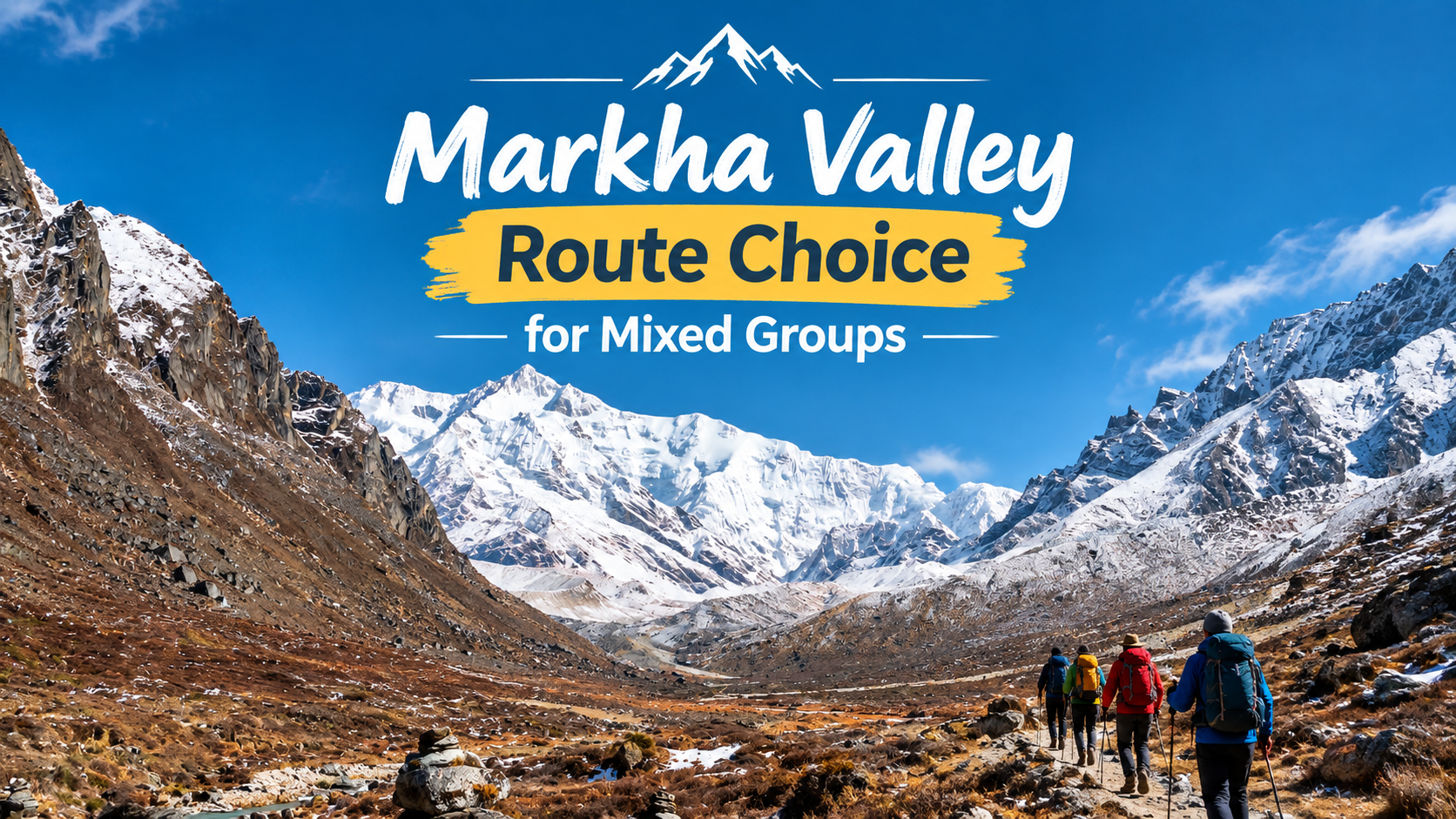
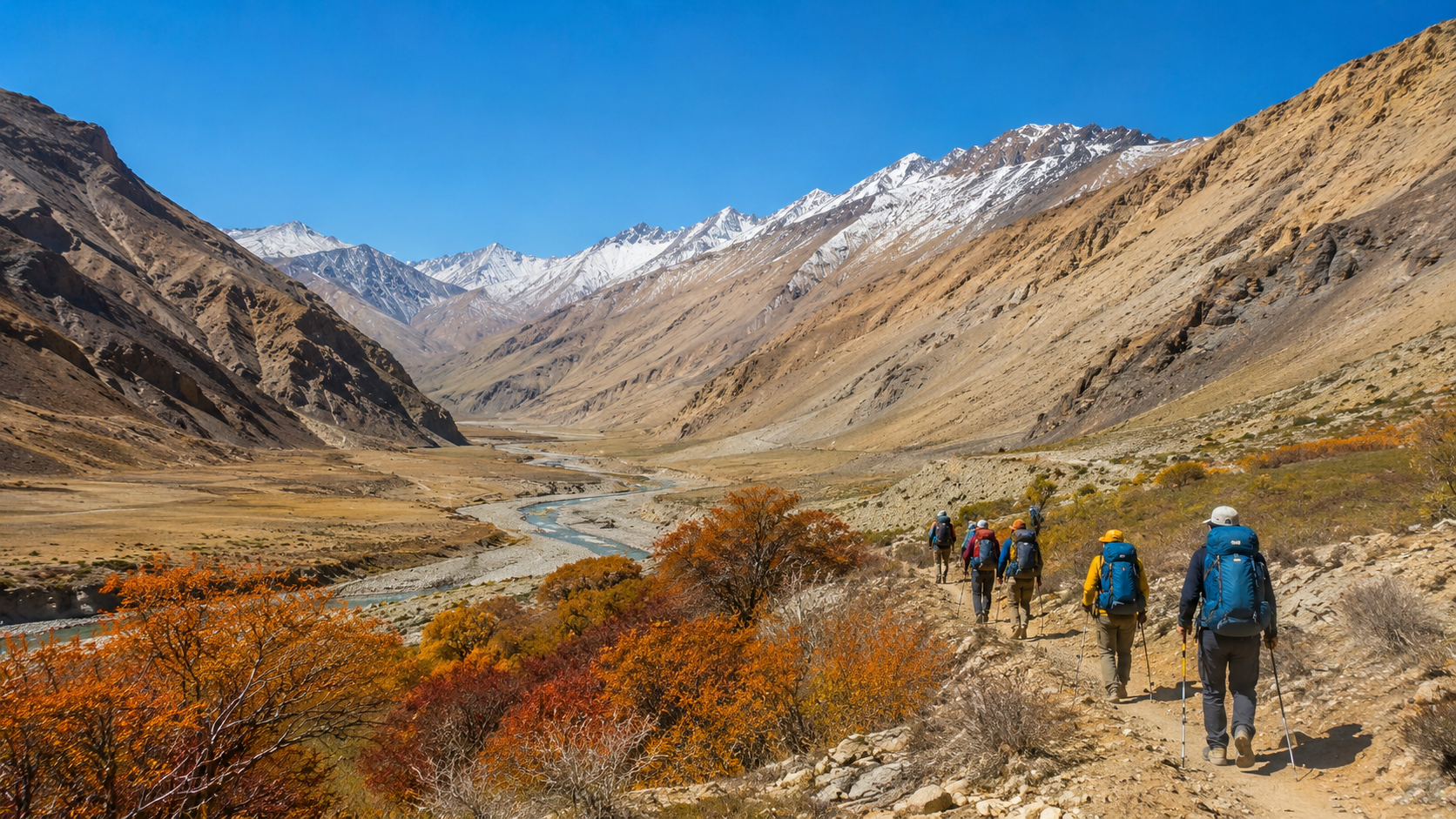
The approach weaves through the beautiful Markha Valley, passing villages like Skui, Markha and Hunkar before reaching base camp. The summit window is narrow (July–September), and climbers need basic ice axe and crampon skills even for the less technical Kang Yatze II.
Permit note for Kangyatze climbing: These peaks lie inside Hemis National Park. You will need three permits: an IMF-style climbing permit (via the new Ladakh system), a national park entry permit, and a Protected Area Permit (PAP) for foreign nationals. Lead time: 2 months.
Read more: Browse our 4 days Ladakh Tour package to easier your trek.
Read more: See details about what are the Ladakh trekking Permits and costs.
Mentok Kangri Climb: Remote Trilogy on the Changthang
If you want solitude, the Mentok Kangri climb delivers. Located near the pristine Tso Moriri Lake on the Changthang plateau, Mentok Kangri is actually a cluster of three peaks above 6,000 m: Mentok Kangri 1 (6,262 m), Mentok Kangri 2 (6,250 m), and Mentok Kangri 3 (approx. 6,200 m).
The expedition is 10–14 days long. After driving from Leh to Tso Moriri, you trek through remote passes like Yalung Nyau La (5,300 m) to reach base camp at 5,100 m. The climbs themselves are non-technical—long snow slopes and gradual ridgelines secured with fixed ropes—but the high altitude and remoteness demand excellent fitness.
Summit day typically starts around 2 am. From the top, you get sweeping views of the Tibetan plateau, the Himalayas, and the turquoise expanse of Tso Moriri far below.
Permit note for Mentok Kangri climb: Foreign nationals require a Protected Area Permit (PAP) for the Tso Moriri restricted zone, in addition to the standard climbing permit. Lead time: 2–3 months.
Read more: Read full Ladakh guidance by experienced trekking guide.
Dzo Jongo Peak: The Hidden Gem of the Markha Valley
Dzo Jongo peak is often overlooked, which is precisely its charm. At 6,280 m, it is actually higher than both Kang Yatze II and Stok Kangri. Yet the climb is less technical than Kang Yatze I and less crowded than almost any other 6,000 m peak in Ladakh.
The expedition starts in Leh, drives to the Markha Valley, and then involves a 34 km trek to base camp at 5,180 m. From base camp, the summit push crosses glaciers, rocky sections, and steep snow slopes that require crampons and ropework. The difficulty is rated as AD (moderate) or “challenging” depending on conditions.
What makes Dzo Jongo peak special is its ability to serve as either a standalone expedition or a twin-peak objective combined with Kang Yatze II in a single trip.
Permit note for Dzo Jongo peak: The peak is open for 2026 expeditions. Permits are processed through MTOs at the Leh Tourism Office. Lead time: approximately 2 months.
Read more: See what is the best time to trek in Ladakh.
Ladakh Expedition Permits at a Glance
| Peak | Altitude | Difficulty | Best Season | Permit Lead Time |
| Stok Kangri | 6,153 m | Non-tech | Jul–Sep | Closed |
| Nun Kun | 7,135 m / 7,077 m | Technical (AD/D) | Jun–Sep | 3–4 months |
| Kang Yatze II | 6,200 m | Non-tech | Jul–Sep | 2 months |
| Kang Yatze I | 6,400 m | Technical (AD–D) | Jul–Aug | 2 months |
| Mentok Kangri | 6,262 m | Non-tech | Jul–Sep | 2–3 months |
| Dzo Jongo | 6,280 m | Moderate (AD) | Jul–Sep | 2 months |
Permit fees (2026): Peaks below 6,500 m – USD 50 per foreign climber; above 6,500 m – USD 200–300 per foreign climber. Indian nationals pay ₹200–₹600 per member depending on altitude.
Frequently Asked Questions (Ladakh Expedition Peaks)
1. Is Stok Kangri expedition possible in 2026?
No. Stok Kangri expedition remains closed. No official reopening date has been announced. Choose Kang Yatze II, Mentok Kangri, or Dzo Jongo instead.
2. Do I need technical skills for Kang Yatze climbing?
For Kang Yatze II, no advanced skills are needed—only basic crampon and ice axe use. For Kang Yatze I, technical mountaineering skills (steep snow, glacier travel, rope handling) are required.
3. Can a beginner attempt a Mentok Kangri climb?
Yes. The Mentok Kangri climb is non-technical and suitable for fit trekkers with no previous mountaineering experience, provided they have solid high-altitude trekking fitness.
4. How fit must I be for a Nun Kun expedition?
Extremely. Nun Kun expedition is a serious high-altitude mountaineering objective. You need prior experience on 6,000 m+ peaks, technical ice and rock skills, and the stamina for 20+ days at altitude.
5. Where do I actually apply for permits?
All Ladakh expedition peaks permits are now processed through registered Mountaineering Tour Operators (MTOs) only. You cannot apply as an individual. The final authority is the Assistant Director (Tourism), Leh.
Ready to Plan Your Ladakh Trek?
Ladakh delivers a category of trekking experience that exists nowhere else in India — high-altitude cold desert, Buddhist culture woven through the trail, and a sense of remoteness that the Himalayan classics increasingly lack. Our 2026 Ladakh season runs from June through October for summer treks, and again in January and February for the Chadar Trek.
Plan your Ladakh trek now: Call/WhatsApp +91 74072 48200 · Email contact@trekinsikkim.in
Read more: Browse all our Ladakh expedition packages with prices and 2026 dates
Read more: See how we reach the Lea: Complete guide
Read more: Read full Ladakh guidance by experienced trekking guide.
Read more: See what is the best time to trek in Ladakh.
About the author
Kiran Gurung is the founder of Glacier Treks & Adventure, an IMF-certified mountaineer, and a working trek leader with fifteen years of operating experience across the Indian Himalaya. He has personally led the Markha Valley Trek, Chadar Trek, Mentok Kangri climbing peak, and the Nun-Kun expedition on multiple occasions. Glacier Treks & Adventure operates the full Ladakh trekking and expedition portfolio — Markha, Chadar, Sham Valley, Nubra, Tso Moriri, Mentok Kangri, Kang Yatse, Nun and Nun-Kun — alongside the company’s Sikkim trekking operations from its base in Yuksom. The company is affiliated with the IMF, the Sikkim Department of Tourism, TAAS, YTDC, and SAMA.